
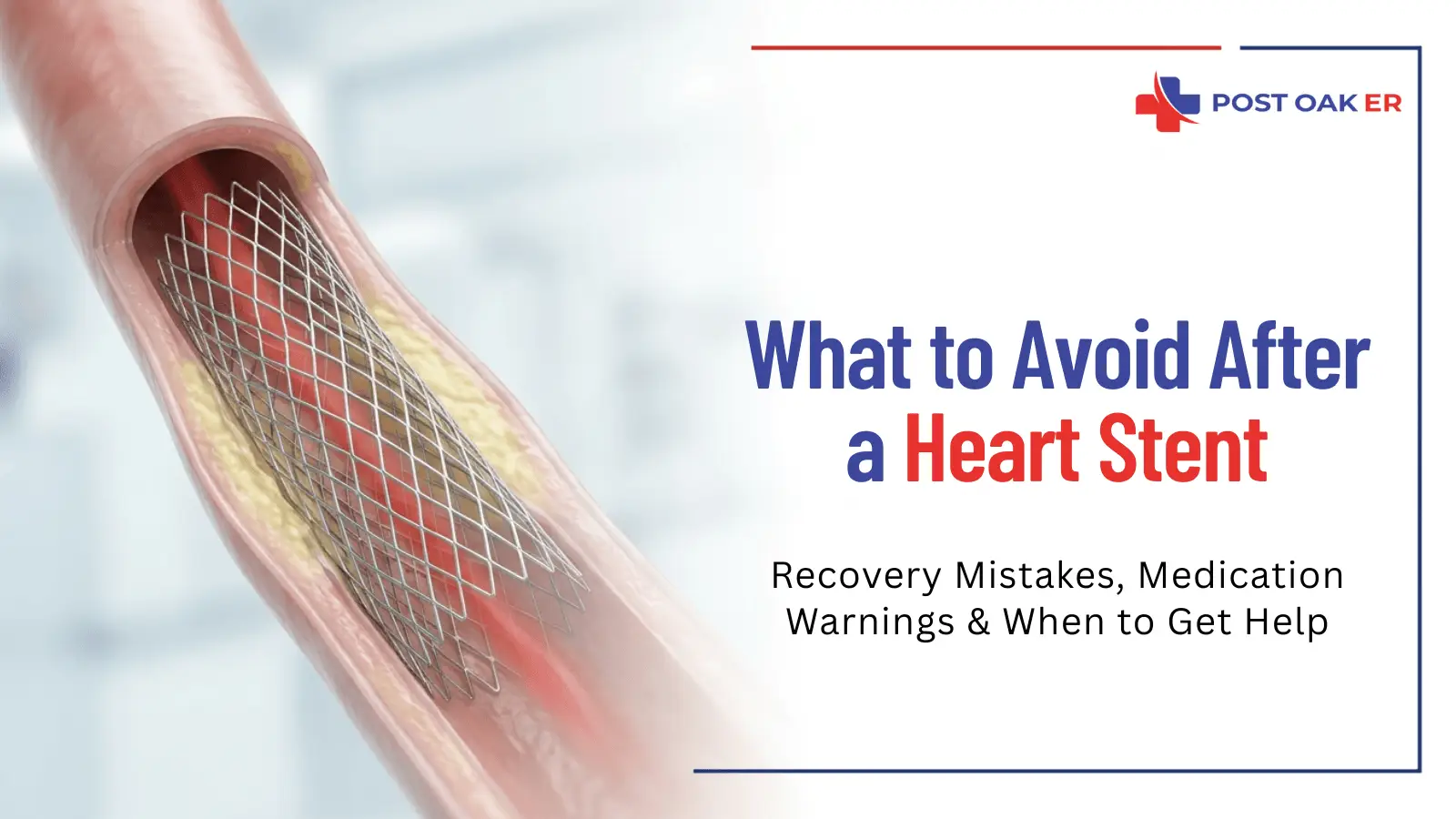
After a heart stent, the biggest things to avoid are skipping prescribed medicines, rushing back into heavy activity, smoking, ignoring the catheter site, and treating the stent like a complete cure. A stent can improve blood flow through a narrowed or blocked coronary artery, but recovery still depends on careful follow-up and long-term heart care.
For patients in Houston, the goal is not to feel afraid after a stent. The goal is to know which choices protect recovery and which warning signs need urgent attention. Many people do well after stent placement, but the first days and weeks matter because medication, activity, wound care, and symptoms all need to be handled the right way.
Key Takeaways
- A heart stent helps keep a narrowed coronary artery open, but it does not erase the need for heart care.
- Do not stop antiplatelet or blood-thinning medicine unless your cardiologist or prescribing clinician tells you to.
- Avoid heavy lifting and strenuous activity until your care team clears you.
- Watch the catheter site for bleeding, swelling, redness, drainage, or increasing pain.
- Smoking after a stent raises future heart risk and should be avoided.
- Follow-up care and cardiac rehab may be part of a safer recovery plan.
- Chest pain, trouble breathing, fainting, severe bleeding, or stroke-like symptoms need urgent medical attention.
What to Avoid After a Heart Stent
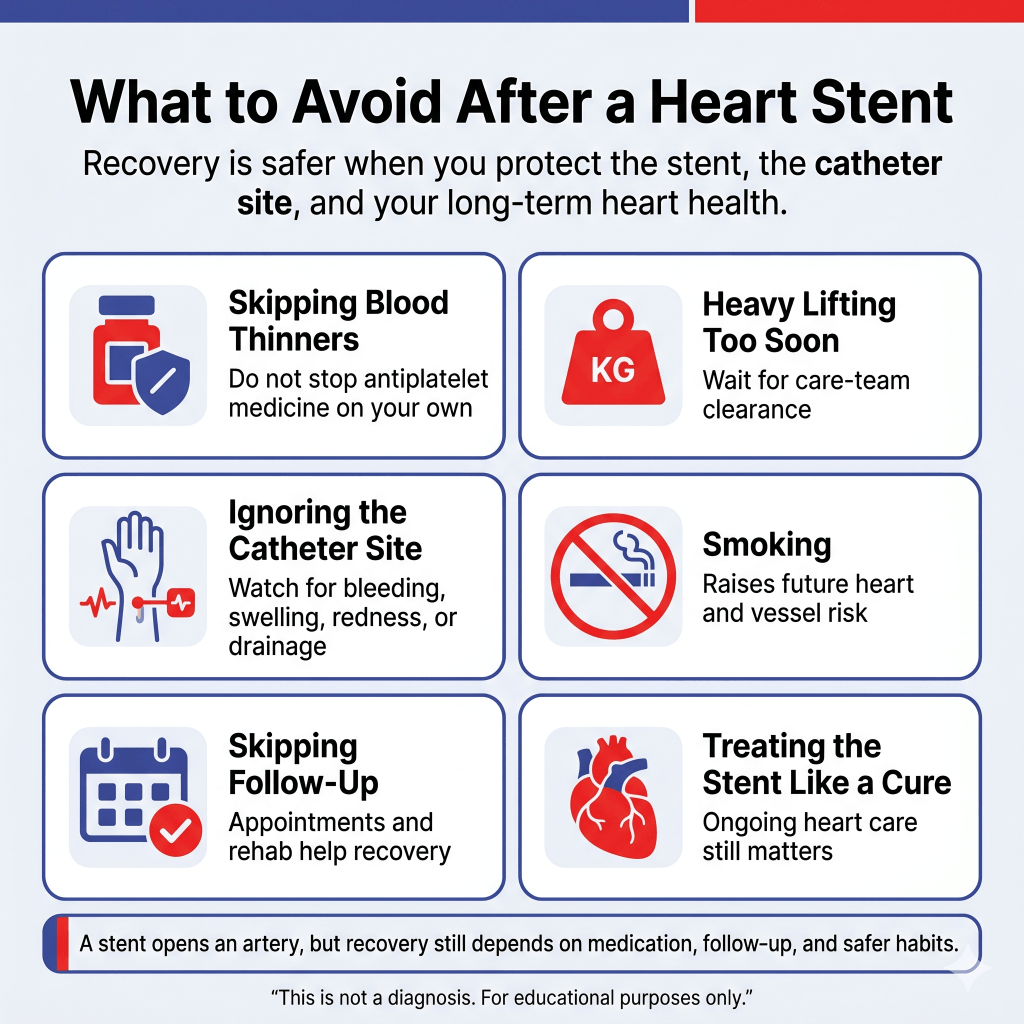
After a heart stent, avoid anything that can raise your risk of clotting, bleeding, delayed healing, or future artery problems. That includes stopping prescribed blood thinners too soon, lifting too much before you are cleared, smoking, skipping follow-up, and ignoring symptoms that feel like a heart emergency.
It also helps to avoid the mindset that the stent “fixed everything.” Angioplasty and stent placement can open a clogged artery and improve blood flow, but coronary artery disease still needs ongoing management through medication, lifestyle changes, and medical follow-up.
Do Not Stop Blood Thinners or Antiplatelet Medicine on Your Own
This is one of the most important safety rules after a coronary stent. Many patients are prescribed antiplatelet medicine or blood-thinning medicine to reduce the risk of a clot forming in or near the stent. NHLBI explains that antiplatelet medicines help prevent blood clots from forming in the stent.
Do not stop these medicines unless your cardiologist or prescribing clinician tells you to. Feeling better does not mean the medicine is no longer needed. The exact medication plan can vary based on the type of stent, why it was placed, bleeding risk, and other health factors, so this is not something to adjust on your own.
Do Not Rush Back Into Heavy Activity
Many people can return to light activity fairly soon after a stent, but that does not mean heavy lifting, strenuous exercise, or intense work should start right away. NHLBI says patients should resume normal physical activity and return to work when their provider says it is okay.
Your timeline may depend on whether the stent was planned or placed during a heart attack, whether the catheter went through the wrist or groin, how your symptoms are doing, and what your cardiology team recommends. A slow, steady return is safer than trying to prove you are “back to normal” too quickly.
Do Not Ignore the Catheter Site
A heart stent is placed through a catheter, often inserted through the wrist or groin. After the procedure, that area needs attention while it heals. Some bruising or soreness may happen, but certain changes should not be ignored.
Watch for bleeding, swelling, redness, drainage, or increasing pain at the catheter site. You should also pay attention to numbness, unusual coldness, color change, or worsening discomfort in the arm or leg where the catheter was placed. Those symptoms should be reported promptly because they may suggest bleeding, infection, or circulation problems.
Do Not Smoke After a Stent
Smoking is one of the most important habits to avoid after a heart stent. It can continue to damage blood vessels, worsen coronary artery disease, and raise the chance of future heart problems.
This is not about blaming the patient. It is about protecting the artery that was treated and reducing the risk that more blockages will develop later. If quitting feels difficult, that is very common. The best next step is to ask your clinician for a realistic stop-smoking plan instead of trying to handle it alone.
Do Not Treat the Stent Like a Cure
A stent can improve blood flow in a treated artery, but it does not remove the underlying tendency toward plaque buildup. Mayo Clinic explains that a stent helps prop the artery open and decreases the chance of the artery narrowing again, but the broader heart-disease risk still needs attention.
That means long-term care still matters. Your plan may include antiplatelet medicine, cholesterol treatment, blood pressure control, diabetes management if relevant, food changes, activity guidance, and regular follow-up. The stent is part of treatment, not permission to ignore the rest of your heart health.
Foods and Habits to Limit After a Stent
After a stent, it is wise to limit habits that work against heart recovery. That often includes smoking, heavy alcohol use, frequent fried foods, high-salt meals, processed foods, sugary drinks, and a return to the same eating pattern that may have contributed to artery disease in the first place.
This does not mean you need a perfect diet overnight. A better approach is to build a pattern you can keep: more vegetables, fruits, whole grains, lean proteins, and heart-healthy fats, while cutting back on foods that are very salty, sugary, or high in saturated fat. Your cardiology team may also give more specific advice based on cholesterol, blood pressure, diabetes, kidney function, or weight.
Do Not Skip Follow-Up or Cardiac Rehab if Recommended
Follow-up is not just a formality. It helps your care team check your recovery, review medications, talk through symptoms, and adjust the plan if something is not going well. NHLBI says patients should make a follow-up appointment after getting a stent so their provider can check progress and make sure there are no problems.
Cardiac rehab may also be recommended. Cardiac rehab is a medically supervised program designed to improve your cardiovascular health after a heart attack, heart failure, angioplasty, or heart surgery. It can help patients rebuild strength, understand medications, improve confidence, and lower future heart risk.
When to Go to the ER or Call 911
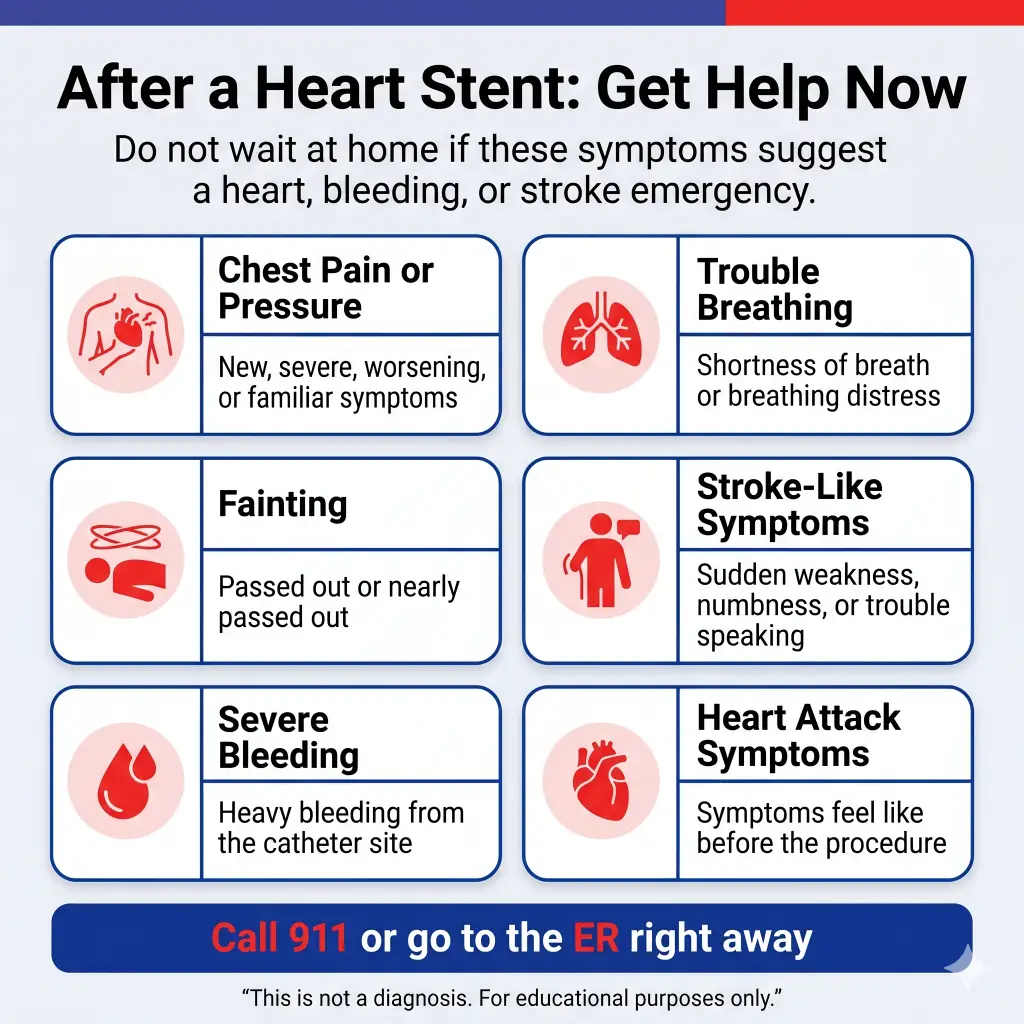
Go to the ER or call 911 right away for chest pain or pressure, trouble breathing, fainting, sudden weakness, stroke-like symptoms, severe bleeding from the catheter site, or symptoms that feel like a heart attack. New, severe, or familiar chest symptoms after a stent should not be waited out at home.
If you are in Houston and you develop chest pain, trouble breathing, fainting, or other serious symptoms after a heart stent, Post Oak ER is open 24/7 for prompt emergency evaluation. A stent history is important information to tell the emergency team, especially if your symptoms feel similar to what you had before the procedure.
What a Safer Recovery Plan Usually Includes
A safer recovery plan is usually built around a few steady habits: take medications exactly as prescribed, follow the activity limits you were given, monitor the catheter site, keep follow-up appointments, and ask whether cardiac rehab is appropriate for you.
It also helps to write down symptoms, questions, and medication concerns before follow-up visits. If you notice new chest discomfort, unusual shortness of breath, swelling, dizziness, bleeding, or catheter-site changes, do not wait until you forget the details. Track what happened, when it started, and what made it better or worse.
Many people recover well after a stent, but the best outcomes usually come from treating recovery as the beginning of better heart care, not the end of the problem. The stent opened the artery. Your next job is to protect your heart going forward.
Frequently Asked Questions
What should you avoid after a heart stent?
Avoid stopping prescribed blood thinners, heavy activity before clearance, smoking, skipping follow-up, ignoring catheter-site changes, and brushing off chest pain or serious symptoms.
Can I stop blood thinners after a stent if I feel fine?
No. Do not stop antiplatelet or blood-thinning medicine unless your cardiologist or prescribing clinician tells you to. These medicines help reduce the risk of clotting in or around the stent.
How long should I avoid heavy lifting after a stent?
The timeline depends on your procedure, access site, symptoms, and provider instructions. In general, return to normal activity only when your care team says it is safe.
Can I exercise after getting a heart stent?
Often yes, but exercise should restart gradually and follow your discharge instructions. Some patients are referred to cardiac rehab for supervised recovery and safer long-term exercise planning.
What foods should I avoid after a stent?
Try to limit fried foods, heavily processed foods, high-salt meals, sugary drinks, and foods high in saturated fat. Your clinician may give more specific advice based on cholesterol, blood pressure, diabetes, or other risk factors.
Is chest pain normal after a stent?
Some mild discomfort can happen after procedures, but new, severe, worsening, or familiar chest pain should not be ignored. Chest pain after a stent needs prompt medical attention, especially if it comes with shortness of breath, sweating, fainting, or weakness.
When should I go to the ER after a heart stent?
Go to the ER or call 911 for chest pain, trouble breathing, fainting, sudden weakness, stroke-like symptoms, severe bleeding, or signs of a heart attack.
Does a stent cure coronary artery disease?
No. A stent helps open a treated artery, but it does not cure coronary artery disease. Ongoing medication, lifestyle changes, and follow-up still matter.