
One of the biggest mistakes people make before an echocardiogram is thinking every heart ultrasound works the same way. It does not. A standard transthoracic echocardiogram is usually simple and often does not require fasting, but a transesophageal echo or a stress echo may come with extra rules about food, caffeine, medications, exercise clothing, or getting a ride home.
For patients in Houston, the safest approach is simple: use the prep instructions given for your appointment. Guessing can lead to delays, unnecessary stress, or showing up unprepared. And if you develop chest pain, shortness of breath, fainting, or other serious symptoms before the test, the emergency matters more than the appointment.
Key Takeaways
- Not every echocardiogram has the same prep rules.
- A standard transthoracic echo often allows normal eating and drinking, but other types may not.
- Do not stop medications unless your provider specifically tells you to.
- Stress echo prep may involve avoiding caffeine, tobacco, food, and sometimes certain medicines.
- A transesophageal echo may require fasting, sedation, and a ride home.
- Wear practical clothes if your test involves exercise, and arrive ready for check-in.
- If you have chest pain, trouble breathing, fainting, or severe symptoms before the test, get urgent care instead of waiting on the echo.
What Not to Do Before an Echocardiogram
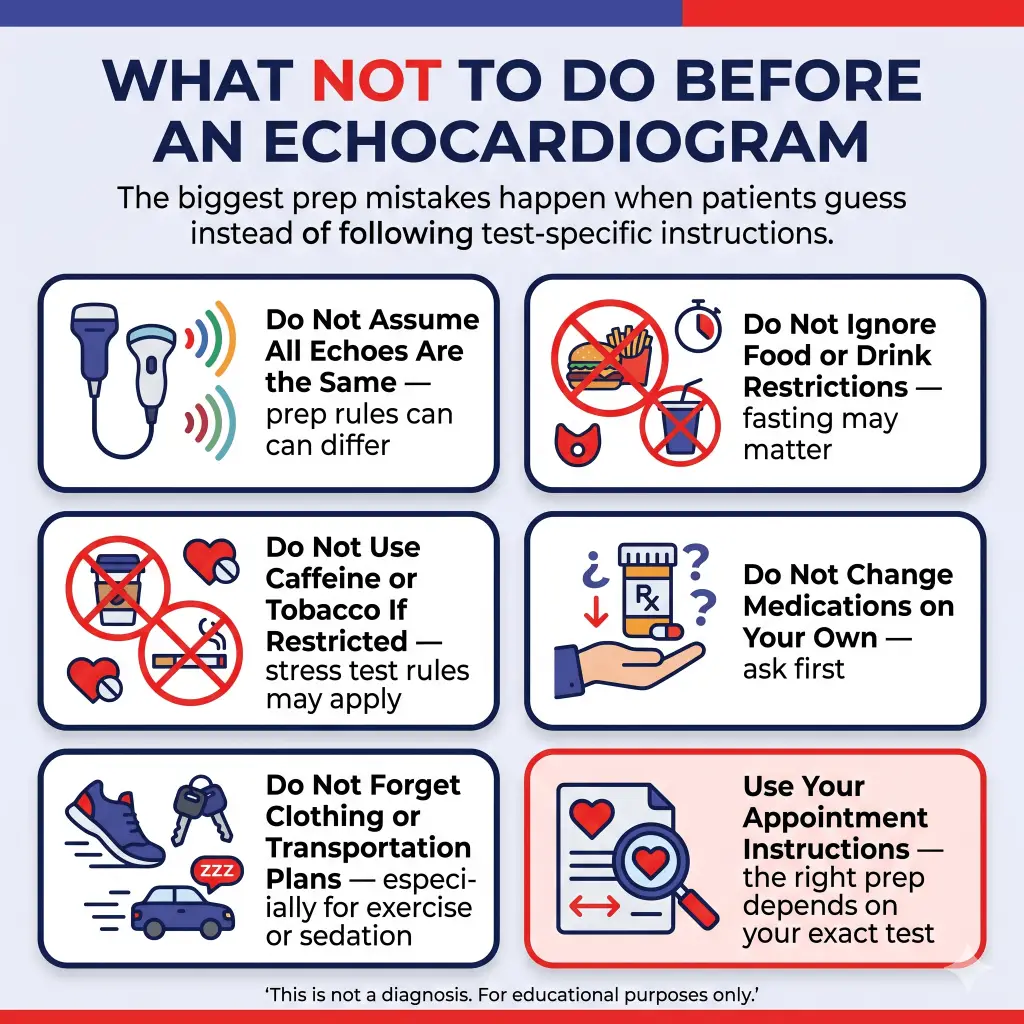
Do not treat all echo appointments the same. Do not rely on generic online advice if your care team gave you test-specific instructions. Food, caffeine, smoking, medications, and even transportation plans can vary depending on the type of echocardiogram you are having.
That is why this topic feels confusing for so many patients. People want one simple rule that covers everything, but the real answer is more specific: the biggest mistake is following the wrong prep for the wrong test.
Do Not Treat Every Echocardiogram Like the Same Test
A standard transthoracic echocardiogram is the most common type and is usually straightforward. Many people can eat and drink normally before it. But other types of echocardiograms may have different requirements.
For example, a transesophageal echocardiogram uses sedation and a probe passed down the throat, while a stress echocardiogram checks how the heart performs during exercise or medication-induced stress. Because the tests are different, the preparation may be different too.
Do Not Eat, Drink, or Use Caffeine if Your Instructions Restrict It
One of the most common prep mistakes is not paying close attention to food and drink rules. For a standard transthoracic echo, many patients can eat and drink as usual. But if you are having a transesophageal echo, you may be told not to eat or drink for several hours before the test.
If you are scheduled for a stress echo, caffeine, nicotine, food, and some medications can affect how the test is performed. That means coffee, energy drinks, certain teas, tobacco, and even some over-the-counter products may matter depending on the instructions you were given.
Do Not Stop or Change Your Medications on Your Own
Another common mistake is changing medications without checking first. The right answer depends on the kind of echo you are having and why it was ordered. Some patients do need special medication instructions before a stress study. Others do not.
The safe move is to ask the clinician who ordered the test or the testing center. Do not stop prescription medicines, skip doses, or make last-minute changes based on a general article or something you heard from someone else.
Do Not Overlook Clothing, Timing, and Basic Appointment Prep
If your echo involves exercise, do not show up in clothing that makes walking or biking harder. Comfortable clothes and shoes make the appointment easier. Even if your study is not an exercise test, many patients still need to undress from the waist up and put on a gown, so practical clothing helps.
Also, do not overlook the basics. Bring your ID, medication list, and any instructions the office sent you. If sedation is involved, make transportation plans ahead of time rather than sorting it out at the last minute.
Do Not Panic if You Are Not Sure What the Test Involves
An echocardiogram is a heart ultrasound. It uses sound waves to create moving pictures of the heart, including how it looks, how it pumps, and how blood moves through it.
That may sound technical, but for most patients the experience is fairly routine. A sonographer usually performs the study, gel is placed on the chest, and the team captures images while you lie still and sometimes change position or breathing. The exact process depends on the type of echo, but most patients find it manageable.
What Happens During an Echocardiogram
During a standard transthoracic echo, a provider places gel on the chest and moves a handheld device over the skin to capture images of the heart. The test is generally noninvasive and often takes about 40 to 60 minutes.
A transesophageal echo is different because sedation is used and the imaging probe goes down the throat into the esophagus for a closer view. A stress echo is different because images are taken before and after exercise, or before and after medicine that makes the heart work harder.
When to Go to the ER or Call 911
If you develop severe chest pain or pressure, severe shortness of breath, fainting, sudden weakness, or other major warning signs before your echo appointment, do not stay home waiting for the test. Those symptoms need emergency care.
If you are in Houston and you develop chest pain, shortness of breath, fainting, or other possible heart-emergency symptoms before your scheduled heart test, Post Oak ER is open 24/7 for prompt emergency evaluation. An echocardiogram can answer important heart questions, but it should not delay urgent treatment when symptoms are happening right now.
What to Expect After the Test
Most people can go back to normal activities after a standard echo. If you had a sedated transesophageal echo, recovery is different. You may be observed for a period of time afterward, and you should not drive yourself home if sedation was used.
Do not expect every result to be explained on the spot. In many cases, the provider who ordered the test reviews the images later and discusses what they mean at a follow-up visit or through the patient portal. No immediate discussion does not automatically mean something is wrong.
At the end of the day, good echocardiogram prep is mostly about doing the basics well: know which type of test you are having, follow the instructions you were given, and avoid making your own changes with food, caffeine, tobacco, or medications. That is the best way to help the appointment go smoothly and avoid preventable delays.
Frequently Asked Questions
Can I eat before an echocardiogram?
For a standard transthoracic echocardiogram, many people can eat and drink as usual. But a transesophageal echo may require fasting for several hours, and a stress echo may also have food restrictions. Follow the instructions for your specific appointment.
Can I drink coffee before an echocardiogram?
Sometimes yes, sometimes no. A routine transthoracic echo usually has fewer restrictions, but caffeine can interfere with a stress echo and is often restricted before that test.
Should I take my regular medications before an echocardiogram?
Do not make medication changes on your own. The right answer depends on the type of echo and the reason it was ordered, so check with the ordering clinician or testing center first.
What should I wear to an echocardiogram?
If your test involves exercise, wear comfortable clothes and shoes you can walk in. For many echo tests, you will also need to undress from the waist up and change into a gown.
How long does an echocardiogram take?
Many echo tests take about 40 to 60 minutes. An exercise stress echo often takes about an hour, and a transesophageal echo can take longer overall because of prep and recovery.
Can I drive myself home after an echocardiogram?
Usually yes after a standard echocardiogram. But if you have a transesophageal echo with sedation, you will need someone to drive you home.
What happens if I accidentally eat before my test?
Call the testing center as soon as possible and tell them exactly what happened. Eating before a standard transthoracic echo may not matter, but it can matter a lot for a transesophageal echo or some stress studies.
Should I go to the ER instead of waiting for my echocardiogram if I have chest pain?
Yes, if the chest pain is severe, does not go away, or comes with symptoms like shortness of breath, sweating, dizziness, or fainting. Those are emergency symptoms and should not be handled like a routine outpatient test issue.