
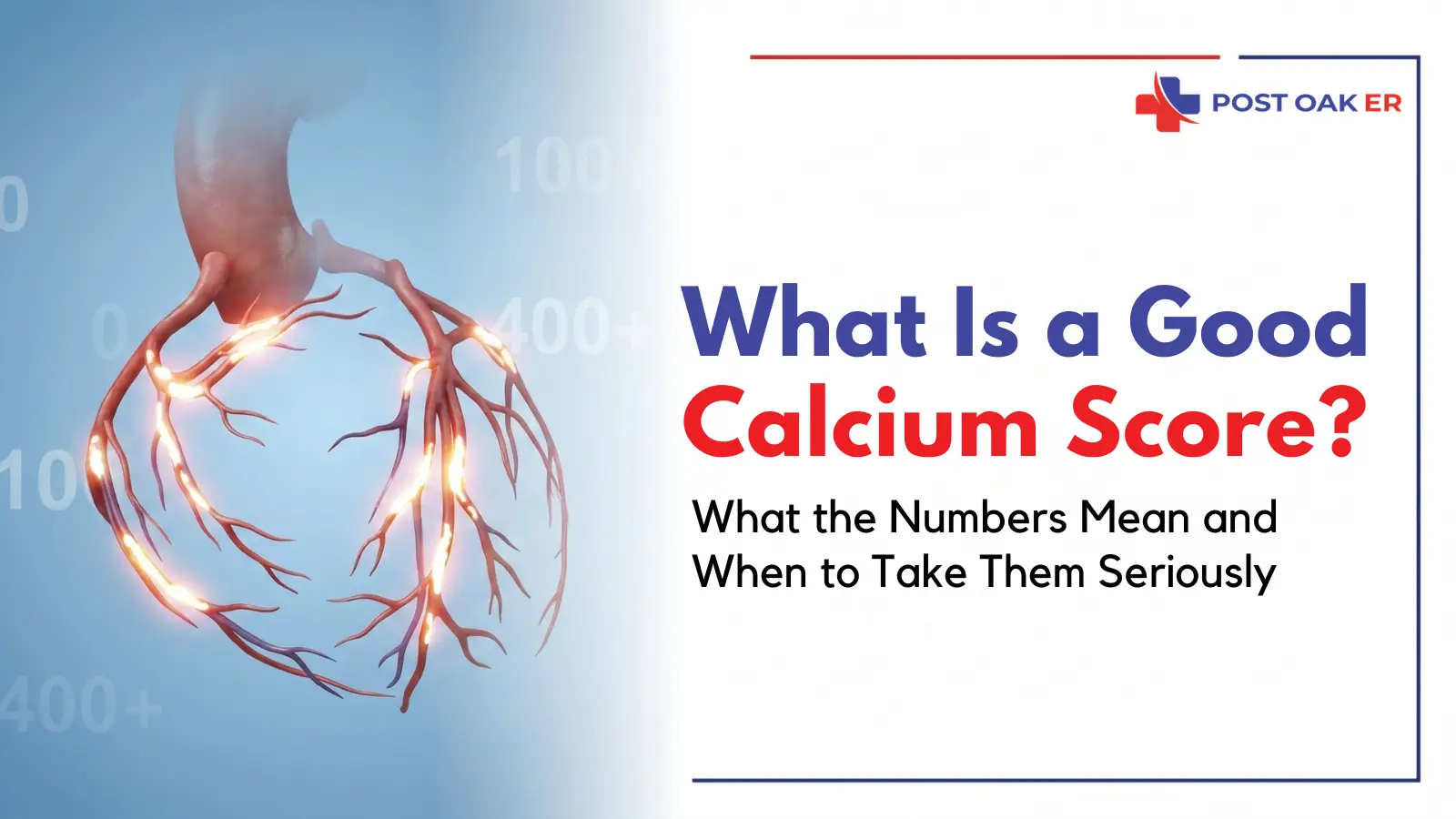
A “good” calcium score is usually 0, because that means no calcified plaque was seen in the coronary arteries on the scan. But that is not the whole story. The real meaning of a calcium score depends on your age, your risk factors, and why the test was ordered in the first place.
For patients in Houston, this is one of those heart tests that can sound more dramatic than it actually is. A calcium score does not tell you everything about your heart in one number, but it can be a useful tool when a doctor is trying to better understand your future risk of coronary artery disease and decide what prevention steps make sense.
Key Takeaways
- A calcium score measures calcified plaque in the arteries that supply the heart.
- In general, lower is better, and 0 is usually the most reassuring result.
- Common score ranges are 0, 1 to 99, 100 to 399, and 400 or higher.
- A score should always be read in context with age, cholesterol, blood pressure, diabetes, smoking, and family history.
- A calcium score is mainly a risk tool, not a same-day answer for active chest pain.
- If you have chest pain, shortness of breath, fainting, or other serious warning signs, you still need urgent medical attention.
What Is a Calcium Score?
A calcium score, also called a coronary artery calcium score or CAC score, comes from a CT scan that looks for calcium in the walls of the coronary arteries. These are the arteries that bring blood to the heart muscle. When calcium shows up there, it usually means plaque has built up over time.
This test is not treatment by itself. It is a way to estimate heart risk more clearly. Doctors often use it when they want more information about a person’s future risk of heart disease, heart attack, or stroke, especially when the picture is not fully clear from standard risk factors alone.
What Is Considered a Good Calcium Score?
The most direct answer is this: a score of 0 is usually considered the best result. In plain language, that means the scan did not detect calcified plaque in the coronary arteries.
Still, a “good” score is not only about the number. A zero score is reassuring, but it does not erase every other risk factor. A person can still have risk from smoking, diabetes, high LDL cholesterol, high blood pressure, or a strong family history of early heart disease. That is why doctors look at the score together with the rest of your health picture instead of treating it like a stand-alone pass or fail test.
What the Calcium Score Ranges Mean
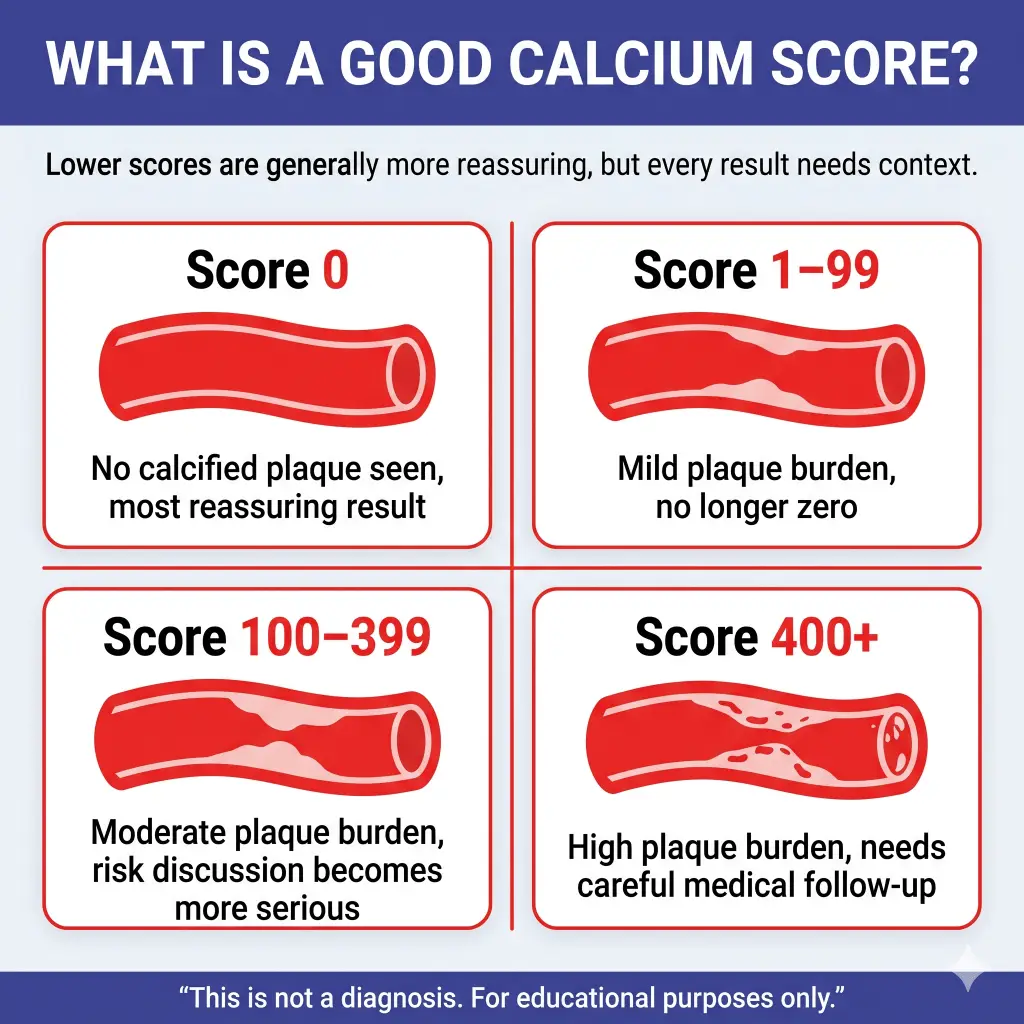
Most calcium scores are explained in simple ranges.
A score of 0 usually means no calcified plaque was detected. That is the most reassuring result and is often described as normal.
A score of 1 to 99 usually suggests a mild amount of calcified plaque. It is no longer zero, so it tells your doctor there is at least some plaque burden to pay attention to.
A score of 100 to 399 usually suggests a moderate amount of calcified plaque. This often means heart risk discussions become more serious, especially when other risk factors are already present.
A score of 400 or higher usually points to a high plaque burden and a higher risk of future heart problems. It does not tell you exactly when something will happen, but it does tell your medical team that the findings should be taken seriously.
Why Age and Risk Factors Matter
The same calcium score can mean different things in different people. A lower score in an older adult may be looked at differently than the same score in a younger adult. Age matters because calcified plaque becomes more common as people get older. Sex can matter too, and so can traditional heart risk factors such as smoking, cholesterol, blood pressure, and diabetes.
That is why doctors do not interpret the number in isolation. A person with a low score but several major risk factors may still need aggressive prevention, while another person with a similar score but fewer risks may have a different plan. In other words, the number matters, but the context matters just as much.
When Doctors May Order a Calcium Score
A calcium score is most useful when a doctor is trying to better estimate long-term heart risk and the decision is not obvious. It is commonly considered for people with borderline or intermediate risk, for people with a strong family history of early coronary artery disease, or when a clinician is deciding whether cholesterol-lowering treatment such as a statin makes sense.
It is usually not the main test for someone who already has known coronary artery disease, has already had a heart attack or stent, or is clearly high risk for reasons that already point to treatment. In those situations, the score usually adds less useful information.
What a Calcium Score Does Not Tell You
A calcium score is helpful, but it has limits. It does not measure every kind of plaque, and it does not tell you exactly how narrow an artery is at that moment. It is best understood as a risk estimate, not a full answer to every heart question.
It also does not settle the question of what to do with active symptoms. If someone has current chest pain, shortness of breath, fainting, heavy sweating, or pain spreading into the jaw, arm, or back, that is not the time to lean on an old calcium score for reassurance. Emergency symptoms still need real-time medical evaluation. That is a practical conclusion from how CAC testing is used: it is mainly meant to guide prevention and treatment decisions, especially in people without clear symptoms.
When to Go to the ER or Call 911
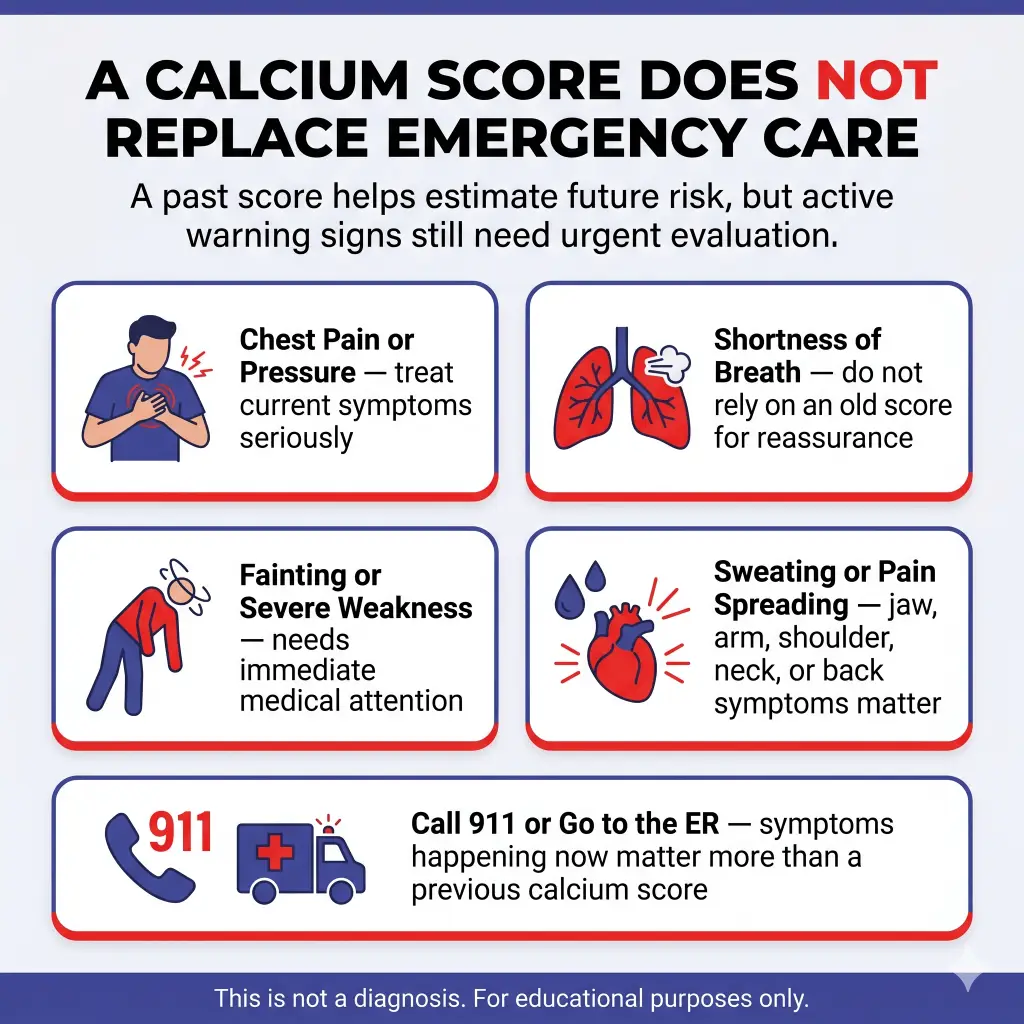
Go to the ER or call 911 right away if you have chest pressure or chest pain, shortness of breath, fainting, severe weakness, sudden sweating, or pain that spreads to the jaw, shoulder, arm, neck, or back. Those symptoms matter more in the moment than whether your calcium score was low, high, or even zero in the past.
If you are in Houston and you have chest pain or other possible heart warning signs, Post Oak ER is open 24/7 for prompt emergency evaluation. A calcium score can help with prevention planning, but it should never talk you out of getting urgent help when symptoms feel serious, new, or out of the ordinary.
What Happens After a Higher Calcium Score
A higher calcium score usually leads to a bigger conversation, not instant panic. Your doctor may talk with you about cholesterol treatment, blood pressure control, smoking, exercise, food choices, diabetes management, or referral to a cardiologist. The goal is to lower future risk, not just react to the number itself.
Depending on your age, symptoms, and overall risk, your clinician may also decide that more testing is appropriate. But in many cases, the biggest next steps are prevention-focused: lifestyle changes, medication when appropriate, and better long-term risk management.
Frequently Asked Questions
Is a calcium score of 0 always good?
A score of 0 is usually the most reassuring result because no calcified plaque was detected. But it still has to be interpreted alongside other risk factors such as smoking, diabetes, blood pressure, cholesterol, and family history.
What is a normal calcium score by age?
There is no single “normal” number that applies the same way to everyone. Age matters because coronary calcium becomes more common as people get older, so doctors often interpret the number in context rather than using a one-size-fits-all answer.
Can you have a heart attack with a low calcium score?
A lower score is reassuring, but it does not mean zero risk forever and it does not replace emergency evaluation for real symptoms. If you have concerning chest pain or other heart warning signs, you still need urgent care.
Is a calcium score of 100 bad?
A score of 100 usually falls into a moderate plaque range and often gets more clinical attention than a very low score. Whether it is “bad” depends on the rest of your risk profile, but it is generally a result that deserves a serious prevention discussion.
What calcium score means blocked arteries?
A calcium score does not tell you exactly how blocked an artery is. It tells you about calcified plaque burden and future risk, not the exact degree of narrowing in real time.
Who should get a calcium score test?
It is usually most helpful for selected adults whose long-term heart risk is not fully clear, especially if a doctor is deciding whether to start or intensify preventive treatment such as a statin.
Can a calcium score go down?
The score is mainly used as a marker of existing calcified plaque and future risk, not as a score people should expect to “fix” quickly. In practice, the focus after an abnormal result is usually on lowering future risk through treatment and lifestyle rather than trying to chase the number itself.
Should I go to the ER for chest pain if I had a normal calcium score before?
Yes. A prior calcium score should not be used as a reason to ignore active chest pain, shortness of breath, fainting, or other serious warning signs. Symptoms happening now should be evaluated based on what is happening now.