
Sudden trouble walking, using the hands, or lifting a limb can signal a serious neurological problem—even without neck pain. Spinal cord compression is one possible explanation. The priority is to recognize lost function and obtain emergency assessment, not diagnose the cause at home.
New, pronounced, or rapidly worsening weakness, inability to walk, or loss of bladder or bowel control with other neurological symptoms requires immediate attention. Sudden major deficits warrant a call to 911.
What Happens When the Spinal Cord Is Compressed in the Neck?
The cervical spinal cord lies inside a canal in the neck and carries signals between the brain and much of the body. Pressure on it can affect strength, sensation, coordination, and walking. This differs from a single compressed nerve root, which more often causes symptoms along one arm.
Pressure can result from narrowing, a disc abnormality, bleeding, or trauma. The Merck Manual’s explanation of spinal cord compression describes sudden and progressive presentations. A narrow canal does not always cause symptoms; neck pain does not measure cord function.
What Loss-of-Function Symptoms Can Signal Spinal Cord Compression?
Suddenly Struggling to Walk or Stay Balanced
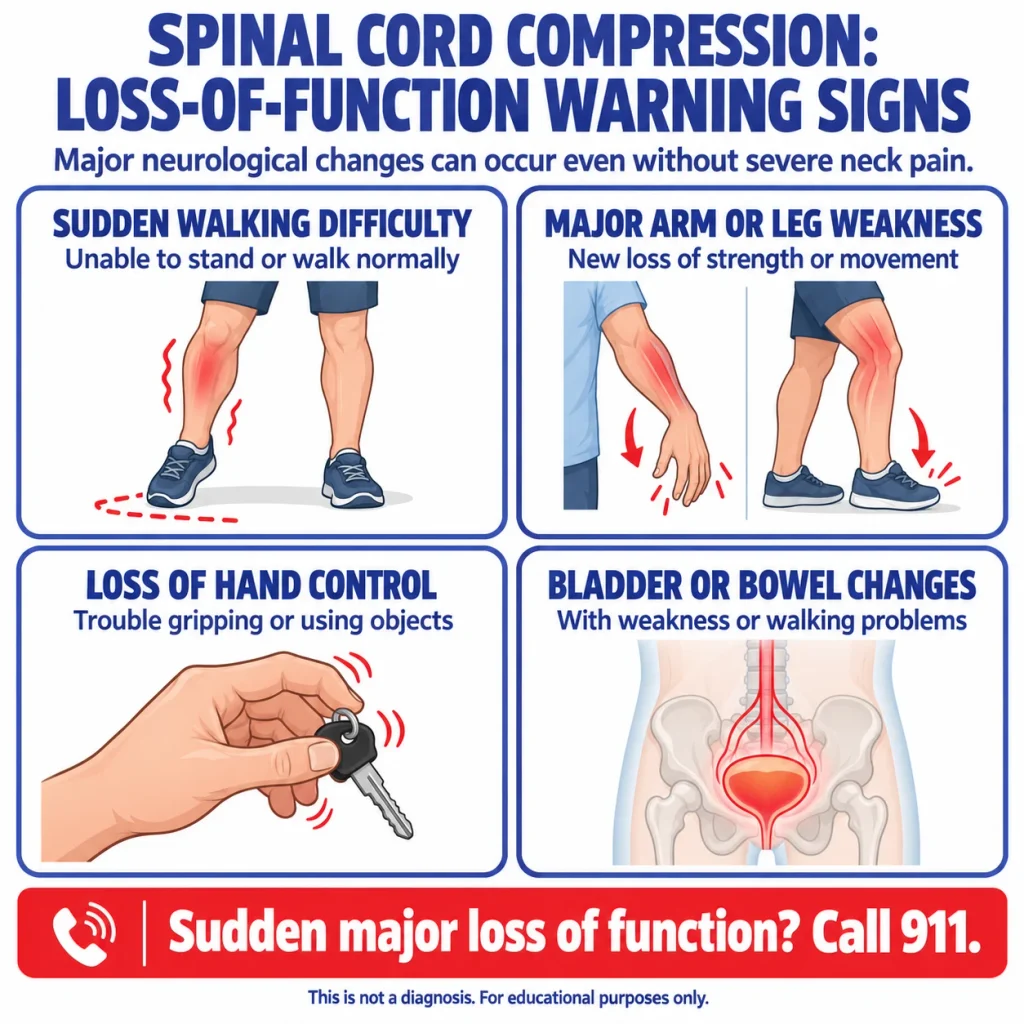
Someone previously walking independently may suddenly need assistance, feel their legs give way, or struggle to stand. Rapidly worsening unsteadiness differs from an occasional misstep or a stable, longstanding balance issue.
The NHS guidance on cervical spinal cord symptoms identifies gait and balance changes as neurological warning signs, particularly when they deteriorate quickly. Do not test your walking repeatedly or attempt stairs when you may fall.
Losing Strength in the Arms or Legs
Being unable to lift an arm, rise from a chair, or bear weight on a leg may represent true weakness. Multiple limbs can be affected without severe neck pain. The National Library of Medicine’s cervical spine overview explains effects on the arms, legs, and balance.
The pattern does not prove cord compression. For other potential causes of localized weakness, see Post Oak ER’s guide to arm weakness. A sudden or marked strength loss needs emergency assessment regardless of which condition is responsible.
Losing the Ability to Use Your Hands Normally
Abrupt difficulty turning a key, controlling a utensil, or handling a phone is more concerning than mild tingling alone. Substantial hand dysfunction is especially concerning when walking or leg strength also changes.
The Leeds NHS guidance on cervical cord dysfunction describes loss of hand dexterity together with changes in gait or limb strength. Slowly developing clumsiness also merits medical assessment, but this article focuses on substantial new loss of function.
New Bladder or Bowel Control Problems
Unexpected inability to urinate, new urinary leakage, or loss of bowel control can indicate serious nervous-system dysfunction when they arise with limb weakness, altered sensation, or difficulty walking. These symptoms have other possible causes and do not specifically identify compression in the neck.
Do not wait for these symptoms to appear; serious limb or walking deficits already warrant attention.
Can Spinal Cord Compression Be Serious Without Severe Neck Pain?
Why Pain Severity Does Not Always Reflect Neurological Damage
Neck pain cannot reliably measure spinal cord dysfunction. Serious weakness or poor coordination can occur with little discomfort, while severe pain alone does not establish cord injury. The Merck Manual’s review of cord-compression symptoms describes this variability.
Why Loss of Function Matters More Than Pain Alone
Compare the person’s current abilities with their baseline: walking, arm strength, and hand use. Major new limitations require evaluation even without pain. For broader symptom guidance, see when neck pain warrants an ER visit.
When Is Suspected Spinal Cord Compression a Medical Emergency?
Sudden or Rapidly Worsening Neurological Symptoms
Major weakness, new inability to walk, or rapidly declining coordination should be treated as an emergency. Deterioration can unfold over hours. Existing neck arthritis or stenosis does not explain away a new deficit.
Sudden weakness or difficulty walking can also be a sign of stroke. The CDC’s stroke warning-sign guidance advises calling 911 for sudden weakness, balance problems, or other stroke symptoms. Emergency clinicians must determine the cause rather than assume it comes from the neck.
New Bladder or Bowel Dysfunction With Weakness or Walking Changes
A new change in bladder emptying or bowel control alongside neurological loss of function requires immediate evaluation. This combination can signal a serious problem somewhere in the nervous system, including but not limited to the spinal cord. Do not wait to see whether normal control returns.
Neurological Changes After a Fall, Collision, or Neck Injury
New numbness, weakness, or inability to move normally after a fall, crash, or direct neck impact raises concern for spinal injury. Avoid unnecessary movement, twisting, or attempts to straighten the neck. Call 911 if a serious injury or significant neurological deficit is suspected; let trained responders manage transport. MedlinePlus emergency-care advice specifically treats spine injury with loss of movement or sensation as an ambulance-level concern.
What Should You Do if You Suspect Spinal Cord Compression?
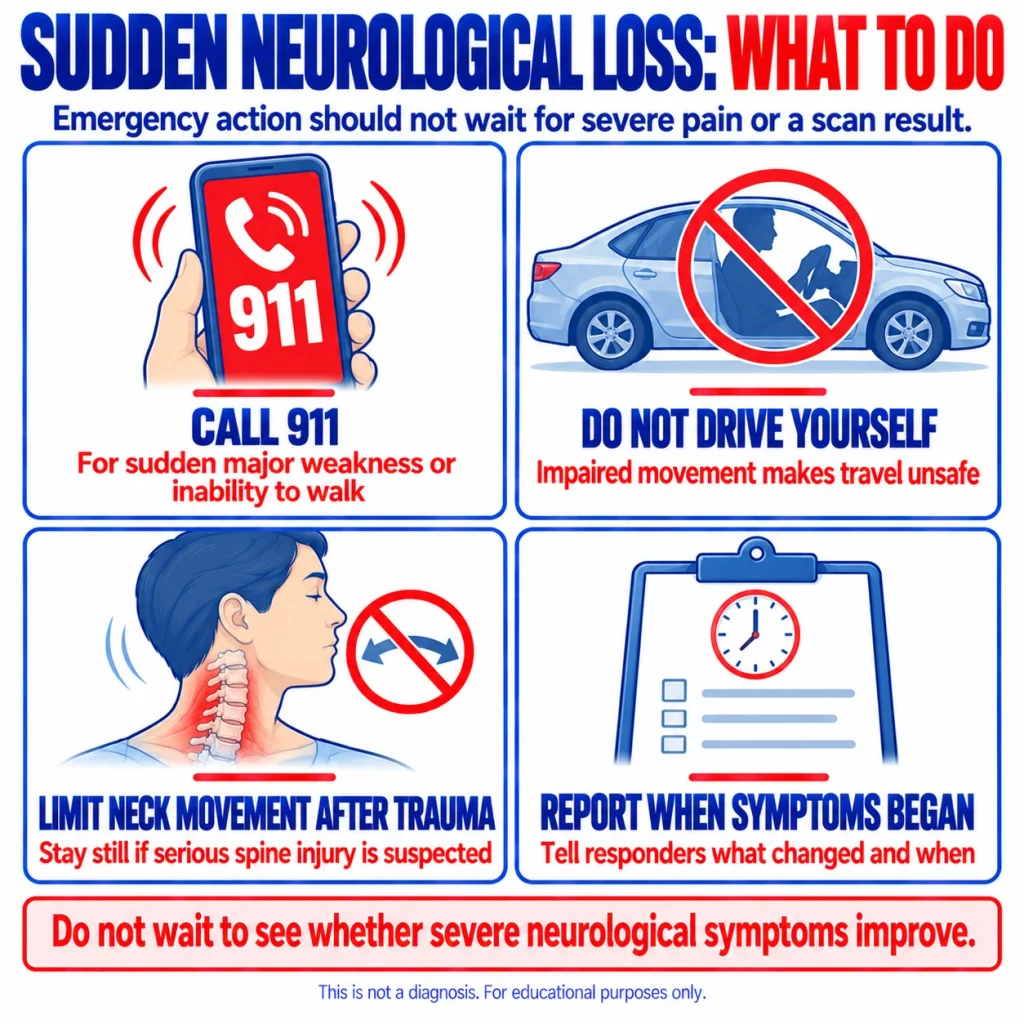
Call 911 for sudden major weakness, inability to stand or walk, paralysis, or other severe neurological changes. Do not drive yourself if strength, movement, or coordination is impaired. If trauma occurred, stay as still as safely possible, avoid neck manipulation, and follow emergency-dispatch instructions. Tell responders when the change began and whether it is progressing.
Do not wait for severe pain or a scan result before seeking help.
How Do Emergency Doctors Evaluate Possible Spinal Cord Compression?
Assessing the Onset and Progression of Neurological Changes
The physician will establish when function was last normal, what has changed, and how quickly. Trauma, past spinal conditions, medications, fever, and other symptoms guide the assessment.
Checking Strength, Sensation, and Neurological Function
A neurological examination may compare strength and sensation in the arms and legs and assess reflexes, coordination, and movement when safe. These findings help clinicians look for evidence of cord dysfunction, a more localized nerve problem, or a condition affecting the brain. An examination guides the workup but may not show the cause by itself.
When Is Emergency Imaging Needed?
MRI provides a direct view of the spinal cord and nearby soft tissues. The American College of Radiology’s myelopathy imaging criteria rate MRI of the affected spine as usually appropriate when acute cord dysfunction is suspected.
After significant trauma, CT may be used to assess fractures. The ACR acute spinal trauma criteria also address MRI when cord or ligament injury is suspected.
Not every patient needs identical scans. The neurologic examination, suspected cause, and injury history guide the choice. When urgent MRI or specialist-level services are unavailable at the evaluating facility, hospital transfer may be necessary.
What Happens if Doctors Suspect Significant Spinal Cord Compression?
Next steps may include close monitoring, urgent advanced imaging, and consultation with a spine or neurological specialist. The location of the suspected problem, speed of decline, and underlying cause determine whether admission or transfer is needed. Some causes of compression are treatable, but delay can allow neurological injury to worsen; Merck Manual guidance on urgent assessment explains why prompt evaluation matters. The goal of emergency care is to identify a serious, potentially reversible problem before further function is lost.
Emergency Neurological Assessment at Post Oak ER in Houston
For patients in Houston’s Post Oak, Galleria, and Uptown area, Post Oak ER offers 24/7 emergency physician evaluation of serious neurological symptoms. Its emergency imaging services include on-site CT and X-ray. Emergency physicians can assess neurological function, determine initial testing and stabilization, and coordinate hospital transfer when urgent MRI, specialist assessment, or additional hospital care is needed. For sudden major weakness, inability to walk, or suspected unstable spinal injury, call 911 instead of arranging private transport.
Frequently Asked Questions
What are the warning signs of spinal cord compression in the neck?
New or rapidly worsening walking difficulty, marked arm or leg weakness, substantial loss of hand coordination, or bladder or bowel changes with other neurological symptoms are concerning. These signs require urgent assessment rather than diagnosis by symptoms alone.
Can spinal cord compression cause sudden leg weakness or difficulty walking?
Yes. Disruption of signals traveling through the cervical spinal cord can affect the legs and balance. Sudden leg weakness or inability to walk warrants emergency care, whatever the cause.
Can you have spinal cord compression without severe neck pain?
Yes. Significant neurological dysfunction can occur with mild discomfort or no major neck pain. Changes in strength and daily function matter more than pain intensity alone.
Can spinal cord compression affect hand strength or coordination?
Yes. Some people develop substantial difficulty gripping, handling objects, or controlling finger movements. New hand dysfunction accompanied by walking or limb-strength changes is particularly concerning.
Can spinal cord compression cause bladder or bowel control problems?
It can, but these symptoms are not specific to cervical cord compression. New urinary retention or incontinence, or loss of bowel control, together with weakness or walking changes requires emergency evaluation.
How quickly can spinal cord compression symptoms get worse?
Symptoms can emerge suddenly, develop over hours or days, or progress more slowly, depending on the cause. Rapid deterioration in movement or coordination should be treated as an emergency.
What tests do doctors use to check for spinal cord compression?
Doctors begin with the symptom history and a neurological examination. MRI often best assesses the cord itself; CT is especially useful when a traumatic bony injury is suspected. The precise testing depends on the presentation.
When should you go to the ER for suspected spinal cord compression?
Seek immediate emergency evaluation for major new weakness, loss of walking ability, or bladder or bowel changes with neurological symptoms. Call 911 for sudden severe deficits or suspected serious spinal trauma, and do not drive yourself.