
When breathing becomes harder, a person with COPD may reach for the rescue inhaler or nebulizer prescribed for sudden symptoms. The key safety question is not simply whether the treatment was used. It is whether it produced the relief expected under that person’s COPD action plan.
Little improvement, relief that fades quickly, worsening breathlessness, or new concerning symptoms after treatment can mean that home management is no longer enough. In that situation, repeatedly trying medication outside the prescribed plan may delay evaluation of a serious COPD exacerbation or another medical problem.
What COPD Rescue Treatment Is Intended to Do
Many prescribed rescue medicines are short-acting bronchodilators. They relax muscles around narrowed airways and can provide relatively rapid relief from wheezing, chest tightness, or increased breathing difficulty. The American Thoracic Society’s COPD medication guide describes these fast-acting medicines as relievers for sudden breathlessness, while the National Heart, Lung, and Blood Institute emphasizes that the exact treatment plan is individualized.
Rescue treatment mainly targets airway narrowing. It may not correct an infection, pneumonia, a heart-related problem, or another cause of worsening breathing. Use it only as directed in the prescription and clinician-directed action plan.
Rescue Inhaler vs. Nebulizer: What Is the Difference?
Rescue Inhaler
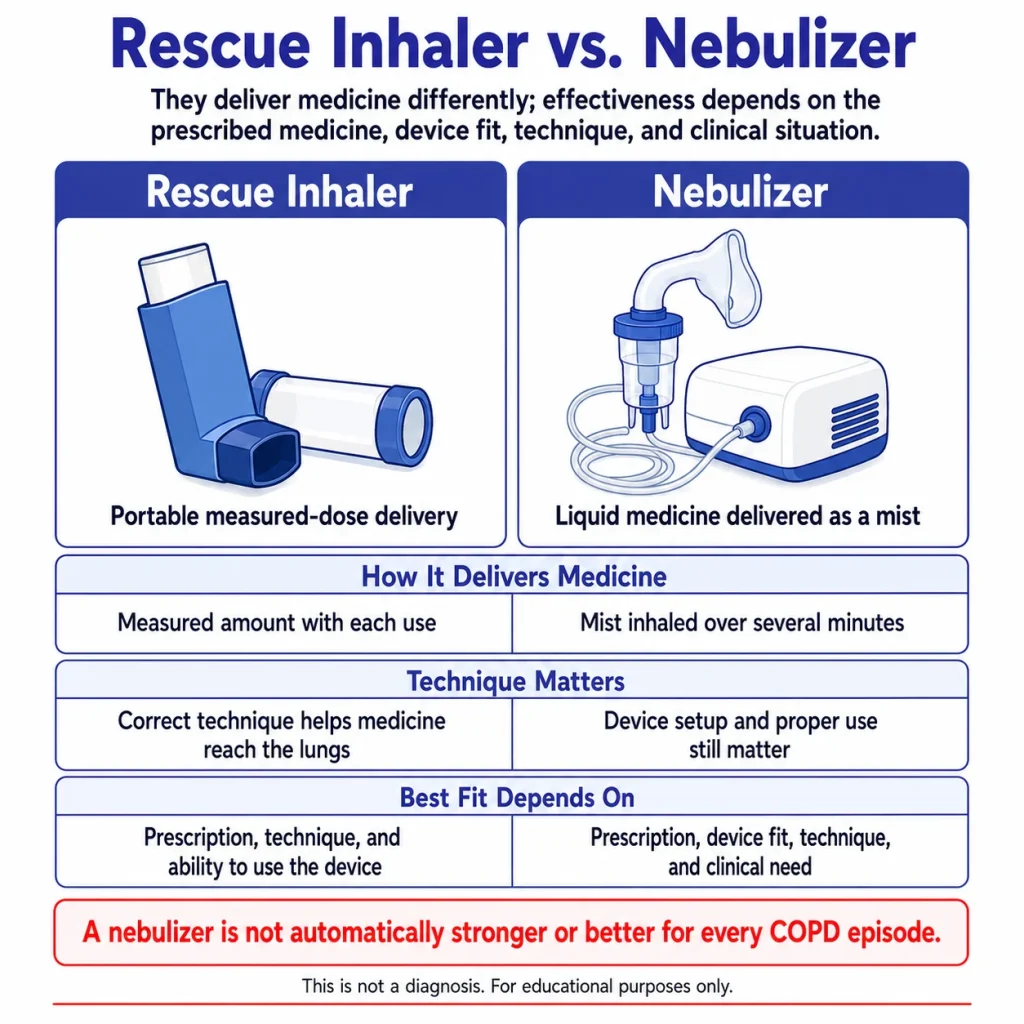
A rescue inhaler is a portable device that delivers a measured amount of medicine. Effective delivery depends partly on using the device correctly. Some metered-dose inhalers are prescribed with a spacer or holding chamber; the American Thoracic Society’s inhaler guidance explains how technique and a spacer can affect how much medicine reaches the lungs.
Nebulizer
A nebulizer uses a compressor and medication cup to turn liquid medicine into a mist that is inhaled through a mouthpiece or mask over several minutes. The American Thoracic Society’s nebulizer fact sheet notes that this delivery method can help some people who have difficulty using certain inhalers. A nebulizer is not automatically stronger or more effective for every person or every episode; the prescribed medicine, device fit, technique, and clinical situation all matter.
Signs That the Rescue Inhaler or Nebulizer May Not Be Enough
Little or No Improvement
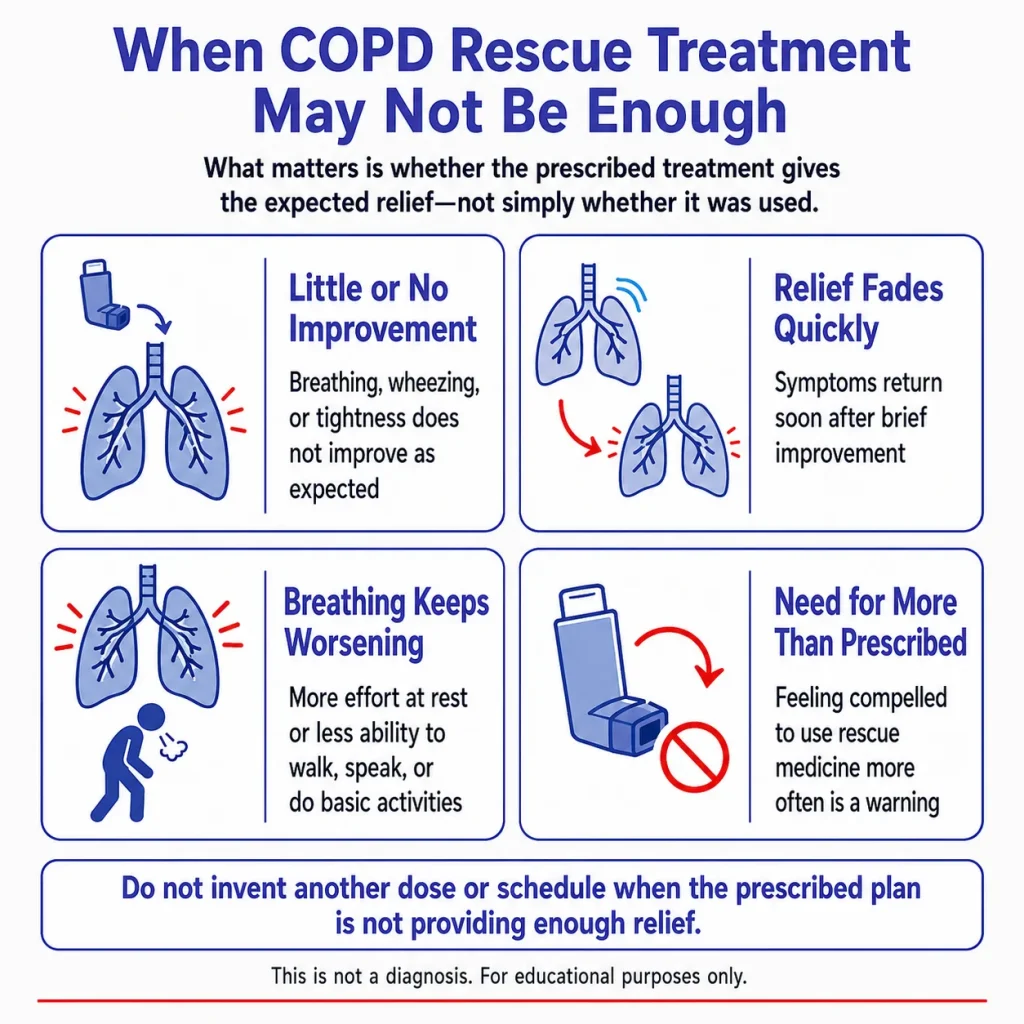
Breathing difficulty, wheezing, or chest tightness that does not improve as expected after following the prescribed rescue plan needs medical assessment. The lack of response is the warning; it is not a reason to invent another dose.
Relief Lasts Only a Short Time
Brief improvement followed by a rapid return of symptoms can mean the underlying problem is progressing. Pay attention to the direction of change, not only the few minutes immediately after treatment.
Breathing Continues to Worsen
Increasing effort to breathe, worsening breathlessness at rest, or declining ability to walk, speak, or complete basic activity despite prescribed treatment signals that home care may no longer be safe.
The Patient Feels a Need to Use More Than Prescribed
Feeling compelled to use rescue medication more often or in larger amounts than directed is itself a warning. The American Lung Association COPD Action Plan treats more frequent rescue use or medicine that is not helping as a reason to contact a provider, while severe symptoms fall into its red emergency zone. Seek professional guidance rather than changing the dose or schedule independently.
Why Rescue Treatment May Not Be Providing Relief
An inadequate response does not always mean the medication itself has failed. Medical evaluation may identify a different or more advanced problem, such as:
- A COPD exacerbation that is becoming more severe
- A respiratory infection or pneumonia
- Another cause of chest discomfort or breathing difficulty
- Difficulty delivering the medicine effectively because of technique
- An empty, blocked, damaged, or otherwise malfunctioning device or supply
- Symptoms not primarily caused by airway narrowing
These possibilities cannot be sorted out reliably by repeatedly trying treatment at home while breathing continues to worsen.
Can Albuterol or Another Rescue Medication Make Symptoms Feel Worse?
Rescue medicines such as albuterol can cause noticeable effects, including shakiness, nervousness, dizziness, or a faster heartbeat. MedlinePlus drug information for albuterol also identifies chest pain, a fast or irregular heartbeat, and increased difficulty breathing as potentially serious symptoms that require prompt medical guidance.
Do not stop, increase, or otherwise change a prescribed medication on your own. Follow the clinician’s instructions. New, severe, or persistent chest pain, fainting, a markedly rapid or irregular heartbeat sensation, or worsening breathing after treatment deserves urgent evaluation.
Warning Signs That Require Emergency Care
Treatment failure becomes an emergency decision when severe symptoms are present. The NHLBI COPD Caregiver’s Toolkit identifies hard, fast breathing despite COPD medicine, difficulty walking or finishing a sentence, very fast or irregular heartbeats, and gray or blue lips or fingernails as reasons to call 911.
- Severe or rapidly worsening breathing difficulty
- Visibly increased effort to breathe
- Difficulty speaking normally because of breathlessness
- Confusion, unusual drowsiness, or difficulty staying alert
- Bluish or grayish lips, skin, or fingernails
- New or concerning chest pain
- Symptoms that remain severe after the prescribed rescue plan was followed
- Serious or persistent symptoms that may represent a medication-related problem
Call 911 when the person is in severe respiratory distress, has altered awareness, or cannot be transported safely. Do not continue delaying emergency help while waiting for another home treatment to work.
What to Do When the Prescribed Rescue Plan Is Not Working
- Follow the existing clinician-directed COPD action plan.
- Do not improvise a new dose, frequency, or medication combination.
- Do not keep postponing evaluation while waiting for repeated treatments to provide relief.
- Seek professional assessment when relief is inadequate, short-lived, or accompanied by concerning symptoms.
- Call 911 for severe respiratory distress or another sign of instability.
Do not substitute home remedies, borrow another person’s inhaler, or use someone else’s nebulizer medication.
What the ER May Evaluate
Emergency clinicians assess both the severity of the breathing problem and why the usual rescue treatment did not provide enough relief. The evidence-based 2026 GOLD COPD report and pocket guide support individualized assessment because a COPD exacerbation can vary in cause and severity and may resemble or occur alongside other conditions.
- Vital signs, oxygen status, work of breathing, and alertness
- Heart and lung examination
- The medication used, how it was delivered, and what response occurred
- Chest imaging when clinically appropriate
- Laboratory testing when the findings may help guide care
- Assessment for a COPD exacerbation, infection, heart-related problem, or another cause
Supervised emergency treatment depends on the findings and may differ from the patient’s home rescue plan. Not every patient needs every test or treatment.
24/7 Emergency Evaluation at Post Oak ER
Post Oak ER provides 24/7 emergency care in Houston for COPD patients whose breathing remains difficult or continues to worsen despite following their prescribed rescue plan. Our emergency team can assess breathing and oxygen status, review possible medication-related concerns, and provide imaging, laboratory testing, or medically supervised respiratory treatment when clinically appropriate. If the person is struggling to breathe, becomes confused or unusually drowsy, develops bluish discoloration, or has serious chest symptoms, call 911 instead of continuing to repeat home treatment.
Frequently Asked Questions
How can I tell whether my COPD rescue inhaler is not working?
The main warning is inadequate or short-lived relief after you follow your prescribed rescue plan. Worsening breathing effort, reduced ability to speak or move normally, or severe symptoms after treatment require prompt assessment.
Is a nebulizer stronger than a rescue inhaler for COPD?
Not automatically. They are different delivery methods, and effectiveness depends on the prescribed medicine, device, technique, and the person’s condition. Use the method in your clinician-directed plan.
Can albuterol make COPD symptoms feel worse?
Albuterol can cause shakiness, nervousness, dizziness, or a faster heartbeat. Worsening breathing, chest pain, fainting, or a severe or irregular heartbeat sensation after use needs medical evaluation.
Should I use my rescue inhaler more often when symptoms do not improve?
Do not create a new schedule or take more than prescribed. Follow your COPD action plan and contact a clinician or seek emergency care based on the severity of your symptoms.
When should failed rescue treatment be evaluated in the ER?
Go for emergency evaluation when breathing remains severe, rapidly worsens, or is accompanied by difficulty speaking, confusion, unusual drowsiness, bluish or grayish color, or concerning chest symptoms. Call 911 if the person is unstable or cannot be transported safely.
What may the ER check when a COPD inhaler or nebulizer is not providing relief?
The team may assess vital signs, oxygen status, breathing effort, alertness, heart and lung findings, and the medication response. Imaging or laboratory tests may be used when needed to evaluate an exacerbation, infection, heart-related problem, or another cause.