
A forceful coughing spell can leave you lightheaded, unsteady, or suddenly on the floor. The experience is frightening, and the fall itself can cause harm. Coughing can briefly change pressure inside the chest and reduce the blood reaching the brain, but that mechanism should not be assumed without considering other causes.
MedlinePlus defines fainting, or syncope, as a brief loss of consciousness caused by reduced blood flow to the brain. Heart rhythm problems, neurologic conditions, breathing problems, medication effects, and other factors may also be involved. Actual loss of consciousness deserves particular attention, even when coughing clearly came first.
Why Can Coughing Make You Feel Dizzy or Faint?
A hard or repeated cough sharply raises pressure inside the chest. That pressure can temporarily reduce blood returning to the heart, lower cardiac output, and decrease blood flow to the brain. A peer-reviewed review of cough syncope describes this pressure-related circulation change as a leading explanation for cough-triggered loss of consciousness.
This is a possible mechanism, not a diagnosis. The meaning of the event depends on whether awareness was lost, how quickly the person recovered, accompanying symptoms, medical history, medications, injuries, and whether it has happened before.
Dizziness, Near-Fainting, and Passing Out Are Not the Same
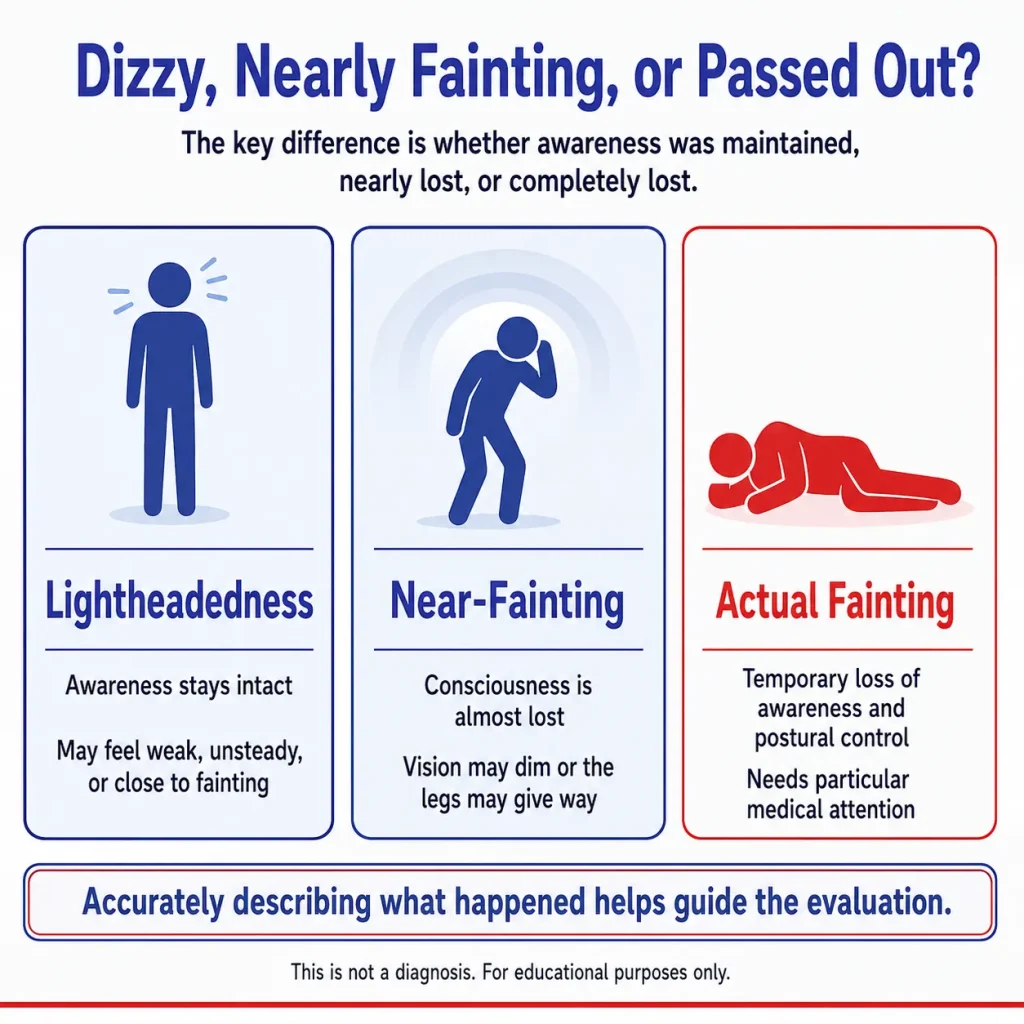
Describing the event accurately helps the medical team judge its urgency and choose an appropriate evaluation.
Lightheadedness After Coughing
Lightheadedness may feel like weakness, unsteadiness, or an approaching faint while awareness remains intact. Severe or repeated episodes, especially with other symptoms, warrant assessment. Post Oak ER’s guide to when dizziness needs emergency evaluation explains additional warning combinations.
Near-Fainting
Near-fainting means consciousness was almost lost. Vision may dim, sounds may fade, the legs may give way, or the person may need to sit or lie down immediately.
Actual Loss of Consciousness
Fainting includes a temporary loss of awareness and postural control. The American Heart Association notes that violent coughing can trigger situational syncope, but fainting can also signal an underlying condition and creates an immediate injury risk.
Immediate Safety After a Cough-Related Dizzy or Fainting Episode
Move away from hazards and sit or lie down. Do not resume driving, climbing, swimming alone, operating machinery, or working at height until the event has been appropriately evaluated. Check for head impact, bleeding, severe pain, or a possible fracture.
After a head impact, watch for worsening headache, repeated vomiting, unusual behavior, increasing confusion, weakness, slurred speech, marked drowsiness, or difficulty waking; the CDC lists these as danger signs after a possible traumatic brain injury. Post Oak ER also provides guidance on concussion symptoms that need ER care. If someone witnessed the episode, preserve their account of the coughing, collapse, movements, breathing, skin color, and recovery.
When Coughing and Dizziness Need Medical Evaluation
Arrange timely medical assessment when the symptom is new, keeps returning, causes near-fainting, or interferes with safe daily activity. A cough that persists, worsens, or comes with breathing difficulty, fever, chest symptoms, blood, or unexplained weakness also needs evaluation, even if consciousness was never fully lost.
Warning Signs That Require Emergency Evaluation
Actual Loss of Consciousness
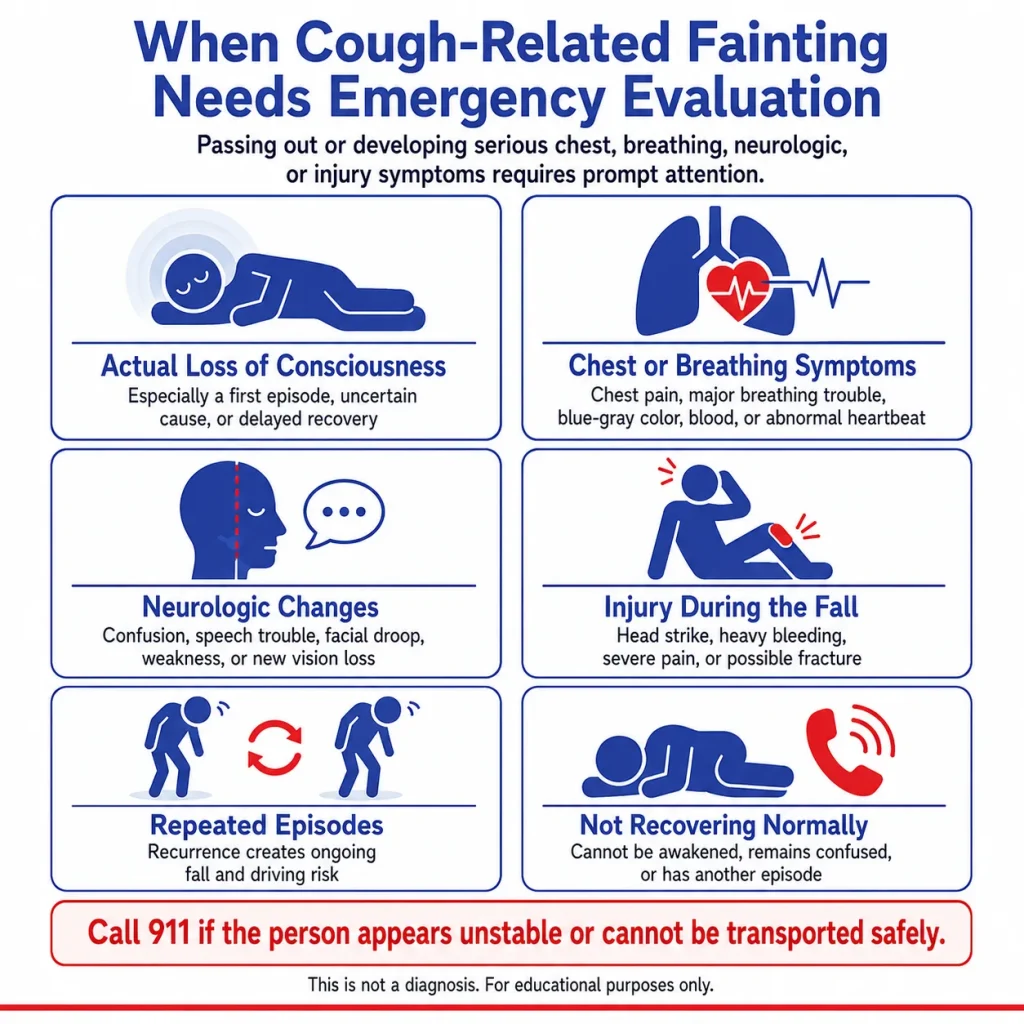
Go to the ER after passing out during or after coughing, particularly for a first episode, uncertain cause, delayed recovery, or significant medical history.
Chest or Breathing Symptoms
Emergency evaluation is appropriate when fainting or near-fainting occurs with chest pain, major breathing difficulty, blue or gray color, coughing blood, or a racing or irregular heartbeat. See Post Oak ER’s emergency chest-pain guidance for related warning patterns.
Neurologic or Mental-Status Changes
Prolonged confusion, trouble speaking, facial droop, one-sided weakness or numbness, new vision loss, severe imbalance, or failure to return to normal awareness requires emergency action. The CDC advises calling 911 for sudden stroke warning signs.
Injury During the Fall
A head strike, heavy bleeding, severe pain, deformity, inability to use a limb, or another potentially serious injury should be evaluated promptly.
Recurrent Episodes
Repeated cough-related fainting creates ongoing fall and driving risk. Recurrence may also reveal a heart, lung, neurologic, medication-related, or other problem that needs timely investigation.
When to Call 911
Call 911 if the person does not regain normal awareness promptly, cannot be awakened, has severe breathing difficulty or chest symptoms, develops a new neurologic change, sustains a significant injury, or has another episode before fully recovering. Emergency medical services are also appropriate when the person appears unstable or cannot be transported safely. Do not let the affected person drive.
How COPD May Be Relevant
COPD can involve an ongoing cough and periods of worsening respiratory symptoms, as described by the National Heart, Lung, and Blood Institute. However, COPD does not automatically explain dizziness or fainting. A person with COPD may still need assessment for respiratory compromise, a heart rhythm or circulation problem, a neurologic event, medication effects, injury, or another contributor.
What an Emergency Evaluation May Include
The evaluation is guided by what happened before, during, and after the episode. The ACC/AHA/HRS syncope guidance emphasizes a detailed history, physical examination, and resting ECG in the initial assessment; broad routine testing is not useful for every patient.
Depending on the findings, care may include vital signs and oxygen assessment; heart, lung, and neurologic examinations; medication and health-history review; evaluation of fall injuries; heart testing; laboratory work; or imaging. Not every patient needs every test. The goal is to assess immediate risk, investigate the fainting event, and determine whether further care is needed.
Information That Can Help the Medical Team
Share the most specific timeline possible, including:
- What triggered the cough and whether awareness was completely lost
- How long the event appeared to last and what the person looked like
- How quickly normal awareness returned
- Any chest, breathing, heartbeat, or neurologic symptoms
- Any fall, head strike, bleeding, or other injury
- Previous episodes, current medications, and relevant medical conditions
24/7 Emergency Evaluation in Houston
Post Oak ER provides 24/7 emergency care in Houston for fainting, near-fainting, breathing difficulty, and injuries that occur during a coughing episode. Based on the clinical findings, the emergency team can assess cardiovascular, neurologic, and respiratory concerns and provide laboratory testing, emergency imaging, heart evaluation, or injury assessment when appropriate. Call 911 if the person remains confused, has severe chest or breathing symptoms, sustains a serious injury, or does not recover normally after passing out.
Frequently Asked Questions
Why can forceful coughing make someone dizzy?
A forceful cough can temporarily raise pressure in the chest and reduce blood returning to the heart. That can briefly decrease blood flow to the brain, causing lightheadedness or, in some people, fainting.
What is cough syncope?
Cough syncope is a brief loss of consciousness associated with coughing. The label describes the event, but a clinician still needs to consider other possible causes of fainting.
Is passing out from coughing dangerous?
It can be. Even a brief episode may cause a fall, crash, or other injury, and the loss of consciousness may have a cause that needs medical evaluation.
When should coughing-related dizziness be evaluated in the ER?
Use the ER for actual fainting, severe or repeated near-fainting, delayed recovery, chest pain, significant breathing difficulty, palpitations, neurologic changes, or an injury. Call 911 if the person is unstable or cannot be transported safely.
Can COPD cause someone to faint while coughing?
COPD can be associated with forceful or persistent coughing, which may be the immediate trigger. It should not be assumed to be the full explanation; other respiratory, cardiac, neurologic, medication-related, and injury concerns may still require assessment.
What information should a witness record after a coughing-related fainting episode?
Record what happened before the cough, whether awareness was fully lost, the apparent duration, movements or color changes, any injury, and how quickly the person returned to normal. Note chest, breathing, heartbeat, or neurologic symptoms as well.