

Pain along just one side of your neck can feel unusually specific: Why the left? Why the right? Yet the side itself rarely reveals the cause. A more useful starting point is whether the discomfort followed sleep or movement—and whether headache, arm symptoms, swallowing trouble, fever, or injury appeared with it.
Does It Matter Whether Neck Pain Is on the Left or Right Side?
One-sided neck pain is discomfort concentrated mainly on the left or right, rather than across the whole neck. Muscles, joints, and nerves can produce symptoms on either side. As the National Library of Medicine explains, neck pain can arise from several different structures; its precise location cannot identify which one is responsible. How suddenly it started, whether it is worsening, and whether normal movement or function has changed generally tell you more.
What Can Cause Pain on Only One Side of the Neck?
Muscle Tension, Sleeping Position, or Minor Strain
An awkward sleeping position, hours leaning toward a screen, or a sudden head turn may irritate muscles on one side. The pain may feel tight or sore and become more noticeable when you look over a shoulder. A familiar movement-related ache is often less concerning than pain accompanied by new symptoms, but ‘I must have slept wrong’ is not a reliable explanation for rapidly worsening discomfort.
Neck Joint Irritation or Referred Pain
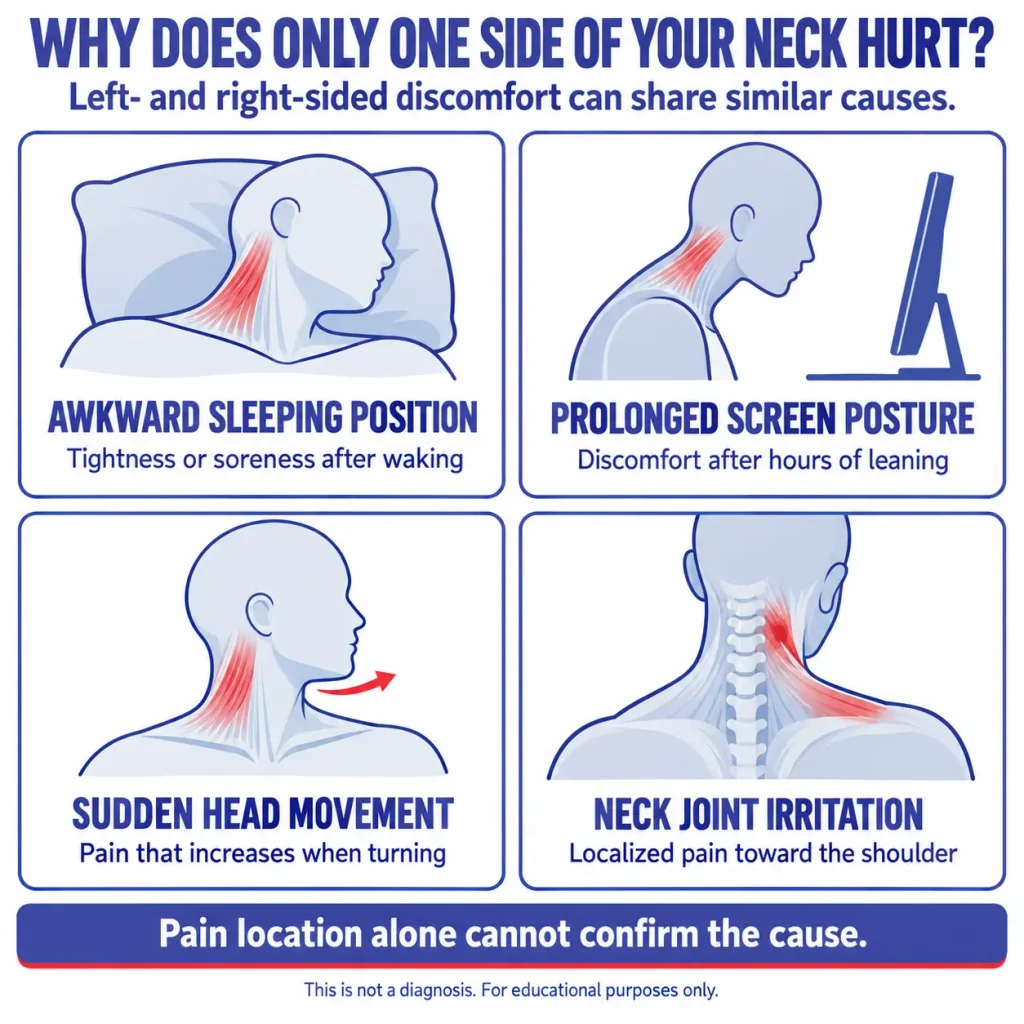
Irritated neck joints can also produce localized pain. Sometimes discomfort is felt toward the shoulder or nearby areas rather than exactly where it begins. Symptoms that do not fit a simple strain warrant an assessment of the broader pattern, not an attempt to pinpoint a diagnosis from the side alone.
Is Left-Sided Neck Pain Different From Right-Sided Neck Pain?
What Left-Sided Neck Pain May Mean
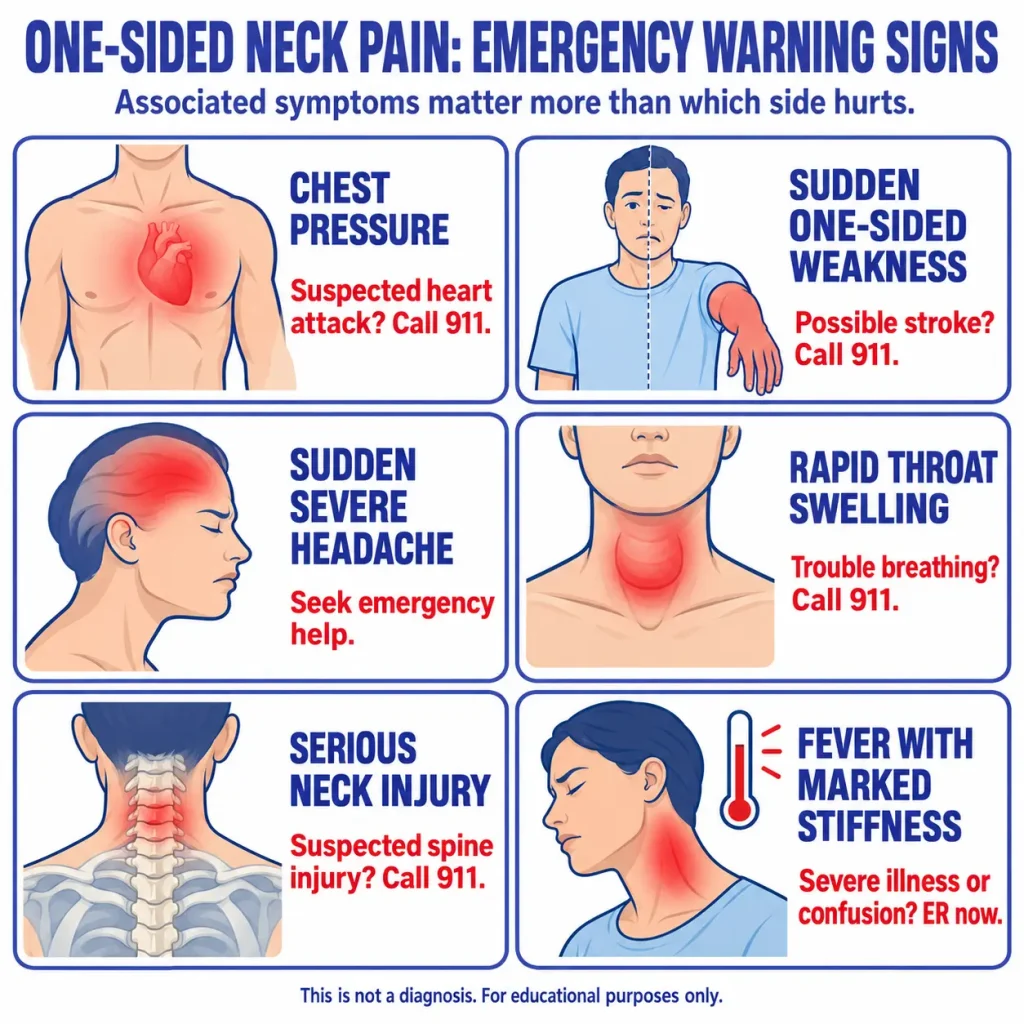
Left-sided neck pain commonly has the same muscular or joint-related explanations as right-sided pain. It does not, by itself, mean a heart problem. The situation changes when neck discomfort accompanies chest pressure, breathlessness, sweating, or nausea: the American Heart Association’s heart attack warning signs include neck discomfort among possible symptoms. Call 911 if a heart attack is suspected.
What Right-Sided Neck Pain May Mean
Right-sided pain is not inherently safer or more dangerous. A right-sided ache after a long workday may be muscular, while right-sided pain with sudden weakness, an unusual headache, swallowing difficulty, or a significant injury deserves assessment on the same terms as left-sided pain.
What Symptoms Make One-Sided Neck Pain More Concerning?
One-Sided Neck Pain With Arm Pain, Tingling, or Weakness
Pain reaching the shoulder or arm, or new tingling and numbness, may suggest irritation of a neck nerve. Reduced grip strength or worsening arm weakness needs prompt medical assessment; Post Oak ER’s arm weakness guide addresses those changes in more detail. Sudden weakness affecting one side of the body—especially with facial drooping or speech trouble—is a possible stroke: call 911.
One-Sided Neck Pain With a Severe Headache
A headache that begins abruptly, is exceptionally severe, or feels unlike previous headaches changes the urgency. Uncommonly, a problem involving an artery in the neck can cause neck pain and headache, as described by the American Heart Association’s cervical artery dissection guidance. The CDC’s stroke warning signs include sudden severe headache, vision changes, speech difficulty, and weakness. Seek emergency help for these features; for additional context, see the facility’s headache emergency guide.
One-Sided Neck Pain With Swallowing Difficulties or Neck Swelling
Painful swallowing, a new lump, or swelling near the throat may reflect an issue outside the neck muscles, including infection or inflammation. Rapidly increasing swelling, drooling because saliva cannot be swallowed, or breathing difficulty requires emergency help. The NHS guidance on serious throat symptoms identifies these as immediate warning signs.
One-Sided Neck Pain After a Fall, Collision, or Sudden Injury
A vehicle collision, fall, sports impact, or forceful twist raises concern even when pain is mostly on one side. Severe neck pain, tenderness over the spine, or new numbness or weakness after trauma needs emergency evaluation. If a serious spinal injury is possible, call 911 and avoid moving or straightening the neck; this follows MedlinePlus spinal-injury first-aid guidance.
When Should You Seek Medical Care for One-Sided Neck Pain?
When Emergency Care Is Necessary
Call 911 for stroke-like changes, suspected heart attack, serious breathing difficulty, or a major injury with possible spinal damage. A sudden, explosive headache; rapidly worsening neck swelling with inability to swallow saliva; or rapidly progressing loss of strength or coordination also requires emergency evaluation. Fever with marked neck stiffness, severe headache, or confusion can indicate a serious infection; the CDC identifies bacterial meningitis as a medical emergency.
When Prompt Medical Assessment Is Appropriate
Arrange timely medical evaluation when one-sided pain persists or worsens, limits everyday activity, or comes with new arm tingling or numbness. Fever, painful swallowing, or unexplained swelling should also be checked rather than treated as an ordinary muscle strain. The facility’s fever emergency guidance explains additional combinations that should not wait.
When One-Sided Neck Pain May Be Less Urgent
Mild pain linked to posture or a particular movement may be less urgent if there was no significant injury and there are no neurological, fever-related, headache, swallowing, or breathing symptoms. Some uncomplicated muscular pain settles with time. If the pattern changes or improvement does not follow, get reassessed rather than relying on the original explanation.
How Do Doctors Evaluate One-Sided Neck Pain?
Understanding the Pain and Accompanying Symptoms
A clinician will ask where the pain is felt, how it began, what makes it worse, and whether it travels elsewhere. Recent activity or trauma, fever, headache, swallowing changes, and arm symptoms help distinguish a likely musculoskeletal problem from one needing urgent investigation.
Physical Examination and Further Testing When Needed
The examination may include neck tenderness and movement, arm strength and sensation, and checks of the throat or other areas when indicated. An isolated one-sided ache does not automatically require a scan. RadiologyInfo’s summary of imaging appropriateness criteria explains why imaging depends on the clinical scenario; trauma, neurological deficits, or suspected infection may change the choice of tests.
Emergency Evaluation for Concerning Neck Pain in Houston
For patients near the Galleria and Uptown, Post Oak ER’s 24/7 emergency care team evaluates concerning neck pain in adults and children without an appointment. Emergency physicians can assess sudden neurological changes, severe headaches, major injuries, or possible serious infections and determine whether on-site CT, X-ray, ultrasound, laboratory testing, or additional care is appropriate. For a broader discussion of emergency warning signs, see Post Oak ER’s neck pain ER guide.
Frequently Asked Questions
Why does only one side of my neck hurt?
A muscle or joint on one side may be irritated by posture, sleep, or movement. Location alone cannot confirm the cause, especially when the pain is unusual or changing.
Is neck pain on the left side more serious than pain on the right?
No. Neither side is automatically more dangerous. Associated chest symptoms, neurological changes, injury, or other warning signs matter more than left versus right.
Can sleeping in the wrong position cause one-sided neck pain?
Yes. Sleeping with the neck awkwardly positioned can leave one side tight or sore. New weakness, fever, severe headache, or worsening symptoms need a different assessment.
Why does one-sided neck pain sometimes travel into the shoulder or arm?
Neck structures, including nerves, can produce pain felt beyond the neck. Tingling, numbness, or reduced strength can help a clinician decide whether nerve involvement is likely.
When is one-sided neck pain with a headache an emergency?
A sudden, extremely severe headache, especially with vision changes, confusion, weakness, or speech difficulty, warrants emergency help. Do not assume it is a strained muscle.
Can one-sided neck pain be related to swallowing problems?
Yes. A throat or nearby tissue problem can cause neck discomfort and painful swallowing. Trouble breathing, rapid swelling, or inability to swallow saliva requires immediate emergency assistance.
When should I go to the ER for pain on one side of my neck?
Go for emergency evaluation after serious trauma or when pain comes with severe headache, major neurological symptoms, significant infection signs, or airway concerns. Call 911 for suspected stroke, breathing compromise, or serious spinal injury.