
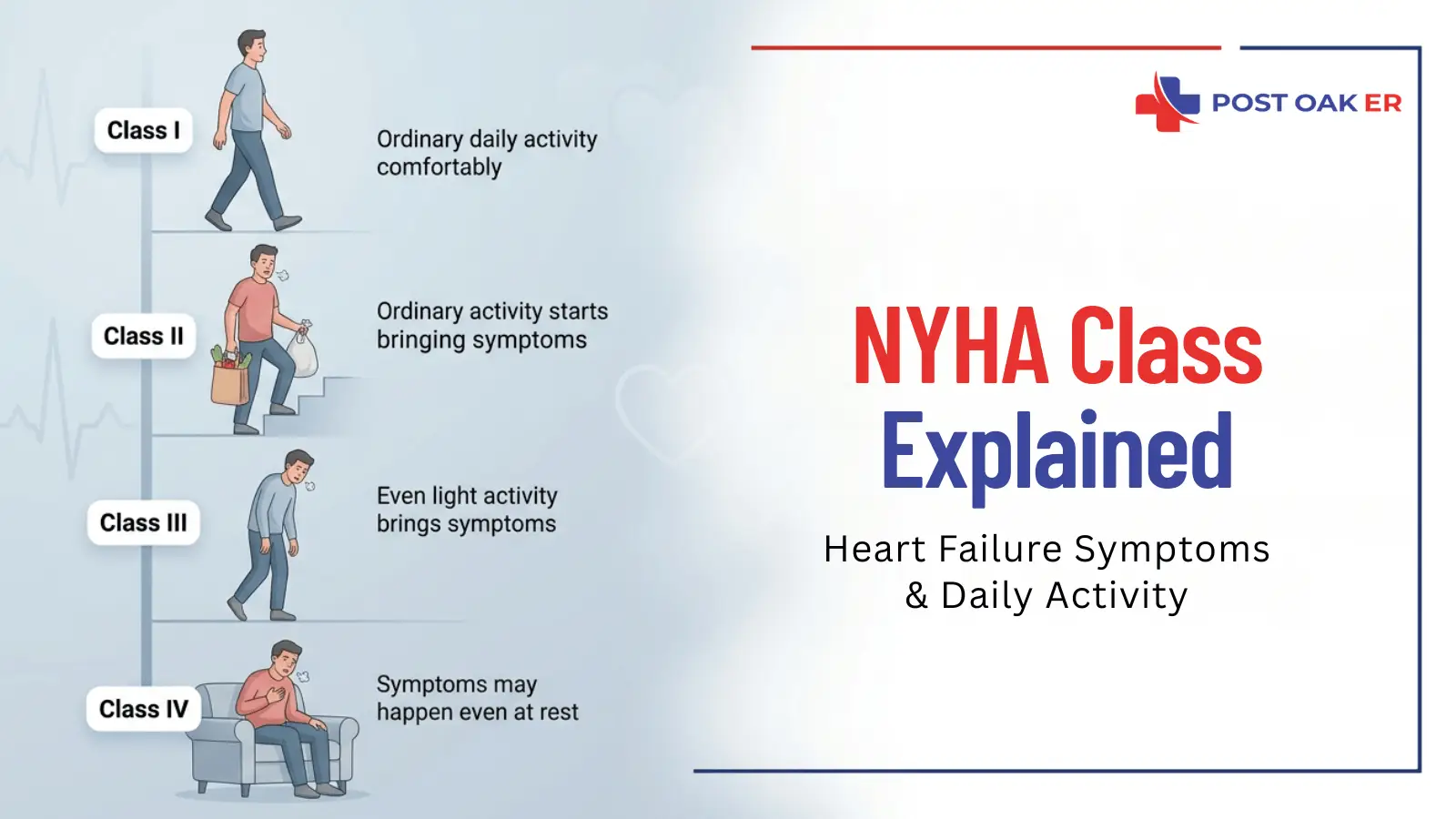
NYHA class is a way doctors describe how much heart failure symptoms limit daily activity. It is not based on one blood test, one scan, or one number alone. Instead, it focuses on what a person can do before symptoms such as shortness of breath, fatigue, palpitations, or chest discomfort begin.
For patients and families in Houston, this can make heart failure conversations easier to understand. If someone is told they are NYHA Class II, III, or IV, the class helps describe how symptoms are affecting real life: walking, climbing stairs, getting dressed, doing chores, and resting. It is meant to guide care, not scare the patient.
Key Takeaways
- NYHA class describes how heart failure symptoms affect daily activity and comfort at rest.
- Class I means ordinary activity does not cause unusual symptoms.
- Class II means normal daily activity can trigger symptoms.
- Class III means lighter activity can bring symptoms.
- Class IV means symptoms may happen even at rest.
- NYHA class can change if symptoms improve or worsen.
- NYHA class is different from heart failure stage and ejection fraction.
- Severe shortness of breath, chest pain, fainting, blue or gray lips, confusion, or sudden worsening should be treated as urgent.
What NYHA Class Means
NYHA stands for New York Heart Association. The NYHA system places people with heart failure into four classes based on symptoms and physical activity limits. The main question is simple: how much activity can this person do before symptoms start?
This is why NYHA class is called a functional classification. It connects the medical condition to daily function. A person’s class can help the care team understand whether heart failure is stable, improving, or getting worse over time.
NYHA Class I: No Symptoms With Ordinary Activity
In NYHA Class I, ordinary activity does not cause unusual symptoms. A person may be able to walk around the house, run errands, do light chores, or climb stairs without unusual fatigue, shortness of breath, palpitations, or chest discomfort.
This does not mean the heart is perfect or that treatment no longer matters. It means symptoms are not limiting normal activity at that time. Follow-up, medications, blood pressure control, lifestyle guidance, and risk-factor management may still be important.
NYHA Class II: Symptoms With Normal Daily Activity
In NYHA Class II, the person is usually comfortable at rest, but normal physical activity may bring symptoms. That may include shortness of breath, fatigue, palpitations, or chest discomfort during activities that used to feel routine.
For example, climbing stairs may feel harder, carrying groceries may require more effort, brisk walking may bring on breathlessness, or household chores may require more breaks. Class II symptoms should be discussed with a clinician, especially if they are new, worsening, or limiting normal routine more than before.
NYHA Class III: Symptoms With Light Activity
In NYHA Class III, the person may still feel comfortable at rest, but less-than-ordinary activity can trigger symptoms. This class usually reflects a more noticeable daily limitation than Class II.
Practical examples may include getting short of breath while dressing, needing rest after showering, feeling exhausted after light cleaning, or struggling to walk short distances. Merck’s NYHA examples include symptoms during lower-intensity activities such as showering, dressing, moderate household cleaning, slow stair climbing, or slower walking.
When symptoms reach this level, the care plan may need closer review. That does not always mean an emergency is happening, but it does mean the symptom pattern should not be ignored.
NYHA Class IV: Symptoms Even at Rest
NYHA Class IV means symptoms may happen even at rest, and any physical activity can make discomfort worse. A person may feel short of breath, weak, or uncomfortable while sitting or lying down, not only during movement.
This class needs close medical management, but it should not be treated as a life-expectancy label by itself. NYHA Class IV describes symptom burden and activity limitation. It does not replace a full evaluation, prognosis discussion, or care plan from the medical team.
NYHA Class vs. Heart Failure Stage
NYHA class and heart failure stage are easy to confuse, but they are not the same thing. NYHA classes are I, II, III, and IV. ACC/AHA heart failure stages are A, B, C, and D. The American Heart Association explains that people in stage C or D heart failure may also receive an NYHA Functional Classification to describe symptoms and function.
A simple way to remember it is this: Stage describes the disease path. Class describes how the patient feels and functions. Both can be useful, but they answer different questions.
NYHA Class vs. Ejection Fraction
NYHA class is also different from ejection fraction. Ejection fraction measures how much blood the left ventricle pumps out with each beat. NYHA class describes symptoms and activity limits.
A person’s daily symptoms do not always match one number perfectly. Some people have reduced ejection fraction and fewer symptoms. Others may have preserved ejection fraction and still experience heart failure symptoms such as shortness of breath, fatigue, or fluid buildup.
Can NYHA Class Improve or Get Worse?
Yes. NYHA class can change over time. It may improve when treatment is working, fluid is better controlled, medications are adjusted, cardiac rehab helps build safer activity tolerance, or lifestyle changes support the heart. It may worsen if fluid builds up, heart failure progresses, medications are missed, infection develops, kidney problems add strain, or another medical issue affects the body.
Signs Your Heart Failure Symptoms Are Getting Worse
Worsening heart failure symptoms may include more shortness of breath, needing more pillows to sleep, waking up breathless, swelling in the legs, ankles, feet, or belly, sudden weight gain, worsening fatigue, new dizziness, fainting, or less ability to do normal activities.
These changes do not always mean the person has moved into a different NYHA class, but they are important. If symptoms are gradually worsening, the care team may need to review medications, fluid status, blood pressure, kidney function, diet, activity level, and follow-up timing.
When to Go to the ER or Call 911
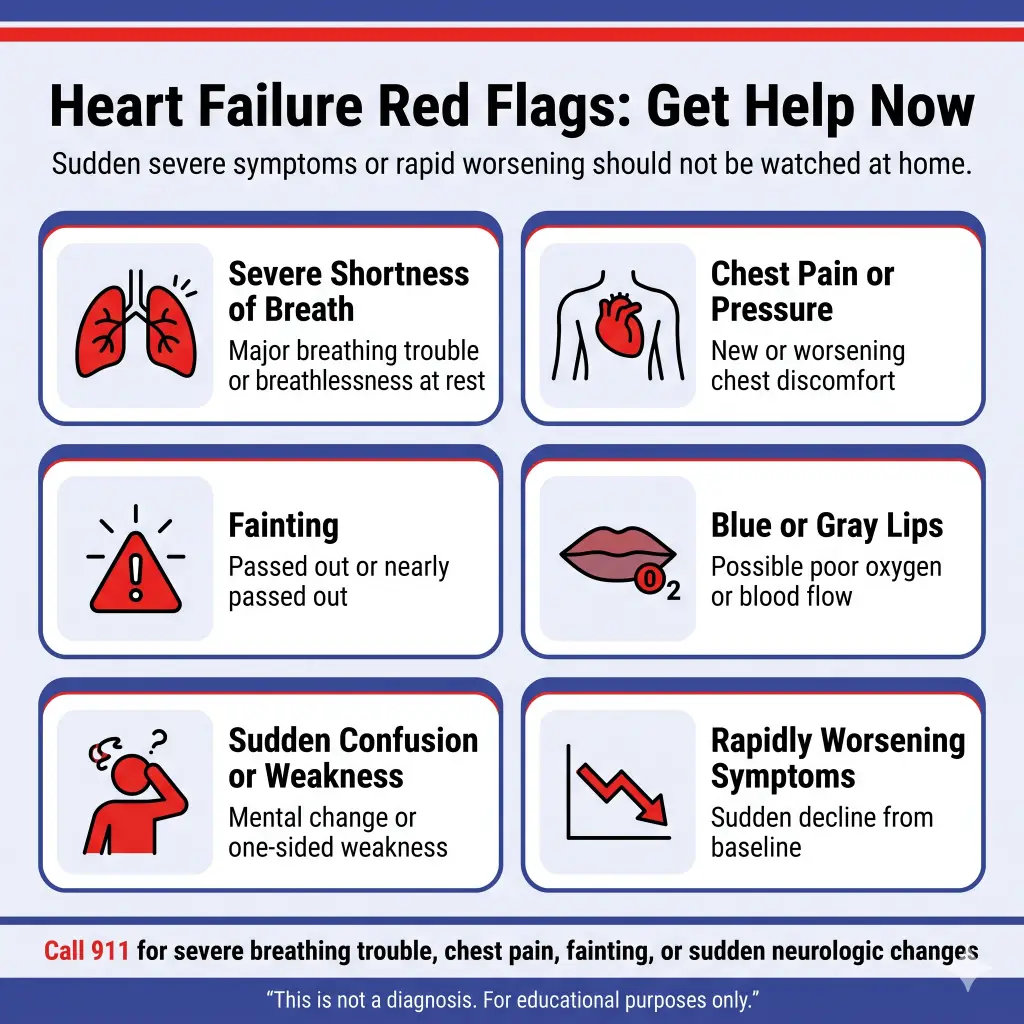
Go to the ER or call 911 right away for severe shortness of breath, chest pain or pressure, fainting, blue or gray lips, sudden confusion, sudden weakness, breathing trouble at rest that feels severe, symptoms that rapidly worsen, or symptoms that feel like a heart attack or stroke. Mayo Clinic notes that heart failure can cause fluid buildup, shortness of breath, swelling, and blue or gray skin color from poor blood flow.
If you are in Houston and heart failure symptoms suddenly worsen, or you develop chest pain, major breathing trouble, fainting, or sudden confusion, Post Oak ER is open 24/7 for prompt emergency evaluation. The American Heart Association’s emergency guidance is clear: If these warning signs are present, call 911.
What to Ask Your Doctor About Your NYHA Class
Once you understand the basic classes, the next step is to ask practical questions. These can help you have a more useful conversation with your clinician:
- Which NYHA class am I in right now?
- Has my class changed since my last visit?
- What symptoms should I track at home?
- What activity level is safe for me?
- Should I change my fluid or salt plan?
- Do my medications need review?
- Should I consider cardiac rehab?
- When should I call the office versus go to the ER?
The goal is not to memorize a label. The goal is to understand what your symptoms mean, what your current limits are, and what changes should trigger a call, appointment, or emergency evaluation.
NYHA Classes at a Glance
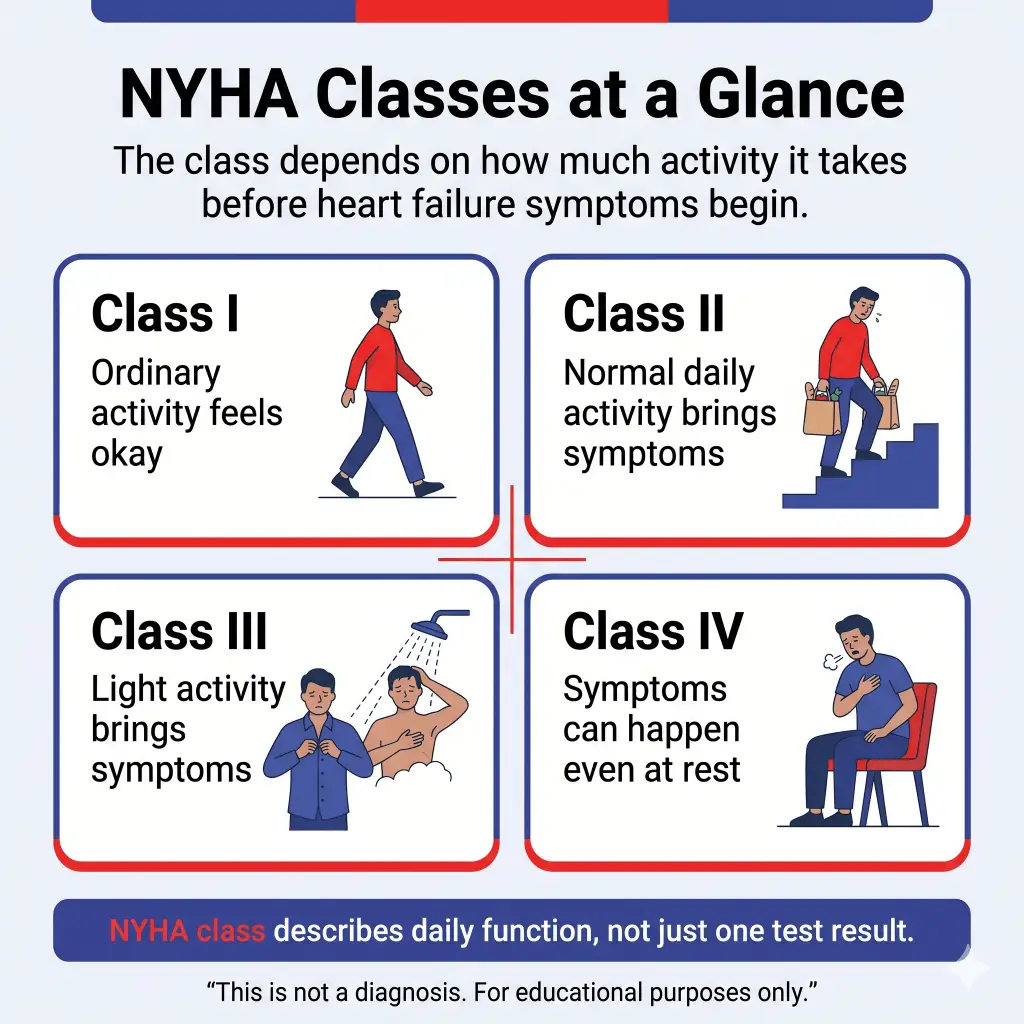
Here is a simple way to remember the four NYHA classes:
- Class I: Ordinary activity feels okay.
- Class II: Ordinary activity brings symptoms.
- Class III: Light activity brings symptoms.
- Class IV: Symptoms can happen even at rest.
This summary is helpful, but it should not replace medical advice. Two people with the same NYHA class may still have different test results, treatment plans, risk factors, and follow-up needs.
NYHA class is not meant to frighten patients. It is a way to describe how heart failure feels in daily life. Understanding the class can help patients and families track symptoms, ask better questions, and respond quickly when symptoms suddenly become severe.
Frequently Asked Questions
What does NYHA class mean in heart failure?
NYHA class describes how much heart failure symptoms limit physical activity. It helps explain whether symptoms happen with ordinary activity, lighter activity, or even at rest.
Is NYHA Class I still heart failure?
It can be. Class I means ordinary activity does not cause unusual symptoms, but a person may still have a heart condition that needs treatment, monitoring, and follow-up.
What daily activities become hard in NYHA Class II?
In Class II, ordinary activities may become harder. Examples can include climbing stairs, brisk walking, carrying groceries, or doing household chores without needing extra breaks.
How is NYHA Class III different from Class IV?
Class III means symptoms happen with light activity, but the person may still feel comfortable at rest. Class IV means symptoms can happen even while resting, and physical activity may make symptoms worse.
Is NYHA class the same as heart failure stage?
No. NYHA class describes symptoms and activity limits. Heart failure stage describes where someone is in the disease process. A person may hear both systems during heart failure care.
Is NYHA class the same as ejection fraction?
No. Ejection fraction is a pumping measurement. NYHA class is about symptoms and daily function. Both can matter, but they are not the same thing.
Can NYHA class improve with treatment?
Yes. NYHA class can improve if symptoms improve with treatment, fluid control, medication adjustments, cardiac rehab, or other care changes. It can also worsen if symptoms progress.
When should someone with heart failure go to the ER?
Someone with heart failure should go to the ER or call 911 for severe shortness of breath, chest pain, fainting, blue or gray lips, sudden confusion, sudden weakness, or symptoms that rapidly worsen.