

A fall or crash can leave your neck sore, even when you can stand and talk. Soreness alone cannot show whether the injury involves muscles, bones, ligaments, nerves, or the spinal cord. What matters is whether the circumstances and symptoms suggest a serious injury.
After significant trauma, call 911 for severe neck pain, weakness, numbness, confusion, or trouble moving normally. Do not test the neck by turning it. For pain without a clear injury, Post Oak ER explains when neck pain warrants emergency care.
Why Does a Neck Injury After a Fall or Crash Need Careful Assessment?
An impact may strain muscles, damage ligaments or bones, or affect nerves and the spinal cord. One person may have a simple cervical strain; another may need testing to exclude fracture or instability.
The force of impact is not a diagnosis. Clinicians consider the accident, neck tenderness, alertness, neurological findings, and other injuries. The American Association of Neurological Surgeons describes spinal cord warning signs that can follow accidents and falls, including new changes in strength or sensation.
What Should You Do Immediately After a Neck Injury?
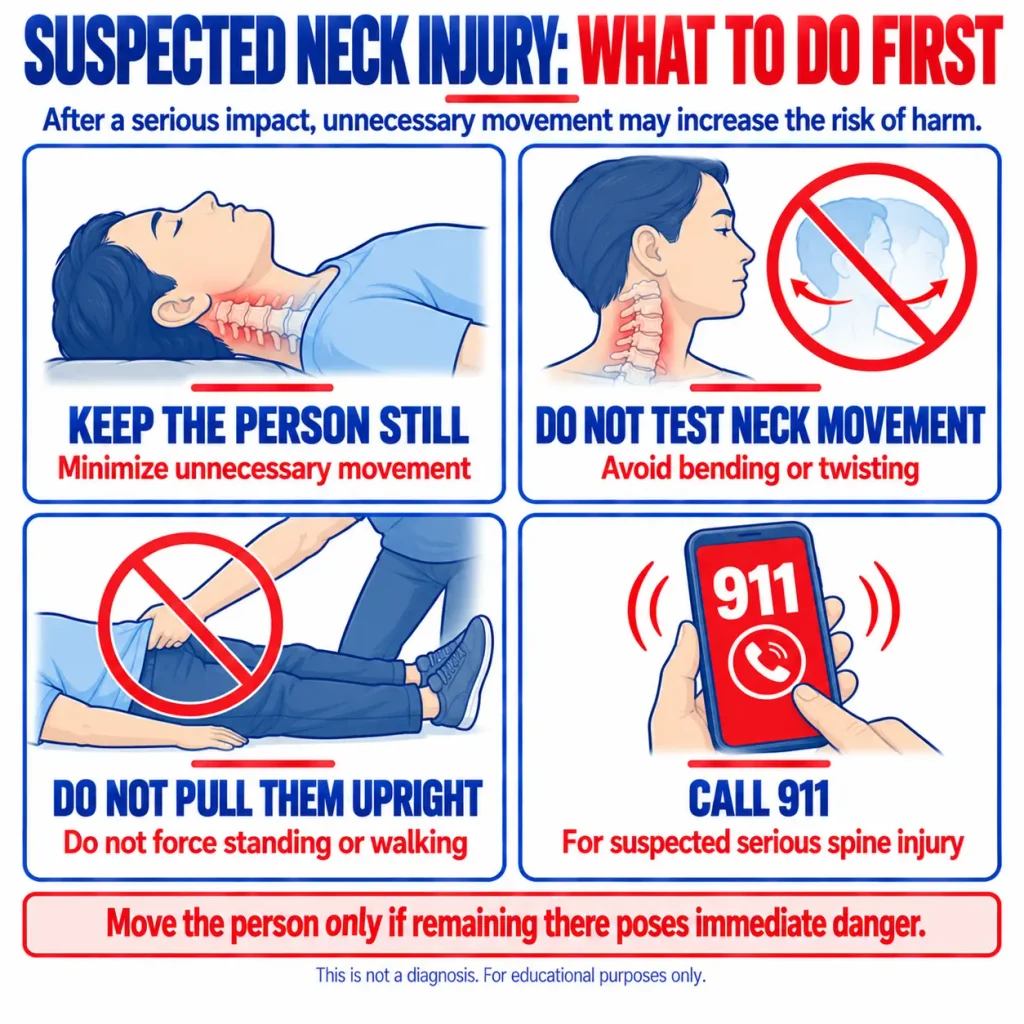
Avoid Unnecessary Neck Movement When a Serious Injury Is Possible
If the fall, crash, or symptoms suggest a significant spine injury, ask the person to remain as still as reasonably possible. Do not straighten their head, stretch the neck, remove protective equipment, or ask them to look over each shoulder. Avoid pulling them to their feet. The MedlinePlus first-aid guidance for suspected spinal injury advises against moving an injured person unless it is necessary for immediate safety.
Bystanders should not fit a neck brace or attempt to “clear” the injury. Emergency responders can manage movement and transport precautions.
When Should You Call 911 Instead of Driving?
Call 911 after a high-impact event or whenever there is suspected spine injury, severe midline neck pain, new arm or leg weakness, numbness, difficulty walking, loss of consciousness, or confusion. Keep the person still while help arrives unless remaining there presents immediate danger, such as fire. The American Heart Association and American Red Cross first-aid recommendations support activating emergency services and minimizing movement for suspected spinal injury.
What Symptoms After Neck Trauma May Indicate a More Serious Injury?
Neck Pain, Tenderness, or Difficulty Moving
Soreness, stiffness, and limited motion may follow minor or serious injuries. Tenderness directly over the middle of the neck is especially relevant; diffuse muscle tightness is less specific. Modest pain does not exclude injury.
Numbness, Tingling, or Weakness in the Arms or Legs
New pins-and-needles sensations, reduced feeling, trouble gripping, or weakness after trauma can indicate nerve or spinal cord involvement. The National Institute of Neurological Disorders and Stroke includes sensory change and loss of strength among signs of spinal cord injury. Treat new or worsening symptoms as an emergency rather than waiting to see whether they disappear.
Balance Problems or Difficulty Walking After an Injury
New stumbling, poor coordination, or legs that do not respond normally may be neurological warning signs. Do not ask an injured person to walk across the room to demonstrate what is wrong. Such changes call for emergency assessment.
Other Concerning Symptoms After a Fall or Crash
Confusion, fainting, a significant headache, breathing difficulty, or a major injury elsewhere can change how clinicians assess the neck. Someone who is intoxicated, disoriented, or distracted by another painful injury may be unable to report neck symptoms accurately. The NICE guidance on initial spinal injury assessment specifically accounts for alertness, other injuries, and neurological findings.
Does the Type of Fall or Crash Affect the Need for Emergency Imaging?
Neck Injuries After a Fall
Clinicians ask how far the person fell, where they landed, whether the head struck anything, and what happened immediately afterward. A fall from a height increases concern, but a ground-level fall can also cause significant injury, particularly in older adults or people with conditions that make the spine more vulnerable.
Neck Injuries After a Vehicle Collision
Impact direction, rollover, ejection, and vehicle damage help describe the forces involved. Some crashes cause temporary soft-tissue pain; others require urgent assessment. Calling symptoms “whiplash” should not dismiss tenderness or neurological changes.
Why the Injury Mechanism Alone Does Not Decide Whether Imaging Is Needed
Two people in similar accidents may need different care because their age, symptoms, examination findings, and medical history differ. This is why emergency imaging is not automatic after every crash—and why a seemingly small impact cannot always be dismissed.
How Do Emergency Doctors Evaluate a Neck Injury?
Reviewing How the Injury Happened
A physician asks about the impact, symptom timing, and subsequent changes. Previous neck surgery, spinal disease, medications, and other conditions may affect the assessment.
Checking Neck Tenderness and Neurological Function
The examination may include checking for midline cervical tenderness, testing arm and leg strength and sensation, and assessing alertness and other injuries. Neck movement is assessed only when the clinician judges that it is safe. As the National Institutes of Health explains in its spinal injury diagnostic overview, the history of the accident and tests of movement and sensation help guide evaluation.
How Doctors Decide Whether Cervical Spine Imaging Is Necessary
Trained clinicians may use validated assessment frameworks, including NEXUS criteria or the Canadian C-Spine Rule, in patients for whom those tools are appropriate. These consider findings such as tenderness, neurological symptoms, alertness, and the mechanism of injury. Their purpose is to help identify patients who can be safely evaluated without imaging, not to encourage patients to apply a checklist to themselves.
When Is a CT Scan, X-Ray, or MRI Needed After Neck Trauma?
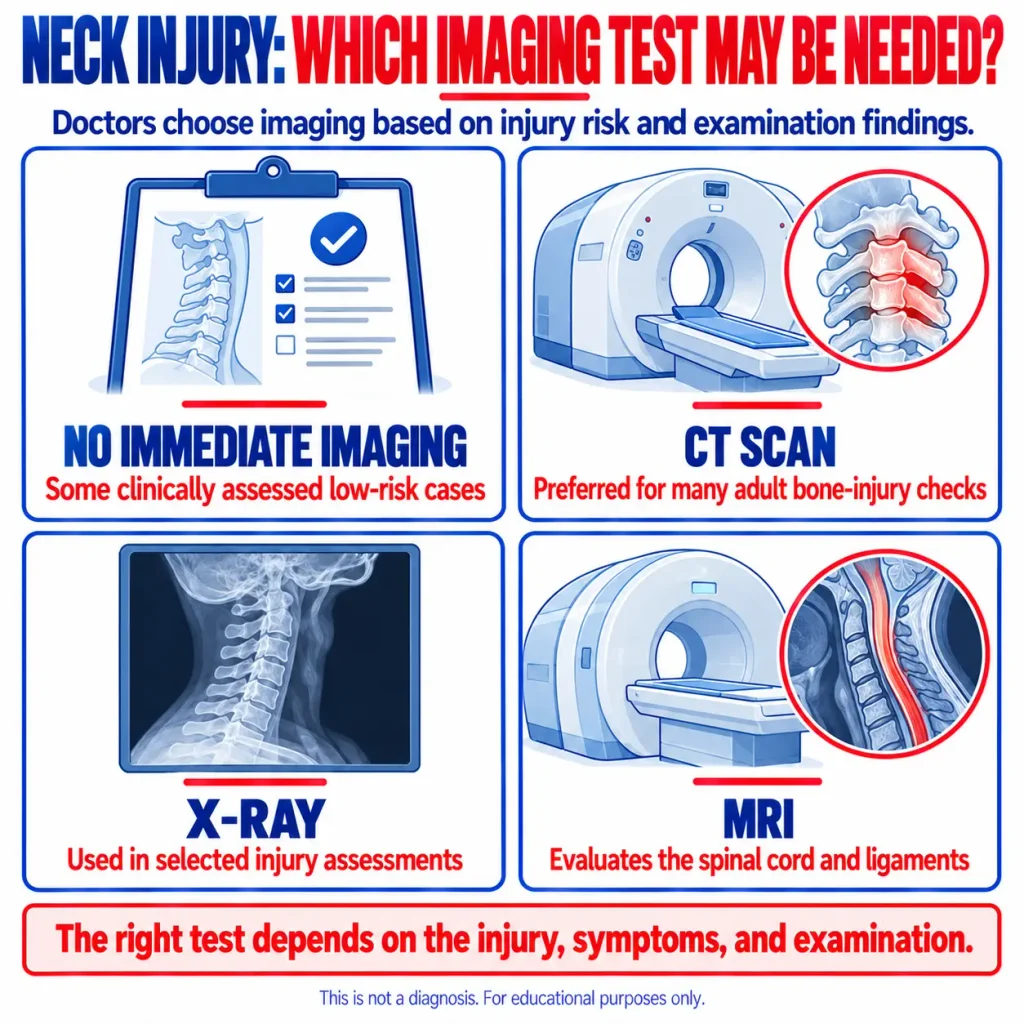
When Imaging May Not Be Necessary
An alert person who meets appropriate low-risk criteria and has a reassuring clinician examination may not need cervical spine imaging. That decision is a form of medical assessment, not an assumption that nothing is wrong. The American College of Radiology acute spinal trauma criteria distinguish low-risk patients from those whose findings warrant imaging.
When a CT Scan May Be Recommended
When cervical spine imaging is indicated in most adults after blunt trauma, a CT scan without IV contrast is generally the preferred initial test. It shows bone detail well and helps identify fractures that may not be visible on plain X-rays. The clinician considers the examination, mechanism, age, and neurological findings—not the request for a scan alone.
What Is the Role of X-Rays and MRI?
X-rays remain useful in selected circumstances, including some pediatric or resource-dependent pathways, but are less sensitive than CT for important cervical spine injuries in adults. MRI examines structures that CT does not show as well, such as the spinal cord, ligaments, and some other soft tissues; it may be needed if neurological findings persist or a related injury is suspected. The RadiologyInfo guide to imaging for suspected spine trauma explains why test selection changes with clinical findings. An MRI is not routine after every injury, and a normal CT does not answer every neurological question.
What Happens After Emergency Evaluation of a Neck Injury?
If the clinician finds no evidence of a serious spine injury, treatment may focus on symptom relief, activity guidance, and a follow-up plan. Suspected fracture, instability, or neurological injury may instead require continued spine precautions, specialist discussion, further imaging, or transfer for hospital-level care. Decisions about removing precautions belong to the treating team.
After discharge, seek reassessment promptly if pain escalates or new numbness, weakness, or problems walking appear. For broader injury-related care at the facility, see Post Oak ER’s trauma and injury services.
Emergency Neck Injury Assessment in Houston at Post Oak ER
Following a fall or crash in Houston, Post Oak ER provides emergency evaluation 24 hours a day near the Galleria and Uptown. Its physicians assess concerning injuries and determine whether testing is appropriate; on-site CT and X-ray services are available as part of physician-guided emergency imaging. If serious spine injury or new loss of neurological function is suspected, call 911 rather than driving yourself. Further hospital-based care can be arranged when the assessment indicates that it is needed.
Frequently Asked Questions
When should I go to the ER for a neck injury after a fall?
Go for emergency evaluation if you have significant neck pain or tenderness, a concerning fall, or new symptoms affecting an arm or leg. Call 911 if a serious spinal injury is suspected or it is unsafe to move.
Can you have a serious neck injury without severe pain?
Yes. Pain severity alone cannot rule out a cervical spine injury, especially when other neurological signs, a concerning mechanism, or impaired alertness are present.
Do all neck injuries after car accidents require imaging?
No. Clinicians may safely avoid imaging in appropriately assessed low-risk patients. A concerning mechanism or abnormal examination changes that decision.
How do doctors decide whether a neck injury needs a CT scan?
They consider the injury details, age, alertness, neck tenderness, neurological findings, and validated decision criteria when applicable. CT is often the first imaging test when adult cervical trauma requires imaging.
Is a CT scan better than an X-ray for checking a neck injury?
CT generally detects important cervical bone injuries more reliably in adults after significant blunt trauma. X-rays still have a limited role in selected patients and settings.
When might an MRI be needed after neck trauma?
MRI may be ordered when clinicians suspect injury to the spinal cord, ligaments, or other soft tissues, particularly with concerning neurological findings. It is not required for every sore neck.
Is it safe to move your neck after a fall or crash?
Do not deliberately bend or turn your neck to test it if a serious injury is possible. Let emergency responders or clinicians decide when movement is safe.
Can neck injury symptoms appear hours after an accident?
Yes. Pain or stiffness may become more noticeable later, and neurological symptoms can also evolve. New weakness, numbness, or trouble walking warrants immediate assessment regardless of when it begins.