
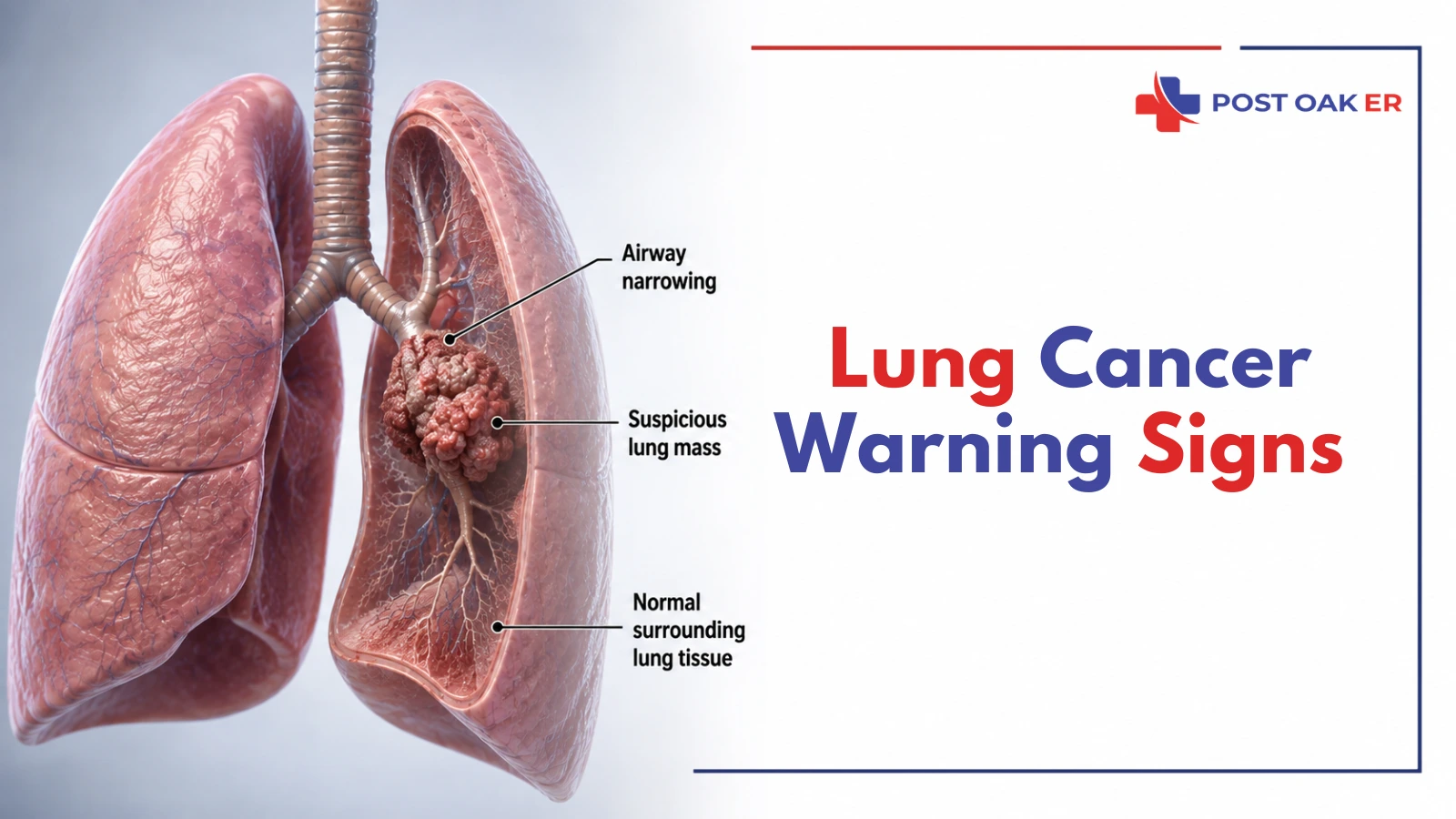
A lingering cough, a change in breathing, or blood in mucus can be unsettling, especially when lung cancer is the concern. The useful question is whether a respiratory or chest symptom is new, persistent, changing, or severe enough to need medical evaluation.
The CDC’s current lung cancer symptom guidance lists a cough that worsens or does not go away, chest pain, shortness of breath, wheezing, coughing up blood, fatigue, and unexplained weight loss among possible warning signs. The same symptoms can occur with many other conditions, so they cannot diagnose lung cancer on their own.
When a Cough or Breathing Change Deserves a Closer Look
A cough is common. Shortness of breath is common. What deserves closer attention is a change from your usual pattern: a cough that is not resolving as expected, a familiar cough that becomes noticeably different, new breathlessness without a clear explanation, or symptoms that keep progressing instead of settling.
Respiratory infections, asthma, COPD, reflux, medication effects, and other lung or heart problems can also produce cough or breathing symptoms. The purpose of evaluation is to find the cause rather than assume the worst. If your symptoms began as an infection and you are mainly trying to judge emergency warning signs, Post Oak ER has a separate guide on when a respiratory infection needs ER evaluation so this article can stay focused on lung-cancer warning patterns.
Lung Cancer Warning Signs People May Notice
A Persistent or Changing Cough
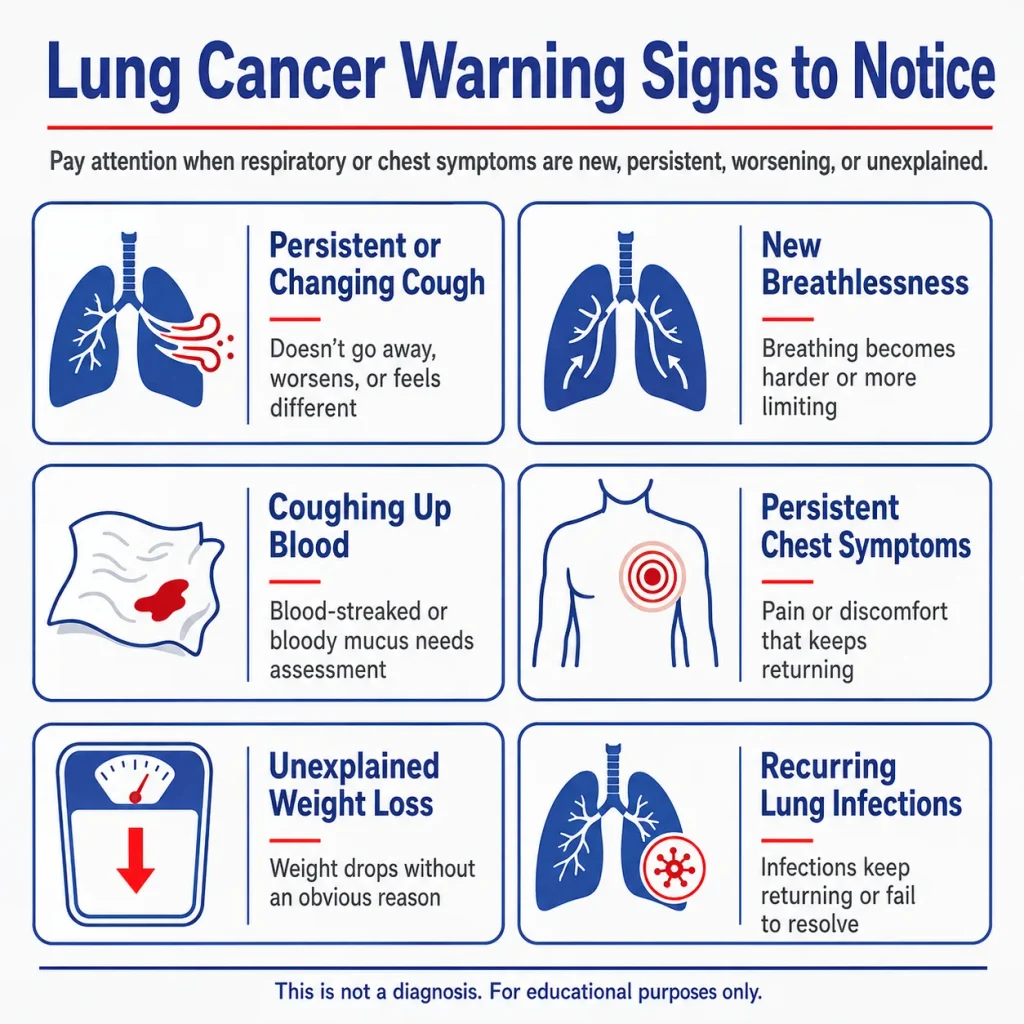
One of the most recognized warning patterns is a cough that does not go away or gets worse. A person who already has a chronic “smoker’s cough,” asthma-related cough, or another long-standing cough may notice that it sounds different, occurs more often, wakes them more, produces different mucus, or becomes harder to control.
There is no single lung-cancer cough that has a distinctive sound or feel. The American Cancer Society’s lung cancer symptom guidance emphasizes persistence and worsening rather than a specific cough quality. A new or changing cough therefore matters more as a pattern to evaluate than as a symptom to interpret by itself.
New or Worsening Breathing Symptoms
Shortness of breath, new wheezing, or a noticeable decline in breathing can occur with lung cancer, but these symptoms are not specific to cancer. They may reflect airway narrowing, infection, fluid, heart or lung disease, or many other problems. New breathlessness that persists or becomes progressively more limiting deserves medical assessment even when it is still mild.
The National Library of Medicine notes that new or worsening breathing difficulty should be medically assessed, while sudden breathing difficulty that seriously interferes with breathing or talking is an emergency. That distinction—persistent versus acutely severe—is more useful than trying to decide at home what disease is causing the symptom.
Coughing Up Blood or Blood-Streaked Mucus
Blood-streaked mucus is medically called hemoptysis when the blood is coming from the respiratory tract. Lung cancer is one possible cause, but infections, bronchiectasis, blood clots in the lung, irritation from forceful coughing, and other conditions can also cause it.
Because the amount and associated symptoms change the urgency, coughing up blood should not be treated as just another cough symptom. MedlinePlus guidance on coughing up blood advises contacting a healthcare provider whenever it occurs and getting immediate medical help when the bleeding is more substantial or occurs with chest pain, dizziness, lightheadedness, fever, or severe shortness of breath. Post Oak ER’s bleeding emergency guide also addresses coughing up blood as a reason for urgent evaluation.
Chest Symptoms and Other Changes
Chest discomfort or pain can be part of a lung-cancer presentation, especially when it is persistent or linked with coughing or deep breathing. Other possible warning patterns include hoarseness, unusual fatigue or weakness, loss of appetite, unexplained weight loss, or respiratory infections that keep returning or do not resolve as expected.
These changes are best interpreted as a pattern. Weeks of cough, progressive breathlessness, chest symptoms, and unexplained weight loss warrant more attention than a few days of fatigue during an obvious viral illness. No symptom combination confirms cancer.
What “Early Lung Cancer Symptoms” Can — and Cannot — Tell You
People often search for “stage 1 lung cancer symptoms,” “first symptoms,” or “what lung cancer feels like” because they want a sign that clearly separates early cancer from ordinary illness. In reality, early lung cancer may cause no symptoms at all. The CDC notes that most people with lung cancer do not develop symptoms until the disease is advanced, although symptoms can occur earlier.
When early symptoms do occur, they can still be nonspecific: a persistent cough, chest discomfort, shortness of breath, wheezing, or blood in sputum. Those symptoms do not reveal whether cancer is present, whether it is non-small cell or small cell lung cancer, or what stage it might be.
That last point matters. The National Cancer Institute’s patient information on non-small cell lung cancer separates symptoms from diagnosis and staging: imaging and other tests evaluate suspicious findings, while biopsy is used when lung cancer is suspected. A symptom cannot substitute for that process.
When Persistent Symptoms Need Medical Evaluation
A mild symptom does not have to be an emergency to deserve attention. Arrange medical evaluation when a cough is lingering or worsening, breathing feels different from your normal baseline, chest symptoms recur without a clear explanation, or several changes are occurring together. This is especially reasonable when symptoms are not behaving like a routine illness that is steadily improving.
The goal of a non-emergency visit is to establish a clinical picture: when symptoms started, whether they are changing, what accompanies them, relevant smoking or exposure history, and whether an examination or imaging is warranted.
When Breathing, Bleeding, or Chest Symptoms Should Not Wait
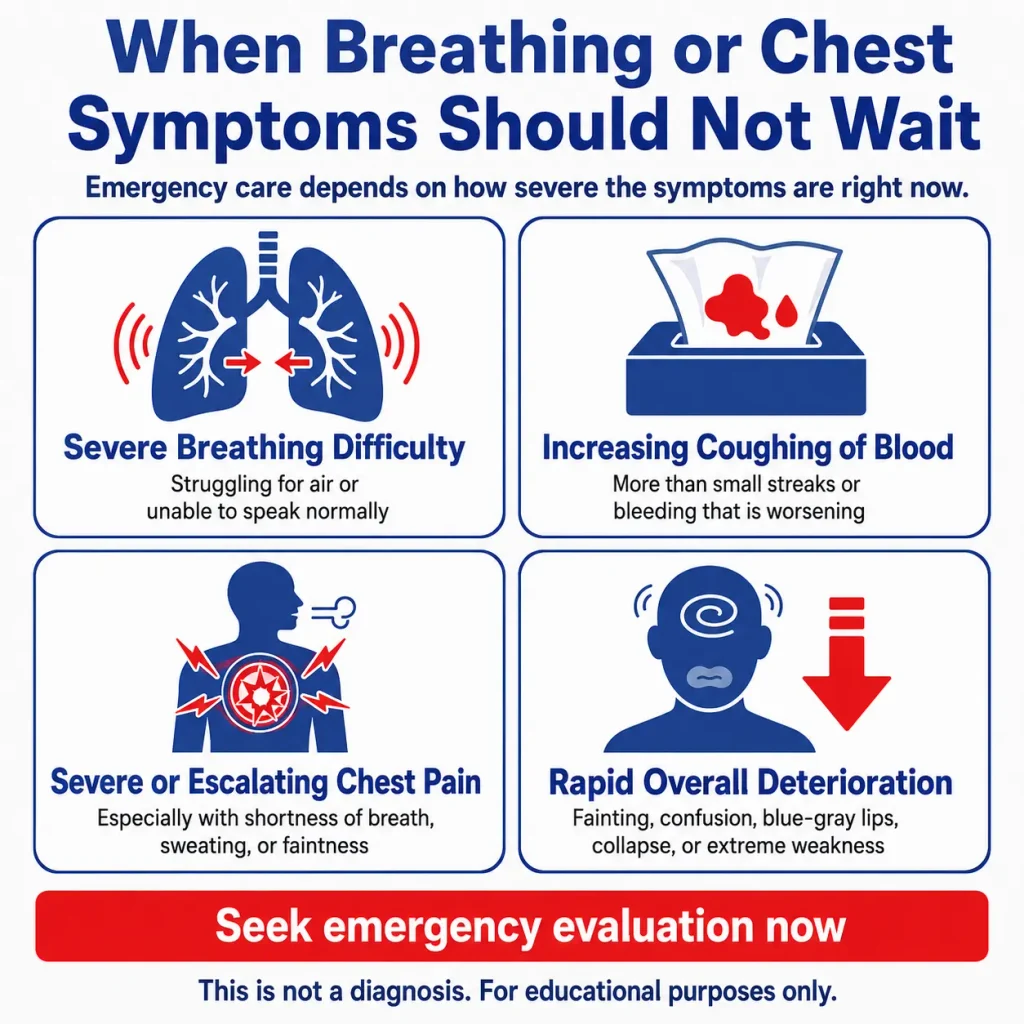
Emergency evaluation is based on the severity of what is happening now—not on whether lung cancer has already been diagnosed. Severe respiratory distress, significant bleeding, or rapidly worsening chest symptoms can have several dangerous causes that require immediate assessment.
Severe breathing difficulty. Go to the ER or call 911 if breathing becomes suddenly severe, interferes with speaking, or you are struggling to get enough air. MedlinePlus emergency guidance for breathing difficulty specifically treats sudden or seriously limiting breathing difficulty as an emergency.
Coughing up more than small streaks of blood, or bleeding that is increasing. Urgency rises when hemoptysis is more than a small amount or occurs with severe shortness of breath, chest pain, dizziness, or lightheadedness.
Major or rapidly worsening chest symptoms. Sudden, severe, persistent, or escalating chest pain—especially with shortness of breath, sweating, faintness, or other signs of serious illness—needs emergency evaluation. The Post Oak ER chest-pain guide explains the ER decision point for acute chest symptoms, while MedlinePlus chest-pain guidance advises emergency care for dangerous chest-pain patterns.
Rapid overall deterioration. Confusion, fainting, blue or gray lips, collapse, extreme weakness, or a fast decline alongside breathing or chest symptoms should be treated as an emergency. The American Heart Association’s 911 guidance includes severe chest pain, difficulty breathing, severe bleeding, and loss of consciousness among situations that warrant calling 911.
What Medical Evaluation May Help Clarify
Evaluation starts with the immediate problem: symptoms, vital signs, oxygen level when relevant, medical history, and a focused examination. Depending on what the clinician finds, chest imaging may be appropriate. A chest X-ray can identify some abnormalities, while CT can provide more detailed images when clinically indicated.
Imaging can identify a suspicious area or another urgent explanation for symptoms, but it does not by itself complete a lung-cancer diagnosis. The American Cancer Society’s overview of tests for lung cancer explains that imaging can lead to further workup, while the actual cancer diagnosis is made by examining cells or tissue in the laboratory. Further testing may include bronchoscopy or another form of biopsy, depending on the finding and clinical situation.
An ER visit has a narrower purpose. It can evaluate severe breathing difficulty, bleeding, chest symptoms, low oxygen, infection, or other urgent complications and identify findings that require immediate care or follow-up. It is not a substitute for the specialist workup used to determine cancer type, stage, or treatment plan.
24/7 Emergency Evaluation for Severe Respiratory or Chest Symptoms in Houston
For Houston-area patients with severe breathing difficulty, coughing blood, major chest symptoms, or symptoms that are worsening quickly, Post Oak ER is available 24/7 for emergency evaluation. The facility provides on-site CT, X-ray, ultrasound, and laboratory services as part of emergency care; you can review its emergency imaging services for details. The ER’s role is to assess the urgent problem, identify immediate complications, stabilize serious symptoms when needed, and determine the safest next step—not to promise a definitive lung-cancer diagnosis during an emergency visit.
Frequently Asked Questions
Can a persistent cough be an early sign of lung cancer?
Yes. A cough that does not go away or gets worse is a recognized lung-cancer symptom, and some people with early lung cancer do have symptoms. A persistent cough is far more often caused by something other than cancer, so the right next step is medical evaluation rather than self-diagnosis.
What does a lung cancer cough usually feel like?
There is no single characteristic lung-cancer cough. It may be dry or produce mucus, and the more useful clue is a cough that persists, worsens, or changes from your usual pattern. Coughing blood or rust-colored mucus is a separate warning sign that deserves prompt assessment.
Can stage 1 lung cancer cause symptoms?
It can, but stage 1 lung cancer may also cause no symptoms. When symptoms are present, they can overlap with many common respiratory conditions. Symptoms alone cannot tell you that lung cancer is stage 1—or determine any stage.
Can you have lung cancer without coughing?
Yes. Some people with lung cancer do not have a cough, and many have no symptoms until later. Others may first notice breathlessness, chest discomfort, fatigue, unexplained weight loss, hoarseness, or another change.
Does coughing up blood always mean lung cancer?
No. Coughing up blood can occur with infections, bronchiectasis, blood clots in the lung, irritation from forceful coughing, lung cancer, and other conditions. Because the causes range from minor to serious, any hemoptysis warrants medical attention, with emergency care for heavier bleeding or bleeding accompanied by severe shortness of breath, chest pain, dizziness, or lightheadedness.
When should breathing symptoms or a cough be evaluated in the ER?
Use the ER for severe or rapidly worsening symptoms: difficulty breathing that interferes with speaking, significant or increasing coughing of blood, severe or escalating chest pain, fainting, confusion, blue or gray lips, or rapid overall deterioration. A stable but persistent cough or mild unexplained breathing change usually needs timely medical follow-up rather than emergency care.