
Congestive heart failure itself is usually not inherited as one single disease. It is a clinical condition where the heart is not pumping or filling well enough to meet the body’s needs. But family history can still matter because some underlying causes of heart failure can run in families, especially certain heart muscle diseases, inherited cholesterol disorders, and rhythm conditions.
For patients in Houston, the key point is balance. A parent or sibling with heart failure does not mean you are guaranteed to develop it. But it does mean you should know what caused their heart failure, share that history with your doctor, and ask whether screening makes sense for you.
Key Takeaways
- Congestive heart failure is usually not inherited as one single condition.
- Some underlying causes of heart failure can run in families.
- Inherited cardiomyopathies can affect the heart muscle and may lead to heart failure.
- A family history of heart disease can raise awareness, especially when relatives were affected at a young age.
- Genetic testing is not needed for everyone, but family history may lead doctors to recommend screening or specialist evaluation.
- Symptoms such as shortness of breath, swelling, fatigue, fainting, chest pain, or rapid worsening should not be ignored.
- Severe shortness of breath, chest pain, fainting, blue or gray lips, or sudden weakness should be treated as urgent.
Is Congestive Heart Failure Hereditary?
Congestive heart failure, often simply called heart failure, is not usually passed down as one simple diagnosis. What may be inherited is the risk factor or the underlying condition that can eventually lead to heart failure. That difference matters because “heart failure” describes what is happening to heart function, not always the original cause.
For example, one person may develop heart failure after long-standing high blood pressure. Another may develop it after coronary artery disease, valve disease, a heart attack, or cardiomyopathy. In some families, the inherited part may be a heart muscle condition, a rhythm disorder, or very high cholesterol rather than heart failure itself.
Why Heart Failure Can Run in Families
Heart failure can appear in families for more than one reason. Sometimes relatives share genes that raise the risk of heart muscle disease. Sometimes they share risk patterns such as high blood pressure, diabetes, high cholesterol, obesity, or early coronary artery disease. Sometimes family members also share lifestyle patterns, environment, diet, stress, or access-to-care challenges.
That is why family history is a clue, not a verdict. A family history should make you more aware and more prepared, but it should not make you feel that heart failure is unavoidable. The American Heart Association emphasizes that knowing family history is important, but having a family history does not mean the same condition is inevitable.
Inherited Conditions That Can Lead to Heart Failure
Some inherited heart conditions can increase the risk of heart failure. Cardiomyopathy is one important group. Cardiomyopathy affects the heart muscle, and certain forms can make the heart muscle too thick, weak, stiff, or abnormal in structure. NHLBI notes that Hypertrophic cardiomyopathy and arrhythmogenic cardiomyopathy are often inherited.
Other family-linked conditions may also matter. Dilated cardiomyopathy can sometimes run in families. Certain inherited rhythm disorders may increase risk in specific situations. Familial hypercholesterolemia is another example: Familial hypercholesterolemia is an inherited condition that causes high blood levels of LDL cholesterol, which raises the risk of coronary artery disease and heart attack. Coronary disease can then contribute to heart failure in some patients.
Family History Clues Worth Discussing
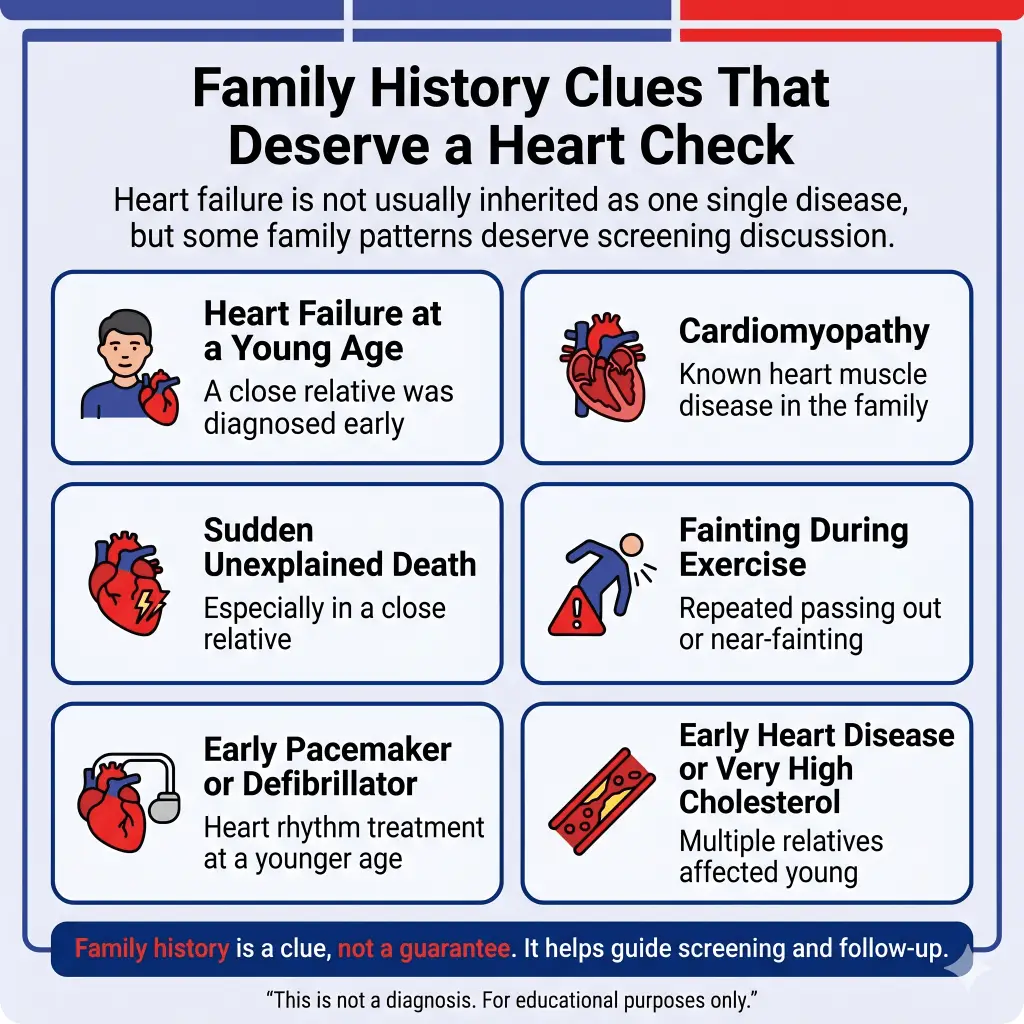
Some family-history details deserve extra attention. Tell your doctor if a close relative had heart failure at a young age, cardiomyopathy, sudden unexplained death, repeated fainting during exercise, a pacemaker or defibrillator at a younger age, or multiple relatives with heart failure, rhythm problems, or early heart disease.
Very high cholesterol in relatives is also important. CDC notes that having family members with heart disease at age 50 or younger can be a sign of familial hypercholesterolemia. If you know about early heart attacks, sudden cardiac death, or unusually high LDL cholesterol in your family, bring that information to your appointment.
Who May Need Heart Screening?
Screening may be considered when the family history suggests an inherited or strongly family-linked heart condition. This may include first-degree relatives of someone with inherited cardiomyopathy, people with multiple relatives affected by young-onset heart disease, or people with unexplained fainting, palpitations, or symptoms during exercise.
Screening decisions should be made with a clinician because not every family history requires the same testing. The American College of Cardiology explains that genetic evaluation for cardiomyopathy involves a detailed family history, counseling, and genetic testing when appropriate.
What Screening May Include
Depending on the situation, a clinician may review your family history, check blood pressure, order cholesterol or blood sugar testing, perform an ECG or EKG, or recommend an echocardiogram. If an inherited cardiomyopathy is suspected, genetic counseling or genetic testing may be discussed.
This does not mean every person with a relative who had heart failure needs genetic testing. Often, the first step is simply understanding the family member’s actual diagnosis. Heart failure from uncontrolled blood pressure is different from heart failure caused by an inherited cardiomyopathy.
Can You Lower Your Risk if Heart Failure Runs in Your Family?
Yes, in many cases you can lower risk, especially when the family pattern includes risk factors that can be managed. Blood pressure control, cholesterol management, diabetes care, not smoking, regular activity if safe, maintaining a healthier weight, limiting alcohol misuse, and taking prescribed medications correctly can all matter.
Genes are important, but they are not the whole story. A family history gives you a reason to be more proactive. It can help you start screening earlier, ask better questions, and work on risk factors before symptoms appear.
Symptoms That Should Not Wait
Family history is important, but symptoms happening now should not be handled like routine screening. Heart failure can cause shortness of breath, fatigue, swelling, rapid or irregular heartbeat, and trouble breathing when lying down. These symptoms deserve medical attention, especially if they are new, worsening, or limiting normal activity.
Do not wait for a routine appointment if symptoms are severe or changing quickly. Chest pain, fainting, sudden weakness, blue or gray lips, severe breathing trouble, or rapid worsening of swelling or breathing should be treated as emergency.
When to Go to the ER or Call 911
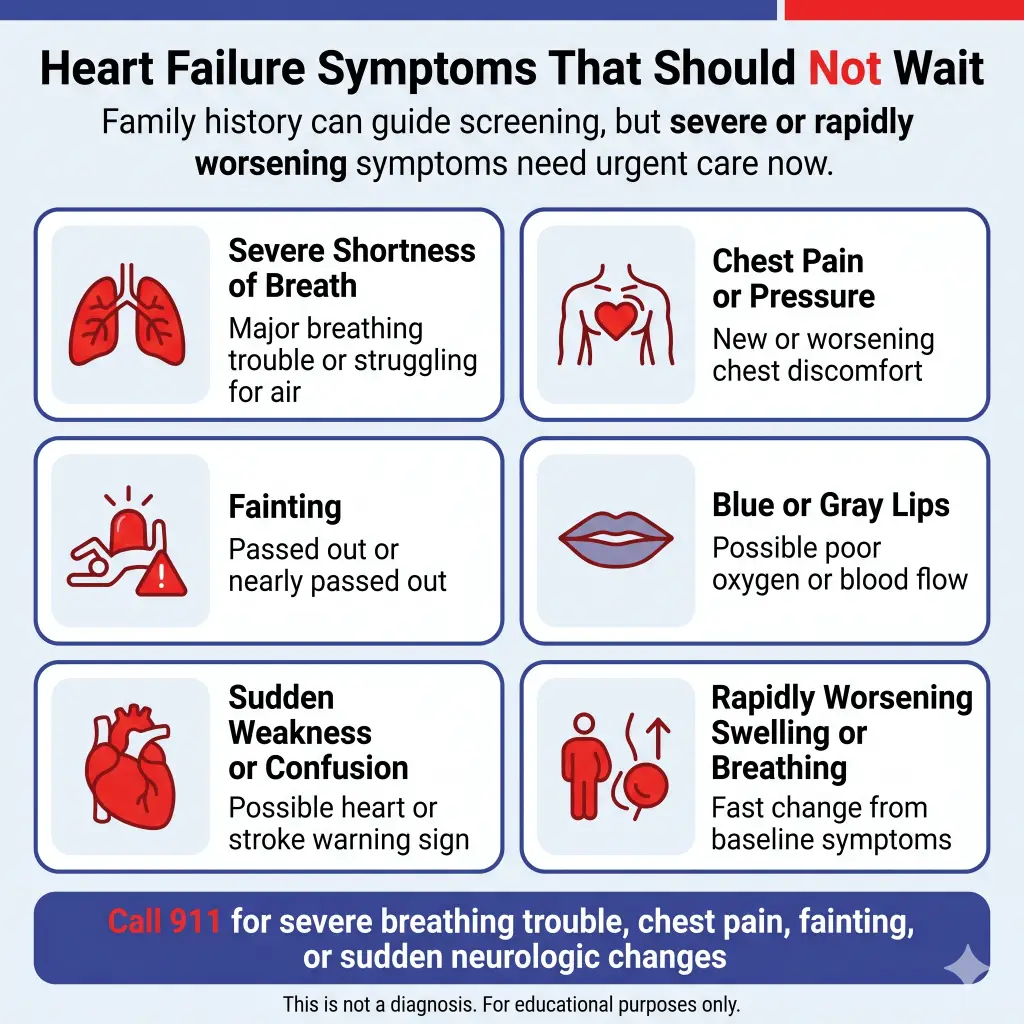
Go to the ER or call 911 for severe shortness of breath, chest pain or pressure, fainting, blue or gray lips, sudden confusion, sudden weakness, rapidly worsening swelling or breathing, or symptoms that feel like a heart attack or stroke. Mayo Clinic specifically warns about rapid or irregular heartbeat with shortness of breath, chest pain or fainting in people with heart failure symptoms.
If you are in Houston and you develop chest pain, severe shortness of breath, fainting, sudden weakness, or rapidly worsening heart-related symptoms, Post Oak ER is open 24/7 for prompt emergency evaluation. Family history can guide prevention, but emergency symptoms need immediate attention.
What to Ask Your Doctor About Family Risk
If heart failure runs in your family, ask practical questions:
- What caused my family member’s heart failure?
- Was it cardiomyopathy, coronary artery disease, valve disease, high blood pressure, or something else?
- Should first-degree relatives be screened?
- Do I need an ECG or echocardiogram?
- Should I see a cardiologist?
- Is genetic counseling appropriate?
- Should cholesterol or blood pressure be checked more often?
- What symptoms should send me to the ER?
These questions help move the conversation from worry to action. The goal is not to panic about genetics. The goal is to understand your personal risk and respond early when screening or treatment could help.
Family History and Heart Failure at a Glance
- CHF itself: Usually not inherited as one simple disease.
- Family risk: Can matter when the underlying cause runs in families.
- Inherited causes: Cardiomyopathy, certain rhythm conditions, familial cholesterol disorders, and some congenital conditions.
- Screening: May include family history, ECG, echo, labs, or genetic counseling.
- Do not wait: Severe breathing trouble, chest pain, fainting, or sudden weakness need emergency care.
Congestive heart failure can have family links, but family history is not destiny. The safest approach is to learn what caused heart problems in your family, share that information with your clinician, manage the risks you can control, and seek urgent care when serious symptoms appear.
Frequently Asked Questions
Is congestive heart failure hereditary?
Usually, congestive heart failure itself is not inherited as one simple disease. But some causes of heart failure, such as inherited cardiomyopathies or familial cholesterol disorders, can run in families.
If my parent had heart failure, will I get it too?
Not necessarily. Family history can raise awareness, but it does not guarantee that you will develop heart failure. The cause of your parent’s heart failure matters a lot.
What inherited conditions can lead to heart failure?
Inherited cardiomyopathies, certain rhythm disorders, familial hypercholesterolemia, and some congenital heart conditions can increase risk in some families.
Does cardiomyopathy run in families?
Yes, some types do. NHLBI notes that hypertrophic cardiomyopathy and arrhythmogenic cardiomyopathy are often inherited.
Should family members be screened for heart failure risk?
Screening may be appropriate when a close relative has an inherited cardiomyopathy, sudden unexplained death, young-onset heart disease, or a known genetic heart condition. Ask a clinician what level of screening fits your family history.
Do I need genetic testing if heart failure runs in my family?
Not always. Genetic testing is usually considered when the family history or diagnosis suggests an inherited condition. Genetic counseling may help decide whether testing is useful.
Can lifestyle still lower risk if heart failure runs in my family?
Yes. Blood pressure control, cholesterol management, diabetes care, not smoking, safe physical activity, and regular medical follow-up can still reduce risk.
When should someone with possible heart failure symptoms go to the ER?
Go to the ER or call 911 for severe shortness of breath, chest pain, fainting, blue or gray lips, sudden confusion, sudden weakness, or rapidly worsening swelling or breathing.