
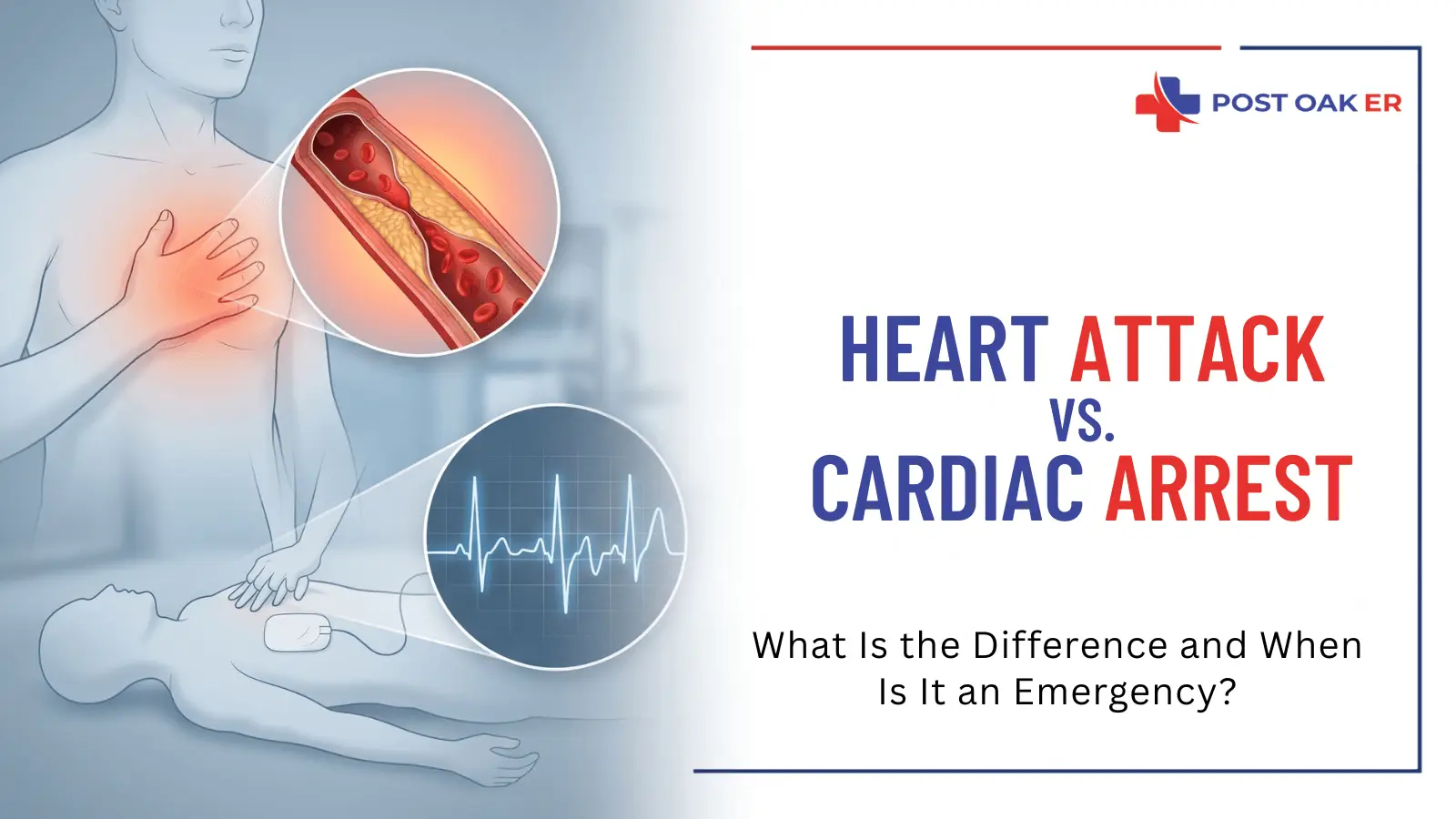
A heart attack and cardiac arrest are not the same thing, even though people often use the terms as if they mean the same emergency. A heart attack happens when blood flow to part of the heart is blocked. Cardiac arrest happens when the heart suddenly stops pumping blood effectively because of an electrical problem.
That difference matters because the warning signs, the immediate response, and the level of urgency can look very different. For patients in Houston, the most important thing to know is this: both are emergencies, and neither should be ignored or waited out at home.
Key Takeaways
- A heart attack is a circulation problem caused by blocked blood flow to the heart.
- Cardiac arrest is an electrical problem where the heart suddenly stops pumping effectively.
- A person having a heart attack is often awake and may still be able to talk.
- A person in cardiac arrest usually collapses, becomes unresponsive, and is not breathing normally.
- A heart attack can sometimes lead to cardiac arrest.
- Both conditions need emergency action right away.
- CPR and an AED are especially important during cardiac arrest.
What Is a Heart Attack?
A heart attack happens when a blocked artery stops blood from reaching part of the heart muscle. When that blood flow is cut off, the heart muscle begins to lose oxygen, and damage can start if the blockage is not treated quickly.
A heart attack does not usually mean the heart has stopped beating. In many cases, the person is still conscious and may describe chest pressure, pain, shortness of breath, sweating, nausea, or discomfort that spreads to the arm, jaw, back, or shoulder. Symptoms may come on suddenly, but they can also start slowly and feel mild at first.
What Is Cardiac Arrest?
Cardiac arrest happens when the heart suddenly and unexpectedly stops pumping blood well enough to supply the brain and other vital organs. It is usually caused by a dangerous heart rhythm problem, also called an arrhythmia.
When cardiac arrest happens, the person often collapses, loses consciousness, does not respond, and may stop breathing normally or only gasp. This is an immediate life-threatening emergency, and a person can die within minutes without fast help.
Heart Attack vs. Cardiac Arrest: The Main Difference
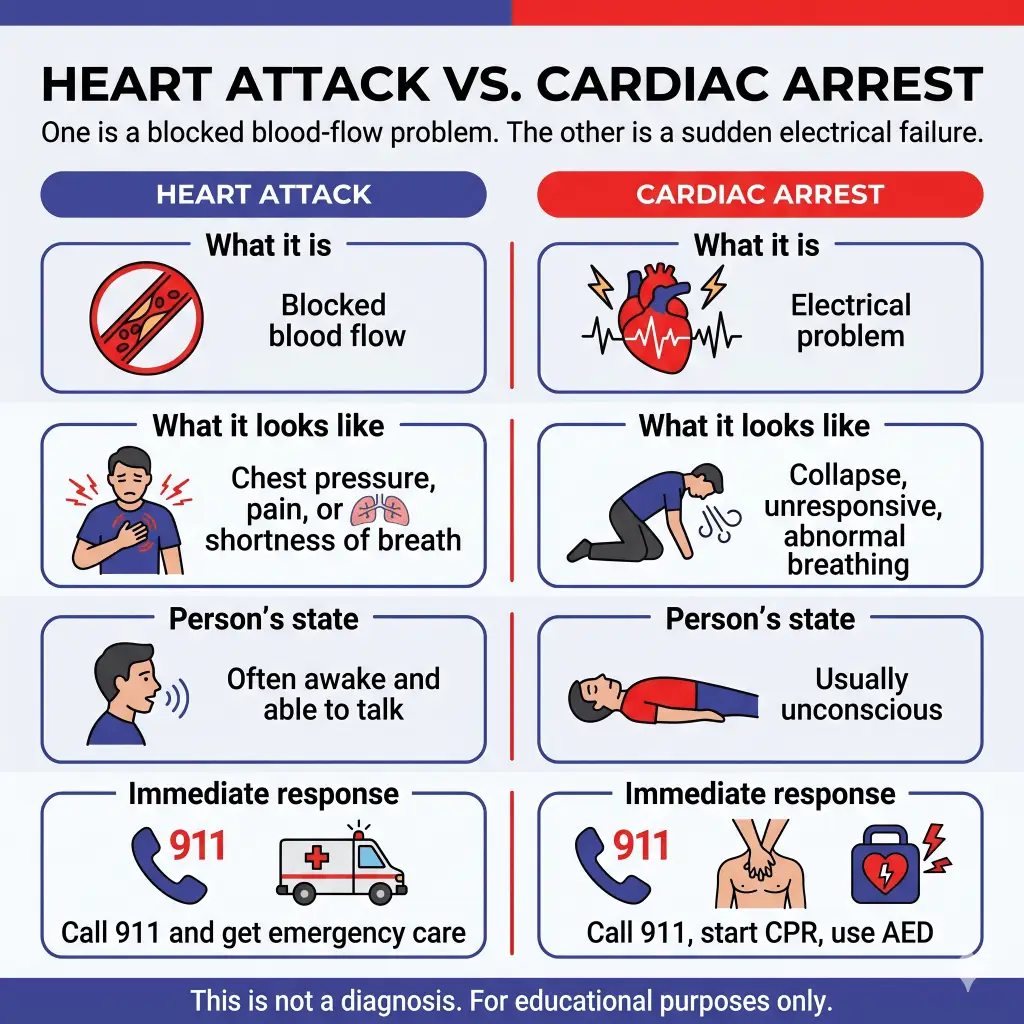
a heart attack is a blood-flow problem, while cardiac arrest is an electrical problem. During a heart attack, blood cannot reach part of the heart muscle the way it should. During cardiac arrest, the heart can no longer pump blood effectively through the body.
They are different conditions, but they are connected. A heart attack can sometimes trigger cardiac arrest, which is one reason people mix them up. Even so, they should not be treated as interchangeable terms.
What Symptoms Can Look Like in a Heart Attack
Heart attack symptoms often include chest pressure, squeezing, fullness, or pain. Some people also notice pain in the arm, shoulder, jaw, neck, or back, along with shortness of breath, cold sweating, nausea, or lightheadedness.
Not every heart attack looks dramatic. Some start slowly, and some feel more like bad indigestion, heaviness, or unusual discomfort that will not go away. That is one reason people sometimes delay getting help.
What Symptoms Can Look Like in Cardiac Arrest
Cardiac arrest usually looks much more sudden. The person may collapse without warning, become unresponsive, and stop breathing normally. In some cases, there may be gasping, but the person is not truly breathing in a normal, effective way.
This is not a situation where someone should watch and wait to see if the person wakes up on their own. Cardiac arrest needs immediate action because every minute without CPR and defibrillation lowers the chance of survival.
Why People Mix Them Up
People mix these terms up because both involve the heart, both are emergencies, and both can happen suddenly. Also, a heart attack can lead to cardiac arrest, so the two are often discussed together.
In everyday conversation, people sometimes say someone “had a heart attack” when the person actually collapsed from cardiac arrest. But from a medical standpoint, they are different problems and require slightly different immediate responses.
When to Go to the ER or Call 911
Call 911 right away for chest pressure, chest pain, shortness of breath, fainting, severe weakness, cold sweating, or pain spreading into the arm, shoulder, jaw, neck, or back. Even if you are not fully sure it is a heart attack, emergency help is still the safest move because early treatment can begin sooner.
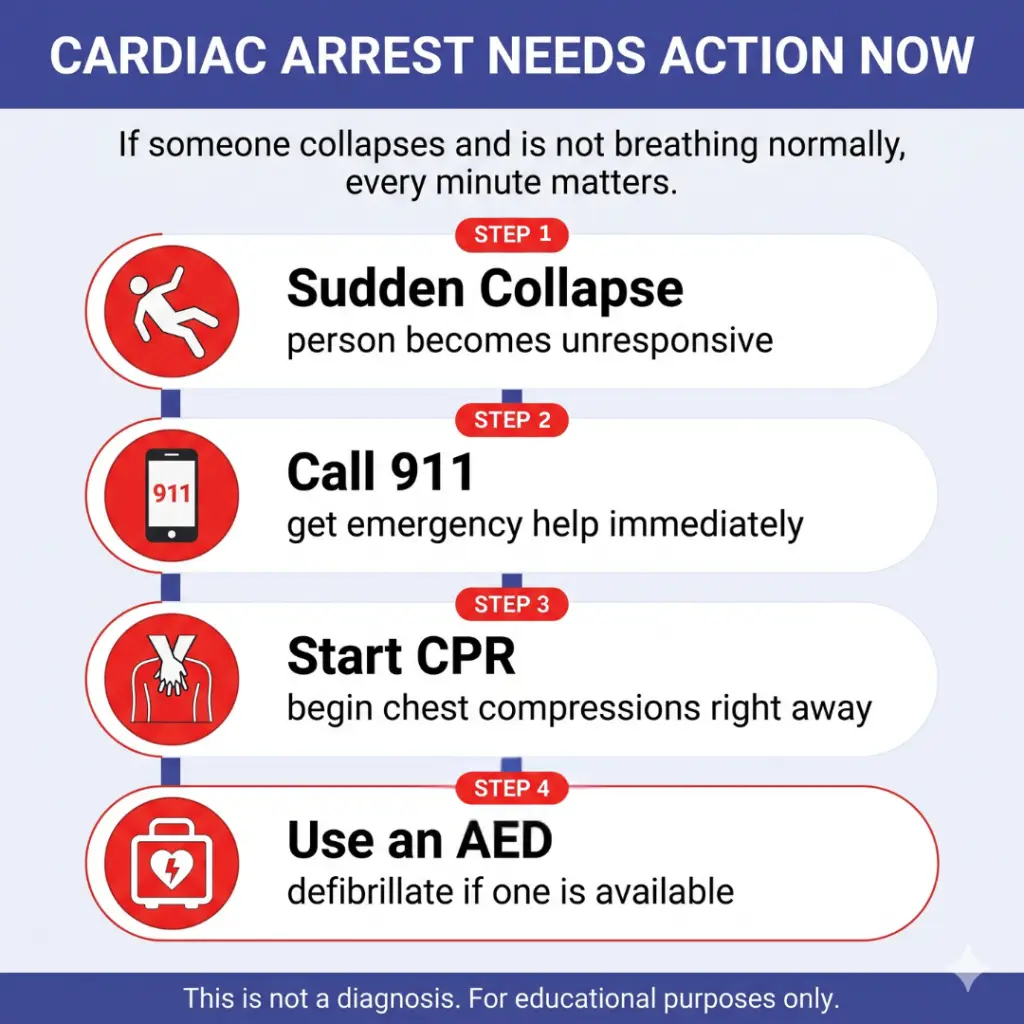
If someone collapses, is unresponsive, and is not breathing normally, call 911 immediately, start CPR, and use an AED if one is available. If you are in Houston and you are dealing with chest pain, collapse, or other possible heart emergency symptoms, Post Oak ER is open 24/7 for prompt emergency evaluation.
What Happens After You Reach Emergency Care
If doctors suspect a heart attack, one of the first tests is usually an EKG checks whether you may be having a heart attack. Blood tests are also commonly used, and a troponin test measures the amount of a protein called troponin in your blood to look for heart muscle damage.
If someone survives cardiac arrest, hospital care focuses on stabilizing the heart, preventing organ damage, and finding the reason the arrest happened in the first place. That may include heart monitoring, imaging, blood tests, and treatment of the underlying rhythm problem or heart disease.
Why Fast Action Matters
With a heart attack, getting help quickly can limit how much heart muscle is damaged. With cardiac arrest, immediate action can be the difference between life and death because blood flow to the brain and other organs stops right away.
The good news is that you do not need to diagnose the exact condition at home before taking action. If symptoms suggest a serious heart emergency, the right move is to call 911 and get emergency care fast.
Frequently Asked Questions
Is a heart attack the same as cardiac arrest?
No. A heart attack is a blocked-blood-flow problem, while cardiac arrest is when the heart suddenly stops pumping effectively because of an electrical problem.
Can a heart attack turn into cardiac arrest?
Yes. A heart attack can sometimes trigger cardiac arrest, which is one reason the two conditions are closely linked.
Which is more dangerous, a heart attack or cardiac arrest?
Both are serious emergencies, but cardiac arrest is immediately life-threatening because the heart stops pumping blood to the brain and other organs.
Does your heart stop during a heart attack?
Usually, no. During a heart attack, the heart typically continues beating, even though blood flow to part of the heart muscle is blocked.
What does cardiac arrest look like?
It often looks like sudden collapse, unresponsiveness, no normal breathing, or gasping. The person may also have no pulse.
Should I do CPR during a heart attack?
If the person is awake and breathing, CPR is not usually what they need first. But if the person collapses, becomes unresponsive, and is not breathing normally, start CPR right away because that suggests cardiac arrest.
Can someone be awake during cardiac arrest?
Cardiac arrest usually causes a person to lose consciousness very quickly because the brain is no longer getting enough blood flow.
Should I call 911 for chest pain even if I am not sure it is a heart attack?
Yes. Emergency services should be called even if you are not fully sure, because every minute matters and treatment can begin sooner.