
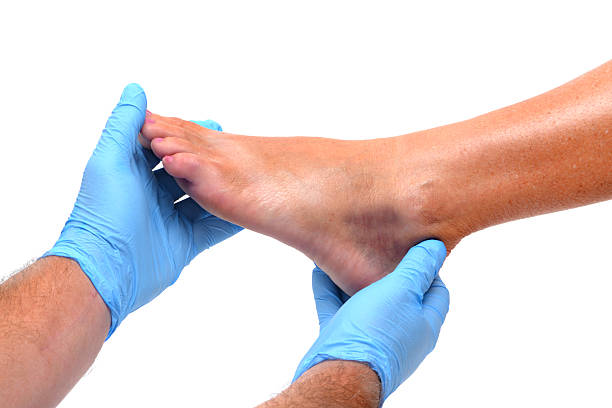
Overview
A foot bruise occurs when small blood vessels are damaged and leak blood into surrounding tissue, leading to visible discoloration. Foot bruises are often painful and may involve swelling. While many cases are mild, bruising—especially on the top of the foot—can sometimes be associated with more serious conditions, such as a stress fracture, particularly when symptoms persist or worsen.
This article presents only medically verified information supported by authoritative sources and established clinical guidance.
What Is a Foot Bruise?
A foot bruise results from damage to small blood vessels, allowing blood to collect under the skin. This trapped blood causes discoloration and localized tenderness. Foot bruises are commonly painful to the touch and may involve swelling.
Common Causes of Foot Bruising
causes include:
- Minor trauma, such as bumps, scrapes, falls, or direct impact
- Repetitive stress or overuse, particularly from running, jumping, or prolonged walking
- Underlying medical conditions, including blood clotting disorders or poor circulation
Bruising may also occur without a clearly remembered injury, especially when repetitive microtrauma is involved.
Foot Bruising and Stress Fractures
A stress fracture is a small crack in a bone caused by repetitive force rather than a single injury. Stress fractures commonly affect the metatarsal bones on the top of the foot.
When a stress fracture irritates nearby blood vessels, it can result in:
- Bruising on the top of the foot
- Persistent pain
- Swelling
- Tenderness
- Difficulty bearing weight
Symptoms Associated With a Foot Bruise
Commonly verified symptoms include:
- Skin discoloration
- Swelling or puffiness
- Tenderness or pain when touched
- Pain during walking or weight-bearing
Symptoms that worsen instead of improving may indicate a more serious underlying injury.
Diagnosis and Imaging
Healthcare providers may use:
- Physical examination, including assessment of tenderness, swelling, and gait
- X-rays to rule out fractures
- MRI if pain persists or a stress fracture is suspected
These tools help differentiate simple bruising from bone or soft-tissue injury.
Treatment and Management
Treatment depends on the cause and severity of the injury and may include:
- Rest and activity modification
- Ice application to reduce swelling
- Compression and elevation
- Temporary immobilization, such as a walking boot, for more severe injuries
- Pain management, as recommended by a healthcare provider
Healing and Recovery Expectations
- Stress fractures typically require 6–8 weeks to heal when treated early and appropriately.
- Exact healing timelines for uncomplicated foot bruises are commonly discussed in clinical settings, but high-quality evidence defining precise timelines is limited.
When to See a Doctor
Medical evaluation is recommended if any of the following occur:
- Increasing or severe pain
- Inability to bear weight
- Rapidly worsening swelling or bruising
- Numbness, tingling, or changes in skin color
These symptoms may indicate a fracture or a circulation-related condition requiring prompt care.
Frequently Asked Questions
Can a bruise appear on the foot without an injury?
Yes. Verified evidence shows bruising can occur due to repetitive stress, poor circulation, or blood clotting disorders, even without obvious trauma.
Can a bruise on the top of the foot mean a fracture?
Yes. Bruising on the top of the foot, especially when accompanied by persistent pain or swelling, is commonly associated with stress fractures.
When is imaging recommended for a bruised foot?
Imaging such as X-ray or MRI is recommended when pain does not improve, swelling worsens, or a fracture is suspected.
Why is my foot bruised for no reason?
Verified evidence indicates bruising may occur due to repetitive stress, circulatory issues, or blood clotting disorders.
How long does a foot bruise take to heal?
There is no high-quality evidence supporting a precise healing timeline for uncomplicated foot bruises.
Can I walk on a bruised foot?
There is no high-quality evidence supporting this. Persistent pain with weight-bearing should be medically evaluated.
Does swelling from a bruise go away in a few days?
There is no high-quality evidence supporting an exact timeframe for swelling resolution in simple foot bruises.
Key Takeaways
- Foot bruises result from blood vessel damage and commonly cause pain and swelling.
- Bruising on the top of the foot may signal a stress fracture, particularly when symptoms persist.
- Imaging and medical evaluation are important when pain or swelling worsens.
- Exact healing timelines for simple bruises are not supported by high-quality evidence.
APA Reference List
American Academy of Orthopaedic Surgeons. (n.d.). Stress fractures of the foot and ankle. OrthoInfo. Retrieved December 24, 2025, from https://orthoinfo.aaos.org/en/diseases–conditions/stress-fractures-of-the-foot-and-ankle/
American Academy of Orthopaedic Surgeons. (n.d.). Toe and forefoot fractures. OrthoInfo. Retrieved December 24, 2025, from https://orthoinfo.aaos.org/en/diseases–conditions/toe-and-forefoot-fractures/
Bryant S. Ho, M.D. (2024, July 8). Treating blunt trauma to the top of the foot. https://www.bryanthomd.com/blog/treating-blunt-trauma-to-the-top-of-the-foot-42122.html
Carrollton Foot Center. (2024, October 8). Understanding foot bruising: Causes, symptoms, and when to seek help. https://www.carrolltonfeet.com/foot-bruising/3957/
Cleveland Clinic. (2024, November 14). Hematoma: Definition, types & treatment. https://my.clevelandclinic.org/health/diseases/hematoma
Cleveland Clinic. (2025, January 22). RICE method: Rest, ice, compression, & elevation. https://my.clevelandclinic.org/health/treatments/rice-method
Cleveland Clinic. (n.d.). Bruises (ecchymosis): Symptoms, causes, treatment & prevention. Retrieved December 24, 2025, from https://my.clevelandclinic.org/health/diseases/15235-bruises
Cleveland Clinic. (n.d.). Poor circulation: Symptoms, causes and treatment. Retrieved December 24, 2025, from https://my.clevelandclinic.org/health/diseases/21882-poor-circulation
Mayo Clinic Staff. (2025, April 25). Stress fractures: Symptoms & causes. Mayo Clinic. https://www.mayoclinic.org/diseases-conditions/stress-fractures/symptoms-causes/syc-20354057
Mayo Clinic Staff. (n.d.). Bruise: First aid. Mayo Clinic. Retrieved December 24, 2025, from https://www.mayoclinic.org/first-aid/first-aid-bruise/basics/art-20056663
MedlinePlus. (2025, April 1). Bruise. MedlinePlus Medical Encyclopedia. https://medlineplus.gov/ency/article/007213.htm
MedlinePlus. (2025, July 24). Bruises (contusion). https://medlineplus.gov/bruises.html
MSD Manual Consumer Version. (2024, July). Bruising and bleeding (Quick facts). https://www.msdmanuals.com/home/quick-facts-blood-disorders/blood-clotting-process/bruising-and-bleeding
National Health Service. (n.d.). Sprains and strains. Retrieved December 24, 2025, from https://www.nhs.uk/conditions/sprains-and-strains/
Tatlonghari, M. (2025, December 12). Stress fracture bruise on top of the foot: Symptoms, causes and treatment. Precision Pain & Spine Institute. https://njnopain.com/blogs/stress-fracture-bruise-on-top-of-foot
York and Scarborough Teaching Hospitals NHS Foundation Trust. (n.d.). Treating a soft tissue injury. Retrieved December 24, 2025, from https://www.yorkhospitals.nhs.uk/childrens-centre/your-childs-hospital-journey/therapy-services/physiotherapy/treating-a-soft-tissue-injury/