

Seeing foamy urine once in a while is not always a sign that something is wrong. Sometimes it happens because urine hits the toilet water quickly or because the urine is more concentrated than usual. But if your urine is regularly foamy, getting foamier over time, or is happening along with swelling, fatigue, or changes in urination, it can be a clue that protein is leaking into the urine. That matters because persistent protein in urine can point to kidney stress or kidney disease.
Educational only. This is not medical advice or a diagnosis.
What does foamy urine actually mean?
Foamy urine usually refers to urine that looks frothy, bubbly, or covered with foam rather than just having a few short-lived bubbles. Cleveland Clinic notes that occasional bubbles can happen, but if urine is regularly foamy or becomes more foamy over time, it may mean there is a high level of protein in the urine (proteinuria).
Protein in urine matters because healthy kidneys usually keep most protein in the bloodstream. NIDDK explains that albuminuria means there is too much albumin in the urine, and that a healthy kidney does not let significant albumin pass into urine. A damaged kidney can.
When foamy urine can be harmless
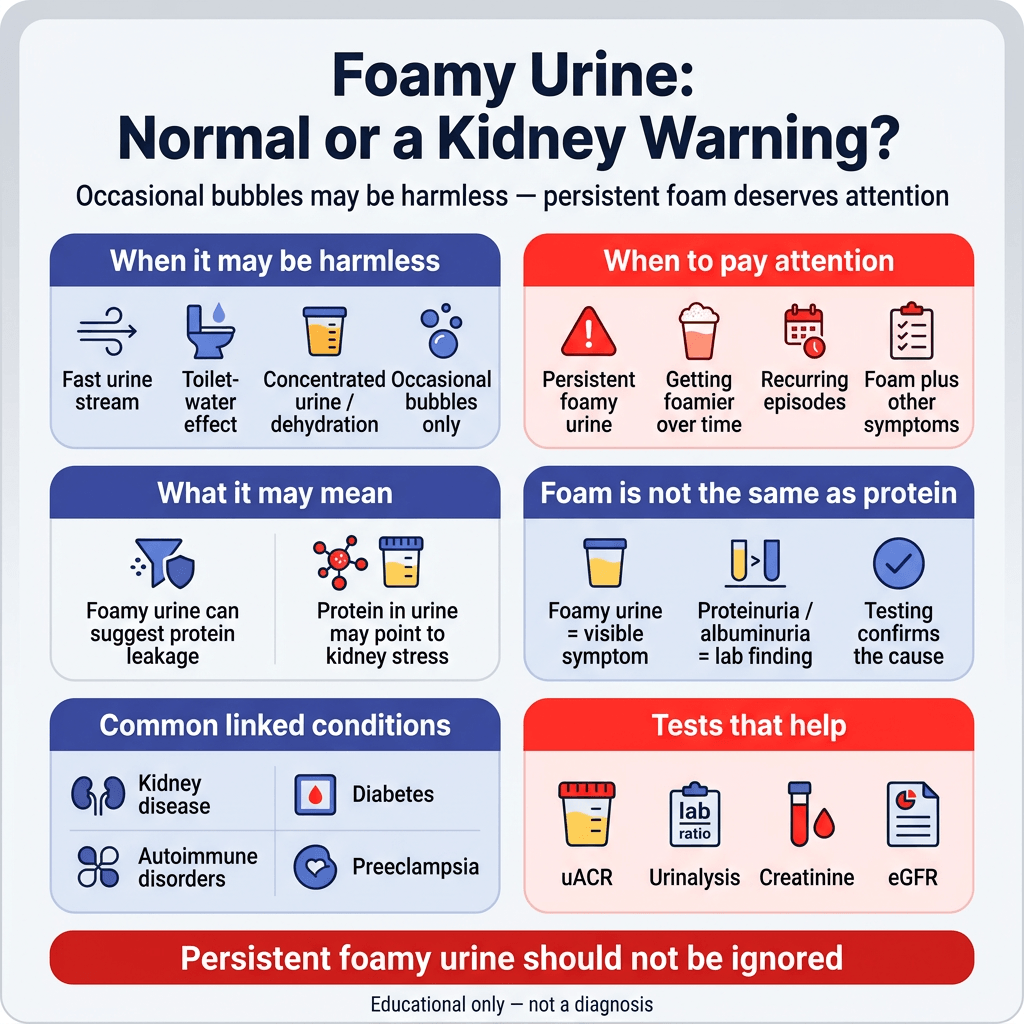
Not every foamy-looking urine episode points to kidney disease.
Fast urine stream or toilet-water effect
Sometimes urine looks bubbly simply because of the force of the stream or the way it hits the water. Cleveland Clinic notes that bubbles may appear occasionally and are not always a sign of illness.
Concentrated urine / dehydration
If you are dehydrated, urine becomes more concentrated and changes in appearance can happen. Cleveland Clinic’s proteinuria guidance lists dehydration as one possible cause of protein in urine, and Cleveland Clinic’s urine-changes guidance notes persistent foamy urine deserves attention especially if it comes with swelling.
Orthostatic proteinuria (a less common, usually harmless pattern)
Cleveland Clinic describes orthostatic proteinuria as protein in urine that happens mainly when someone is standing and returns to normal after lying down. It is generally considered harmless and does not mean the kidneys are failing.
When foamy urine may suggest kidney problems
If foamy urine is persistent, it is more likely to deserve a kidney-focused workup. National Kidney Foundation notes that people with albuminuria/proteinuria may notice foamy urine, along with swelling or frequent urination, although many people have no symptoms at all.
NIDDK also explains that albumin in the urine can be a sign of chronic kidney disease (CKD), and that lowering urine albumin may reduce the chance that kidney disease progresses to kidney failure.
Conditions commonly linked to persistent protein in urine
Cleveland Clinic lists several causes of proteinuria, including:
- kidney disease
- diabetes
- autoimmune disorders
- preeclampsia
- dehydration and fever in some cases
Foamy urine vs. protein in urine: are they the same thing?
Not exactly.
- Foamy urine is a visible symptom.
- Proteinuria or albuminuria is a lab finding.
In real life:
- Foamy urine can happen without serious disease
- Protein in urine can happen without obvious foam
- The right question is whether testing confirms albumin/protein leakage
NIDDK states that a spot urine albumin-to-creatinine ratio (uACR) is the recommended test to assess and monitor urine albumin.
What tests help confirm the cause?
uACR (urine albumin-to-creatinine ratio)
This is one of the most useful tests when protein leakage is suspected. NIDDK explains that albuminuria is usually detected with a urine albumin-to-creatinine ratio, and its clinical quick reference notes that the ratio is helpful because it is not thrown off by urine concentration the same way a dipstick can be.
Creatinine and eGFR
If your clinician is concerned about kidney function, they may also check blood creatinine and eGFR to understand how well the kidneys are filtering. NIDDK’s CKD testing overview describes urine albumin and GFR-based blood testing as the core lab tools for kidney disease diagnosis.
Urinalysis
National Kidney Foundation notes that a urinalysis can detect signs of kidney disease and other conditions, and that urine appearance changes such as foamy urine can sometimes point to important issues worth evaluating.
What should you do if your urine keeps looking foamy?
The best move is not to self-diagnose. It is to confirm whether protein is present and then look for the reason.
A sensible next-step plan is:
- Notice whether the foamy urine is persistent
- Watch for associated symptoms such as swelling, fatigue, or changes in urination
Ask for:
- uACR
- urinalysis
- creatinine/eGFR if kidney disease is a concern
This is especially important if you also have diabetes, high blood pressure, or a history of kidney disease, because those are common settings where albuminuria matters.
Warning symptoms that shouldn’t wait
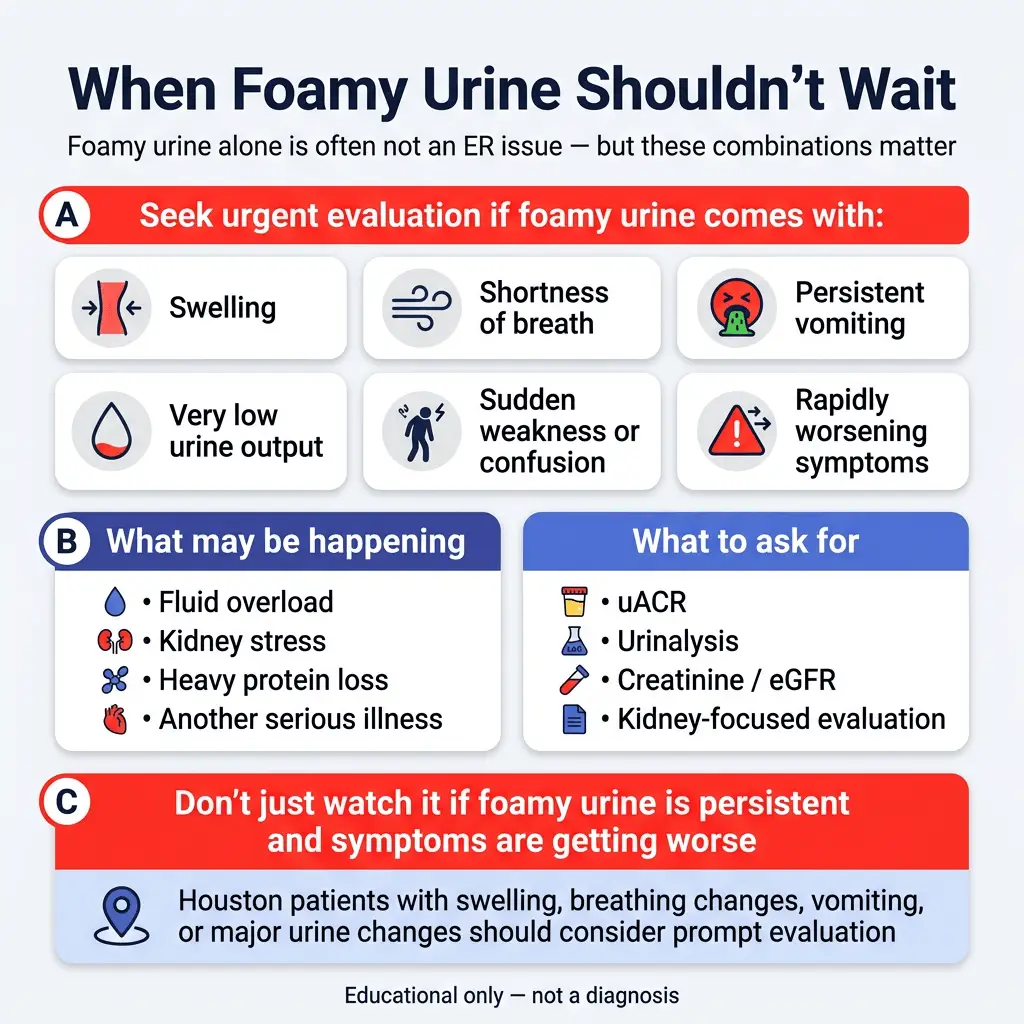
Foamy urine by itself is often not an ER problem. But if it is happening with symptoms that suggest fluid overload, kidney stress, or a more serious illness, same-day evaluation is reasonable.
Seek urgent evaluation if foamy urine is paired with:
- swelling in the feet, ankles, face, or around the eyes
- shortness of breath
- persistent vomiting
- very low urine output
- feeling suddenly very weak, confused, or much worse
National Kidney Foundation lists puffiness/swelling and foamy urine among symptoms that can accompany albuminuria, and Cleveland Clinic notes persistent foamy urine plus leg swelling is worth prompt medical attention.
If you’re in Houston and you’re seeing persistent foamy urine along with swelling, breathing changes, vomiting, or a major change in urination, it’s reasonable to get checked rather than wait for it to get worse.
Post Oak ER states it is a 24/7 emergency room in Houston’s Post Oak & Galleria area with board-certified ER physicians, plus on-site CT, ultrasound, X-ray, and labs. Their No Wait ER page also highlights on-site labs and imaging and 24/7 care.
Frequently Asked Questions
Is foamy urine always a kidney problem?
No. Occasional bubbles can be normal. But persistent foamy urine can suggest protein in the urine, which deserves evaluation.
Can dehydration cause foamy urine?
It can contribute, especially if urine is concentrated. Dehydration is also listed as one possible cause of protein in urine.
What test checks for protein in urine?
The most useful test is usually uACR (urine albumin-to-creatinine ratio), along with urinalysis when appropriate.
If my urine is foamy but I feel fine, should I still get checked?
If it happens repeatedly, yes. National Kidney Foundation notes many people with albuminuria have no symptoms, which is why testing matters.
What conditions can cause persistent foamy urine?
Kidney disease, diabetes, autoimmune conditions, and other causes of proteinuria can all contribute.