

Overview
Eye herpes—also called ocular herpes or herpes simplex keratitis—is an eye infection caused by herpes viruses. The most common cause is herpes simplex virus type 1 (HSV-1), though HSV-2 and, less commonly, varicella zoster virus (the virus responsible for shingles) can also affect the eyes.
This condition can involve the eyelids, the surface of the eye (cornea), or deeper eye structures. It often requires prompt medical evaluation because untreated or recurrent infections can lead to scarring and permanent vision loss.
What are the symptoms of eye herpes?
The symptoms can vary depending on which virus is involved and the part of the eye affected. In addition to eye discomfort or redness, you may notice:
- Eyelid swelling or inflammation (blepharitis)
- Redness or swelling of the white of your eye (episcleritis)
- Swelling of the cornea or conjunctiva
- Watery discharge from your eye, especially with episcleritis
- Droopy eyelid (ptosis)
- Rash or blisters on the skin around your eye, particularly on your forehead or the bridge of your nose (more common with varicella zoster)
- Itching or a tingling sensation
- In rare cases, painless vision loss
Often, symptoms only affect one side of your face or one eye. With varicella zoster-related eye infections, you might notice a rash, blisters, or scabbing on your forehead or nose, and these skin symptoms may be accompanied by fatigue, nerve pain, or a general “unwell” feeling even before any eye or skin changes appear.
If you experience any of these symptoms—especially if you have a history of cold sores or shingles—see an eye doctor right away. Prompt treatment is key to protecting your vision.
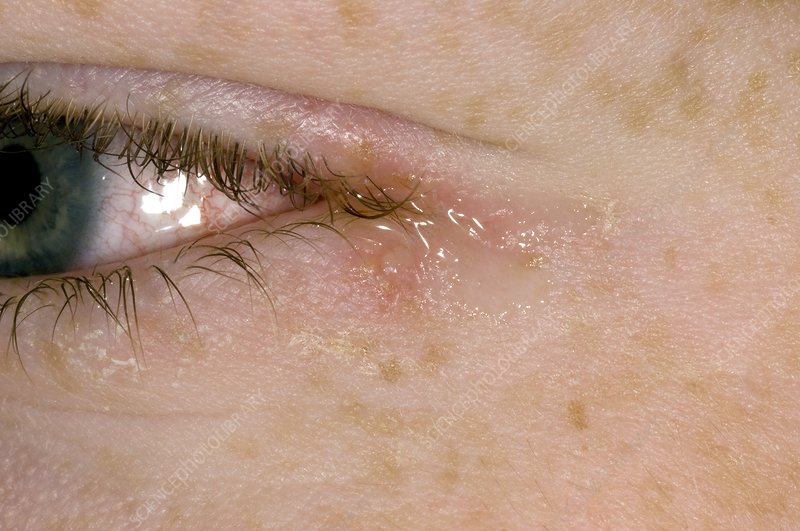
Close-up of a lesion (cold sore) at the corner of the eye in a 20 year old male patient infected with the Herpes simplex virus. Herpes simplex is a common viral infection that leads to painful skin blisters.
Who Is at Risk for Developing Ocular Herpes?
Anyone can potentially develop ocular herpes, regardless of age. The risk is most closely tied to exposure to herpes viruses—especially HSV-1, which is extremely widespread in the general population. In fact, about half of people in the U.S. ages 15 to 49 carry HSV-1, even if they never have symptoms. HSV-2, while primarily linked to genital herpes, can also occasionally cause eye infections.
Varicella zoster virus (the same virus that causes chickenpox and shingles) is another culprit. While it affects about 1 in 1,000 people each year, older adults—especially those over 60—are more likely to experience complications, including eye involvement. Children and young adults are less commonly affected by these types of ocular infections.
Your risk increases if you have:
- Previously had a cold sore or genital herpes infection
- A weakened immune system (from conditions like HIV/AIDS, cancer treatment, or certain medications)
- Close contact with someone actively shedding the virus
Remember, having the virus doesn’t guarantee you’ll develop eye symptoms, but it does mean the potential is always there, especially with certain triggers or immune changes.
How Common Is Eye Herpes?
Ocular herpes isn’t exactly a rare bird in the world of eye diseases. In the United States alone, HSV-related eye herpes affects roughly half a million people. Each year, doctors diagnose tens of thousands of new cases, and unfortunately, no age group is immune—anyone can develop this infection.
Because herpes simplex viruses are staggeringly common, the pool of individuals at risk is quite large. If you zoom out to look at people between ages 15 and 49 in the U.S., about half test positive for HSV-1 (the main culprit behind eye herpes), and around 1 in 8 carry HSV-2.
Shifting to shingles—the varicella zoster virus—around 1 in 1,000 Americans get it each year, with rates rising sharply in older adults (about 1 in 100 for those over 60). Of these, somewhere between 8% and 20% will develop eye symptoms tied to the infection. For children, though, eye involvement with this virus is a rare occurrence.
What Causes Eye Herpes
- HSV-1 is responsible for most cases of eye herpes.
- HSV-2 can affect the eye but is less common; it is more often associated with newborn infections through vertical transmission. HSV-2 is primarily known as a sexually transmitted infection (STI), but in rare cases, it can spread to the face or eyes through bodily fluids—sometimes via your hands or direct contact. This means ocular herpes caused by HSV-2 can occasionally be seen in babies and young children. The most significant risk, however, is during pregnancy or childbirth, when HSV-2 can be passed from mother to baby (vertical transmission). This is one of the main ways newborns contract HSV-2 and later develop eye herpes, with research suggesting it occurs in about 1 in every 3,200 births each year.
- Varicella zoster virus can involve the eye during shingles, a condition known as herpes zoster ophthalmicus. After causing chickenpox in childhood or adulthood, this virus lies dormant in the nervous system—much like HSV. Years or even decades later, it can reactivate as shingles. When shingles spreads along nerves near the eye, it can cause significant eye involvement. Notably, while the varicella zoster virus causes both chickenpox and shingles, only shingles is associated with eye herpes; chickenpox rarely affects the eyes and is not classified as eye herpes when it does. Unlike shingles on the skin, eye herpes isn’t considered contagious.
After the initial infection, herpes viruses can remain dormant in nerve tissue and later reactivate, leading to recurrent eye infections.
How Eye Herpes Spreads or Reactivates
- The virus spreads through direct contact with infected saliva, sores, or bodily fluids.
- Autoinoculation can occur when a person touches an active cold sore and then touches their eye.
- Reactivation may occur after the virus has been dormant and has been associated with:
- Stress or fever
- Illness
- Ultraviolet light exposure
- Eye injury or eye surgery
- Immune suppression
Transmission of HSV from an infected eye to another person is considered uncommon, but careful hygiene is still important.
Symptoms of Eye Herpes
Symptoms can range from mild to severe and may affect one or both eyes. Eye herpes is sometimes mistaken for conjunctivitis (“pink eye”).
Early Signs of Varicella Zoster-Related Eye Herpes
Before any changes are visible on the eye or skin, people with varicella zoster virus affecting the eye may notice some early, general symptoms. These can include:
- Nerve pain (often described as tingling, burning, or sensitivity around the affected area)
- Feeling unusually tired or rundown
- A general sense of not feeling well (malaise)
These symptoms sometimes show up days before any redness, blisters, or sores appear in or around the eye. Recognizing these early warning signs can make a difference in getting prompt treatment and potentially minimizing complications..
Common Symptoms
- Eye redness
- Eye pain or discomfort
- Watery discharge
- Sensitivity to light
- Blurred vision
- Foreign-body sensation (feeling like something is in the eye)
- Blisters or sores on the eyelid or skin around the eye
Skin Symptoms of Varicella Zoster-Related Eye Herpes
When herpes zoster (the virus behind shingles) involves the eye, it often produces skin symptoms on just one side of the face. You might notice:
- A red, sometimes painful rash—most often on the forehead, upper eyelid, or along the side of the nose
- Groups of small fluid-filled blisters that can break open and form crusts
- Itching or tingling in the affected area before the rash appears
These skin changes can develop before or during the eye symptoms themselves and are important clues that the varicella zoster virus is involved. If you notice these signs, especially alongside eye discomfort, seek prompt medical attention.
More Severe Symptoms
- Worsening vision changes
- Swelling of the cornea or eyelids
- Increased light sensitivity
- Signs of deeper eye involvement
One Eye or Both Eyes?
Eye herpes often affects one eye, but it can involve both eyes.
Types of Eye Herpes
Epithelial Keratitis
- Affects the surface layer of the cornea
- Often heals with treatment
- Usually does not cause permanent scarring when treated promptly
Stromal Keratitis
- Involves deeper layers of the cornea
- Can lead to inflammation, scarring, and permanent vision loss if untreated
Uveitis / Iridocyclitis
- Affects internal eye structures such as the iris or ciliary body
- Associated with more severe inflammation and vision symptoms
How Does Eye Herpes from Varicella Zoster Virus Differ in Appearance?
When eye herpes is caused by the varicella zoster virus (the same virus that causes shingles), it may come with a telltale sign that sets it apart from herpes simplex: a rash, cluster of blisters, or sores on just one side of the forehead—usually above or around the eye. This happens because the varicella zoster virus travels along specific nerves that run into the forehead and eyelid, often leading to skin involvement in addition to eye problems. In contrast, herpes simplex-related eye herpes typically does not produce this localized facial rash.
Possible Complications
Without appropriate treatment, eye herpes can lead to:
- Corneal scarring
- Recurrent inflammation
- Secondary glaucoma
- Permanent vision loss or blindness
Prompt diagnosis and treatment are associated with a lower risk of these complications. While eye herpes isn’t life-threatening, it is a lifelong condition—herpes viruses remain dormant in the body and can reactivate, causing repeat episodes. Fortunately, this condition is treatable, and antiviral medications can help control infection, reduce the risk of recurrences, and protect your vision. For many people, ongoing antiviral therapy may be recommended to manage the virus and lower the chances of future flare-ups.
How Eye Herpes Is Diagnosed
Diagnosis is typically made by an eye care professional and may include:
- Clinical eye examination
- Slit-lamp examination to evaluate the cornea and internal eye structures
- Corneal staining patterns
- Eye swabs for viral testing (such as PCR), when needed
- Measurement of eye pressure
- In some cases, blood tests indicating prior exposure
During the clinical evaluation, your eye care specialist will carefully assess which parts of the eye are affected and the extent of the infection. The slit-lamp exam, a key part of the process, allows the specialist to view both the surface and the inside of your eye in great detail. This helps guide both the diagnosis and the best approach to treatment.
Treatment Options
There is no cure for herpes viruses, but treatment can control infection and reduce recurrence.
Common treatment approaches include:
- Antiviral eye drops or ointments
- Oral antiviral medications
- Anti-inflammatory medications, used cautiously and under medical supervision
- Topical antibiotics to prevent secondary bacterial infection, when indicated
Antiviral medications may be given in several forms, including intravenous (IV), oral (pill), or topical preparations. Common options include acyclovir, valacyclovir, famciclovir, ganciclovir, foscarnet, and trifluridine. Your healthcare provider will determine the most appropriate type and route based on the severity and location of the infection.
In severe cases with significant scarring or structural damage, surgery may be necessary. Some individuals with recurrent disease may require long-term antiviral therapy.
Prevention
Eye herpes cannot be prevented with complete certainty, but risk can be reduced by:
- Avoiding touching the eyes, especially during an active cold sore
- Washing hands frequently
- Not sharing personal items such as towels, makeup, or eye products
- Managing stress and overall health
- Using UV-protective eyewear outdoors
- Following medical guidance for recurrent herpes infections
Vaccination against shingles has been shown to reduce the risk of shingles-related eye complications.
If you have eye herpes, it’s important to get it treated as soon as possible. Early treatment not only helps control infection and reduces the chance of serious complications, but may also lower the risk of permanent vision loss. Speak to your healthcare provider about antiviral medications, which can help manage symptoms and may be recommended on a longer-term basis to prevent the virus from reactivating and causing recurrent infections. Regular follow-up with your eye care professional can help monitor your eye health and further reduce the risk of future flare-ups.
When to See a Doctor
Seek urgent medical evaluation if you experience:
- Sudden vision changes
- Severe eye pain
- Blisters or sores around the eye
- Rapidly worsening redness or swelling
- Intense light sensitivity
- New eye symptoms with a history of herpes infection
Early treatment is important to help preserve vision.
Frequently Asked Questions
Is eye herpes contagious?
The herpes viruses that cause eye herpes are contagious, but transmission from an infected eye to another person is uncommon. Good hygiene reduces risk.
Can eye herpes cause blindness?
Yes. Severe or untreated eye herpes—particularly infections affecting deeper eye layers—can lead to permanent vision loss or blindness.
Can eye herpes come back?
Yes. Herpes viruses can reactivate multiple times throughout life, especially during illness, stress, or immune suppression.
Is there a cure for ocular herpes?
There is no cure for herpes viruses. Antiviral treatment can control outbreaks and reduce recurrence.
What does eye herpes look like?
Eye herpes may cause redness, watery eyes, light sensitivity, and sometimes blisters on the eyelid or skin around the eye.
How long does eye herpes last?
With treatment, mild cases may improve within one to two weeks. More severe cases may take longer to heal.
Is eye herpes the same as pink eye?
No. Eye herpes and conjunctivitis can appear similar, but eye herpes often involves pain, light sensitivity, and blisters. A clinical exam is needed for diagnosis.
Can eye herpes spread from a cold sore?
Yes. Touching an active cold sore and then touching the eye can transfer the virus.
Does eye herpes always cause pain?
There is no high-quality evidence showing that eye herpes always causes pain; symptom severity varies by individual and type of infection.
APA Reference List
Ahmad, B., Gurnani, B., & Patel, B. C. (2024, March 10). Herpes simplex keratitis. In StatPearls [Internet]. StatPearls Publishing. https://www.ncbi.nlm.nih.gov/books/NBK545278/
Centers for Disease Control and Prevention. (2025, May 27). What causes HSV (herpes simplex virus) keratitis. https://www.cdc.gov/contact-lenses/causes/what-causes-hsv-herpes-simplex-virus-keratitis.html
Cleveland Clinic. (n.d.). Ocular herpes (eye herpes): Symptoms & treatment. Retrieved December 12, 2025, from https://my.clevelandclinic.org/health/diseases/ocular-eye-herpes
Merck Manual Professional Edition. (2024, July). Herpes simplex keratitis. https://www.msdmanuals.com/professional/eye-disorders/corneal-disorders/herpes-simplex-keratitis
Merck Manual Consumer Version. (2024, July). Herpes simplex keratitis. https://www.msdmanuals.com/home/eye-disorders/corneal-disorders/herpes-simplex-keratitis
Medical News Today. (2023, October 30). Eye herpes: Pictures, symptoms, and types. https://www.medicalnewstoday.com/articles/321693
National Health Service. (n.d.). Herpes simplex eye infections. Retrieved December 12, 2025, from https://www.nhs.uk/conditions/herpes-simplex-eye-infections/
Nijm, L. M. (2025, May 9). Herpes simplex epithelial keratitis. EyeWiki. https://eyewiki.org/Herpes_Simplex_Epithelial_Keratitis
World Health Organization. (2025, May 30). Herpes simplex virus. https://www.who.int/news-room/fact-sheets/detail/herpes-simplex-virus