
Exercise is usually one of the best lifestyle steps for high blood pressure, but it needs to be done the right way. The danger is not movement itself. The danger is exercising when your blood pressure is severely elevated, pushing too hard too quickly, or ignoring warning symptoms like chest pain, severe shortness of breath, dizziness, or fainting.
For patients in Houston, the goal is not to be scared of activity. The goal is to know when exercise is helpful, when you should slow down, and when symptoms mean you should stop and get medical care. Regular exercise can help control high blood pressure, but safety depends on your numbers, your symptoms, and your overall health history.
Key Takeaways
- Exercise can help lower and control high blood pressure when done safely.
- You do not need to jump into intense workouts right away; it is safer to start slow and build gradually.
- Adults are generally advised to get at least 150 minutes of moderate-intensity aerobic activity each week.
- Exercising can become risky if your blood pressure is very high or you have warning symptoms.
- Chest pain, severe shortness of breath, fainting, sudden weakness, vision changes, or trouble speaking should never be ignored.
- A reading around 180/120 mm Hg or higher with symptoms can signal a hypertensive emergency.
- If symptoms feel severe, unusual, or sudden, emergency evaluation matters.
Is Exercise Safe if You Have High Blood Pressure?
For many people, yes. Exercise is often part of a healthy blood pressure plan because it can support the heart, blood vessels, weight control, stress management, and overall cardiovascular health. The American Heart Association says regular physical activity can help control high blood pressure, weight, and stress.
That does not mean every person should start the same way. Someone who has been inactive for years, has very high readings, or has other heart risk factors may need a slower plan and medical guidance before increasing intensity. Mayo Clinic specifically advises people not to jump straight into extreme exercise and to begin gradually.
Why Exercise Can Help Lower Blood Pressure
Exercise helps because it trains the heart to work more efficiently. Mayo Clinic explains that a stronger heart can pump more blood with less effort, which lowers the force on the blood vessels and can help reduce blood pressure over time.
This is why walking, cycling, swimming, and other steady activities can be useful. The benefit usually comes from consistency, not from pushing your body as hard as possible. For high blood pressure, a realistic routine you can keep doing is usually better than a difficult plan you quit after a week.
When Exercising With High Blood Pressure Can Be Dangerous
Exercise can become risky when your pressure is severely elevated, your symptoms suggest a heart or stroke warning sign, or your body is not ready for the level of effort. A sudden jump from no activity to hard running, heavy lifting, or high-intensity training may be too much for some people, especially if they already have uncontrolled blood pressure or other cardiovascular risks.
It can also be dangerous to keep going when your body is clearly telling you to stop. Chest pressure, severe breathlessness, faintness, confusion, or pain spreading into the jaw, neck, shoulder, arm, or back should not be treated as “normal workout discomfort.” Those symptoms need attention.
Blood Pressure Numbers That Deserve Caution
Blood pressure numbers matter, but they should be interpreted carefully. A single high home reading can happen because of stress, pain, caffeine, recent activity, poor cuff placement, or taking the reading too soon after movement. If there are no symptoms, it is reasonable to sit quietly and recheck properly.
The number becomes more concerning when blood pressure is higher than 180/120, especially if symptoms are also present. The American Heart Association says a person should call 911 if blood pressure is higher than 180/120 and symptoms include chest pain, shortness of breath, back pain, numbness, weakness, vision change, or difficulty speaking.
Exercises That Are Usually Safer Starting Points
For many people with high blood pressure, moderate activity is a safer starting point than intense workouts. Good options often include walking, light cycling, swimming, water exercise, gentle strength training, and short sessions spread throughout the day. The American Heart Association recommends trying to get at least 150 minutes of moderate-intensity aerobic activity each week.
The CDC gives similar general guidance, saying Adults need at least 150 minutes of moderate-intensity physical activity a week, plus muscle-strengthening activity on two days each week. That does not mean you must do everything at once. A 10- or 15-minute walk can still be a useful step if you are starting from a low activity level.
Exercises or Habits to Be More Careful With
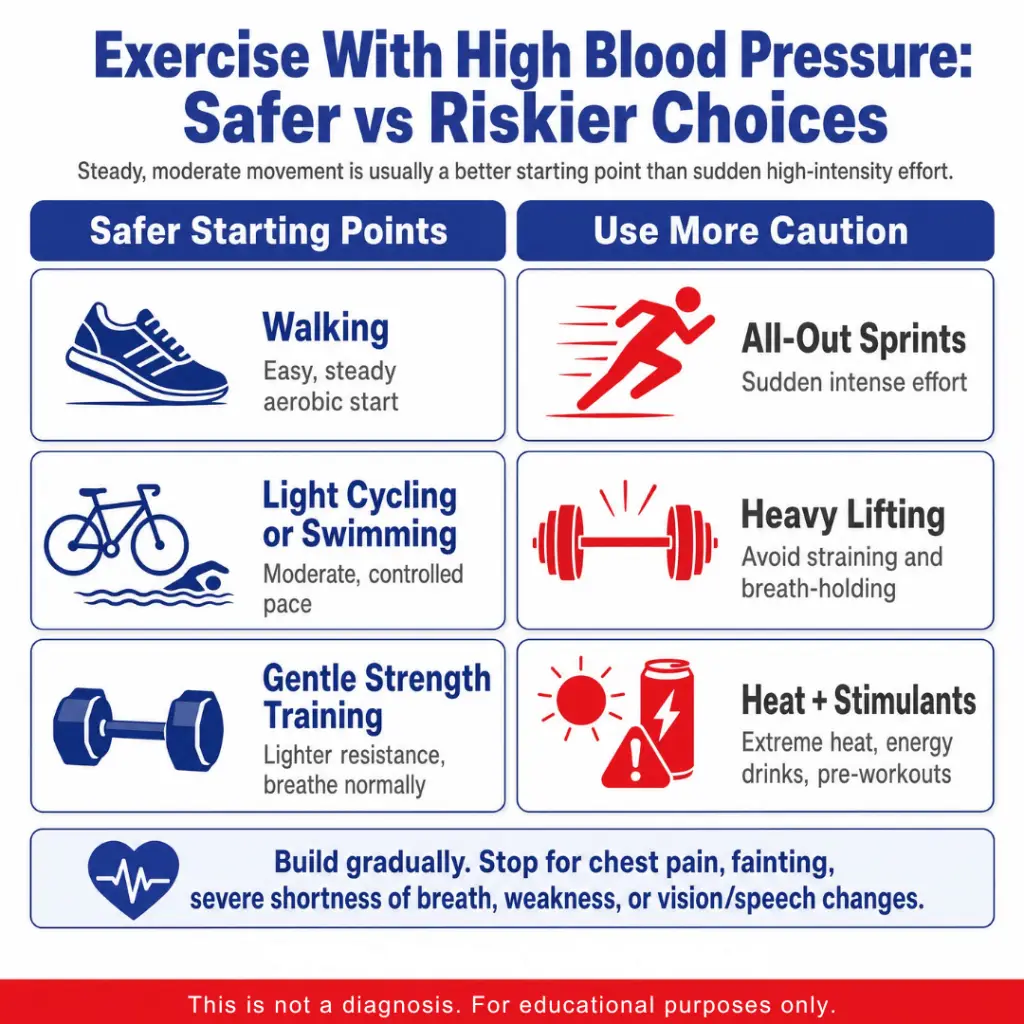
Some forms of exercise need more caution when blood pressure is high. Heavy lifting, breath-holding, sudden all-out sprints, intense interval workouts, and exercising in extreme heat can place extra stress on the body. This does not mean all strength training is forbidden. It means the plan should be realistic, gradual, and safe for your health status.
Be especially careful with pre-workout stimulants, energy drinks, and products that raise heart rate or blood pressure. Also avoid pushing through symptoms just to finish a workout. With high blood pressure, the safer mindset is not “no pain, no gain.” It is “steady progress without warning signs.”
Warning Signs That Mean You Should Stop Exercising
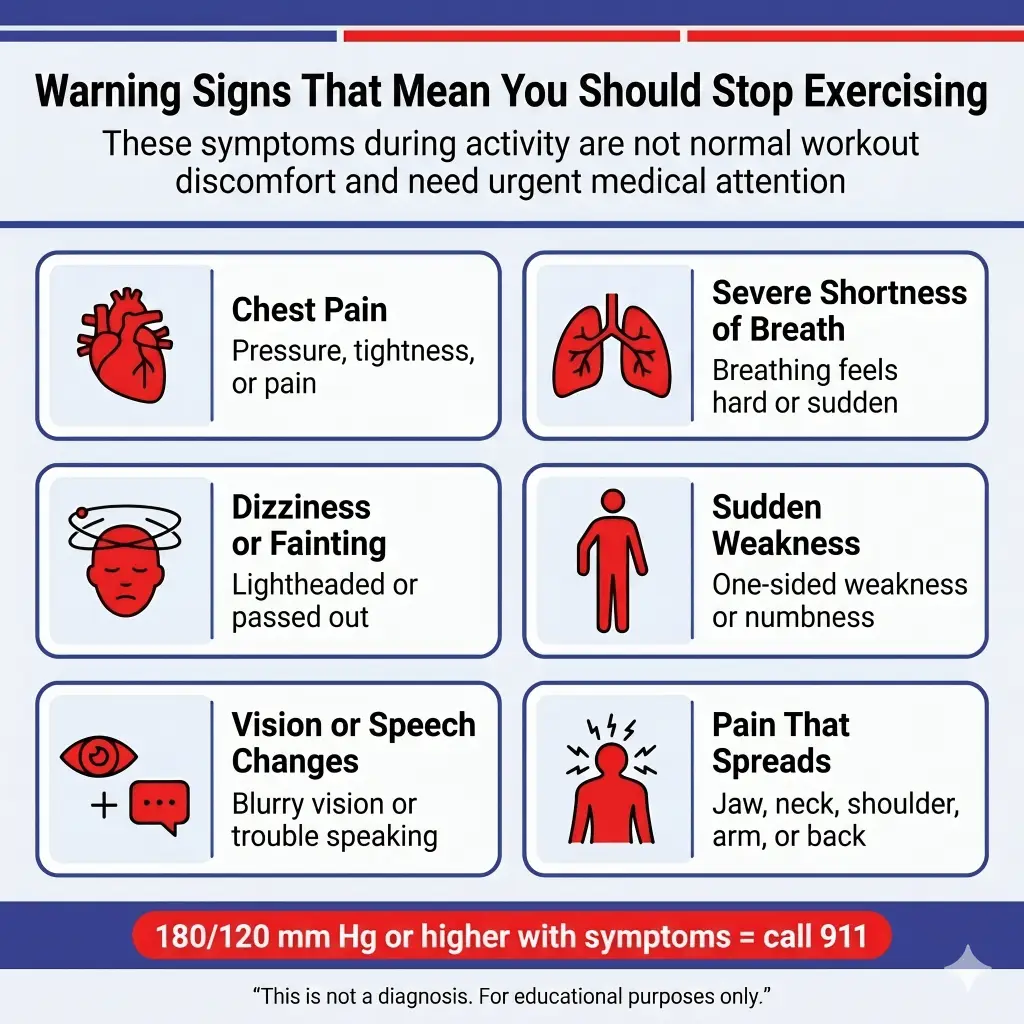
Stop exercising and get help if you feel chest pain or pressure, severe shortness of breath, dizziness, fainting, sudden weakness, confusion, or pain spreading into the jaw, neck, shoulder, arm, or back. These symptoms may point to a heart or circulation problem and should not be brushed off as normal exercise fatigue.
You should also stop if your heartbeat feels very irregular, your vision changes, you develop trouble speaking, or your body suddenly feels weak or numb on one side. These are not symptoms to “walk off.” The safest next step is medical evaluation.
When to Go to the ER or Call 911
Go to the ER or call 911 right away if high blood pressure comes with chest pain, severe shortness of breath, fainting, sudden weakness, numbness, trouble speaking, vision changes, confusion, or symptoms that feel like a heart attack or stroke. The American Heart Association says, Call 911 if your blood pressure is higher than 180/120 and you are experiencing symptoms such as chest pain, shortness of breath, numbness, weakness, vision change, or difficulty speaking.
If you are in Houston and high blood pressure comes with chest pain, breathing trouble, fainting, or stroke-like symptoms, Post Oak ER is open 24/7 for prompt emergency evaluation. It is safer to get checked quickly than to keep exercising or wait at home hoping the symptoms pass.
How to Exercise More Safely With High Blood Pressure
A safer routine usually starts with moderation. Begin with walking or another low-impact activity, then slowly increase time, distance, or intensity. Mayo Clinic recommends starting slowly, and warmups and cool-downs can make the transition into and out of activity easier on the body.
Mayo Clinic also explains that warming up helps get the body ready for aerobic activity, while cooling down allows the heart rate and blood pressure to return toward baseline more gradually. That is especially helpful for people who tend to feel lightheaded or uncomfortable when stopping exercise suddenly.
It also helps to breathe normally during strength exercises, avoid straining, take medications as prescribed, and track your blood pressure at home if your clinician recommends it. If you have heart disease, diabetes, kidney disease, prior heart attack, high cholesterol, or symptoms with activity, ask your clinician what level of exercise is safe for you.
What to Do if Your Blood Pressure Is High After Exercise
It is normal for blood pressure to rise during activity and then come down during recovery. If you check immediately after exertion, the number may look higher than your resting baseline. Sit quietly, breathe normally, and recheck after a few minutes if you are not having symptoms.
But if the reading is very high, does not improve, or comes with chest pain, trouble breathing, severe headache, weakness, numbness, vision changes, confusion, or trouble speaking, do not treat it like a normal post-workout reading. That is when urgent medical care is needed.
Exercise is not the enemy when you have high blood pressure. In most cases, safe movement is part of the solution. The real danger is ignoring severe numbers, jumping into intense activity too quickly, or pushing through symptoms that could signal a heart or stroke emergency.
Frequently Asked Questions
Is it safe to exercise with high blood pressure?
For many people, yes. Exercise can help control blood pressure, but the safest plan depends on your readings, symptoms, fitness level, and medical history.
What blood pressure is too high to exercise?
If your blood pressure is around 180/120 mm Hg or higher, do not start exercising until you have rechecked it properly and know whether symptoms are present. If that number comes with chest pain, shortness of breath, weakness, numbness, vision change, or trouble speaking, call 911.
Can exercise make high blood pressure worse?
During activity, blood pressure naturally rises for a period of time. Over the long term, regular exercise often helps lower and control blood pressure. The concern is exercising too intensely, with uncontrolled readings, or while having warning symptoms.
What exercises are best for high blood pressure?
Moderate aerobic activities are often good starting points, such as walking, cycling, swimming, and other steady movement. Strength training may also help when done safely and without breath-holding or heavy straining.
Should I lift weights if I have high blood pressure?
Some people can do strength training safely, but heavy lifting and breath-holding can be risky. Use lighter resistance, breathe normally, avoid straining, and ask your clinician if you have uncontrolled readings or heart risk factors.
What symptoms mean I should stop exercising?
Stop if you develop chest pain, severe shortness of breath, dizziness, fainting, sudden weakness, confusion, vision changes, trouble speaking, or pain spreading into the jaw, neck, shoulder, arm, or back. These symptoms need medical attention.
Should I go to the ER if my blood pressure is high after exercise?
Go to the ER or call 911 if the reading is very high and comes with serious symptoms such as chest pain, breathing trouble, weakness, numbness, confusion, vision changes, or trouble speaking.
Can walking help lower blood pressure?
Yes. Walking is a practical moderate-intensity activity for many people, and regular physical activity can help lower and control high blood pressure over time.