
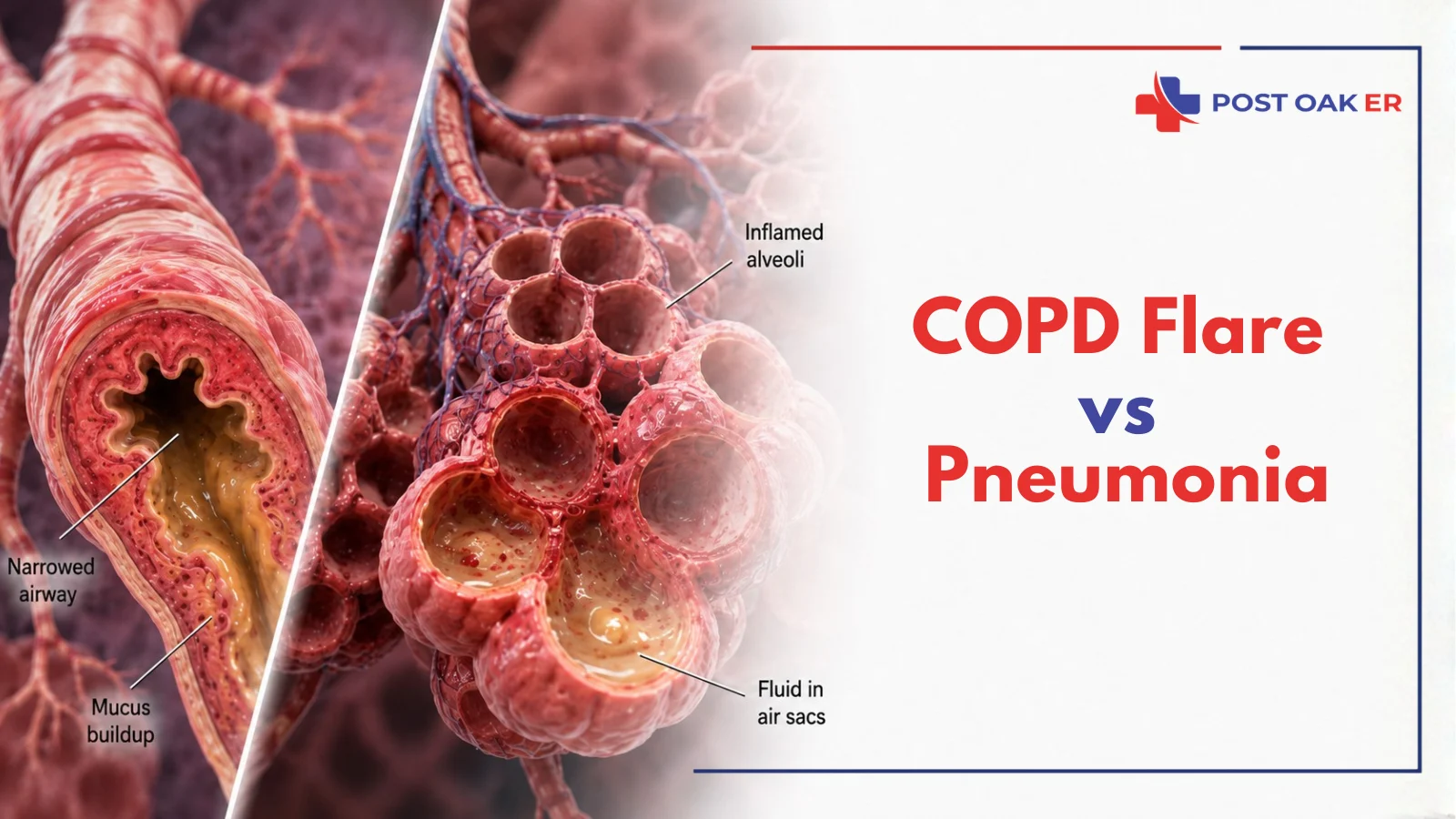
Living with COPD means learning your usual breathing, cough, energy, and mucus pattern. When those symptoms change, it may be hard to tell whether you are having a COPD flare-up, developing pneumonia, dealing with another respiratory infection, or facing more than one problem at the same time.
This guide explains which changes deserve attention and when medical evaluation is appropriate. It cannot diagnose pneumonia at home. Because symptoms overlap and pneumonia can trigger a flare, the decision often depends on how far the illness has moved from baseline and how quickly it is progressing.
Key Takeaways
- Symptoms overlap. Breathlessness, cough, fatigue, mucus changes, chest discomfort, and lower oxygen readings may occur with either condition.
- Both conditions can occur together. A lung infection can trigger or intensify a COPD exacerbation.
- Baseline changes matter. Progressive breathing difficulty, systemic illness, chest symptoms, or poor response to a rescue plan calls for assessment.
What Is the Difference Between a COPD Flare and Pneumonia?
A COPD flare, or exacerbation, is a worsening of respiratory symptoms beyond normal day-to-day variation. Breathlessness, coughing, wheezing, chest tightness, fatigue, or mucus production may increase. Infections and inhaled irritants are common triggers, although the cause is not always identified.
Pneumonia is a lung infection. The CDC overview of pneumonia notes that bacteria and viruses are common causes. The infection inflames lung tissue and may interfere with oxygen exchange.
The diagnoses can coexist. Pneumonia or another lung infection may set off a COPD flare, so both problems may need evaluation.
Why COPD Flares and Pneumonia Can Be Difficult to Tell Apart
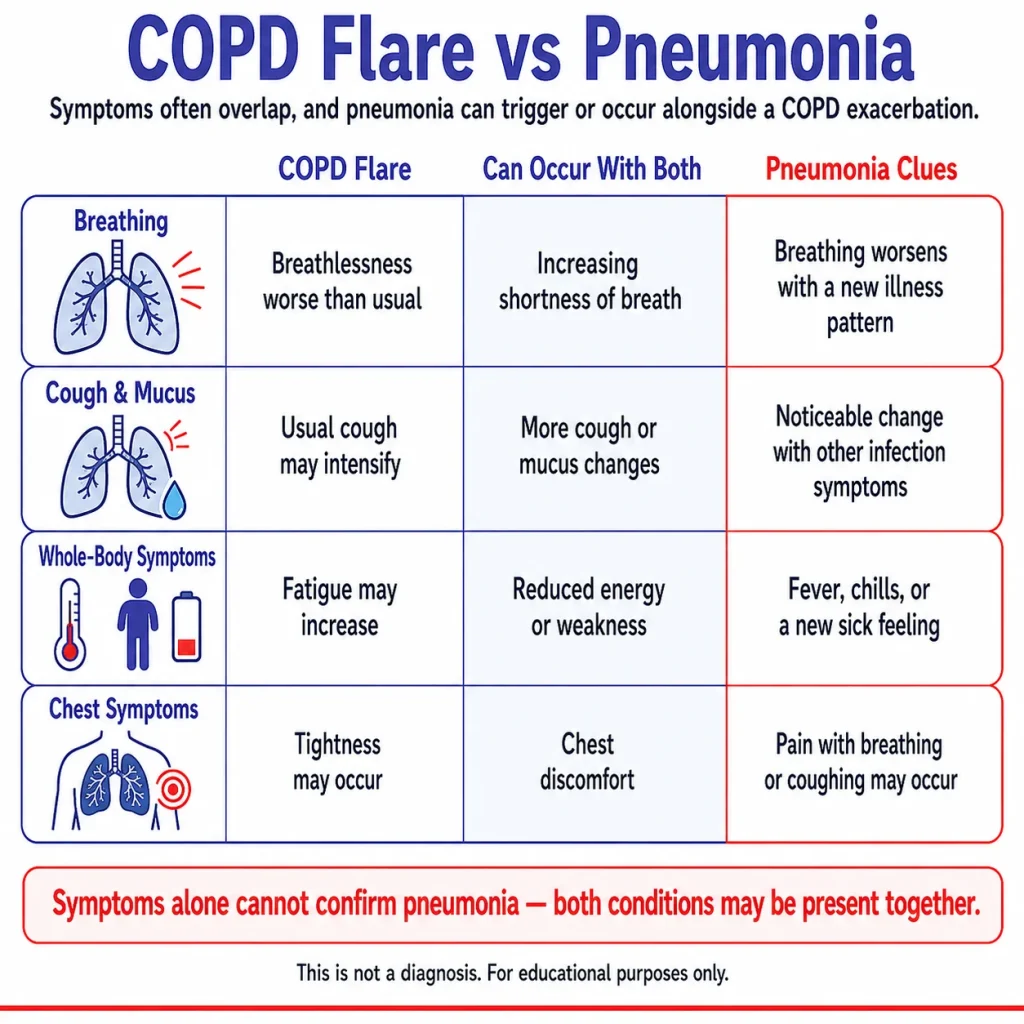
Both conditions can produce a similar outward picture. Even a familiar symptom may have a different cause during a new illness, and no single sign reliably identifies a flare, pneumonia, or both.
Symptoms That May Occur With Either Condition
- Increasing shortness of breath: Breathing may become harder at rest or during activities that are normally manageable.
- More frequent or intense coughing: A usual COPD cough may worsen, or a new cough may develop.
- Mucus changes: The amount, thickness, or color may differ from the person’s usual pattern.
- Chest discomfort: Tightness, soreness from coughing, or pain with breathing may occur, but each has several possible causes.
- Reduced energy: Fatigue may limit walking, bathing, eating, or other routine activities.
- More respiratory effort or a change in oxygen readings: The person may breathe faster, use extra muscles to breathe, or see readings outside the range expected for them.
Start With the Patient’s Usual COPD Baseline
The most useful first question is often, “How is today different from my usual COPD?” The American Thoracic Society’s COPD exacerbation guidance emphasizes that each person may have a different flare pattern.
- Is breathlessness more severe or appearing with less activity than usual?
- Has the cough become more frequent, deeper, or harder to control?
- Has the amount or character of mucus changed meaningfully?
- Are fever, chills, confusion, marked weakness, or another whole-body change new?
- Are symptoms continuing to progress, or is the clinician-directed COPD action plan providing less relief than expected?
Baseline comparison can reveal an important change, but it cannot determine the exact cause.
Changes That May Raise Concern for Pneumonia
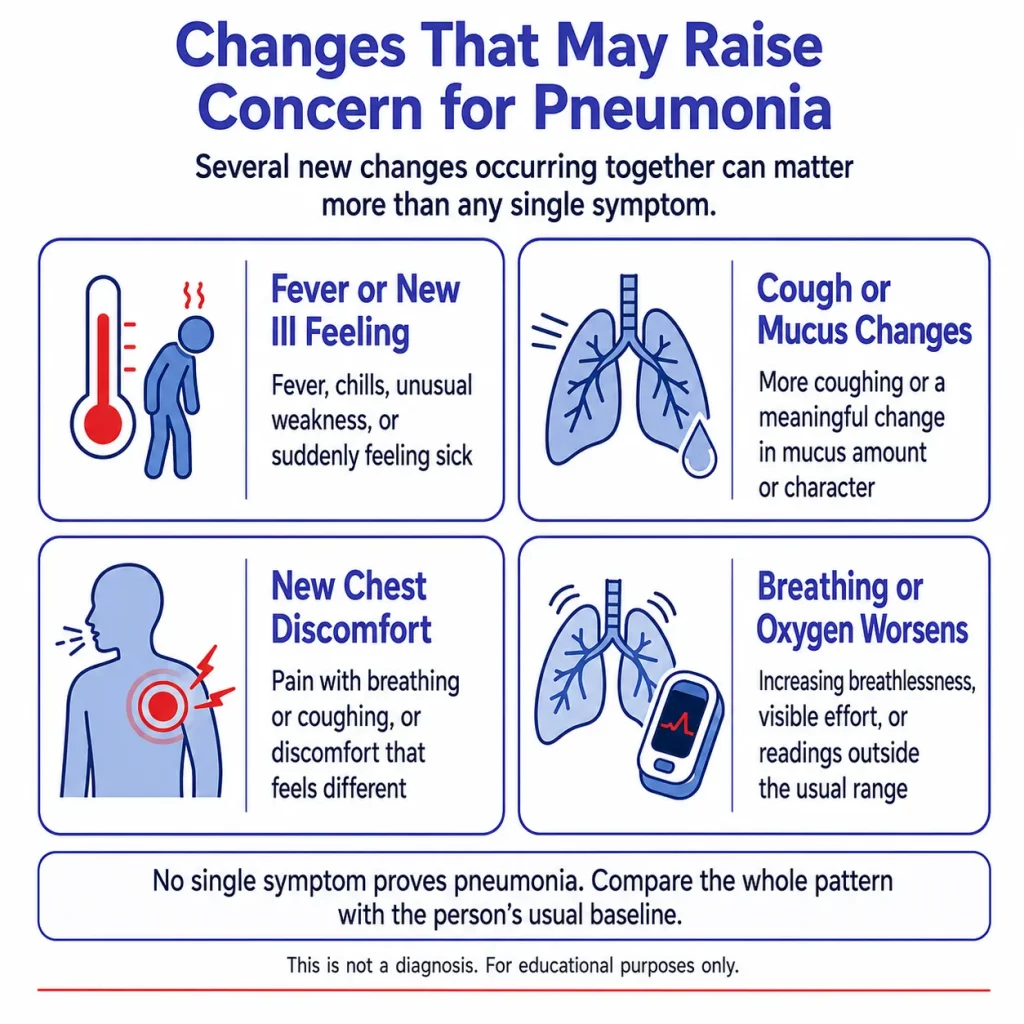
The following changes can increase concern for pneumonia, especially when several appear together, but none proves the diagnosis on its own.
Fever or a New Systemic Illness
Fever, chills, a sudden sick feeling, or unusual weakness alongside worsening respiratory symptoms deserves attention. Symptoms vary: MedlinePlus notes that older adults and people with serious illness may have fewer or milder pneumonia symptoms, sometimes with a lower-than-normal temperature. Fever can support concern for infection, but its absence does not safely rule pneumonia out.
A Noticeable Change in Cough or Mucus
More coughing, more mucus, or a change from the patient’s normal sputum pattern may occur with either condition. Color is only one observation. CDC antibiotic education materials explain that green mucus alone does not establish a bacterial infection or show that an antibiotic is needed.
New Chest Discomfort
Pain with breathing or coughing can occur with pneumonia, while tightness may accompany a flare. Chest pressure, sudden one-sided pain, or distinctly different discomfort can also signal another urgent heart or lung problem.
Worsening Breathing or Oxygen Status
Increasing breathlessness, faster breathing, visible effort, or an oxygen reading outside the patient’s usual or clinician-directed range is concerning. The FDA’s pulse oximeter guidance advises considering readings together with symptoms because device accuracy varies. Do not wait for a particular number when the person is clearly deteriorating.
Why Symptoms Alone Cannot Confirm Pneumonia
Symptoms guide the evaluation but do not replace examination and testing. The 2026 GOLD report treats pneumonia as an important condition to consider when someone appears to be having a COPD exacerbation. In practical terms:
- Fever can occur with pneumonia or another infection; it does not confirm pneumonia by itself.
- Mucus color alone does not identify a bacterial cause or determine whether antibiotics are appropriate.
- A familiar COPD cough does not exclude a new lung infection.
- The absence of one expected symptom, including fever, does not safely exclude pneumonia.
- A COPD flare and pneumonia may be present at the same time.
When the Symptoms Need Medical Evaluation
A person with COPD should arrange timely assessment when a respiratory illness creates a meaningful change from baseline, keeps worsening, or does not respond as expected to the plan prescribed by their clinician. Examples include:
- New fever, chills, or a distinctly ill feeling with worsening breathing symptoms
- A clear increase in coughing or a meaningful change in mucus amount or character
- New chest discomfort
- Oxygen readings that differ from the person’s usual or clinician-directed range
- Greater difficulty walking, bathing, eating, speaking, or completing routine activities
- Symptoms that continue to progress instead of stabilizing
This is not a scoring system. One major change may justify evaluation, especially with advanced COPD, prior severe flares, or other serious conditions.
When to Seek Emergency Care
Emergency evaluation is appropriate for severe or rapidly worsening breathing difficulty, markedly increased breathing effort, confusion or unusual drowsiness, concerning chest pain or pressure, bluish or grayish lips or skin, or a major decline in oxygen status accompanied by worsening symptoms. The NHLBI’s COPD emergency guidance also identifies trouble catching the breath or talking, reduced alertness, and failure of the recommended rescue treatment as reasons to call 911.
If the person appears unstable, cannot speak normally, is difficult to wake, or cannot be transported safely, call 911 rather than driving. For a broader overview of urgent breathing and whole-body warning signs, review the emergency symptoms evaluated at Post Oak ER.
How Medical Evaluation Helps Distinguish the Cause
Clinicians combine symptom history with examination, oxygen assessment, and selected tests to determine whether pneumonia, a flare, both, or another urgent cause best explains the change.
Physical Examination and Oxygen Assessment
Evaluation may include vital signs, alertness, breathing effort, lung sounds, oxygen saturation, and comparison with the usual COPD status. Medication use, recent infections, prior flares, and rescue-plan response also matter.
Chest Imaging
MedlinePlus describes chest X-ray as a common test when pneumonia is suspected. Imaging can show lung changes that support pneumonia or suggest another explanation, but results still have to be interpreted with the examination and clinical history.
When clinically appropriate during an emergency visit, Post Oak ER provides on-site X-ray and CT imaging to support physician-led evaluation.
Selective Laboratory or Infection Testing
Blood tests, respiratory-virus testing, sputum studies, or other tests may be chosen according to severity and the diagnostic question. The ATS/IDSA community-acquired pneumonia guideline does not recommend every microbiology test for every patient; testing becomes more selective according to clinical severity and risk factors.
Why Treatment Depends on What the Evaluation Finds
A COPD flare, pneumonia, or both may require different decisions. Emergency care may support breathing and oxygenation while clinicians assess whether airway inflammation, infection, or another condition is driving the illness.
Antibiotics are not automatically appropriate for every COPD flare or every mucus change. They treat bacterial infections, not viral illness, and the decision depends on the full clinical picture rather than one symptom or one home observation.
After the Immediate Illness
After discharge, follow the written instructions, take prescribed medicines as directed, and complete the recommended follow-up. Ask the regular clinician to review the COPD action plan and prevention measures, including which vaccines are appropriate. Current CDC pneumococcal vaccine recommendations vary by age, health conditions, and vaccination history, so the schedule should be individualized.
Emergency Evaluation for Worsening Breathing in Houston
Post Oak ER provides 24/7 emergency care in Houston for COPD patients with worsening breathing, concerning oxygen changes, chest symptoms, or signs of serious respiratory infection. Our emergency team can assess breathing and oxygen status and use chest imaging, on-site laboratory testing, and other emergency evaluation when clinically appropriate. Because pneumonia and a COPD exacerbation can overlap or occur together, a significant change should be assessed rather than dismissed as “just COPD.” Call 911 for severe respiratory distress, confusion, bluish or grayish discoloration, or another sign of instability.
Frequently Asked Questions
Can pneumonia trigger a COPD exacerbation?
Yes. A lung infection can increase airway inflammation and worsen the person’s usual COPD symptoms, causing an exacerbation.
Can someone have pneumonia and a COPD flare at the same time?
Yes. The conditions are not mutually exclusive. Pneumonia may be the trigger for the flare, so evaluation may need to address both.
How can you tell pneumonia from a COPD exacerbation?
Symptoms alone may not separate them reliably. Clinicians use the change from baseline, examination, oxygen assessment, chest imaging, and selected tests to identify the most likely cause.
Does fever always mean that a person with COPD has pneumonia?
No. Fever may occur with pneumonia or another infection, and some people with pneumonia do not develop a clear fever. It is one part of the overall pattern, not a diagnosis.
Does a change in mucus color prove that antibiotics are needed?
No. Color alone cannot confirm a bacterial infection or determine treatment. Clinicians consider the full symptom pattern, examination findings, illness severity, and any relevant tests.
What tests may be used to evaluate pneumonia in someone with COPD?
Evaluation commonly starts with vital signs, a lung examination, and oxygen assessment. Chest imaging and selected blood, sputum, or respiratory-infection tests may be added when the clinical situation supports them.
When should a person with COPD and possible pneumonia go to the ER?
Go to the ER for severe or rapidly worsening breathing trouble, confusion or unusual drowsiness, concerning chest pain or pressure, bluish or grayish discoloration, a major symptomatic oxygen decline, or failure of the prescribed rescue plan. Call 911 when the person appears unstable or cannot be transported safely.