
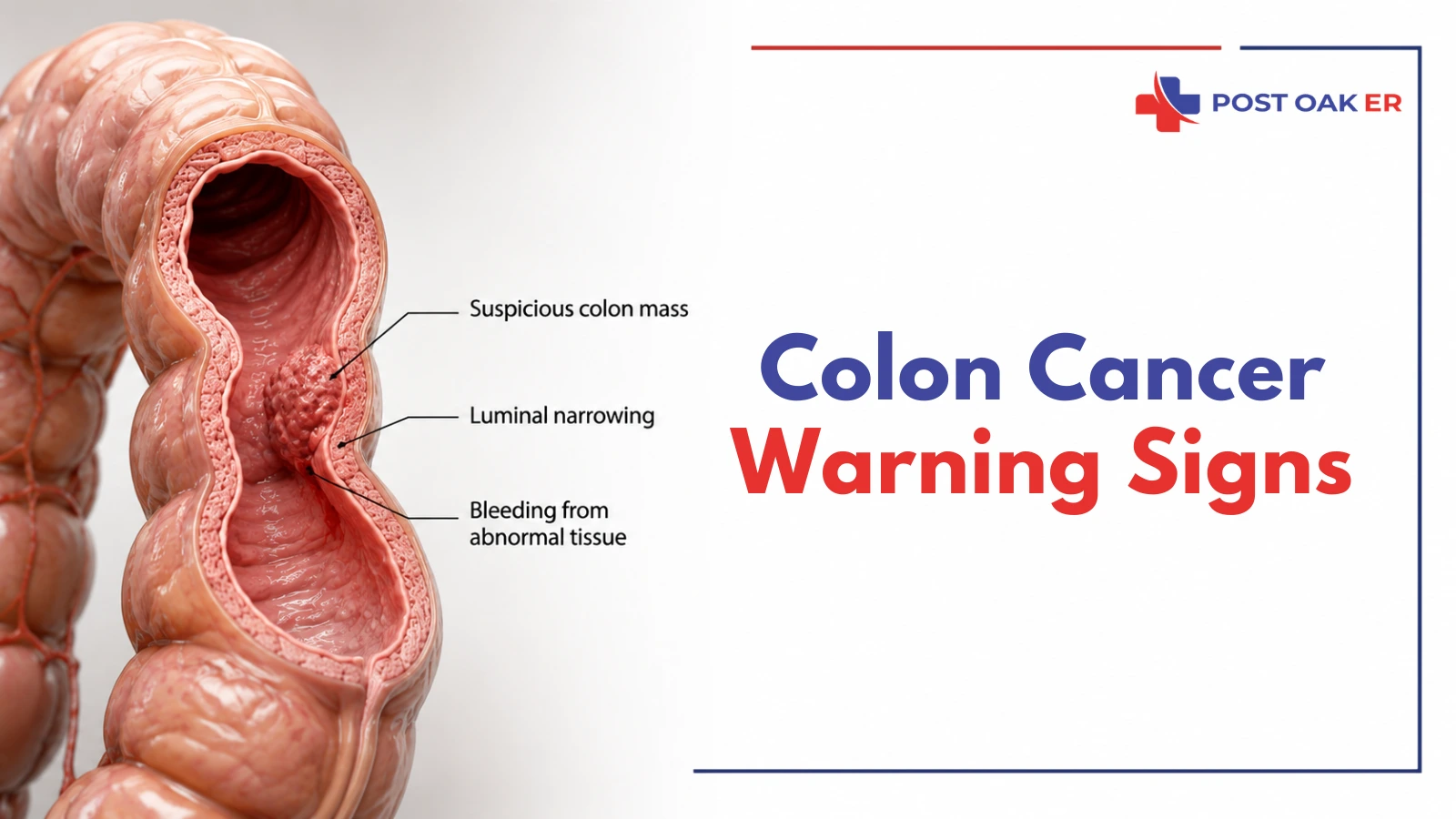
A streak of blood once and a bowel pattern that has been different for three weeks are not the same clinical signal. Colon cancer symptoms often matter as a pattern: a change that is new, keeps returning, or appears with other concerning symptoms. Blood in or on the stool, ongoing bowel changes, abdominal discomfort, and weakness are among warning signs recognized by the National Cancer Institute. None of these symptoms, however, can diagnose colon cancer on their own.
The practical question is what the pattern is doing now. A stable person with a persistent bowel change usually needs timely medical follow-up to find the cause. Heavy bleeding, severe pain, fainting, or rapid deterioration changes the decision and may require emergency evaluation.
The Pattern Matters More Than One Isolated Bowel Change
Bowel habits can shift for many reasons, including diet, medicines, infection, constipation, and stress. Concern rises when a clear change from your usual pattern does not settle, keeps returning, or appears with bleeding, pain, fatigue, or weakness.
The CDC advises discussing changes in bowel habits, blood in or on the stool, persistent abdominal pain or cramps, and unexplained weight loss with a clinician. The goal is not to assume cancer; it is to avoid dismissing a pattern that needs a proper evaluation.
Blood in the Stool and Changes You Should Notice
Visible Blood or Repeated Rectal Bleeding
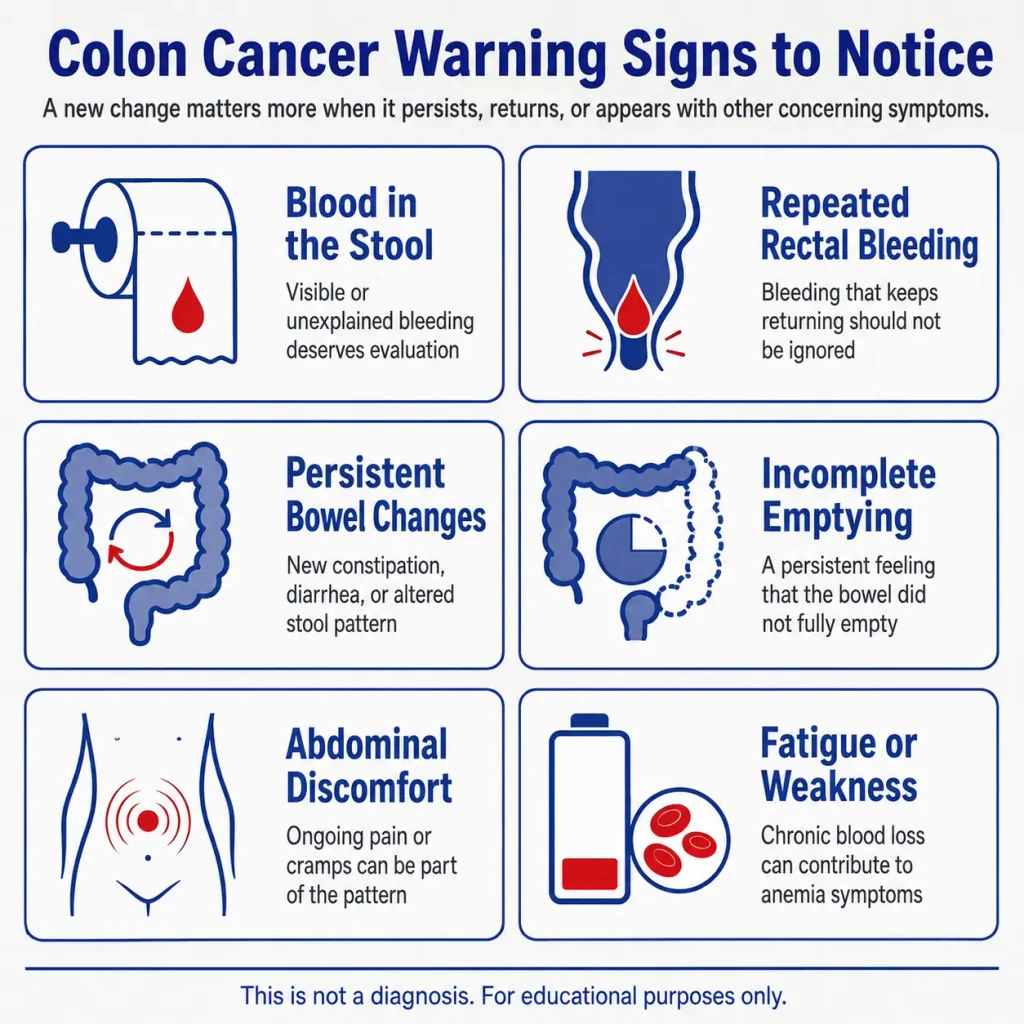
Blood may appear on toilet paper, on the stool, mixed with it, or in the toilet water. Many causes are not cancer, but repeated or unexplained rectal bleeding should be evaluated rather than assigned a cause by appearance alone. The American Cancer Society’s colorectal symptom guidance includes rectal bleeding and blood in the stool among recognized warning signs.
A useful distinction is recurrence and volume. A small, self-limited episode in someone who otherwise feels well is different from bleeding that continues, becomes heavier, produces clots, or is accompanied by dizziness, weakness, or abdominal pain. Post Oak ER also provides Houston-specific guidance on when bleeding belongs in the ER for patients trying to make that decision.
Dark or Unusual Stool Changes
Dark brown, maroon, or black stool can raise concern for bleeding, but color is not a diagnosis. Iron, bismuth-containing medicines, foods, and bleeding from different parts of the digestive tract can alter stool color. MedlinePlus explains that black or tarry stools can reflect upper gastrointestinal bleeding but can also have non-bleeding causes. Colorectal bleeding can also produce darker stool in some situations.
If the stool is truly black and tarry, or if a color change occurs with visible blood, lightheadedness, fainting, shortness of breath, or significant weakness, the issue is no longer simply “what color is my stool?” It is whether active gastrointestinal bleeding may be occurring.
Persistent Changes in Your Usual Bowel Pattern
The key word is change. A long-standing bowel pattern is different from a new pattern of prolonged constipation, repeated diarrhea, altered stool form, or a persistent sense of incomplete emptying. These can occur with colon cancer, according to the NCI colon cancer patient information.
These symptoms are common in many benign conditions. What makes them worth a clinician’s attention is persistence, a meaningful departure from your baseline, or a pattern that is steadily worsening rather than settling.
When Bowel Changes Come With Pain, Weakness, or Other Warning Signs
Bowel changes become more concerning when they are part of a broader pattern. Persistent abdominal discomfort, unexplained fatigue or weakness, and recurring bleeding deserve evaluation. Chronic gastrointestinal blood loss can contribute to anemia and fatigue even when bleeding is not dramatic.
The NIDDK guidance on gastrointestinal bleeding notes that acute bleeding can cause abdominal pain, lightheadedness, fainting, tiredness, or shortness of breath, while chronic bleeding may cause anemia. These symptoms do not identify colon cancer as the cause; they help show when the effect of bleeding itself may be becoming medically important.
What “Early Colon Cancer Symptoms” Can – and Cannot – Tell You
There is no single “first” symptom that reliably identifies colon cancer. The basic warning signs are similar in women and men, and some colorectal cancers cause few or no noticeable symptoms early.
Symptom severity also cannot tell you whether cancer is present or what stage it would be. A subtle change can have a non-cancer cause, while a dramatic bleed may come from another gastrointestinal condition. Symptoms create a reason for evaluation, not a diagnosis. High-level NCI information on colorectal screening also underscores the separate role of screening in finding disease before symptoms begin.
When Symptoms Need Follow-Up – and When They Should Not Wait
If you are otherwise stable, arrange prompt medical follow-up for a bowel-pattern change that persists, repeatedly returns, or is paired with recurring unexplained blood in the stool. The purpose of follow-up is to identify the cause and decide what testing is appropriate.
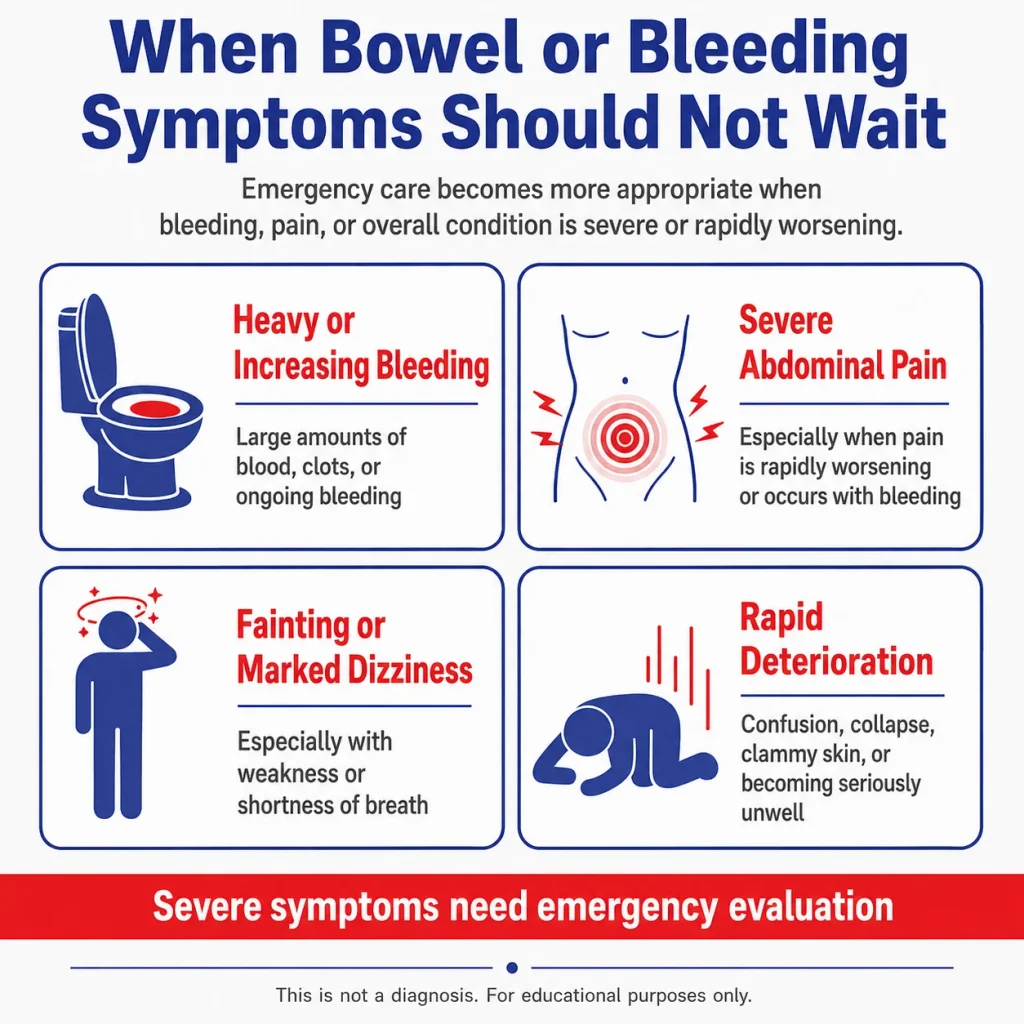
Emergency care becomes more appropriate when the current problem is severe, regardless of whether cancer is suspected. The American Cancer Society guidance on blood in the stool and NIDDK guidance both identify heavy or acute bleeding with systemic symptoms as reasons for urgent evaluation.
– Heavy, ongoing, or rapidly increasing rectal bleeding, especially when the toilet contains a large amount of blood or clots.
– Severe or rapidly worsening abdominal pain, particularly when it occurs with bleeding or a markedly ill appearance.
– Fainting, marked dizziness, new shortness of breath, or significant weakness with bleeding.
– Confusion, collapse, cold or clammy skin, or other signs that the person may be unstable.
– Rapid deterioration or a sense that the person is becoming seriously unwell over a short period.
If bleeding is heavy and you may faint, you have collapsed, or it is not safe to travel by private vehicle, call 911. For severe abdominal pain, Post Oak ER also maintains guidance on when abdominal pain warrants ER evaluation.
How Concerning Colon Symptoms Are Evaluated
Evaluation starts with the pattern: when symptoms began, how often they occur, whether pain is present, medicines that affect bleeding, relevant history, and signs of anemia or dehydration. A clinician may examine the abdomen and rectal area and order blood tests when appropriate.
If colorectal cancer is a concern, a colonoscopy may be used to examine the colon and rectum and obtain tissue from an abnormal area. The American Cancer Society overview of colorectal cancer diagnostic testing explains how history, examination, blood work, stool testing in selected circumstances, imaging, colonoscopy, and biopsy may fit into the workup.
An emergency visit focuses on active bleeding, severe pain, dehydration, anemia, or instability. CT can help with some urgent abdominal problems, but it does not replace colonoscopy or a complete colorectal workup. Post Oak ER lists CT, X-ray, and ultrasound among its on-site emergency imaging services.
When Severe Bowel or Bleeding Symptoms Need ER Care in Houston
Post Oak ER is open 24/7 for Houston-area patients whose bowel or bleeding symptoms have become severe. For heavy ongoing bleeding, severe abdominal pain, fainting, marked weakness, or rapid worsening, the emergency team can assess vital signs, evaluate for blood loss or dehydration, obtain appropriate on-site laboratory testing and imaging when clinically indicated, and stabilize urgent problems. When the immediate emergency is addressed, patients may still need outpatient gastroenterology or colorectal follow-up for definitive evaluation.
Frequently Asked Questions
Can blood in the stool be an early sign of colon cancer?
Yes, but blood in the stool has many possible causes and most are not colorectal cancer. Repeated or unexplained bleeding should be evaluated rather than diagnosed by color or amount alone.
What bowel changes can happen with colon cancer?
Possible changes include diarrhea, constipation, altered stool form or frequency, or a persistent feeling of incomplete emptying. The meaningful signal is a new change from your normal pattern that persists or returns.
Can colon cancer cause symptoms even if there is no visible blood in the stool?
Yes. Bowel changes, abdominal discomfort, fatigue, or weakness can occur without visible blood. Bleeding can also be occult, meaning it is too small to see with the naked eye.
Are colon cancer symptoms different in women?
The core warning signs are generally the same in women and men, including blood in the stool, persistent bowel changes, abdominal discomfort, and unexplained weakness or fatigue. Symptoms alone cannot confirm colorectal cancer.
Can you have early colon cancer without noticeable symptoms?
Yes. Colorectal cancer may cause few or no symptoms early. Symptom-based evaluation and age- or risk-appropriate screening therefore serve different roles.
When does rectal bleeding require emergency care?
Go to the ER for heavy or ongoing bleeding, large amounts of blood or clots, severe abdominal pain with bleeding, or bleeding accompanied by fainting, marked dizziness, shortness of breath, confusion, or significant weakness. Call 911 if the person is collapsing, appears unstable, or cannot be transported safely.