
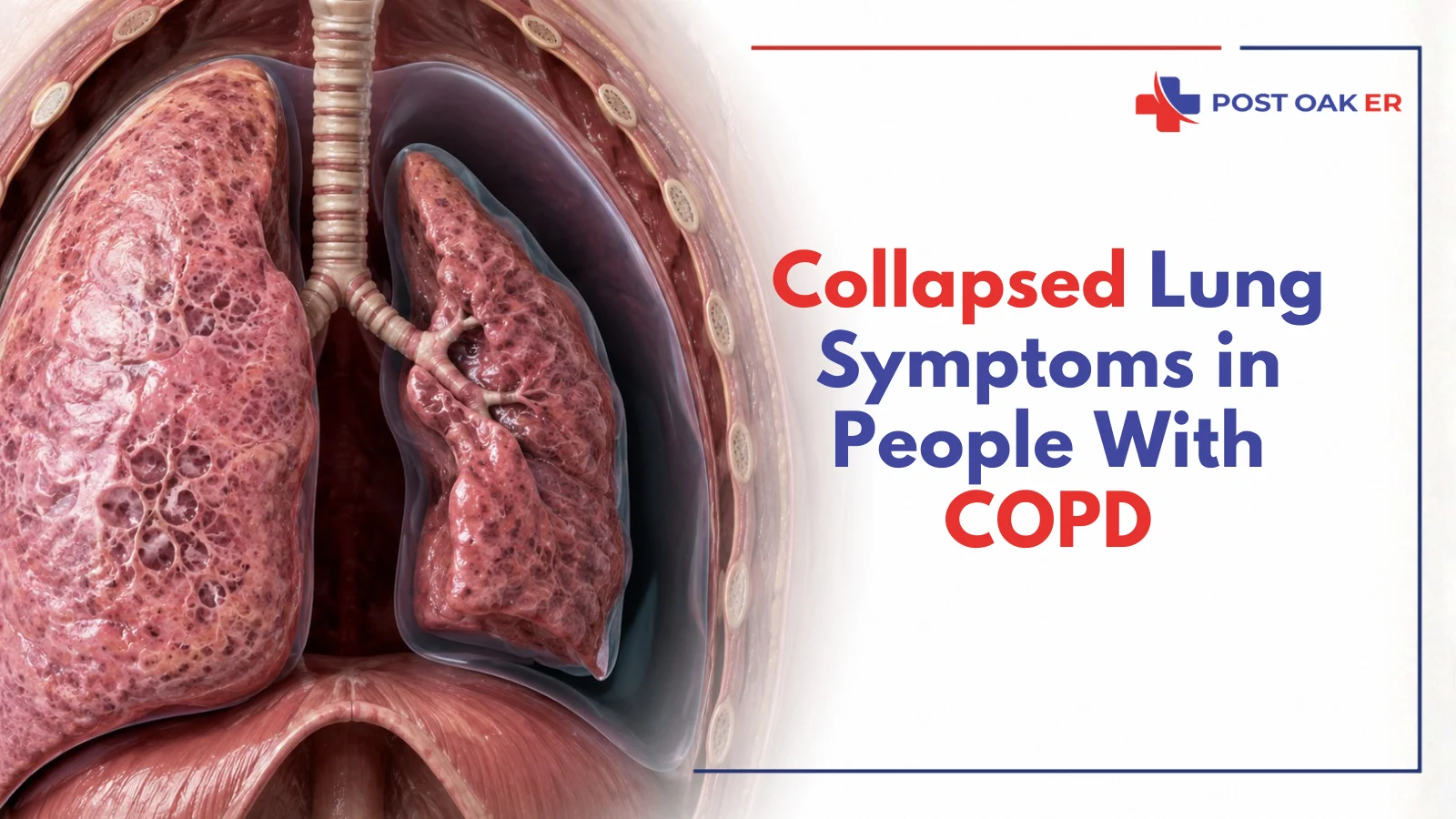
For someone living with COPD, shortness of breath may be familiar. A sudden change is different. New chest pain, especially when it begins abruptly with a sharp increase in breathing difficulty, may signal a collapsed lung or another serious chest emergency rather than a routine COPD flare. A possible collapsed lung cannot be confirmed or ruled out safely at home. It needs prompt emergency evaluation, and severe or rapidly worsening breathing trouble warrants a 911 call.
What Is a Collapsed Lung?
A collapsed lung, medically called a pneumothorax, occurs when air collects in the pleural space between the lung and chest wall. The air can press on the lung and keep part or all of it from expanding normally, as explained in the National Heart, Lung, and Blood Institute overview of pneumothorax. The amount of collapse and the intensity of symptoms can vary, so pain severity alone cannot show how serious the problem is.
Why a Collapsed Lung Is a Concern for People With COPD
COPD changes lung structure and can reduce the reserve available for breathing. Lung disease is a recognized risk context for pneumothorax, according to the NHLBI review of pleural-disorder risk factors. When pneumothorax occurs in someone with underlying lung disease, it is called secondary spontaneous pneumothorax. The Merck Manual professional review notes that this form can be more serious because the person already has less pulmonary reserve. Even a limited additional loss of lung expansion may therefore have a meaningful effect.
Possible Collapsed-Lung Symptoms in Someone With COPD
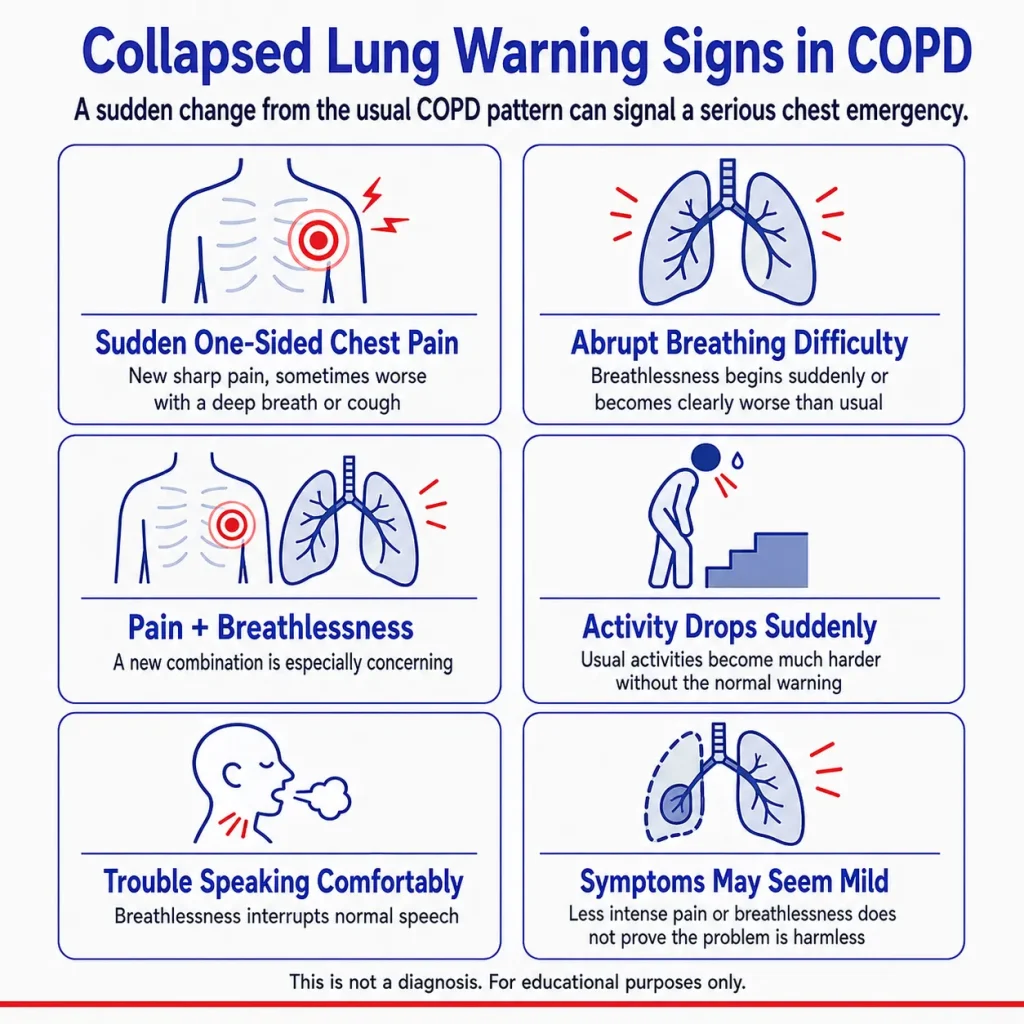
Pneumothorax often begins suddenly, but the pattern is not identical in every person. The American Lung Association symptom and diagnosis guide identifies chest pain and shortness of breath as common symptoms. In someone with COPD, the key concern is a new, abrupt departure from the usual baseline rather than any single symptom by itself.
Sudden One-Sided Chest Pain
A pneumothorax may cause sharp pain on one side of the chest, sometimes worse with a deep breath or cough. What matters is that the pain is new and feels unlike the person’s usual COPD discomfort. Pain location cannot confirm the diagnosis; heart problems, a blood clot in the lung, infection, and other emergencies can produce overlapping symptoms.
Abrupt or Unexplained Breathing Difficulty
Watch for breathlessness that begins suddenly or becomes clearly worse than the person’s normal COPD pattern. A person may notice a sharp drop in activity tolerance, difficulty speaking comfortably, or a sense that breathing changed without the usual warning. These signs need medical assessment rather than repeated home checks.
A New Combination of Chest Pain and Breathlessness
Sudden chest discomfort together with an abrupt increase in shortness of breath is particularly concerning. Do not automatically label the combination as a COPD flare, even if the person has experienced many flares before. The same symptom pairing can occur with several time-sensitive lung and heart conditions.
Symptoms That Seem Mild at First
Less intense symptoms do not prove that the problem is small or harmless. The NHLBI description of pleural-disorder symptoms notes that symptoms can vary and may even be absent. A person with COPD should not wait for pain or breathlessness to become extreme before being evaluated.
Collapsed Lung or COPD Flare: Can You Tell the Difference at Home?
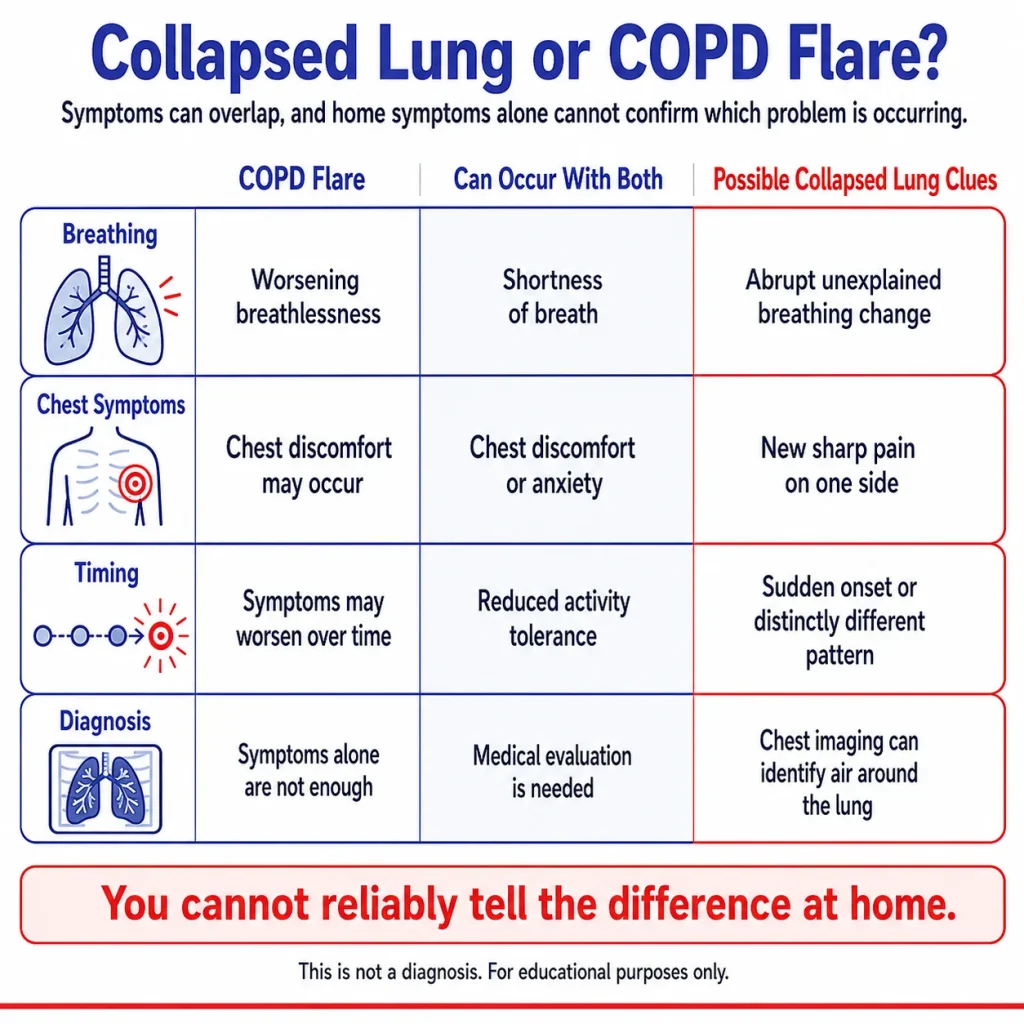
No. Both can cause worsening breathlessness, chest discomfort, anxiety, and reduced activity tolerance. Sudden onset, pain concentrated on one side, or a symptom pattern that feels distinctly different may raise concern for pneumothorax, but none of those features establishes the diagnosis. Clinicians use the history, examination, oxygen assessment, and chest imaging to distinguish pneumothorax from a COPD exacerbation and other causes of chest pain or breathing difficulty. The NHLBI diagnostic overview describes chest X-ray and other imaging as tools for finding air in the pleural space and considering alternative causes.
When to Seek Emergency Care
Go for immediate emergency evaluation when someone with COPD develops sudden chest pain, abrupt breathing difficulty, or a meaningful unexplained change from their normal condition. Do not wait for the symptoms to settle or try to decide at home whether the event is “only COPD.” Post Oak ER’s chest pain emergency guidance also emphasizes that new chest pain with shortness of breath needs urgent attention because different serious causes can feel similar.
When to Call 911
Call 911 when breathing trouble is severe or worsening quickly, the person appears to be in significant distress, becomes faint or confused, or safe transportation is uncertain. The NHLBI treatment guidance for pleural disorders advises calling 911 for severe chest pain or trouble breathing because these can occur with a life-threatening tension pneumothorax.
How the ER Evaluates a Possible Collapsed Lung
Emergency clinicians first assess breathing, oxygen status, circulation, chest symptoms, and overall stability. The evaluation described in the National Library of Medicine collapsed-lung overview may include the following:
- Vital signs and an oxygen-level assessment
- Examination of breath sounds and breathing effort
- Chest imaging to look for air around the lung
- Additional testing when another serious cause must be considered
Symptoms alone cannot show whether a lung has collapsed or how extensive the problem is. Post Oak ER provides emergency imaging services, including X-ray and CT when a physician determines that imaging is appropriate during the evaluation.
What Treatment May Involve
Treatment depends on the type and size of the pneumothorax, the person’s symptoms, oxygen status, underlying lung condition, and overall stability. Care may range from close monitoring and supportive treatment to a procedure that removes trapped air so the lung can expand. When pneumothorax develops spontaneously in a person with COPD, it is considered secondary pneumothorax, and hospital-level care or transfer may be needed. The exact plan is based on examination and imaging findings, not on pain intensity alone.
Emergency Evaluation for Sudden COPD-Related Chest and Breathing Changes
Post Oak ER provides 24/7 emergency care in Houston for sudden chest pain, abrupt breathing difficulty, and other concerning changes in COPD symptoms. Our emergency team can assess vital signs, breathing effort, and oxygen status and can provide chest imaging and other emergency testing when clinically appropriate. Because a collapsed lung cannot be confirmed or excluded at home, sudden chest pain with breathlessness should be evaluated without delay. Call 911 if the person is in severe respiratory distress.
Frequently Asked Questions
Can COPD increase the risk of a collapsed lung?
Yes. COPD is an underlying lung disease associated with secondary spontaneous pneumothorax. Not every sudden breathing change is a collapsed lung, but COPD makes this complication relevant when symptoms begin abruptly.
What does a collapsed lung feel like?
It often causes sudden chest pain and shortness of breath. The pain may be sharp or one-sided, but the experience varies, and the way pain feels cannot confirm the diagnosis.
Can someone have a collapsed lung with only mild symptoms?
Yes. Symptoms can be mild, and some small pneumothoraces may cause few symptoms. In a person with COPD, a new abrupt change still deserves prompt evaluation rather than waiting for symptoms to become severe.
How can you tell a COPD flare from a collapsed lung?
You cannot reliably separate them at home. Sudden onset or new one-sided pain may increase concern for pneumothorax, but examination and chest imaging are needed to distinguish it from a COPD flare and other emergencies.
How is a collapsed lung diagnosed in the ER?
The ER team evaluates symptoms, vital signs, oxygen status, and breath sounds. Chest X-ray is commonly used, while ultrasound, CT, or other testing may be considered when the clinical situation requires it.
When should someone with COPD call 911 for sudden chest pain or breathing difficulty?
Call 911 if breathing is severe or rapidly worsening, the person is in marked distress, becomes faint or confused, or cannot be transported safely. Do not drive someone who appears unstable.