

Chemotherapy can cause fatigue, appetite changes, nausea, bowel changes, and other effects that are unpleasant but expected for many patients. The harder question is what to do when a symptom no longer fits the usual post-treatment pattern. The National Cancer Institute (NCI) explains that chemotherapy can also affect healthy fast-growing cells, which is why side effects can involve the digestive tract, blood counts, infection risk, and overall energy. Severity matters: a symptom that is mild and manageable at home is different from one that prevents drinking, causes fainting, affects breathing, produces significant bleeding, or changes alertness.
This guide focuses on that safety decision. It does not replace the individualized instructions from your oncology team, and it does not try to judge whether a chemotherapy regimen is right for you. If your cancer-care team has given you a fever threshold, after-hours number, or specific instructions for when to go to an emergency room, follow those directions first.
Not Every Chemotherapy Side Effect Is an Emergency
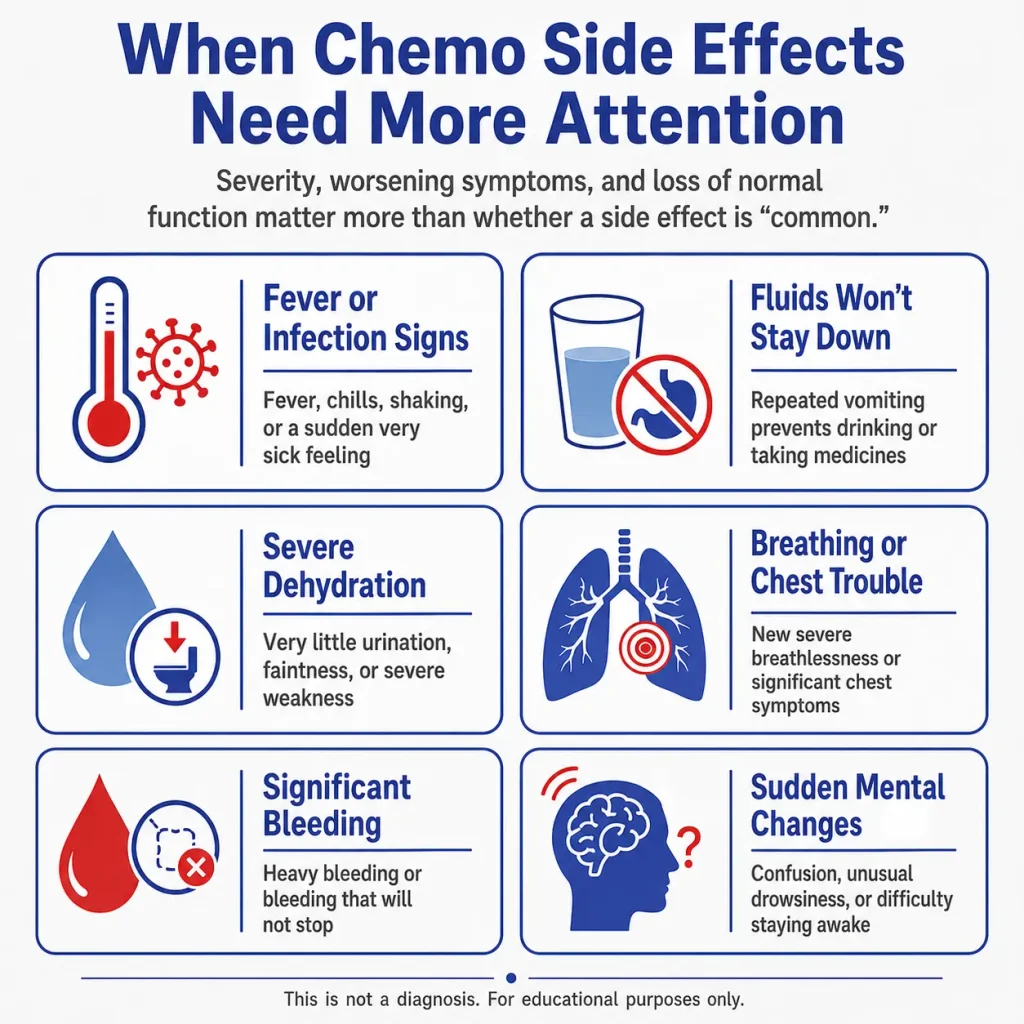
Side effects differ by drug, dose, treatment schedule, and the person receiving treatment. The NCI overview of cancer-treatment side effects emphasizes that even people receiving the same treatment may experience different problems. Common effects can include tiredness, reduced appetite, nausea, constipation or diarrhea, mouth discomfort, taste changes, and temporary difficulty keeping up with normal activities.
The key distinction is not simply whether a symptom is on a chemotherapy side-effect list. Ask how severe it is, whether it is worsening, whether it is stopping the person from drinking or functioning, and whether it is different from what the oncology team said to expect. A familiar mild symptom that improves with the prescribed plan may be manageable at home. A sudden change, relentless symptom, or rapidly declining overall condition deserves faster evaluation.
When Fever or Signs of Infection Need Prompt Attention
Infection deserves special caution during chemotherapy because some treatments temporarily reduce the body’s ability to fight infection. The NCI guidance on infection and neutropenia during cancer treatment notes that infections can become life-threatening and require urgent medical attention. Fever, chills, shaking, a new cough, sore throat, painful urination, diarrhea, redness around a catheter or wound, or a sudden “very sick” feeling should not be treated as routine just because chemotherapy can cause flu-like symptoms.
Your oncology team may give you a specific temperature threshold and tell you exactly whom to call. Follow that plan. If you cannot reach the cancer-care team promptly, if the patient is rapidly worsening, or if fever comes with confusion, breathing difficulty, fainting, or marked weakness, emergency evaluation is reasonable. The CDC’s neutropenia and infection guidance for cancer patients also stresses that infection can become serious quickly when infection-fighting cells are low.
This article keeps low white blood cell counts and neutropenia at a high level on purpose. The practical point here is simple: fever or infection symptoms during chemotherapy deserve a lower threshold for action than the same symptoms might in an otherwise healthy person.
Vomiting, Diarrhea, and Dehydration: When It Is More Than an Expected Side Effect
Nausea and vomiting are common treatment effects, but uncontrolled vomiting can create a second problem: fluid and electrolyte loss. The NCI guidance on nausea and vomiting during cancer treatment warns that uncontrolled vomiting can lead to dehydration, electrolyte imbalance, and weight loss. Diarrhea can add to the fluid loss, especially when it is frequent or occurs together with fever or vomiting.
When fluids will not stay down
A few episodes of nausea that respond to prescribed anti-nausea medicine are different from repeated vomiting that prevents the patient from keeping down water, oral rehydration fluids, medicines, or food. If vomiting keeps returning, the person is getting progressively weaker, or oral fluids will not stay down, contact the oncology team promptly. When the problem is severe, persistent, or causing obvious dehydration, an ER can assess hydration and other urgent causes. Post Oak ER also has a verified patient guide on when nausea and vomiting need ER evaluation.
Signs the body may be becoming significantly dehydrated
Watch for a clear decline rather than trying to count every minor symptom. MedlinePlus lists reduced urination, dark urine, tiredness, and dizziness among dehydration symptoms. In a person receiving chemotherapy, near-fainting or fainting, severe weakness, markedly reduced urination, confusion, or rapid deterioration should move the situation out of routine home management. For a deeper symptom-specific guide, see Post Oak ER’s page on when dehydration should be evaluated in the ER.
Breathing Problems, Chest Symptoms, or Significant Bleeding Should Not Be Dismissed
Some symptoms should change the urgency immediately because they can reflect a serious treatment complication or another emergency that happens to occur during chemotherapy. The decision is based on the symptom in front of you, not on trying to identify the exact chemotherapy complication at home.
• New or severe shortness of breath, labored breathing, or difficulty speaking normally because of breathlessness.
• Chest pain, pressure, or another significant new chest symptom, especially with sweating, fainting, or breathing difficulty.
• Heavy bleeding, bleeding that will not stop, blood in vomit or stool, or other substantial new bleeding.
• Rapidly worsening weakness, near-fainting, fainting, or a sudden sense that the patient is becoming unstable.
Chemotherapy and other cancer treatments can sometimes lower platelets and increase bleeding risk. The NCI guidance on bleeding and bruising during cancer treatment advises patients to call about bleeding that does not stop and other serious bleeding patterns. Likewise, the American Cancer Society’s chemotherapy side-effect guidance identifies trouble breathing, unexplained bleeding or bruising, and prolonged vomiting or diarrhea as symptoms that should prompt immediate contact with the cancer-care team; severe breathing trouble is a reason to call 911.
Confusion or Other Sudden Neurologic Changes Can Change the Urgency
Ordinary treatment fatigue can make someone want to sleep more, but new confusion, unusual drowsiness, difficulty staying awake, sudden disorientation, a seizure, new weakness, or another abrupt neurologic change is different. The NCI describes delirium as a sudden change in awareness and thinking and notes that reversible causes can include dehydration, infection, and medicines.
For caregivers, the most useful question is whether this is a clear departure from the patient’s normal post-treatment state. If a person who is usually tired but oriented becomes confused, hard to wake, unable to answer normally, or develops another sudden neurologic symptom, seek urgent or emergency evaluation rather than assuming it is “chemo brain” or ordinary exhaustion.
Oncology Team, Same-Day Evaluation, or ER: How to Decide
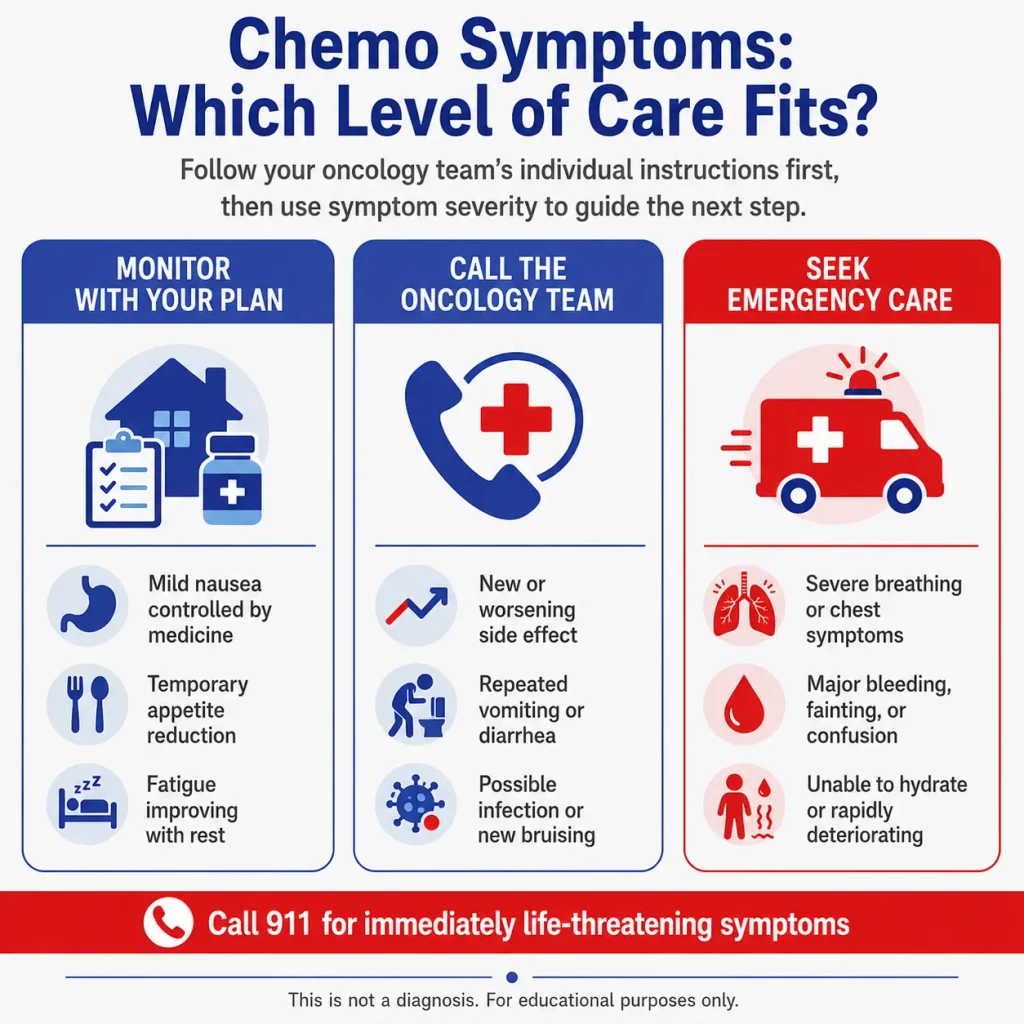
Chemotherapy side effects do not fit perfectly into one universal triage rule. A practical three-level framework can help, while the oncology team’s individualized plan remains the controlling guidance.
Symptoms that may fit the treatment plan
Mild, expected symptoms that match the pattern your oncology team prepared you for, remain manageable with the prescribed plan, and are not worsening may often be monitored at home. Examples include mild nausea that responds to medication, temporary appetite reduction, or fatigue that improves with rest and still allows safe drinking, urination, and basic activity.
Symptoms that deserve a prompt call to the cancer-care team
Call promptly for a new side effect, an expected symptom that is lasting longer or becoming harder to control, repeated diarrhea or vomiting, new bruising, a possible infection symptom, pain that is not responding as expected, or any change that makes you question whether the current home plan is still adequate. This is also the right level for treatment-specific questions, medication adjustments, and decisions about future chemotherapy dosing.
Symptoms that warrant emergency evaluation
Choose emergency care for serious infection signs with rapid decline, severe dehydration, breathing distress, significant chest symptoms, substantial or uncontrolled bleeding, sudden confusion or neurologic change, uncontrolled vomiting with inability to hydrate, fainting, or rapid overall deterioration. If symptoms are immediately life-threatening – such as severe breathing difficulty, collapse, or inability to stay awake – call 911.
What an ER Can Address During a Serious Chemotherapy Reaction or Complication
Emergency evaluation is directed at the acute problem. Depending on the presentation, clinicians may check vital signs and oxygen level, assess hydration, obtain a complete blood count and other relevant laboratory tests, look for signs of infection or bleeding, evaluate respiratory status, give IV fluids or symptom treatment, and use imaging when the symptoms make it clinically appropriate. The goal is to identify immediate complications, stabilize serious symptoms, and determine whether the patient can go home safely, needs hospital-level care, or requires coordination with oncology.
The ER does not replace the oncology team. Decisions about changing the chemotherapy dose, delaying a cycle, switching drugs, or managing long-term cancer treatment belong with the treating oncologist and cancer-care team. Bringing the current medication list, chemotherapy regimen name if known, date of the most recent treatment, oncology contact information, and any recent lab results can help the emergency team understand the situation quickly.
24/7 Emergency Evaluation for Severe Chemotherapy Symptoms in Houston
For Houston-area cancer patients and caregivers, Post Oak ER is available 24/7 when chemotherapy-related symptoms become severe or cannot safely wait for routine oncology follow-up. Its 24/7 emergency-care service includes emergency assessment, on-site laboratory testing, imaging when indicated, medication, fluids, and coordination of next steps. The role is specific: evaluate the acute symptom, identify immediate complications, stabilize the patient when needed, and help determine whether hospital transfer or oncology follow-up is appropriate.
Frequently Asked Questions
How can I tell whether a chemotherapy side effect is normal or serious?
Compare the symptom with the plan your oncology team gave you. Mild, expected effects that are controlled and improving may fit home care, while sudden worsening, inability to drink or function, significant bleeding, breathing problems, confusion, fainting, or rapid decline need faster evaluation.
Should a fever during chemotherapy be treated as an emergency?
Treat fever during chemotherapy as urgent and follow your oncology team’s specific fever instructions. If you cannot reach the team promptly, or fever comes with shaking chills, confusion, breathing difficulty, fainting, severe weakness, or a rapidly worsening condition, seek emergency care.
When does vomiting after chemotherapy become dangerous?
Vomiting becomes more concerning when it is repeated or uncontrolled, fluids and medicines will not stay down, or weakness and dehydration are developing. Blood in vomit, severe pain, confusion, fainting, or breathing/chest symptoms are additional reasons for emergency evaluation.
When should dehydration during chemotherapy be evaluated in the ER?
ER evaluation is appropriate when dehydration is significant or worsening – for example, very little urination, near-fainting or fainting, severe weakness, confusion, rapid decline, or inability to keep fluids down. Mild dehydration that is improving with oral fluids may not require emergency care.
Can chemotherapy cause serious breathing or bleeding complications?
Yes. Some treatment-related problems can affect blood counts or other body systems, but you do not need to identify the exact cause at home. New severe breathing difficulty, major chest symptoms, or substantial or uncontrolled bleeding should be evaluated urgently.
Should I call my oncologist first or go directly to the ER for severe chemotherapy side effects?
If the symptom is severe, rapidly worsening, or immediately dangerous, go directly to emergency care or call 911 for life-threatening symptoms. For stable but concerning changes, contact the oncology team promptly and follow its after-hours plan; if you cannot reach the team and the patient is deteriorating, do not delay needed emergency evaluation.