
Back pain can sometimes cause or contribute to chest pain, especially when muscles, ribs, nerves, posture, or the spine are involved. For example, upper back strain, rib irritation, or chest-wall inflammation can create pain that feels like it is coming from the chest.
For patients in Houston, the important point is this: back-related chest pain is possible, but chest pain should not automatically be blamed on the back. Chest pain that spreads to the back can also come from serious heart, lung, or blood vessel problems. If the pain is severe, sudden, unusual, or comes with trouble breathing, fainting, sweating, nausea, or weakness, it should be checked urgently.
Key Takeaways
- Back, rib, spine, nerve, or chest-wall problems can sometimes cause chest discomfort.
- Muscle-related pain often changes with movement, position, deep breathing, coughing, or pressing on the sore area.
- Chest pain that spreads to the back is different from back pain causing chest discomfort.
- Heart-related chest pain may include pain spreading to the shoulder, arm, back, neck, jaw, teeth, or upper belly.
- Sudden severe chest or upper back pain can be a warning sign of a serious blood vessel problem, such as aortic dissection.
- Chest pain with shortness of breath, sweating, nausea, dizziness, fainting, or neurologic symptoms should be treated as urgent.
- If symptoms feel severe, new, or clearly different from your usual back pain, emergency evaluation matters.
Can Back Pain Really Cause Chest Pain?
Yes, it can. Back pain may contribute to chest pain when the problem involves muscles, ribs, joints, irritated nerves, or posture-related strain. This kind of pain is often described as musculoskeletal chest pain. Cleveland Clinic explains that musculoskeletal chest pain comes from the bones, muscles and tissues that enclose your heart and lungs.
This pain may feel sharp, sore, aching, tight, or localized. It may become worse when you twist, lift, bend, cough, take a deep breath, or press on the painful area. Still, even if the pain seems muscular, it is important not to use that as the only reason to ignore chest symptoms.
Chest Pain That Spreads to the Back Is Different
There is a difference between back pain causing chest discomfort and chest pain spreading into the back. That distinction matters because chest pain that travels to the back can sometimes come from the heart, lungs, or major blood vessels.
Mayo Clinic lists heart-related chest pain symptoms that can include pain spreading to the shoulder, arm, back, neck, jaw, teeth, or upper belly. That does not mean every chest-and-back pain episode is heart-related, but it does mean the pattern should be taken seriously, especially when other warning signs are present.
Common Muscle and Spine Causes
Common non-heart causes of chest and back pain include muscle strain, poor posture, rib joint irritation, upper back strain, pinched or irritated nerves, and chest-wall inflammation. Pain may start after lifting something heavy, twisting awkwardly, coughing hard, exercising, sitting in one position too long, or sleeping in an uncomfortable position.
Costochondritis is another possible cause. Costochondritis can cause chest pain where the rib cartilage attaches to the breastbone. It can feel alarming because the pain is in the chest, but it comes from the chest wall rather than the heart.
How Muscle-Related Chest and Back Pain May Feel
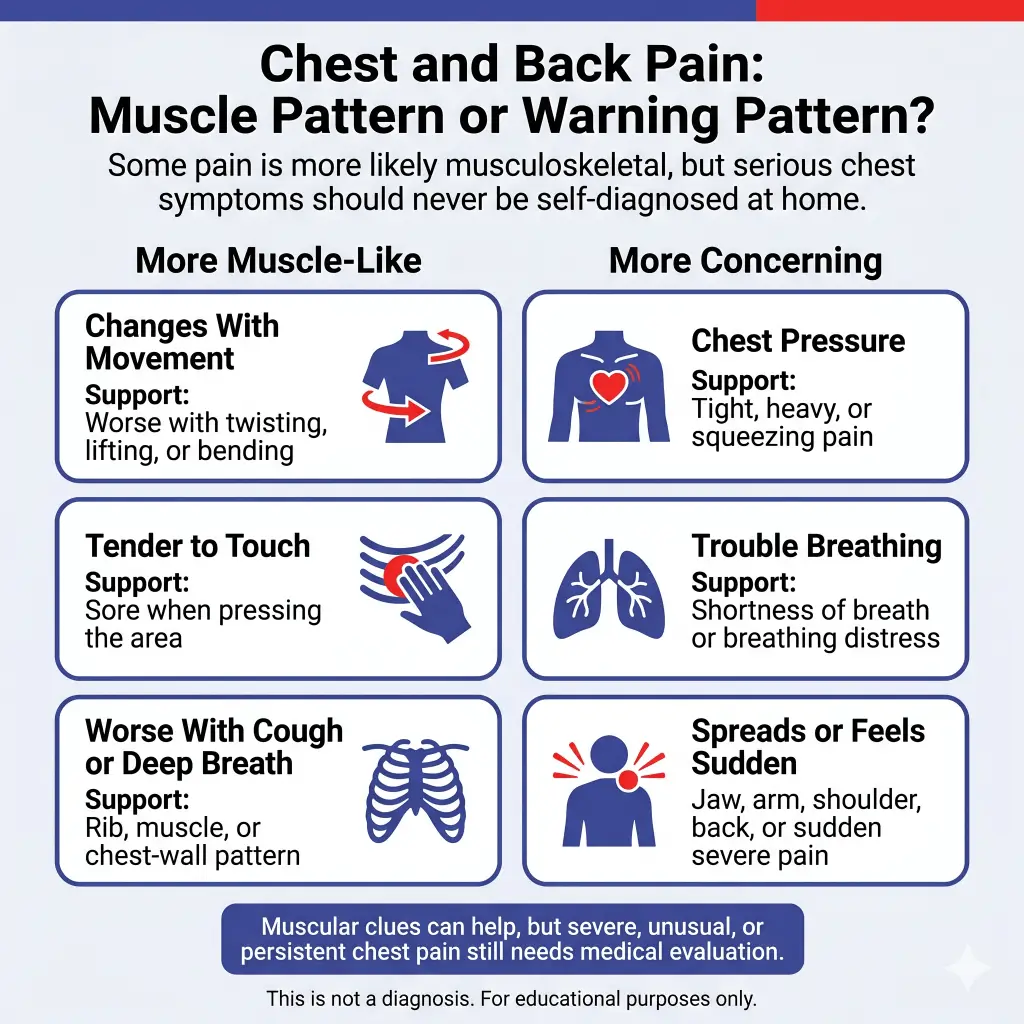
Muscle-related chest and back pain often has a pattern. It may be sore in one spot, feel worse with movement, change when you twist or bend, or become sharper with deep breathing or coughing. It may also feel tender when you press on the area.
Some people notice improvement with rest, position changes, heat, gentle stretching, or avoiding the movement that triggered it. These clues can make a musculoskeletal cause more likely, but they do not completely rule out a heart, lung, or blood vessel problem. When symptoms are severe or unusual, it is safer to get checked.
Serious Causes of Chest and Back Pain
Chest and back pain can also come from more serious conditions. Possible causes include heart attack, angina, aortic dissection, pulmonary embolism, pneumonia, collapsed lung, inflammation around the heart or lungs, and some digestive or gallbladder problems.
One emergency concern is aortic dissection. Mayo Clinic describes symptoms that may include sudden severe chest or upper back pain, shortness of breath, loss of consciousness, or stroke-like symptoms. This type of pain is not something to wait out at home.
Symptoms That Make Chest and Back Pain More Concerning
Chest and back pain becomes more concerning when it comes with chest pressure, squeezing, heaviness, or tightness. Other red flags include shortness of breath, sweating, nausea, vomiting, dizziness, fainting, pain spreading to the jaw, arm, shoulder, neck, or back, sudden severe upper back pain, coughing blood, sudden weakness, confusion, trouble speaking, or a blue or pale appearance.
Mayo Clinic advises emergency care when chest discomfort lasts more than a few minutes, comes with shortness of breath, sweating, nausea, dizziness, or fainting, or radiates beyond the chest.
When It May Be Safe to Call Your Doctor Instead of the ER
Calling your doctor may be reasonable when the pain is mild, clearly linked to movement or posture, started after lifting or twisting, feels sore to touch, and is improving rather than getting worse. This is especially true if there is no chest pressure, trouble breathing, sweating, nausea, fainting, or sudden weakness.
Even then, it is still worth being cautious. If the pain becomes severe, unexplained, persistent, or paired with warning signs, urgent care is safer than assuming it is only muscle strain.
When to Go to the ER or Call 911
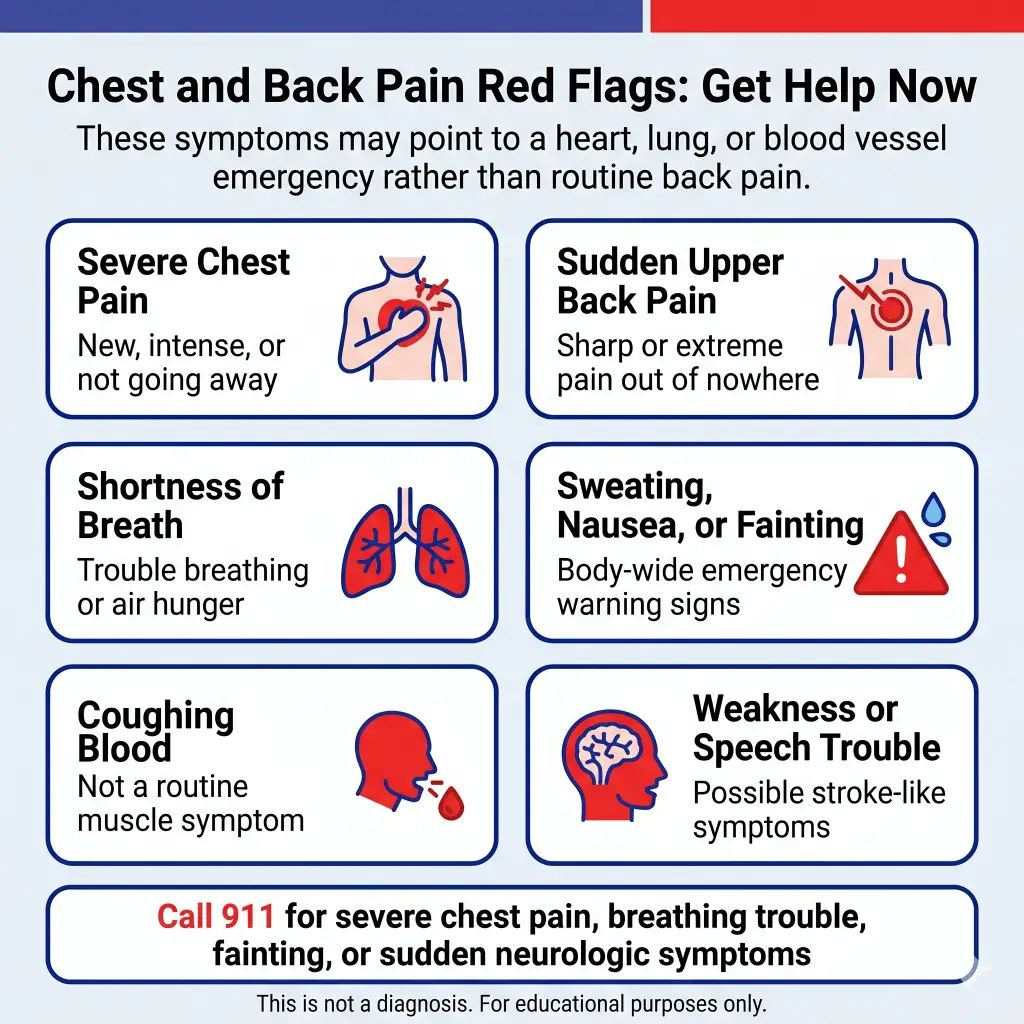
Go to the ER or call 911 right away for chest pain or pressure that is severe, new, or not going away; chest pain with shortness of breath; chest pain with sweating, nausea, dizziness, or fainting; pain spreading to the jaw, arm, shoulder, neck, or back; sudden severe chest or upper back pain; coughing blood; sudden weakness, numbness, confusion, trouble speaking, or facial drooping.
If you are in Houston and chest or back pain comes with chest pressure, trouble breathing, fainting, sudden weakness, or other possible heart or stroke warning signs, Post Oak ER is open 24/7 for prompt emergency evaluation. Do not try to prove at home whether the pain is from the back, heart, lungs, or blood vessels when the warning signs are serious.
What Doctors May Check
What doctors check depends on the symptom pattern. For chest and back pain, you may need an ECG, blood tests, oxygen level check, or chest imaging if heart, lung, or blood vessel problems are possible. Mayo Clinic notes that emergency chest pain evaluation commonly checks first for heart attack and life-threatening lung problems.
Doctors may also examine the painful area for tenderness, muscle strain, rib pain, or spine-related patterns. The goal is to separate common musculoskeletal pain from conditions that need urgent treatment.
Chest and Back Pain at a Glance
- Possible back-related causes: muscle strain, rib irritation, posture, nerve irritation, costochondritis.
- Possible serious causes: heart attack, angina, aortic dissection, pulmonary embolism, lung infection, collapsed lung.
- More muscle-like pattern: pain changes with movement, position, touch, coughing, or deep breathing.
- More urgent pattern: chest pressure, shortness of breath, sweating, nausea, fainting, sudden severe pain, or neurologic symptoms.
- Do not wait: if symptoms are severe, new, worsening, or clearly unusual.
Back pain can sometimes make the chest hurt, but chest and back pain can also be a warning sign of something more serious. The safest approach is to look at the full symptom pattern, avoid self-diagnosing severe chest pain, and get emergency care when warning signs appear.
Frequently Asked Questions
Can back pain cause chest pain?
Yes. Back pain can sometimes cause chest discomfort when muscles, ribs, nerves, posture, or the spine are involved. But chest pain should not automatically be assumed to be from the back.
Can a pulled back muscle make your chest hurt?
Yes, a pulled upper back or chest-wall muscle can sometimes create pain that wraps around or feels like chest pain. It may worsen with movement, twisting, lifting, coughing, or pressing on the area.
How do I know if chest and back pain is muscular?
Muscular pain is more likely when it changes with movement, position, deep breathing, or pressure on the sore area. But those signs do not completely rule out heart or lung problems.
Can heart pain spread to the back?
Yes. Heart-related chest pain can spread to the back, shoulder, arm, neck, jaw, teeth, or upper belly.
What causes chest and upper back pain together?
Possible causes include muscle strain, rib irritation, costochondritis, nerve irritation, heart attack, angina, aortic dissection, pulmonary embolism, lung infection, collapsed lung, or digestive problems.
When should I worry about chest and back pain?
Worry more if the pain is severe, sudden, new, not going away, or comes with shortness of breath, sweating, nausea, dizziness, fainting, sudden weakness, confusion, or pain spreading to the jaw, arm, shoulder, neck, or back.
Should I go to the ER for chest pain that goes to my back?
Yes, if the pain is severe, sudden, persistent, or comes with trouble breathing, sweating, nausea, fainting, weakness, or stroke-like symptoms. Sudden severe chest or upper back pain should be treated as urgent.
What tests do doctors do for chest and back pain?
Depending on the symptoms, doctors may check vital signs, heart rhythm, ECG/EKG, blood tests, oxygen level, chest imaging, and a physical exam for muscle, rib, or spine-related pain.