
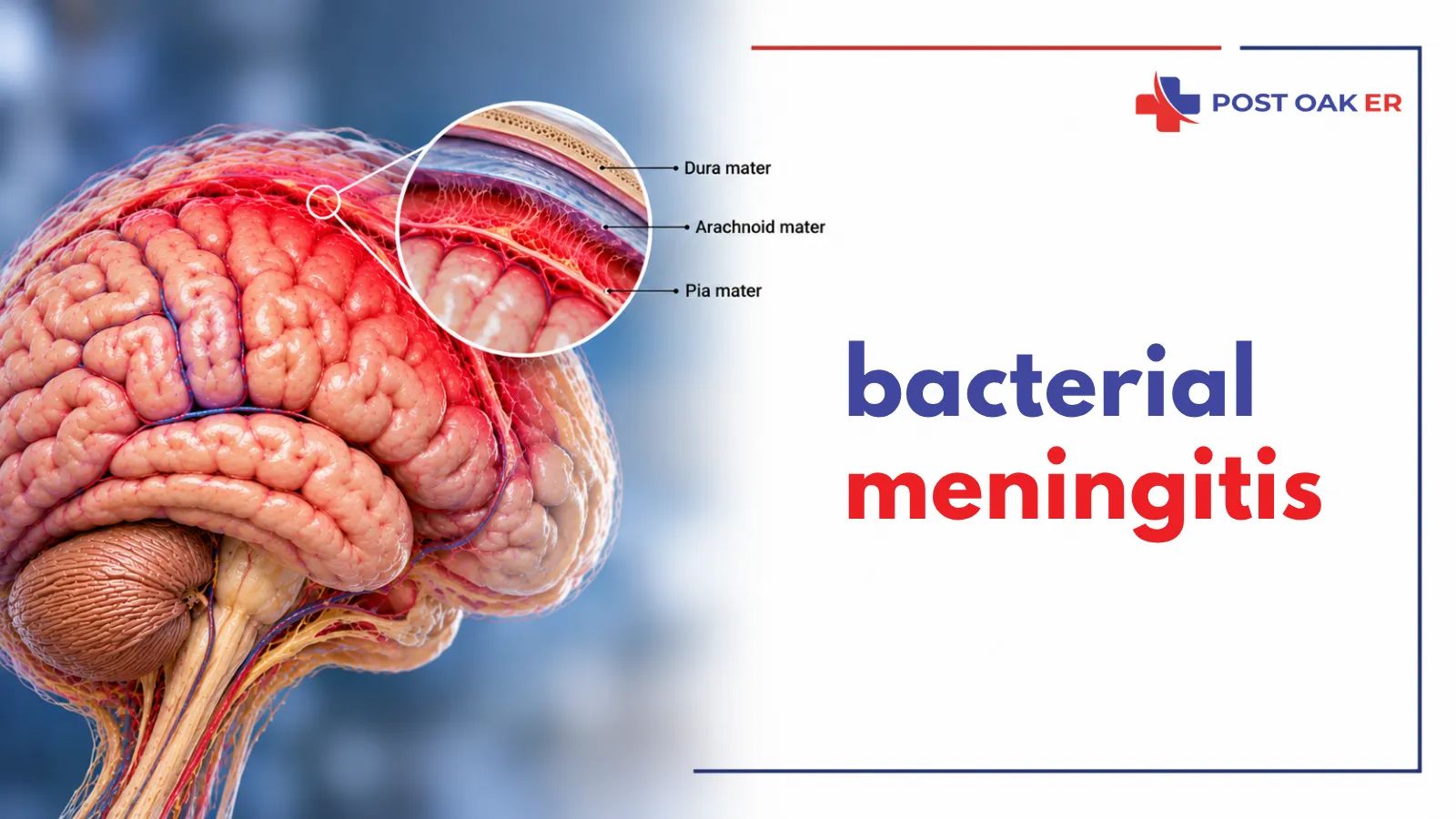
A fever and severe headache may look like the beginning of a familiar illness. But when a person also develops neck stiffness, unusual confusion, or rapidly worsening symptoms, bacterial meningitis becomes an urgent possibility. The warning signs do not always arrive together. If meningitis is suspected, the safest next step is immediate emergency evaluation—not waiting for a complete list of symptoms.
What Is Bacterial Meningitis, and Why Is It a Medical Emergency?
Bacterial meningitis is an infection that inflames the protective membranes around the brain and spinal cord. Several bacteria can cause it, and the particular organism cannot be identified from symptoms at home. According to the CDC’s guidance on bacterial meningitis, severe illness and lasting neurological complications can develop quickly.
The immediate concern is not ordinary neck pain. It is the combination of serious infection and possible changes in brain or nervous-system function. Prompt emergency assessment allows clinicians to start treatment and arrange the hospital care needed to reduce the risk of harm.
What Are the Main Symptoms of Bacterial Meningitis?
Fever and Feeling Seriously Unwell
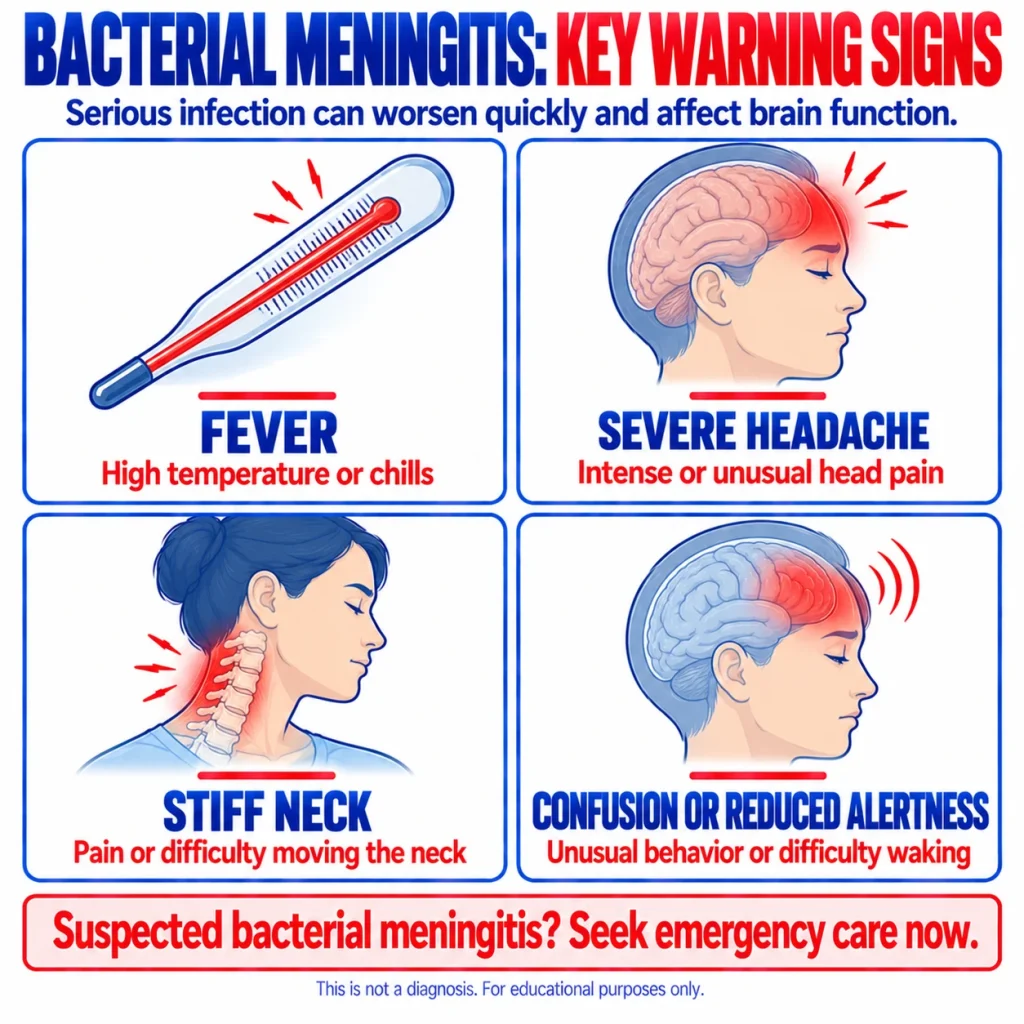
Fever is common, sometimes with chills, weakness, and a striking sense of being unwell. Fever by itself does not mean meningitis, but fever alongside a severe headache, neck stiffness, or altered behavior deserves urgent attention. Post Oak ER’s guide to fever emergencies covers fever warning signs more broadly; meningitis is one specific cause that cannot be excluded at home.
Severe or Unusual Headache
The headache may be intense, different from a person’s usual headaches, or progressively worse. Nausea, vomiting, and discomfort with bright light can occur. A severe headache alone cannot diagnose meningitis; its association with fever and worsening illness is what raises concern. Other headache-related ER warning signs have different causes and require their own assessment.
Stiff Neck or Pain When Moving the Neck
Inflammation of the membranes around the brain and spinal cord can make the neck painful or difficult to move. Unlike an isolated muscle strain, meningitis-related stiffness often occurs with systemic illness or neurological symptoms. Still, some people with meningitis have little or no obvious stiffness. For broader guidance on injury- or function-related symptoms, see when neck pain warrants an ER visit.
Can You Have Bacterial Meningitis Without All Three Classic Symptoms?
Why the Classic Symptoms May Not Appear Together
Yes. Fever, headache, and a stiff neck are the familiar trio, but they are not a reliable self-test. NICE clinical guidance on suspected bacterial meningitis also identifies altered consciousness or cognition as a major warning feature and explicitly cautions that meningitis can be strongly suspected even without the full symptom combination. Signs may be harder to recognize in infants, older adults, and people who cannot describe how they feel.
Why Early Symptoms May Be Mistaken for Another Illness
At first, a person may have fever, fatigue, and a headache without a distinctive sign. These complaints overlap with common infections. The NHS meningitis guidance notes that early symptoms can resemble more familiar illnesses. A rapid change—such as becoming hard to wake, newly confused, or suddenly much sicker—should change the response immediately. Do not wait for a rash or for the neck to become rigid.
What Other Warning Signs Can Occur With Bacterial Meningitis?
Confusion, Unusual Drowsiness, or Difficulty Staying Alert
A person who is disoriented, behaves in a markedly unusual way, cannot answer simple questions, or becomes difficult to wake may have serious involvement of the brain or a severe systemic infection. This is not just tiredness after a feverish night. Call 911 for reduced consciousness, inability to wake the person normally, or other signs of critical illness.
Vomiting, Light Sensitivity, or Seizures
Vomiting and sensitivity to light can accompany the illness but also occur with other conditions. Seizures or new focal weakness are much more urgent findings. MedlinePlus’s medical encyclopedia describes these possible manifestations and the need for immediate hospital treatment when bacterial meningitis is suspected.
A New Purple or Red Rash With Severe Illness
Some cases of meningococcal disease—a bacterial infection that may cause meningitis or a bloodstream infection—produce red or purple spots that do not fade under pressure. The CDC’s meningococcal symptom guidance describes how this illness can begin with flu-like symptoms and deteriorate rapidly. A non-blanching rash with severe illness is an emergency, but many people with bacterial meningitis never develop a rash. Its absence offers no reassurance.
Can Bacterial Meningitis Symptoms Look Different in Babies or Older Adults?
Symptoms in Babies and Young Children
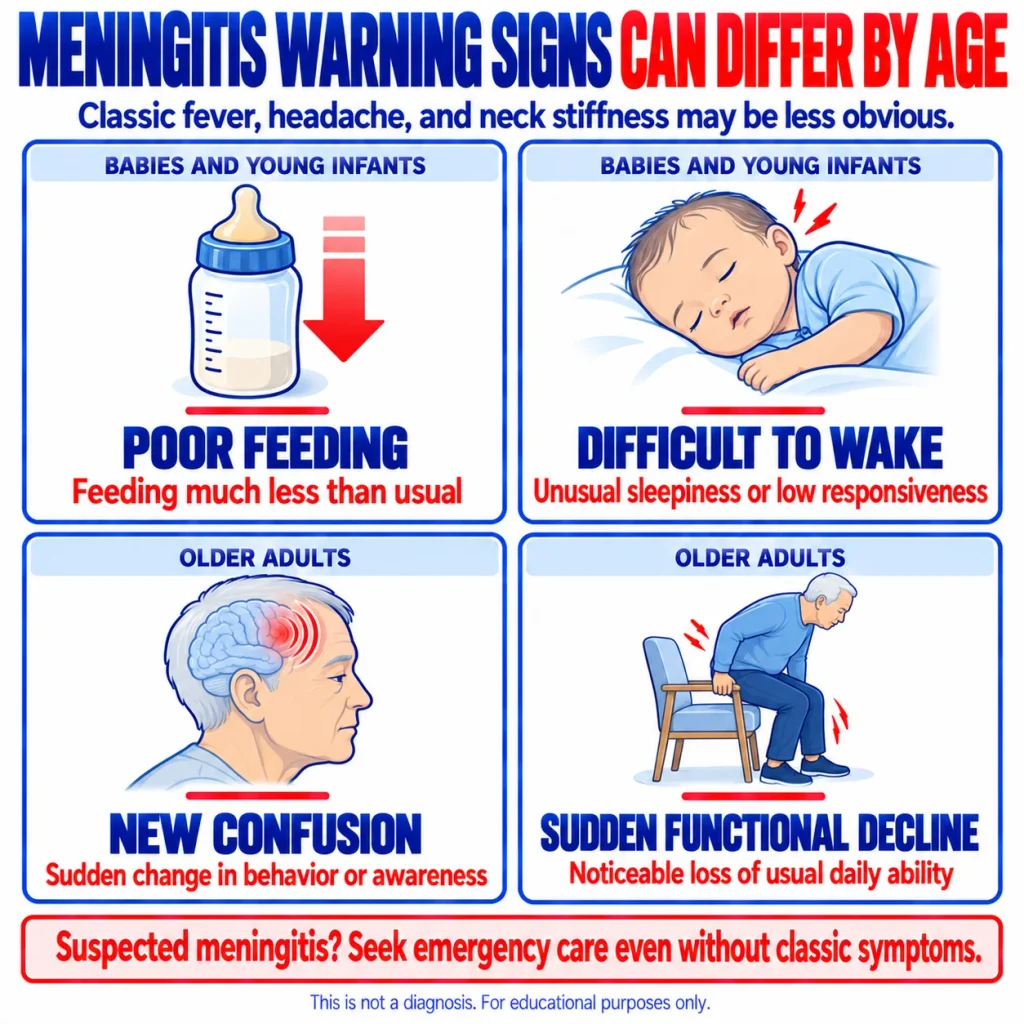
Babies may not show a typical headache-and-stiff-neck pattern. Poor feeding, persistent or unusual crying, irritability, unusual sleepiness, limpness, difficulty waking, or a bulging soft spot on the head may be more noticeable. Fever can be absent in very young infants with serious infection. The CDC’s overview of meningitis symptoms in babies emphasizes that classic signs can be difficult to identify in this age group. A baby who looks seriously ill or is less responsive than normal needs immediate assessment.
Symptoms in Older Adults or People With Weakened Immune Systems
Older adults may have less obvious fever or neck stiffness; new confusion, delirium, reduced alertness, or abrupt decline in usual functioning may be the strongest clue. People with weakened immune systems also require a low threshold for urgent evaluation when serious infection is possible. Family members can help by explaining what behavior or alertness is unusual for the patient.
How Quickly Can Bacterial Meningitis Become Serious?
Why Symptoms May Worsen Rapidly
There is no dependable timetable. Some people worsen over hours, while others follow a different course. A headache and fever may progress to confusion, seizures, or complications of severe infection. The World Health Organization’s meningitis fact sheet describes both neurological symptoms and the possibility of serious bloodstream infection.
Why Waiting for Symptoms to Become Severe Can Be Dangerous
Observation at home can delay antibiotics and stabilization while the illness progresses. Even if the first symptoms are nonspecific, suspected bacterial meningitis is a reason to seek emergency care immediately rather than taking a “wait and see” approach. Improvement after fever-reducing medicine does not establish that the illness is harmless.
When Should You Go to the ER for Possible Bacterial Meningitis?
Fever, Severe Headache, and Neck Stiffness
Go to an emergency department now if fever occurs with a severe or unusual headache and neck stiffness. That combination warrants examination even though it does not prove the diagnosis. Do not wait for a fourth symptom, a rash, or further deterioration.
Fever or Severe Illness With Confusion or Neurological Changes
Call 911 if someone has a seizure, cannot be awakened normally, is markedly confused, becomes unconscious, or develops sudden significant neurological deficits. Emergency medical personnel can monitor and assist a critically ill patient during transport. Do not have a severely ill or confused person drive.
Suspected Meningitis Even Without a Stiff Neck or Rash
Seek immediate emergency assessment when the overall illness raises concern for meningitis, even if neck movement is normal or no rash is visible. A checklist cannot reliably rule it out. For infants and people with altered mental status, the changes noticed by a caregiver may be especially important.
How Do Doctors Diagnose Suspected Bacterial Meningitis?
Initial Medical and Neurological Assessment
Emergency clinicians check vital signs, circulation, breathing, alertness, and neurological function. They ask when symptoms began, whether they are progressing, and whether fever, headache, neck stiffness, or behavior changes have occurred. Age, immune status, recent illness, and other risks shape the evaluation. No single symptom or bedside maneuver can confirm or safely exclude bacterial meningitis.
Blood Tests and Lumbar Puncture
Blood tests and cultures can help assess infection and may identify the organism. A lumbar puncture (spinal tap), when safe, obtains cerebrospinal fluid for tests that help establish whether meningitis is present and what may be causing it. Some patients need stabilization before testing; if the procedure would delay urgent treatment, clinicians may begin antibiotics first.
Is a CT Scan Always Needed Before a Lumbar Puncture?
No. A CT scan is not routinely required for every suspected case. Clinicians may order brain imaging first when examination findings suggest a specific safety concern, including certain neurological deficits or markedly reduced consciousness. Imaging should not create an avoidable delay in treatment. The timing of tests and medications follows the patient’s condition.
Why Does Bacterial Meningitis Require Prompt Hospital Treatment?
Why Antibiotic Treatment Must Not Be Delayed
When bacterial meningitis is strongly suspected, clinicians generally start intravenous antibiotics urgently, without waiting for every test result. Corticosteroids may also be used in selected circumstances. The WHO guidelines on meningitis diagnosis and treatment support early hospital-based antimicrobial care; diagnostic procedures should not hold up time-sensitive treatment.
Why Some Patients Need Intensive Monitoring or Specialized Care
Severe illness can affect breathing, circulation, and brain function. Possible complications include seizures, hearing loss, neurological injury, and life-threatening systemic infection. Depending on the severity and available services, a patient may need admission, specialist care, intensive monitoring, or transfer to another facility.
Emergency Assessment for Possible Meningitis in Houston
For patients and families in Houston, fever with a severe headache, neck stiffness, confusion, or rapidly worsening illness calls for urgent action. Post Oak ER provides 24/7 emergency care for adults and children, with emergency physicians, on-site laboratory services, and CT imaging. Its team can assess concerning symptoms, begin appropriate time-sensitive care, and coordinate hospitalization or transfer when further services are required. If a person is critically ill, call 911 rather than arranging private transport.
Frequently Asked Questions
What are the first symptoms of bacterial meningitis?
Early symptoms may include fever, headache, chills, and feeling unusually ill. They can resemble common infections, so rapid worsening or neurological changes matter.
Do you always have a fever, headache, and stiff neck with bacterial meningitis?
No. These classic symptoms do not always appear together. Suspected meningitis still needs immediate assessment when one of them is absent.
Can bacterial meningitis occur without neck stiffness?
Yes. Some people, particularly infants and older adults, may not have obvious neck stiffness. Other serious symptoms can still indicate an emergency.
How quickly can bacterial meningitis symptoms become severe?
Some cases worsen within hours, but progression varies. There is no safe period to wait once bacterial meningitis is suspected.
Does bacterial meningitis always cause a rash?
No. A red or purple non-blanching rash can occur with meningococcal bloodstream infection, but a rash is not required for bacterial meningitis.
What symptoms of bacterial meningitis are different in babies or older adults?
Babies may feed poorly, become very irritable, or be difficult to wake. Older adults may show confusion or a sudden functional decline without prominent fever or neck stiffness.
How do emergency doctors test for bacterial meningitis?
They assess the patient, obtain relevant blood tests and cultures, and may perform a lumbar puncture to test cerebrospinal fluid. The order and timing depend on medical stability.
Is a CT scan always needed to diagnose bacterial meningitis?
No. CT imaging is reserved for particular clinical concerns and is not a routine prerequisite for lumbar puncture. Treatment should not be delayed unnecessarily for imaging.
Why is early antibiotic treatment important for bacterial meningitis?
Prompt intravenous antibiotics treat the bacterial infection and reduce the chance of serious harm. Doctors may start them before every test result returns.
When should you call 911 for suspected bacterial meningitis?
Call 911 for seizures, markedly reduced consciousness, inability to wake someone, severe confusion, or other signs of critical illness. Emergency transport is safer in those situations.