
An ASCVD risk calculator estimates your chance of having a future plaque-related cardiovascular event, such as a heart attack or stroke. It is mainly used for prevention planning, not for diagnosing symptoms that are happening right now. The score usually uses information such as age, cholesterol, blood pressure, diabetes, smoking, and medication history.
For patients in Houston, the most important thing to understand is this: an ASCVD score can help guide long-term heart-risk conversations, but it should never be used to decide whether active chest pain, severe shortness of breath, fainting, or stroke-like symptoms are safe to ignore. Those symptoms need urgent medical attention.
Key Takeaways
- ASCVD stands for atherosclerotic cardiovascular disease, which means plaque-related disease in the heart and blood vessels.
- An ASCVD risk score estimates future risk, often over 10 years.
- The score is based on factors such as age, cholesterol, blood pressure, diabetes, smoking, and medication use.
- A low score does not mean zero risk, and a high score does not mean a heart attack is guaranteed.
- Risk categories can help guide conversations about lifestyle, blood pressure, cholesterol, and sometimes medication.
- Newer PREVENT calculators may estimate 10-year and 30-year risk for broader cardiovascular outcomes, including ASCVD and heart failure.
- Chest pain, major breathing trouble, fainting, sudden weakness, or stroke-like symptoms should not be evaluated with a risk calculator.
What Is an ASCVD Risk Calculator?
An ASCVD risk calculator is a prevention tool. It estimates the chance that a person may have an ASCVD event over a set period of time, often 10 years. ASCVD events usually include plaque-related heart and blood vessel problems such as heart attack and stroke.
Doctors may use this score during prevention visits to decide whether someone needs stronger lifestyle changes, cholesterol treatment, blood pressure management, diabetes control, or more risk discussion. It is not meant to replace a clinician’s judgment, and it is not designed for active emergency symptoms.
What Does ASCVD Mean?
ASCVD stands for atherosclerotic cardiovascular disease. “Atherosclerotic” refers to plaque buildup inside the arteries. Over time, plaque can narrow arteries, reduce blood flow, or contribute to events such as heart attack, stroke, or peripheral artery disease.
The key word is risk. ASCVD risk is about the chance of future plaque-related cardiovascular problems. It does not tell you exactly what is happening in your arteries today, and it does not diagnose chest pain.
What Your ASCVD Score Means
A 10-year ASCVD score is usually shown as a percentage. For example, a 10% score does not mean “10% of your heart is blocked.” It means that, based on the calculator being used, about 10 out of 100 people with a similar risk profile may be expected to have an ASCVD event over the next 10 years.
That number is an estimate, not a guarantee. A person with a low score can still develop heart disease, and a person with a higher score may never have an event. The value of the score is that it helps start a more informed prevention conversation.
ASCVD Risk Categories
Traditional ACC/AHA risk categories have often grouped 10-year ASCVD risk as low, borderline, intermediate, or high risk. Commonly used cutoffs are: low risk under 5%, borderline risk from 5% to under 7.5%, intermediate risk from 7.5% to under 20%, and high risk at 20% or higher.
There is one important current-context point: newer tools may use different models and cutoffs. The American Heart Association’s PREVENT equations estimate 10-year and 30-year risk for total cardiovascular disease, including ASCVD and heart failure, and current PREVENT-based ASCVD categories may use different thresholds than older Pooled Cohort Equation categories.
So if you see a score online, ask which calculator was used. The number matters, but the model behind the number also matters.
What Information Goes Into the Calculator?
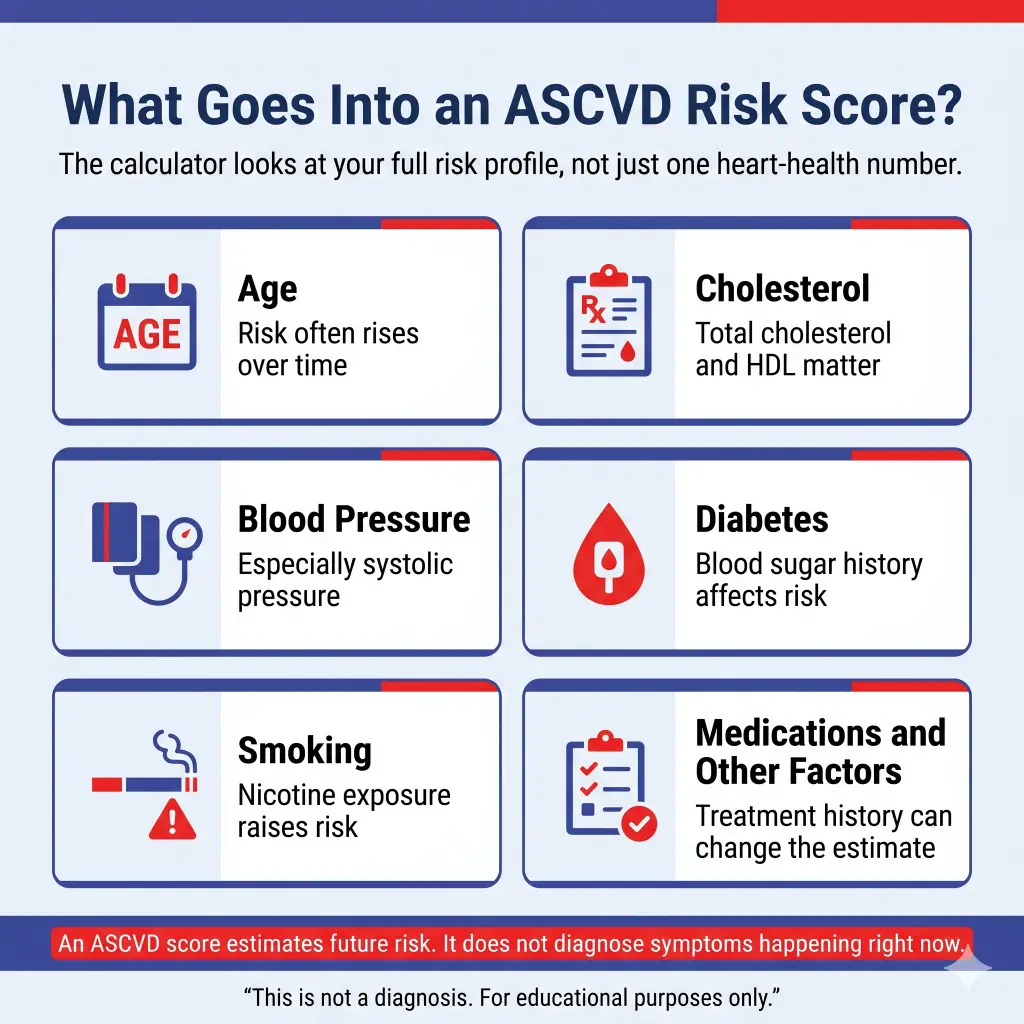
ASCVD risk calculators usually use several pieces of information together. Traditional calculators may include age, sex, race, total cholesterol, HDL cholesterol, systolic blood pressure, blood pressure treatment, diabetes, and smoking status.
Newer PREVENT-based tools may also include body mass index, kidney function, lipid-lowering medication, antihypertensive medication, diabetes, smoking, and optional factors such as urine albumin-to-creatinine ratio, HbA1c, and zip code when available.
That is why two people can have the same cholesterol number but different risk scores. The calculator is looking at the full risk profile, not one number alone.
Why Your Score May Be Higher or Lower Than Expected
Your score may be higher because of older age, high blood pressure, diabetes, smoking, lower HDL cholesterol, higher total cholesterol, kidney-related risk, or several risk factors happening together. A score may be lower when blood pressure, cholesterol, blood sugar, and smoking status are all in a healthier range.
This does not mean the score is a judgment. It is a tool. The goal is to identify which risk factors are driving the number so you and your clinician can discuss what can realistically change.
What a High ASCVD Risk Score May Lead Your Doctor to Discuss
A higher ASCVD score may lead to a conversation about lifestyle changes, cholesterol treatment, blood pressure control, diabetes management, smoking cessation, and follow-up timing. In some cases, a clinician may also discuss statin therapy or additional testing if the treatment decision is not clear. ACC/AHA primary-prevention guidance emphasizes 10-year ASCVD risk estimation and clinician-patient risk discussion before starting some preventive medications.
If risk-based decisions remain uncertain, a coronary artery calcium score may sometimes help refine the discussion in selected borderline or intermediate-risk patients.
The important phrase is “may discuss.” A calculator result should not be treated as an automatic prescription or a stand-alone treatment decision.
What the Calculator Does Not Tell You
An ASCVD calculator does not tell you whether chest pain today is a heart attack. It does not tell you whether an artery is blocked right now. It does not decide whether you need a stent or bypass surgery. It also cannot perfectly capture every risk factor, family-history detail, inflammatory condition, pregnancy-related history, or personal medical nuance.
Most importantly, it cannot tell you whether emergency symptoms can wait. Prevention tools are useful in the right setting, but they are not emergency tools.
ASCVD Score vs. Calcium Score
An ASCVD risk score estimates future risk using clinical information such as age, cholesterol, blood pressure, diabetes, and smoking. A calcium score uses CT imaging to look for calcified plaque in the coronary arteries.
The two can work together in selected cases, but they are not the same thing. A calcium score may be considered when the risk conversation is unclear, especially in borderline or intermediate-risk patients.
When Symptoms Should Not Wait for a Risk Calculator
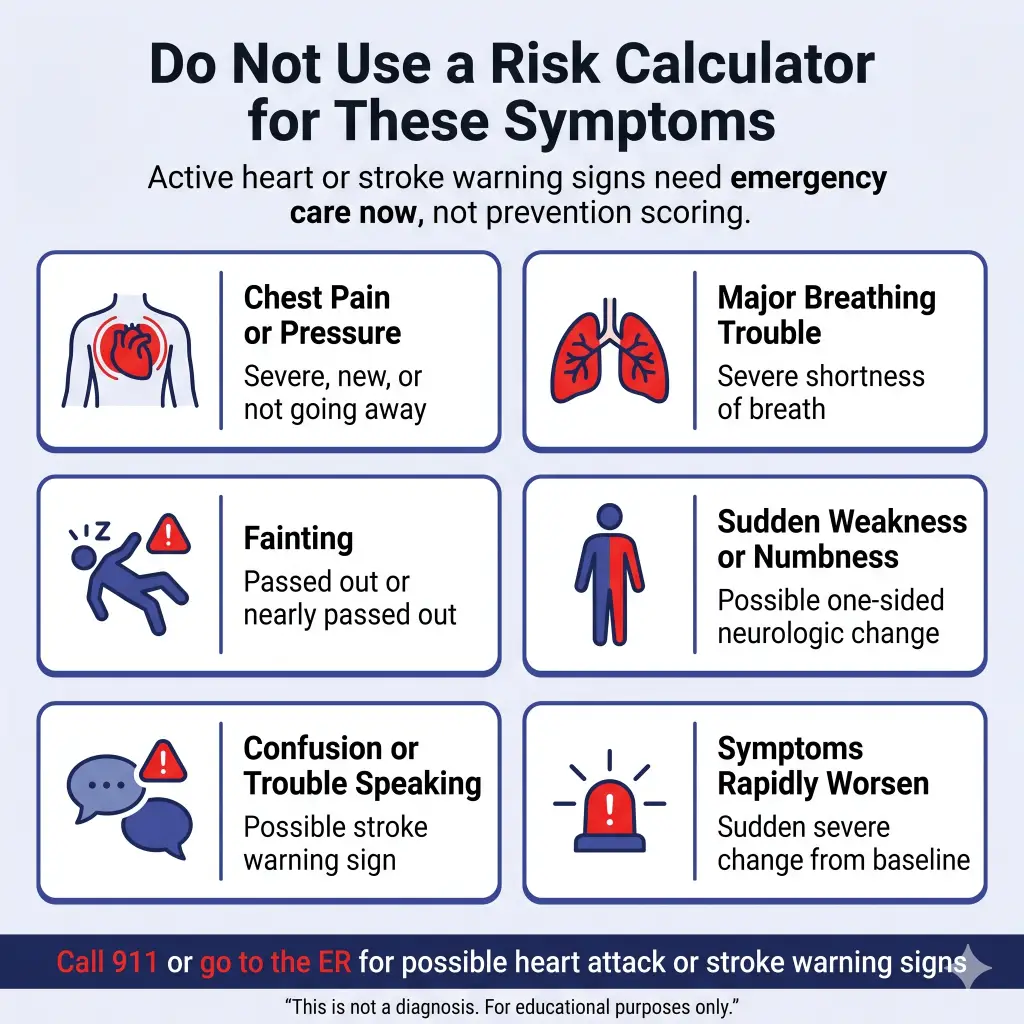
Do not use an ASCVD calculator if you are trying to decide whether active symptoms are dangerous. Chest pain or pressure, severe shortness of breath, fainting, sudden weakness or numbness, confusion, trouble speaking, facial drooping, pain spreading to the jaw, arm, shoulder, back, or neck, or symptoms that feel like a heart attack or stroke should not wait for a prevention visit.
A risk score can help with long-term planning. It cannot safely evaluate symptoms that are happening right now.
When to Go to the ER or Call 911
Go to the ER or call 911 for chest pain or pressure that is severe, new, or not going away; major breathing trouble; fainting; sudden weakness or numbness; confusion; trouble speaking; severe dizziness with chest symptoms; or symptoms that rapidly worsen. The American Heart Association says, If these warning signs are present, call 911.
If you are in Houston and you develop chest pain, major breathing trouble, fainting, sudden weakness, or other possible heart or stroke warning signs, Post Oak ER is open 24/7 for prompt emergency evaluation. Your ASCVD score may be helpful for prevention, but urgent symptoms need real-time care.
Questions to Ask About Your ASCVD Score
If your clinician reviews your ASCVD risk with you, useful questions include:
- Which calculator did we use?
- Is this a 10-year or 30-year estimate?
- Which factors are driving my score?
- What can I change through lifestyle?
- Do I need cholesterol or blood pressure medicine?
- Should we consider a calcium score?
- How often should we recalculate my risk?
- What symptoms should send me to the ER?
These questions help turn the score into a practical conversation instead of just a number on a screen.
ASCVD Risk Score at a Glance
- What it is: A prevention tool that estimates future plaque-related heart and stroke risk.
- What it uses: Age, cholesterol, blood pressure, diabetes, smoking, and other risk factors.
- What it means: A percentage estimate, not a diagnosis.
- What it can guide: Lifestyle changes, cholesterol treatment, blood pressure control, and further risk discussion.
- What it cannot do: Evaluate active chest pain or emergency symptoms.
An ASCVD risk score can be useful, but it should be understood in context. The best use of the score is to guide prevention, identify modifiable risks, and support a clinician-patient conversation. It should never replace emergency care when symptoms suggest a possible heart or stroke emergency.
Frequently Asked Questions
What is an ASCVD risk calculator?
An ASCVD risk calculator estimates a person’s chance of having a future plaque-related cardiovascular event, such as a heart attack or stroke. It is used mainly for prevention planning and clinician-patient risk discussion.
What does a 10-year ASCVD risk score mean?
It estimates the chance of an ASCVD event over the next 10 years among people with a similar risk profile. For example, 10% means about 10 out of 100 similar people may have an event over that period.
What is considered a high ASCVD risk score?
Traditional ACC/AHA categories often define high 10-year ASCVD risk as 20% or higher, but newer PREVENT-based models may use different thresholds. Ask which calculator was used before interpreting the category.
Can I lower my ASCVD risk score?
Some risk factors can improve with lifestyle changes, blood pressure control, cholesterol management, diabetes care, and stopping smoking. Age cannot be changed, but several drivers of the score can be addressed.
Is ASCVD risk the same as a calcium score?
No. ASCVD risk is an estimate based on clinical information. A calcium score is a CT-based test that looks for calcified plaque in the coronary arteries.
Does a high ASCVD score mean I will have a heart attack?
No. A high score means higher estimated risk, not a guaranteed event. It should lead to a serious prevention conversation, not panic.
Should I use an ASCVD calculator if I have chest pain?
No. If you have active chest pain, especially if it is severe, new, or not going away, you need medical evaluation. A risk calculator is not designed for emergency symptoms.
When should I go to the ER instead of waiting for a prevention visit?
Go to the ER or call 911 for chest pain, major breathing trouble, fainting, sudden weakness or numbness, confusion, trouble speaking, facial drooping, or symptoms that feel severe, sudden, or rapidly worse.