

You may step out of a car after a collision feeling shaken but able to move normally. By that evening, turning your head becomes uncomfortable; the next morning, your neck feels stiff. This delayed pattern can occur with whiplash, but the timing alone cannot tell you whether the injury is minor.
The useful questions are what symptoms have developed, whether they are changing, and what the impact may have injured. A medical assessment looks beyond neck soreness to check for signs of a cervical spine or neurological injury.
What Is Whiplash, and How Does a Car Accident Cause It?
Whiplash describes an injury associated with sudden acceleration and deceleration of the head relative to the torso. A rear-end collision is a familiar example: the vehicle and body change speed abruptly while the head moves back and forward. Side or other impacts can produce similar forces.
That motion can strain neck muscles, ligaments and surrounding tissues. As Mayo Clinic’s overview of whiplash explains, it may cause pain and restricted movement without showing exactly which tissue was affected. “Whiplash” is not a guarantee that the bones, nerves or spinal cord are unharmed; the crash circumstances and examination still matter.
What Are Common Whiplash Symptoms After a Car Accident?
Neck Pain and Stiffness After the Collision
Aching along the back or sides of the neck, tenderness and stiffness when looking over a shoulder are common. Some people feel a muscle spasm or notice that turning the head is more difficult than usual. The NHS guidance on whiplash describes neck pain, restricted movement and associated shoulder discomfort as typical symptoms.
Pain can be intense with a soft-tissue strain, while a concerning injury may initially feel less dramatic. Neither the pain score nor the ability to walk away from the scene reliably establishes the diagnosis.
Headaches and Shoulder or Upper Back Discomfort
A headache may begin near the base of the skull. Soreness can also spread across the tops of the shoulders or between the shoulder blades as the neck muscles react to the sudden movement. These patterns are described in the American Academy of Orthopaedic Surgeons’ neck-sprain guidance.
After a crash, however, headache must be considered alongside any head strike, loss of consciousness, nausea or change in awareness. It should not automatically be explained by tight neck muscles.
Other Symptoms That May Accompany Whiplash
Some people report dizziness, tiredness, difficulty concentrating or an unusual sense of being “off.” Those symptoms are not specific to whiplash. Especially when they are pronounced or increasing, clinicians may need to check for concussion or another injury rather than assume a neck strain is responsible.
Can Whiplash Symptoms Appear Hours or Days After an Accident?
Why Neck Pain May Not Start Immediately
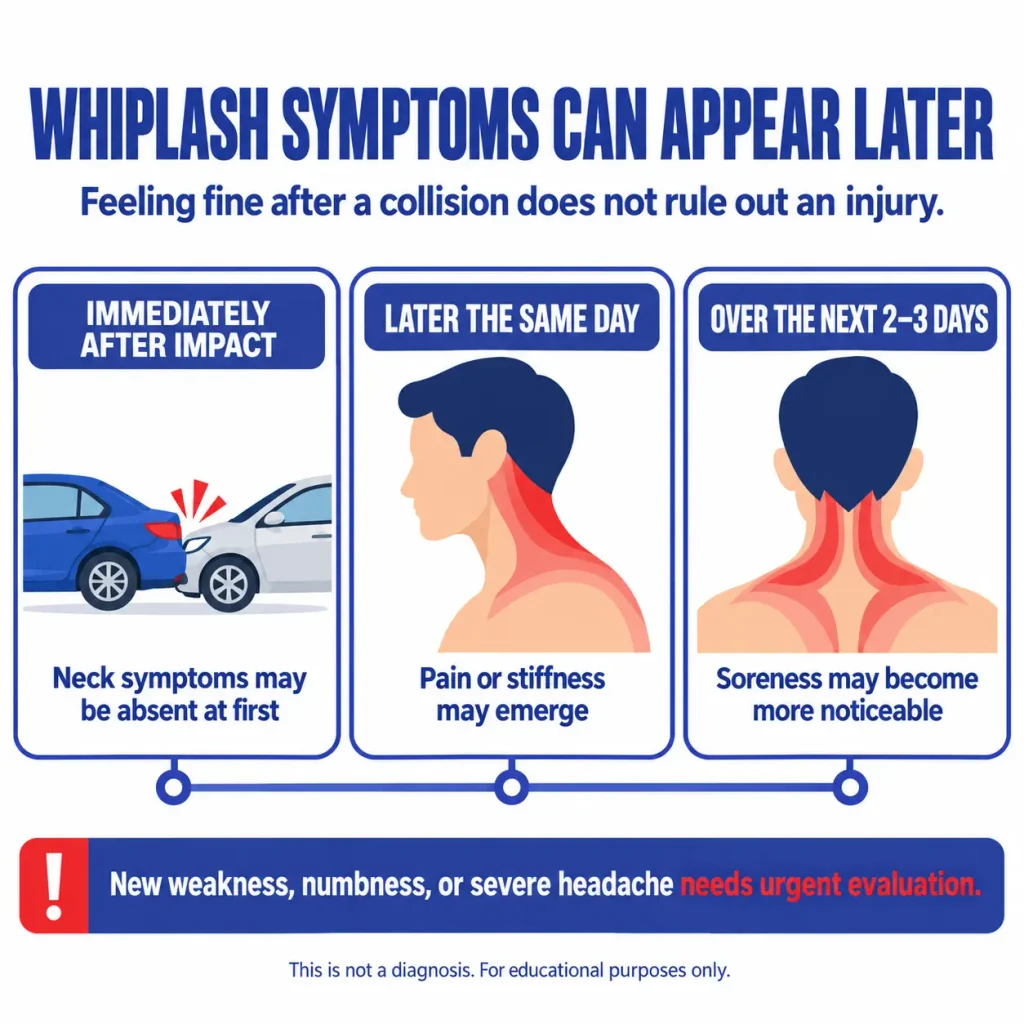
Yes. Symptoms can emerge later the same day or over the next two or three days. Discomfort may become easier to notice as the immediate response to the collision passes and affected tissues become sore. The National Library of Medicine’s whiplash information also notes that pain need not start at the scene.
A delayed onset is common, but it is not a safety test. Feeling well immediately after the crash does not rule out an injury, particularly if there was a significant impact, head trauma or new symptoms afterward.
What If Whiplash Symptoms Are Getting Worse?
Increasing muscle soreness or stiffness can occur during the first days after a strain. Arrange a clinical assessment if pain is escalating, movement is becoming more limited or symptoms are not following the course you were advised to expect. Berkshire Healthcare’s whiplash guidance distinguishes typical discomfort from warning signs such as loss of strength, difficulty walking and severe worsening headache.
A new area of numbness, difficulty gripping objects, leg weakness or a severe headache is a different development from ordinary soreness. Those changes require urgent evaluation, even if they appeared a day or two after the collision.
Which Symptoms After a Car Accident Need Emergency Evaluation?
Numbness, Tingling, or Weakness in the Arms or Legs
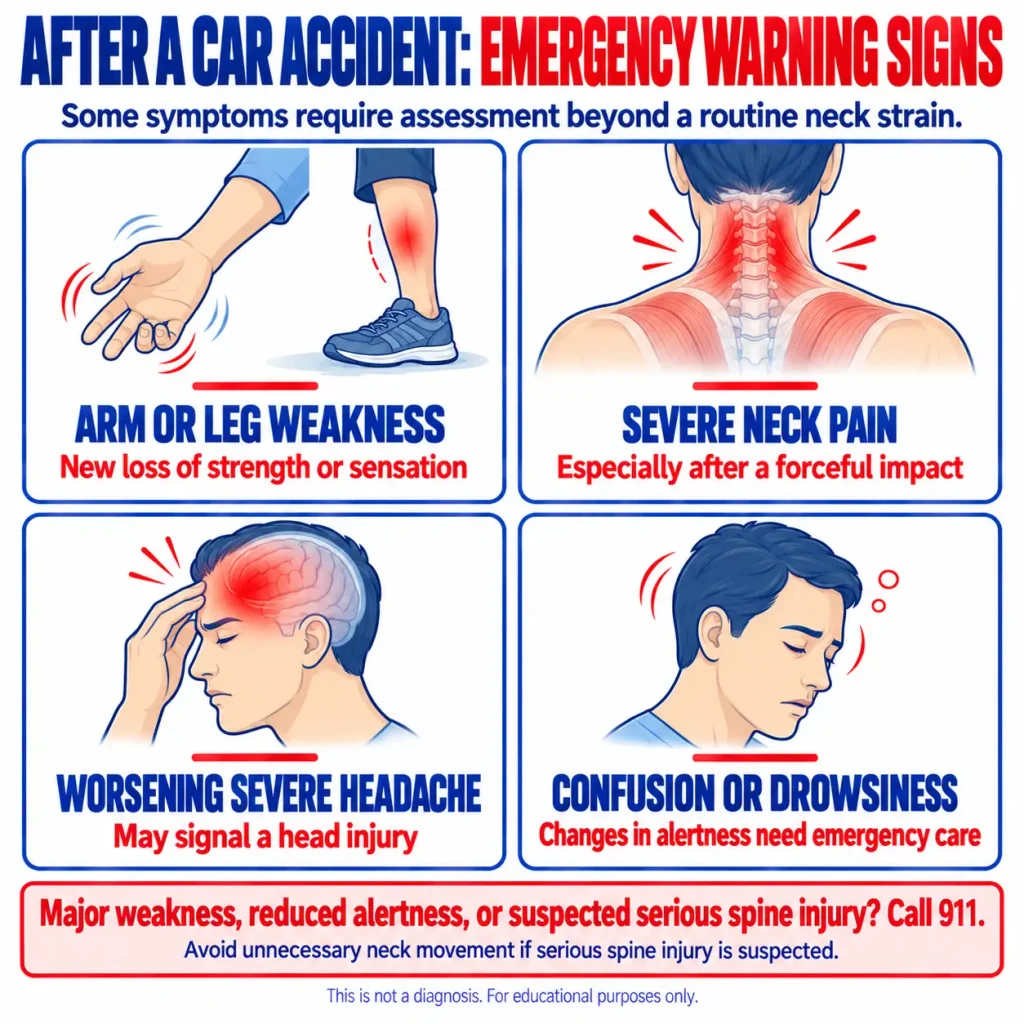
New tingling, loss of feeling, noticeable weakness or difficulty using a hand or leg can indicate that nerves or the spinal cord may be involved. New or worsening weakness, impaired walking or loss of sensation warrants emergency assessment. More general guidance on how changes in function affect urgency is available in Post Oak ER’s neck-pain emergency guidance.
Severe Neck Pain or Difficulty Moving After a Significant Impact
Severe pain, marked tenderness directly over the neck bones, or difficulty moving after a forceful crash needs careful evaluation. The clinician will consider details such as a high-energy collision, rollover, other major injuries and the person’s age and condition. Do not twist or force the neck to see how far it will turn if a serious spinal injury is possible.
Severe Headache, Confusion, or Other Symptoms of Possible Head Injury
A worsening severe headache, repeated vomiting, confusion, unusual behavior, slurred speech, seizures or increasing drowsiness after a crash raises concern for head injury. The CDC’s concussion warning signs identify these as reasons for immediate emergency care. Readers who need more detail about brain-injury symptoms can consult Post Oak ER’s concussion warning-sign guide.
When Emergency Transportation May Be Safer
Call 911 rather than drive if someone has major weakness, altered consciousness, loss of normal movement or sensation, or a suspected serious neck or spine injury. Limit unnecessary head and neck movement while waiting for emergency responders, unless remaining in place creates immediate danger. A person with such symptoms should not drive themself to be examined.
What Should a Doctor Check After a Car Accident?
How the Collision Happened
Expect questions about whether the car was struck from behind or the side, whether the vehicle rolled over, how forceful the impact seemed, and whether your head hit anything. Seat belt use, airbag deployment, any loss of consciousness and other injuries also help explain the risks. The collision story guides care, but does not diagnose whiplash by itself.
Neck Movement, Tenderness, and Neurological Function
The clinician may check where the neck is tender, whether there is pain over the spine, and whether it is safe to assess movement. Strength, sensation, reflexes and limb function can help identify neurological changes. Neck rotation should be assessed only when serious injury has been considered—not as a self-test at the accident scene.
For suspected spinal trauma, NICE spinal-injury assessment guidance emphasizes checking neurological status and risk factors before deciding on movement or imaging.
Checking for Injuries Beyond Whiplash
The examination also looks for clues to an injury that cannot be explained by a routine neck strain, including a possible cervical spine injury, nerve involvement or head trauma. A finding such as focal weakness, significant midline tenderness or altered alertness can change the evaluation pathway. The wider approach to accident-related injuries is covered by Post Oak ER’s trauma and injury care.
Does Whiplash Require an X-Ray, CT Scan, or MRI?
When Imaging May Not Be Necessary
Not everyone with whiplash symptoms needs a scan. Clinicians use the history, examination and validated cervical spine trauma criteria to judge whether imaging is likely to help. Pain alone is not a reason to order every type of scan, and a standard X-ray cannot show a simple muscle or ligament strain directly.
When Imaging May Be Recommended
When cervical spine imaging is indicated after blunt trauma in an adult, CT without contrast is commonly the preferred initial test for important bone injury. MRI may be added if spinal cord, nerve-root or ligament injury is suspected, including certain cases with neurological abnormalities. The American College of Radiology’s patient imaging criteria explain this distinction.
A clinician chooses the study based on the examination and collision risk, not the label “whiplash.” Post Oak ER describes its on-site X-ray and CT capabilities on its Post Oak ER’s emergency imaging services page; additional testing or transfer may be needed when clinically appropriate.
What Happens After Whiplash Has Been Evaluated?
If serious injury has been assessed and an uncomplicated soft-tissue injury is most likely, the care plan may include suitable pain relief, advice on returning to normal activities as tolerated, and instructions for follow-up. Prolonged immobilization is generally not routine for uncomplicated whiplash. The plan is different when the examination suggests a cervical, neurological or head injury requiring more testing or specialist care.
Before leaving, make sure you know which new symptoms should prompt immediate return and when to arrange reassessment if pain or movement does not improve. Do not drive until you can move safely and remain fully alert.
Emergency Assessment After a Car Accident at Post Oak ER
For drivers and passengers in Houston’s Galleria and Uptown area, Post Oak ER provides 24/7 emergency evaluation for concerning symptoms after a collision, including significant neck pain, numbness, weakness and possible cervical spine injury. Emergency physicians can review the impact, examine neurological function and decide whether available on-site X-ray or CT imaging is appropriate. When signs suggest a serious injury requiring care beyond a freestanding emergency department, the team can help arrange the appropriate next level of care. Call 911 for suspected unstable spine injury or major neurological changes rather than attempting private transport.
Frequently Asked Questions
How soon do whiplash symptoms appear after a car accident?
They can begin immediately, several hours later or during the following days. The timing is useful information for your clinician but does not prove how serious the injury is.
Can whiplash symptoms start two or three days after a crash?
Yes. Neck stiffness and pain sometimes become noticeable after a delay. New weakness, numbness, confusion or other concerning symptoms should not be dismissed as ordinary delayed soreness.
Can you have whiplash even if the accident seemed minor?
Yes. Sudden head-and-neck movement can happen in a collision that does not appear severe. The impact circumstances and your symptoms still deserve an appropriate assessment.
Is it normal to have a headache after whiplash?
Headaches, often near the back of the head, can accompany whiplash. A worsening severe headache or one associated with vomiting, confusion or other neurological changes needs emergency care.
Can whiplash cause numbness or tingling in the arms?
People may report these sensations after a neck injury, but they can also indicate nerve or spinal involvement. New, persistent or increasing numbness or weakness warrants prompt medical assessment.
How do doctors tell the difference between whiplash and a more serious neck injury?
They consider the crash mechanism, areas of tenderness, safe neck movement and neurological findings. Those details determine whether additional imaging or urgent specialist evaluation is needed.
Do I need an X-ray, CT scan, or MRI for whiplash?
Not necessarily. A low-risk examination may not require imaging; CT is often preferred when adult cervical spine trauma imaging is indicated, while MRI addresses selected concerns about soft tissue or the spinal cord.
When should I go to the ER for whiplash symptoms?
Go promptly for severe or worsening post-collision neck pain, new numbness or weakness, difficulty walking, or concerning head-injury symptoms. Call 911 for a suspected major spine injury, altered consciousness or severe neurological changes.