

A stiff neck after sleeping awkwardly differs from stiffness with fever, an abrupt headache, or sudden hand weakness. The key questions are what else changed, how quickly, and whether you can function normally.
When Is a Stiff Neck More Than Ordinary Muscle Tightness?
People use “stiff neck” to describe soreness, tight muscles, or restricted movement. An awkward sleeping position, prolonged tension, or a minor strain can cause those sensations without serious illness. As MedlinePlus explains in its neck-pain guidance, however, fever with headache and pronounced stiffness, new weakness, or trouble walking changes the need for care.
Did the stiffness follow ordinary activity, or arrive alongside illness, injury, or lost function? For other neck-pain warning signs, see Post Oak ER’s broader guide to emergency care for neck pain.
Stiff Neck With Fever: Why the Combination Matters
Fever may reflect an illness unrelated to the neck, but new significant stiffness with fever deserves prompt assessment rather than an assumption of muscle tightness.
When Fever and Neck Stiffness May Signal a Serious Infection
One concern is meningitis, inflammation of the protective membranes around the brain and spinal cord. The CDC’s overview of meningitis explains that bacterial meningitis is a medical emergency. Fever plus neck stiffness does not establish that diagnosis, and people do not have to display every textbook symptom for a clinician to consider it.
Marked stiffness with new fever warrants prompt evaluation, even without a severe headache. Rapid deterioration or confusion calls for emergency care.
Fever, Severe Headache, and Neck Stiffness Together
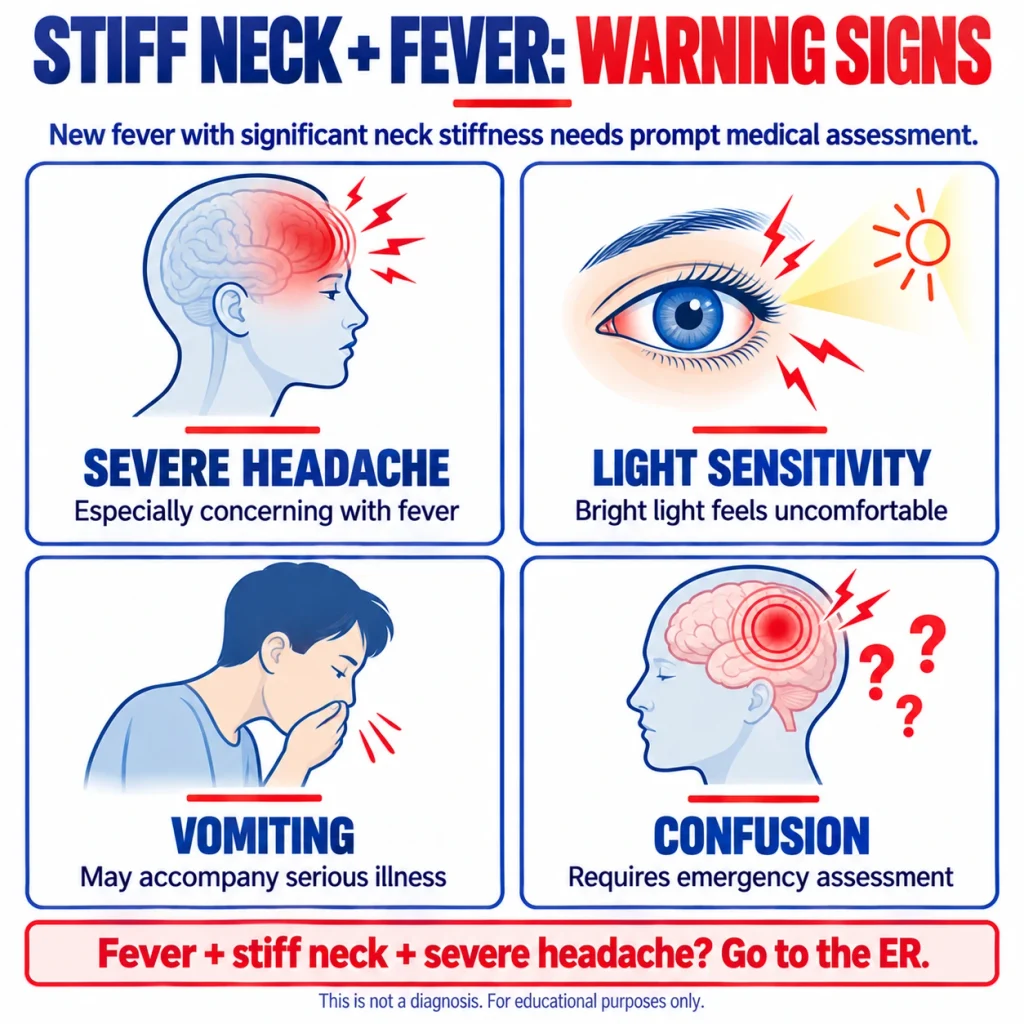
A stiff neck combined with fever and a severe headache is especially concerning. Light sensitivity, vomiting, confusion, or profound illness further raise the urgency. The CDC’s description of meningococcal meningitis symptoms identifies these as possible accompanying features. Do not wait for a rash or another symptom to complete the picture; go to an emergency department.
Stiff Neck With a Headache: What Makes It Concerning?
Headache onset and intensity matter. Muscle tension can coexist with a headache, but sudden changes require a different response.
When Neck Stiffness and Headache May Be Less Concerning
A familiar mild headache with manageable neck tightness and no fever, injury, or neurological change may be less urgent. But if the headache is new, worsening, or unusual, seek assessment even if it began mildly.
When a Severe or Sudden Headache Changes the Situation
A headache that reaches extreme intensity within moments—often called a thunderclap headache—requires immediate emergency evaluation, particularly with a stiff neck. Bleeding around the brain is one possible explanation. MedlinePlus’s explanation of subarachnoid hemorrhage describes sudden severe headache and neck stiffness among its warning features. Do not drive yourself if the pain is overwhelming or you have fainting, confusion, or neurological symptoms. More general headache warning signs are covered in Post Oak ER’s headache emergency guide.
Stiff Neck With Weakness, Numbness, or Other Neurological Changes
Stiffness with impaired limb function or alertness may mean more than sore muscles.
New Arm or Leg Weakness
Difficulty lifting an arm, gripping a cup, or using a leg normally warrants prompt evaluation. Sudden weakness on one side, especially with a drooping face, speech trouble, or altered vision, may indicate stroke. Follow the American Stroke Association’s emergency warning guidance and call 911 immediately—even if the symptoms start to improve. Post Oak ER’s separate arm weakness guide discusses that symptom in more detail.
Numbness, Walking Difficulty, or Loss of Coordination
New numbness, repeated stumbling, unusually clumsy hands, or trouble walking steadily can signal a neurological problem rather than isolated stiffness. NHS guidance on cervical spinal cord symptoms describes changes in hand function, sensation, and balance as findings needing assessment, particularly when worsening rapidly. Sudden or substantial loss of function warrants emergency care; do not wait to see whether stretching helps.
Confusion or Reduced Alertness
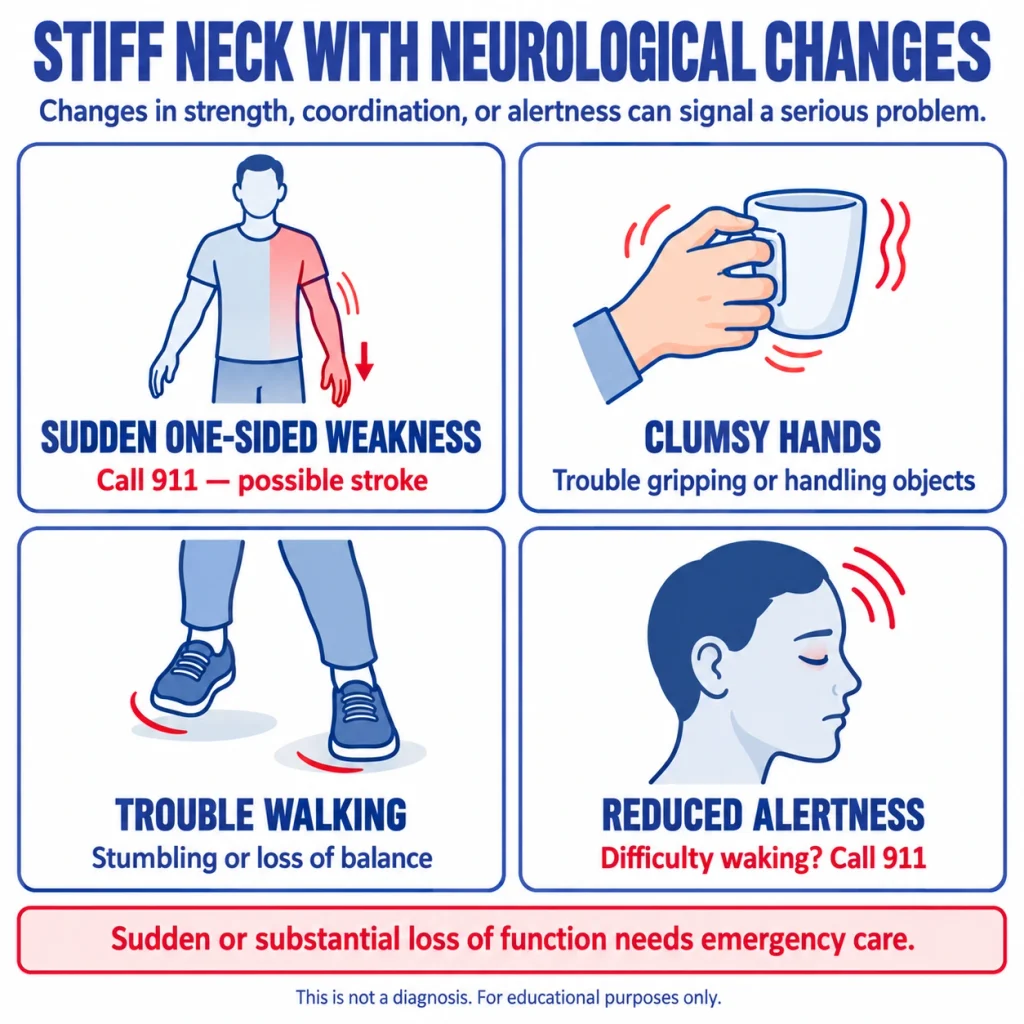
Confusion, unusual drowsiness, or difficulty waking with a stiff neck requires emergency assessment, especially with fever or severe headache. Call 911 if the person cannot stay alert.
Does a Stiff Neck After a Fall or Accident Require Emergency Care?
A collision, fall, sports impact, or forceful twist can cause stiffness, sometimes after a delay. The NHS’s whiplash information notes that symptoms may take hours to appear. That delay does not rule out a more serious injury after significant trauma.
Severe neck pain, tenderness over the spine, new numbness or weakness, or difficulty moving normally after an impact requires emergency assessment. If a serious spinal injury is possible, avoid turning, bending, or trying to “test” the neck. MedlinePlus first-aid guidance for suspected spinal injury advises keeping the person still and calling emergency services; do not move them unnecessarily unless there is immediate danger.
How Quickly Should You Seek Care for a Stiff Neck?
When Immediate Emergency Care Is Needed
Go to the ER for a sudden, extremely severe headache; fever with marked stiffness and severe illness; confusion; major weakness or difficulty walking; rapidly worsening symptoms; or a suspected serious neck injury.
Call 911 rather than driving for stroke-like changes, reduced consciousness, inability to move after an injury, or a suspected unstable neck injury. A companion should not move someone who may have a serious spinal injury.
When Prompt Medical Assessment Is Appropriate
Seek medical assessment promptly for new fever with significant stiffness even when the full pattern of meningitis symptoms is absent, or when discomfort is worsening or interfering with routine activities. If new neurological symptoms appear or the person becomes much sicker, escalate to emergency care rather than waiting for an office appointment.
When Isolated Stiffness May Be Less Urgent
Mild stiffness that follows an ordinary activity, with no fever, severe headache, neurological change, or significant injury, may settle over time. Reassess if movement becomes more limited, symptoms persist, or a new concerning symptom develops.
What Will Doctors Check When a Stiff Neck Comes With Other Symptoms?
Reviewing Symptoms and Recent Events
Clinicians ask when symptoms began, how a headache developed, whether fever is present, and whether trauma occurred. Changes in strength, walking, and mental clarity guide urgency.
Physical and Neurological Examination
Examination may include vital signs, safe neck assessment, and checks of strength, sensation, coordination, and alertness. After significant trauma, clinicians may restrict rather than test neck movement.
When Additional Testing May Be Needed
Blood tests or imaging may be appropriate when infection, neurological injury, or trauma is suspected; imaging is not automatic for every stiff neck. If meningitis is a concern, hospital-based testing may include blood tests and examination of spinal fluid, while treatment for suspected bacterial disease must not be delayed unnecessarily. The CDC’s clinical guidance on meningococcal disease emphasizes prompt diagnosis and treatment. The appropriate tests and care setting depend on the assessment.
Emergency Assessment for Concerning Neck Stiffness in Houston
Near Houston’s Galleria and Uptown areas, Post Oak ER provides 24/7 emergency assessment for neck stiffness with severe headache, neurological changes, significant illness, or injury. Its emergency physicians may use on-site CT imaging and laboratory testing when clinically indicated. If specialized inpatient care or further hospital-based evaluation is required, the team can stabilize patients and coordinate transfer.
Frequently Asked Questions
When should I worry about a stiff neck?
Be concerned when it comes with fever, a severe or abrupt headache, new weakness or numbness, confusion, difficulty walking, or a significant injury. New symptoms and rapid changes matter more than stiffness alone.
Is a stiff neck with a fever always an emergency?
Not always, but new fever with significant neck stiffness needs prompt medical assessment. If there is also a severe headache, confusion, or marked illness, go to the ER now.
Can a stiff neck and headache be a sign of something serious?
Yes. A sudden, extraordinarily severe headache or a headache with fever or neurological symptoms warrants emergency care. A mild, familiar headache without other concerning features is a different situation.
Can you have meningitis without all the usual symptoms?
Yes. Symptoms can vary, so the absence of one classic sign does not exclude meningitis. A clinician must consider the full pattern and how quickly the person is becoming ill.
Why does a stiff neck with arm weakness need medical attention?
Weakness suggests a possible nerve, spinal cord, or brain problem rather than just muscle tightness. Sudden one-sided weakness is a 911 emergency; other new or progressive weakness needs timely evaluation.
Should I go to the ER for a stiff neck after a car accident?
Yes, after a significant collision—particularly if pain is severe or there is numbness, weakness, or trouble moving normally. If a serious spine injury is suspected, avoid moving the neck and call 911.
How can I tell whether my stiff neck needs emergency care?
Look beyond the neck: fever, sudden severe headache, altered alertness, new neurological symptoms, or major trauma should guide urgency. When these are present, seek emergency evaluation instead of trying to diagnose the cause at home.