

Neck pain can feel surprisingly far from the neck. A sharp sensation may run through one shoulder and down an arm, or fingers may tingle while the neck itself barely hurts. One possible explanation is cervical radiculopathy, a problem involving a nerve root as it exits the cervical spine. Recognizing the pattern can help you describe the symptoms, but it cannot establish the diagnosis. The more urgent question is whether normal arm or hand function is changing.
Why Does Cervical Radiculopathy Cause Neck Pain to Travel Into the Arm?
Cervical radiculopathy is often called a “pinched nerve in the neck.” Nerve roots branch from the spinal cord between the neck bones and carry movement and sensation signals to the shoulder, arm, and hand. If a root becomes irritated or compressed, the brain may register pain, tingling, or altered sensation along the territory supplied by that nerve—not just where the irritation occurs. The American Academy of Orthopaedic Surgeons’ explanation of cervical radiculopathy describes this connection between neck nerve roots and arm symptoms.
A disc protrusion or narrowing around the opening where a nerve exits can contribute to the problem. Such structural changes do not automatically mean they are causing a person’s symptoms. The MedlinePlus overview of herniated discs also describes how a neck disc problem can send discomfort toward the shoulder, forearm, or fingers. The clinical picture matters more than any single symptom or scan finding.
What Does Cervical Radiculopathy Feel Like?
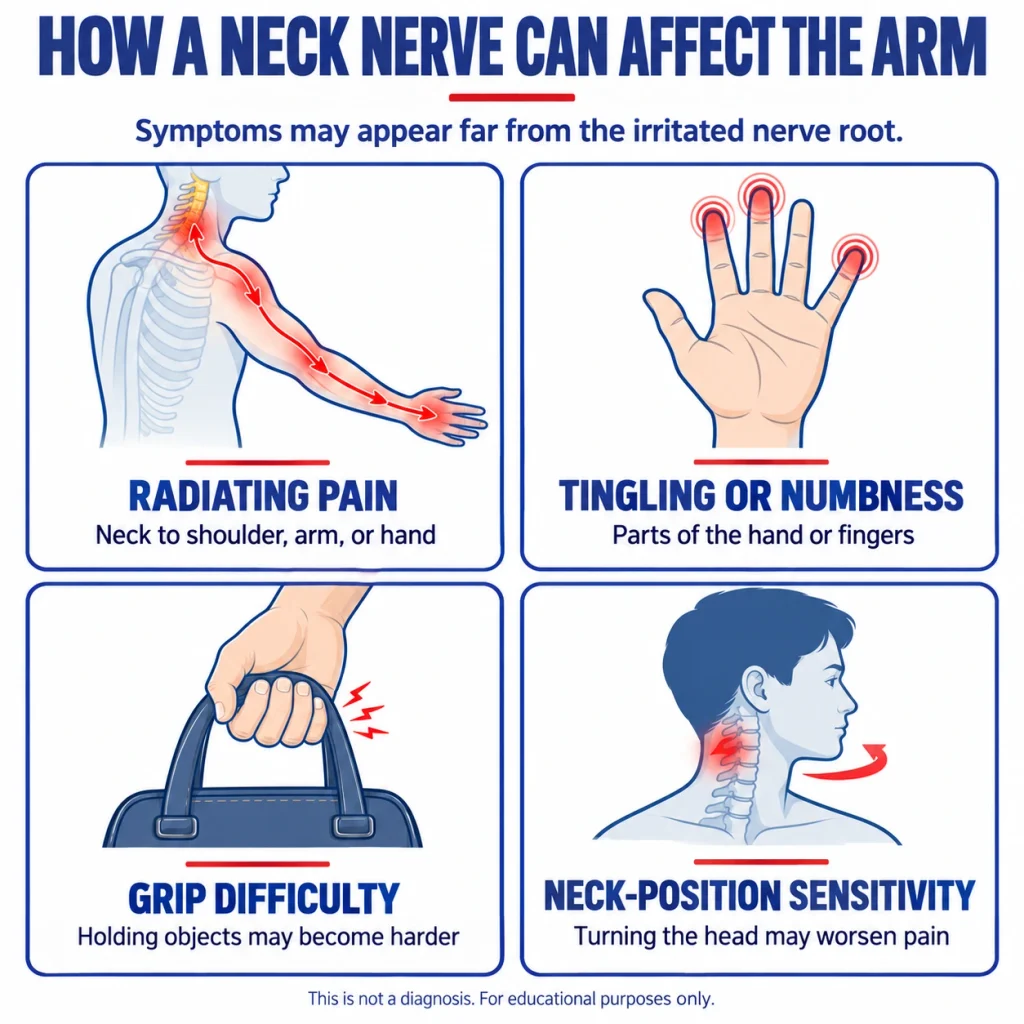
Pain That Radiates From the Neck Into the Arm
People describe the pain as shooting, electric, burning, sharp, or a deep ache. It may begin beside the neck, spread across a shoulder blade, and continue into the upper arm or hand. Symptoms often favor one side, although patterns vary. Looking upward, turning the head, or holding the neck in certain positions may intensify the pain. At times, the arm hurts much more than the neck.
The direction of the pain is useful information, not a reliable at-home test. A clinician also considers whether the sensation follows a plausible nerve-root pattern and whether any examination findings match it.
Tingling, Numbness, or Changes in Sensation
Pins and needles in part of a hand, reduced feeling in several fingers, or an unusual “asleep” sensation can occur with nerve-root irritation. These changes may come and go or remain noticeable between painful episodes. Tell your clinician exactly which fingers or areas feel different; saying only that “the arm is numb” can hide helpful detail.
Weakness and Difficulty Using the Arm or Hand
Some people struggle to grip a bag handle, lift an everyday object, or hold an item securely. Others avoid movement because it hurts. These are not always the same problem: pain can limit effort even when muscle strength is intact, whereas true weakness means a muscle cannot produce its usual force. A new inability to extend the wrist, raise the arm normally, or maintain a grip deserves prompt assessment, particularly if it is worsening.
Is Arm Pain Coming From the Neck or Somewhere Else?
Clues That Suggest a Cervical Nerve-Root Problem
The combination of traveling arm pain, tingling or numbness, and symptoms influenced by neck position can point toward a cervical nerve root. Clinicians pay attention to the onset, exact distribution, triggers, and whether strength or reflexes have changed. The American Academy of Family Physicians’ clinical review explains how history and examination help distinguish cervical radiculopathy from other sources of upper-limb symptoms.
How Neck-Related Arm Pain Can Differ From Shoulder Problems
A shoulder condition may hurt most when reaching overhead, rotating the shoulder, or lying on that side. A neck nerve-root problem may be more likely when discomfort travels below the elbow and occurs with numbness, tingling, or a matching strength change. These patterns overlap: shoulder and cervical problems can coexist, and a clinician may need to examine both areas. Pain location alone cannot reliably separate them.
Why Sudden Arm Weakness Must Not Be Assumed to Be a Pinched Nerve
A sudden loss of strength is not something to explain away as cervical radiculopathy. Sudden one-sided arm weakness or numbness—especially with a drooping face, difficulty speaking, vision changes, or sudden imbalance—may indicate a stroke. The CDC’s stroke warning signs advise calling 911 immediately if these symptoms appear, even if they improve quickly. For a broader discussion of other possible causes, Post Oak ER also covers arm weakness and when it may be an emergency.
When Does Neck Pain Traveling Into the Arm Need Urgent Medical Attention?
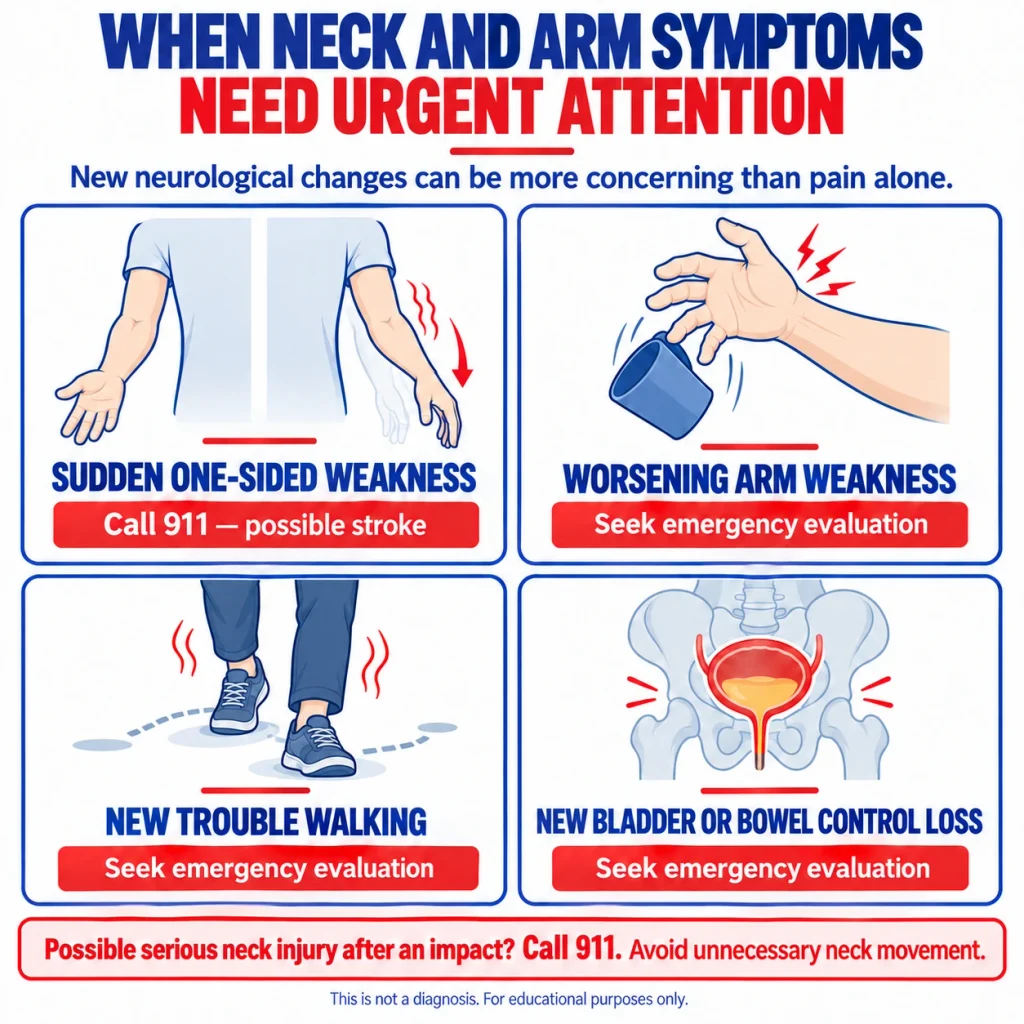
New or Worsening Arm Weakness
New weakness, decreasing grip strength, or a noticeable loss of the ability to use the arm warrants prompt medical assessment. Weakness that progresses over hours or days is more concerning than a stable ache with no change in function. If weakness begins abruptly, call 911—especially when a stroke is possible. If weakness is progressive or substantial without a sudden stroke-like onset, seek emergency evaluation rather than waiting for a routine appointment.
Symptoms That Suggest a More Serious Neurological Problem
A single irritated nerve root generally does not explain new difficulty walking, marked imbalance, loss of hand coordination on both sides, or new bladder or bowel control problems. These findings raise concern for involvement beyond an isolated nerve root. NHS guidance on cervical myelopathy and radiculopathy identifies rapid neurological deterioration as a reason for emergency assessment. New walking difficulty, rapid loss of function, or new bladder or bowel dysfunction requires emergency care.
Neck and Arm Symptoms Following an Injury
Neck pain and radiating arm symptoms after a substantial fall, vehicle collision, diving incident, or hard impact need a different level of caution. If serious neck injury is possible—particularly with weakness, numbness, or inability to move safely—call 911. Avoid moving or twisting the neck unnecessarily, and do not ask the injured person to stand or walk. The American College of Radiology’s acute spinal trauma criteria describe how injury severity and examination findings guide the need for imaging.
When Non-Emergency Medical Evaluation May Be Appropriate
If pain or tingling is stable, there has been no significant injury, and strength and walking remain normal, an outpatient assessment may be appropriate. Arrange an appointment if symptoms persist, recur, disrupt sleep or work, or interfere with ordinary tasks. Reassess the urgency if new weakness or other neurological changes appear. For red flags involving neck pain more generally, see Post Oak ER’s guide to when neck pain needs emergency evaluation.
How Do Doctors Evaluate Suspected Cervical Radiculopathy?
Medical History and Symptom Assessment
A clinician typically asks when the pain started, whether it followed an injury, how far it travels, which fingers feel different, and whether it is improving or worsening. Questions about dropping objects, trouble gripping, or altered walking help establish whether there may be a loss of neurological function rather than pain alone. Prior medical conditions and additional symptoms also shape the evaluation.
Neurological and Physical Examination
The examination may compare arm and hand strength on both sides, check sensation in different areas, test reflexes, and assess neck and shoulder movement when safe. Some movements can reproduce nerve-related symptoms; they should be selected by the clinician, not used as forceful self-tests. Findings can suggest a particular nerve root or indicate that another diagnosis needs consideration.
When Is Imaging Considered?
Not everyone with suspected cervical radiculopathy needs an immediate scan. The ACR Appropriateness Criteria for cervical pain and radiculopathy distinguish uncomplicated symptoms from persistent radiculopathy and cases with higher-risk findings. MRI can show nerve roots, discs, and other soft tissues; MedlinePlus explains the role of cervical MRI in selected neck and neurological problems. CT is often especially useful for evaluating bone injury after significant trauma. The decision depends on the history, examination, progression, and what problem the clinician needs to rule out—not simply how intense the arm pain feels.
What Happens After the Initial Evaluation?
Next steps depend on whether the findings fit a stable nerve-root problem or suggest a more urgent neurological or traumatic condition. Many uncomplicated cases can be managed through outpatient follow-up, with reassessment if symptoms change. Persistent pain, sensory symptoms, or suspected objective weakness may lead to further testing or specialist review. Significant or progressing deficits can require more urgent investigation and coordination of additional care. The aim of the first assessment is to identify what needs action now and what can be followed safely.
Emergency Evaluation for Neck and Arm Symptoms in Houston
For people near Houston’s Galleria and Uptown areas, Post Oak ER provides 24/7 emergency care when neck pain radiating into an arm is accompanied by new or worsening weakness, substantial loss of hand function, or a concerning injury. Its emergency team can assess neurological findings and determine which tests are appropriate; available on-site emergency imaging services include CT and X-ray. Not every patient needs imaging, and a cervical MRI or specialist evaluation may require additional arrangements. If stroke symptoms or a serious neck injury make travel unsafe, call 911 instead of driving.
Frequently Asked Questions
Can cervical radiculopathy cause arm pain without significant neck pain?
Yes. Arm pain, tingling, or numbness can dominate the symptoms even when neck discomfort is mild. The overall pattern and neurological exam help determine whether a cervical nerve root is involved.
Is cervical radiculopathy the same as a pinched nerve in the neck?
Usually, yes. “Pinched nerve” is the everyday term often used for cervical radiculopathy, although irritation—not only direct compression—can affect a nerve root.
Can cervical radiculopathy cause numbness or tingling in the fingers?
Yes. Altered sensation may affect particular fingers or areas of the hand. The distribution provides a clue, but does not confirm the diagnosis by itself.
How can I tell whether my arm pain is coming from my neck or shoulder?
Pain linked to neck motion with tingling or numbness favors a possible nerve-root source; pain mainly provoked by shoulder movement may suggest a shoulder problem. Because they can overlap, a physical examination is usually needed.
Can cervical radiculopathy affect grip strength?
Yes, if a nerve root supplying relevant muscles is affected. A weak-feeling grip may also reflect pain, so a clinician should assess whether there is a true loss of strength.
When is arm weakness with neck pain a medical emergency?
Call 911 for abrupt weakness, especially with facial drooping, speech or vision changes, or sudden imbalance. Seek emergency evaluation for rapidly worsening weakness, major loss of function, new walking or bladder/bowel problems, or symptoms after significant neck trauma.
Does cervical radiculopathy always require an MRI?
No. History and examination often guide the initial assessment. MRI may be useful when symptoms persist, neurological deficits progress, or a more serious problem is suspected.