

Back pain, blood in the urine, or a sudden change in urination can be alarming when prostate cancer is already known or suspected. These symptoms deserve attention, but they do not tell you by themselves whether cancer has spread. The immediate question is what is happening now: Is the symptom stable enough for prompt follow-up, or is there a complication that should be assessed in an emergency setting?
More advanced prostate cancer can be associated with urinary problems, blood in the urine, and persistent pain in the back, hips, or pelvis, but the National Cancer Institute emphasizes that similar symptoms can also come from noncancerous prostate conditions. That distinction matters because symptoms are a reason to evaluate the cause, not a reliable way to stage cancer at home.
Back Pain or Blood in the Urine Does Not Automatically Mean Cancer Has Spread
Both symptoms have many possible explanations. Back pain is common and may come from muscles, joints, discs, arthritis, or other problems unrelated to cancer. Blood in the urine can occur with infection, stones, an enlarged or inflamed prostate, urinary-tract procedures, medications, kidney disease, or cancers of the urinary tract. NIDDK’s hematuria guidance makes the same point: visible or microscopic blood in urine is a finding that needs a cause, not a diagnosis by itself.
Concern rises when a change is new, unexplained, persistent, progressively worse, or occurring in someone with a prostate-cancer history. The American Cancer Society’s prostate-cancer symptom guidance notes that advanced disease can cause back or bone pain, urinary problems, blood in the urine, and neurologic symptoms, while also stressing that most of these symptoms are more often caused by other conditions.
When Back Pain Becomes More Concerning
Persistent or progressively worsening pain
A brief episode of soreness after lifting, exercise, or an awkward movement is different from pain that has no clear explanation, keeps returning, wakes you repeatedly, or becomes harder to control. In the context of prostate cancer, pain that continues in the back, hips, or pelvis warrants medical review. The NCI prostate-cancer treatment summary for patients identifies back, hip, or pelvic pain that does not go away as a possible symptom when prostate cancer is detected at an advanced stage.
That does not mean persistent back pain proves bone involvement. It means the pattern deserves evaluation in light of your cancer history, examination, and any testing your clinician considers appropriate.
Back pain with weakness, numbness, or other neurologic changes

Back pain becomes substantially more urgent when it occurs with new leg weakness, numbness, tingling, difficulty walking, loss of sensation, or new bladder or bowel dysfunction. In a person with current or previous cancer, these symptoms can raise concern for pressure on the spinal cord or cauda equina. NICE guidance on metastatic spinal cord compression treats neurologic signs such as limb weakness, gait disturbance, numbness, and bladder or bowel dysfunction as an oncologic emergency.
Do not simply monitor a new neurologic deficit at home because the urgency is driven by the potential effect on nerve function, not by whether you can determine the exact cause yourself.
What Blood in the Urine Means in This Context
Yes, prostate cancer can be associated with blood in the urine. But hematuria is not specific to prostate cancer and cannot show whether disease has advanced. The same symptom may occur with benign prostate enlargement, prostatitis, urinary infection, stones, kidney or bladder problems, blood-thinning medicines, recent procedures, and other causes.
Visible blood should be evaluated even when it is painless. According to NIDDK’s overview of blood in the urine, clinicians may use the history, examination, urinalysis, and selected blood or imaging tests to determine where the bleeding may be coming from. In this article’s prostate-cancer context, the key point is not to label the bleeding as cancer progression before the source is established.
Urinary Problems That Can Signal a More Immediate Complication
Difficulty or inability to urinate
A slower stream, hesitancy, or incomplete emptying can develop for several reasons, including benign prostate enlargement. A sudden inability to pass urine is different. NIDDK identifies acute urinary retention as a condition requiring immediate medical attention, especially when the bladder feels painfully full or the lower abdomen is swollen or uncomfortable.
For someone with prostate-cancer concerns, inability to urinate should be treated as an acute urinary problem rather than as a clue to be self-interpreted about cancer stage.
Heavy bleeding or worsening urinary symptoms
Small amounts of visible blood still deserve follow-up, but heavy or ongoing bleeding, passing clots, increasing pain, dizziness, or bleeding that interferes with urine flow changes the decision. NIDDK notes that clots in the urine can be painful and can block urine flow. If bleeding is substantial or you cannot urinate, emergency assessment is appropriate.
Stable Symptoms vs Symptoms That Should Go to the ER
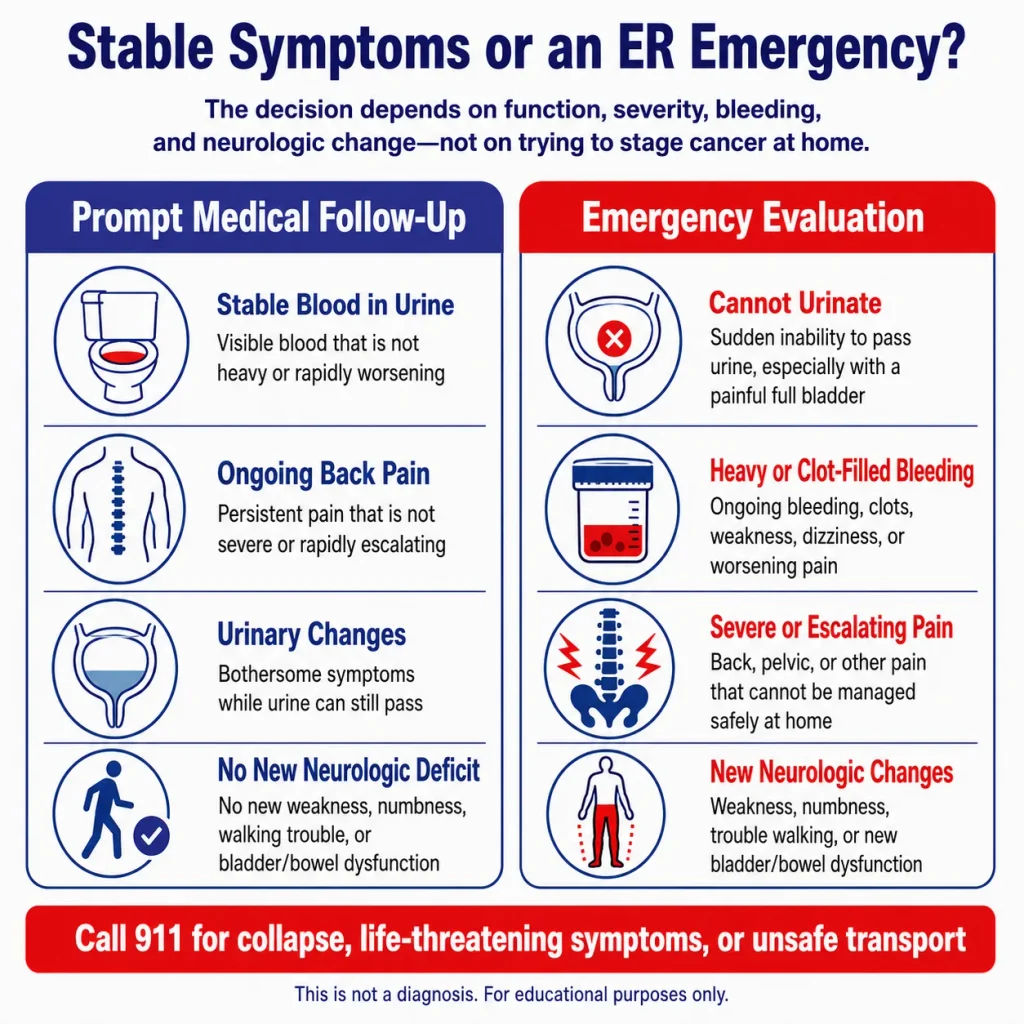
A useful way to decide is to separate a symptom that needs timely medical workup from a complication that is affecting function or overall stability right now.
Prompt medical follow-up may fit when: blood in the urine is present but stable and not heavy; back pain is ongoing but not severe or rapidly worsening; urinary changes are bothersome but you can still pass urine; and there are no new neurologic deficits or signs of major illness.
Emergency evaluation becomes more appropriate with:
• Inability to urinate, especially with a painful or distended lower abdomen.
• Heavy, ongoing, or clot-filled urinary bleeding, particularly with weakness, dizziness, or worsening pain.
• Severe or rapidly escalating back, pelvic, or other pain that cannot be managed safely at home.
• New weakness, numbness, trouble walking, or new bladder or bowel dysfunction along with back pain.
• Marked weakness, confusion, fainting, or rapid overall deterioration.
If symptoms are life-threatening, you collapse, or new neurologic changes make private transportation unsafe, call 911.
What Medical Evaluation May Help Clarify
The evaluation depends on the problem in front of the clinician. For urinary symptoms, this may include a history, abdominal and prostate-focused examination, urinalysis, blood testing, and assessment of whether the bladder is emptying. NIDDK’s urinary-retention diagnostic guidance describes post-void residual measurement, laboratory tests, and selected imaging as tools that may be used when retention is suspected.
Severe back pain with neurologic symptoms requires attention to strength, sensation, walking, bladder or bowel changes, and whether urgent spinal imaging is needed. Blood loss may lead clinicians to check blood counts and kidney function, while urine testing or imaging can help address urinary causes. Not every patient needs every test; testing should follow the symptoms and examination.
An emergency evaluation is designed to identify and manage an acute complication. It does not determine the stage of prostate cancer from symptoms alone. The American Cancer Society explains that confirming and staging prostate cancer relies on a structured diagnostic process that can include clinical assessment, PSA testing, biopsy, and imaging when indicated. Longer-term cancer assessment and treatment decisions belong with the appropriate urology and oncology teams.
24/7 Emergency Evaluation in Houston
For Houston-area patients with severe back pain, inability to urinate, heavy urinary bleeding, new weakness or numbness, or rapidly worsening illness, Post Oak ER is available 24/7 for emergency evaluation. Depending on the presentation, the emergency team can assess current symptoms and use on-site laboratory testing and CT, X-ray, or ultrasound imaging when clinically appropriate. Persistent but stable symptoms still need medical follow-up; they should not be ignored or interpreted as proof that prostate cancer has progressed.
Frequently Asked Questions
Can advanced prostate cancer cause back pain?
Yes. Advanced prostate cancer can be associated with persistent pain in the back, hips, pelvis, or other bones. Back pain is also extremely common for non-cancer reasons, so the symptom needs clinical context rather than self-staging.
Can prostate cancer cause blood in the urine?
Yes, it can. Blood in the urine also has many non-cancer causes, including infection, stones, benign prostate enlargement, inflammation, kidney or bladder conditions, and some medications, so the source should be evaluated.
Does back pain mean prostate cancer has spread to the bones?
No. Back pain alone cannot show that prostate cancer has spread. Persistent or worsening pain in someone with prostate cancer may justify further assessment, but imaging and the broader clinical evaluation are needed to determine the cause.
When is blood in the urine an emergency?
Emergency care is more appropriate when urinary bleeding is heavy or ongoing, clots are blocking urine flow, you cannot urinate, or bleeding comes with severe pain, faintness, major weakness, or rapid deterioration. Stable visible blood still deserves timely medical evaluation.
Can prostate cancer cause difficulty or inability to urinate?
Prostate cancer can contribute to urinary obstruction, but benign prostate enlargement and other conditions are more common causes of urinary difficulty. Sudden inability to urinate is an acute problem that needs immediate medical attention.
When should someone with prostate-cancer concerns go to the ER?
Go to the ER for acute complications such as inability to urinate, heavy urinary bleeding, severe or rapidly worsening pain, or back pain with new weakness, numbness, trouble walking, or bladder or bowel changes. Stable symptoms without those red flags can usually begin with prompt outpatient medical follow-up.