
COPD flare-ups are not always predictable. One may follow a respiratory infection, smoke exposure, or a day with poor air quality; another may develop without one clear cause. Recognizing common triggers cannot guarantee prevention, but it can help people with COPD reduce avoidable risks, notice a meaningful change sooner, and use an individualized action plan before symptoms become severe.
What Is a COPD Flare-Up?
MedlinePlus describes a COPD flare-up—also called an exacerbation—as a rapid worsening of COPD symptoms. The practical comparison is not with another person’s breathing; it is with the patient’s usual day-to-day baseline. A flare may involve more breathlessness, coughing, mucus, or wheezing, along with less ability to walk, sleep, or manage normal activities.
What Commonly Causes COPD Flare-Ups?
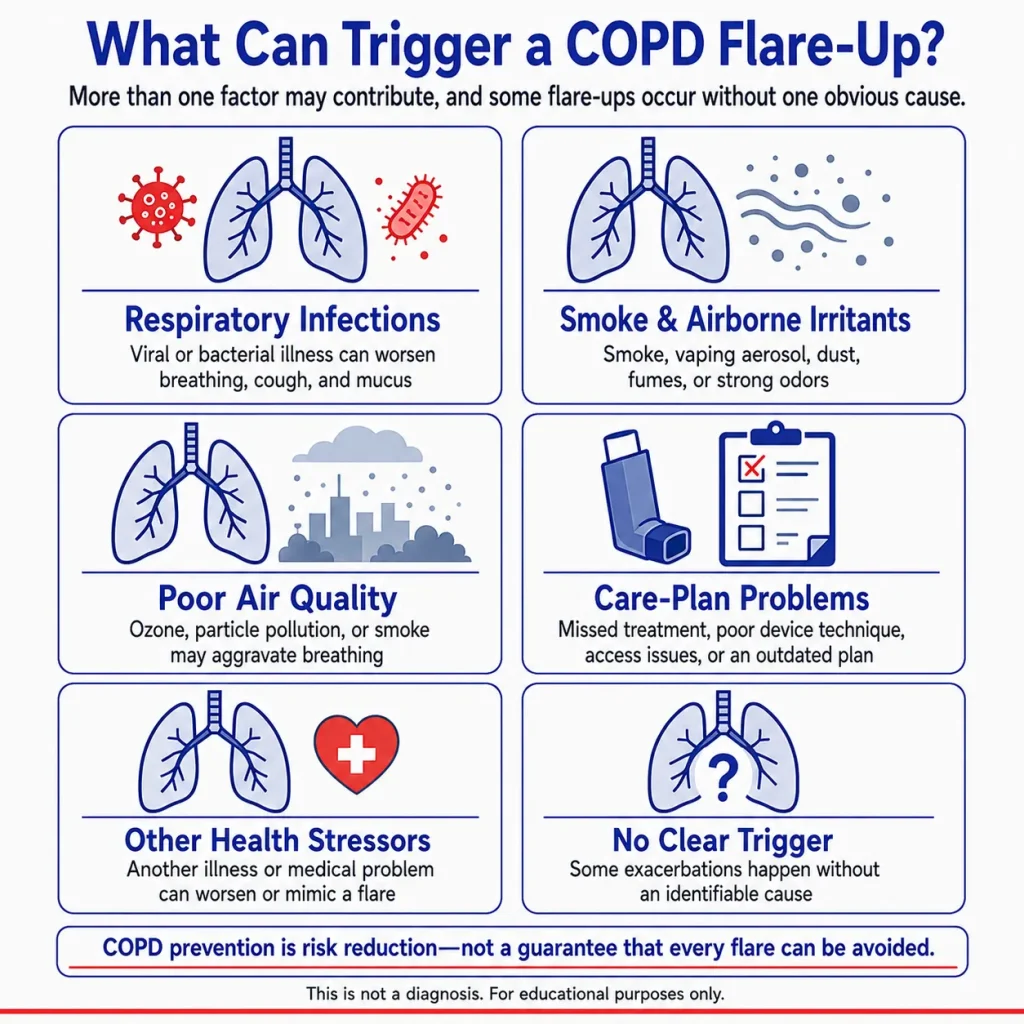
Several factors can irritate the airways, increase inflammation, or place extra stress on the respiratory system. More than one may be present at the same time, so a flare does not always fit into a single category.
Respiratory Infections
Respiratory infections are a major trigger. Viral or bacterial illnesses can increase airway inflammation and cause a noticeable change in breathing, cough, or mucus. The infection and the COPD exacerbation may occur together, but symptoms alone cannot reliably identify the organism or determine whether an antibiotic is appropriate.
Smoke and Airborne Irritants
Cigarette smoke, secondhand smoke, vaping aerosols, dust, fumes, and strong chemical odors can aggravate already-sensitive airways. Exposure may happen at home, at work, during a hobby, or in a poorly ventilated space. The goal is to identify exposures that repeatedly precede worse symptoms and reduce them where practical.
Poor Air Quality
Outdoor conditions can also matter. AirNow explains how ozone and particle pollution can affect breathing and notes that people with lung disease face greater risk from particle pollution. For Houston-area patients, checking the current Air Quality Index can be useful when planning time outdoors, especially if previous bad-air days have matched a decline in breathing.
Problems With the Medication or Care Plan
Missed maintenance treatment, difficulty obtaining prescriptions, incorrect device technique, or an outdated action plan may leave symptoms less controlled. NHLBI advises patients to ask a healthcare provider to review inhaler technique because inhalers are not all used the same way. Treatment should not be changed independently; persistent access or technique problems belong in a conversation with the regular care team.
Other Health Stressors
Another illness or medical problem can increase the body’s demand for oxygen, affect breathing, or resemble a COPD flare. This is one reason a major change should not automatically be blamed on a familiar trigger. A clinician may need to assess whether COPD is the whole explanation or only part of it.
Flare-Ups Without an Obvious Trigger
American Thoracic Society guidance on COPD exacerbations notes that infection and inhaled irritants are common causes, while some exacerbations have no known cause. Prevention is therefore best understood as risk reduction, not a promise that every flare can be avoided.
How to Identify Your Personal COPD Triggers
Look for patterns across several episodes instead of assuming every flare begins the same way. A brief written or digital record can help the patient’s regular clinician separate recurring exposures from coincidence. Useful details include:
- Recent respiratory illness or close contact with someone who was sick
- Smoke, vaping aerosol, fumes, dust, or strong odors
- Outdoor air-quality conditions
- Changes in prescribed medication use, technique, or access
- Early changes in cough, mucus, breathing, or activity tolerance
- The environment or activity immediately before symptoms changed
- How symptoms responded to the clinician-directed action plan
Bring the record to routine visits, particularly after an exacerbation. It can help the care team update the prevention plan without treating one episode as a universal pattern.
Practical Ways to Reduce the Risk of COPD Flare-Ups
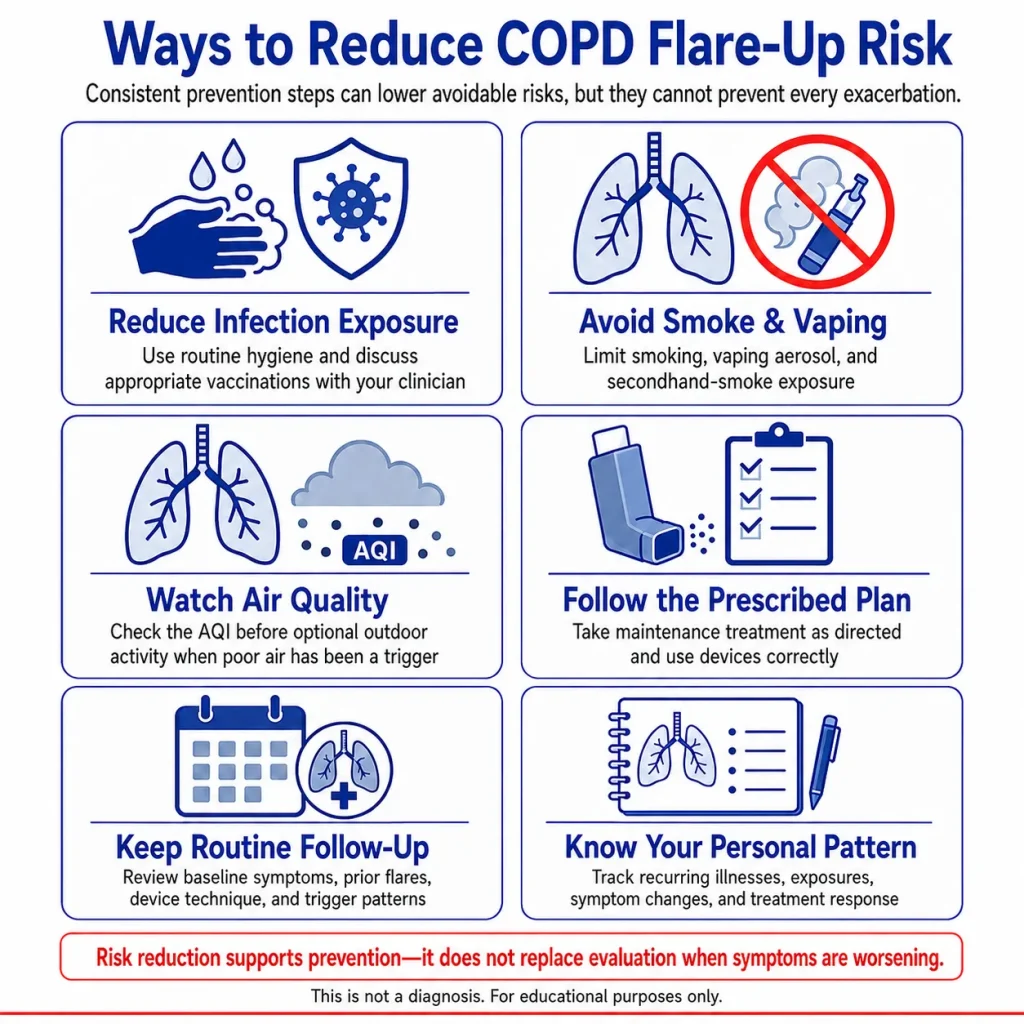
The most useful prevention steps are consistent, realistic, and matched to the individual. They lower risk; they do not replace evaluation once symptoms are getting worse.
Reduce Exposure to Respiratory Infections
CDC respiratory-virus guidance recommends regular hygiene measures such as covering coughs and sneezes and washing or sanitizing hands often. Avoid preventable close exposure to illness when practical, and ask the regular clinician which vaccinations are appropriate. The CDC’s COPD guidance identifies respiratory-disease vaccination as part of COPD management because lung infections can cause serious problems.
Avoid Smoking, Vaping, and Secondhand Smoke
Reducing smoke and aerosol exposure limits preventable respiratory stress. For anyone who smokes, CDC guidance on smoking and COPD recommends working with a healthcare professional on cessation support. Quitting does not reverse established COPD, but it can slow continued smoke-related damage and support better disease control.
Pay Attention to Air Quality
Check the current AQI before optional outdoor activity. If poor conditions have triggered symptoms before, follow the clinician-approved plan for limiting exposure or changing the timing of activity. Avoid making medication changes solely because of an air-quality reading unless those steps are already part of the prescribed plan.
Follow the Prescribed COPD Management Plan
Take maintenance treatment as directed and use each device according to the clinician’s instructions. Report repeated missed doses, cost or refill barriers, side effects, confusing instructions, or difficulty operating an inhaler or nebulizer. These are care-plan problems that can often be addressed before the next flare.
Keep Routine Follow-Up Appointments
Regular follow-up gives the clinician an opportunity to review the patient’s baseline, prior exacerbations, device technique, treatment access, vaccination needs, and personal trigger record. It also creates a natural point to confirm that the action plan still matches the patient’s current condition.
What a COPD Action Plan Should Help You Understand
An individualized action plan is a predetermined framework for responding to change. The American Lung Association’s COPD Action Plan resources organize guidance around how the person feels, what treatment has already been prescribed, when to contact the healthcare team, and when to obtain emergency care. At a high level, the plan should clarify:
- What the patient’s usual COPD baseline looks like
- Which early changes deserve attention
- Which clinician-directed steps to follow
- When to contact the regular care team
- When urgent or emergency evaluation is needed
A generic checklist cannot safely replace a plan created with the treating clinician. Patients and caregivers should not invent medication instructions or copy another person’s plan.
Early Recognition Is Part of Prevention
Early recognition means noticing a meaningful departure from baseline: breathlessness that is clearly worse, a significant change in cough or mucus, less tolerance for routine activity, or prescribed rescue treatment providing less relief than expected. Those changes should activate the established plan and, when directed, prompt contact with the care team. Waiting to identify the exact trigger can delay needed care.
When Prevention Measures Are No Longer Enough
Trigger avoidance and an action plan cannot safely manage every exacerbation. Prompt assessment may be needed when symptoms continue to worsen, represent a substantial change from baseline, or fail to improve as expected after the prescribed steps.
Emergency evaluation is appropriate for severe breathing difficulty, confusion, unusual drowsiness, bluish or grayish lips or skin, concerning chest pain or pressure, inability to speak in full sentences, or serious symptoms that persist despite prescribed rescue treatment. MedlinePlus lists these and other warning signs that require urgent medical contact. Call 911 when the person appears severely unstable, is becoming less responsive, or cannot be transported safely.
Emergency COPD Care in Houston at Post Oak ER
Post Oak ER provides 24/7 emergency care in Houston for severe or continuing breathing symptoms. The emergency team can evaluate respiratory concerns and may use on-site imaging or laboratory testing when clinically appropriate. Prevention remains valuable, but severe respiratory distress, confusion, bluish or grayish discoloration, or concerning chest symptoms should never be managed by waiting for a suspected trigger to pass.
Frequently Asked Questions
What are the most common causes of COPD flare-ups?
Respiratory infections and inhaled irritants such as smoke or air pollution are common triggers. Medication or care-plan problems and other health stressors may also contribute, and some flare-ups do not have one identifiable cause.
Can respiratory infections trigger a COPD exacerbation?
Yes. Viral and bacterial respiratory infections can increase airway inflammation and worsen breathing, cough, or mucus. A clinician may need to determine whether an infection is present and what treatment is appropriate.
Can poor air quality make COPD symptoms worse?
Yes. Ozone, particle pollution, and smoke can aggravate breathing in people with lung disease. Checking the AQI and following a clinician-approved plan can help reduce unnecessary exposure.
Can every COPD flare-up be prevented?
No. Risk-reduction steps can lower exposure to known triggers, but some exacerbations occur without an obvious cause. Patients still need a plan for recognizing and responding to worsening symptoms.
How can someone identify their personal COPD triggers?
Track recent illnesses, exposures, air quality, medication access, early symptom changes, and the response to the prescribed action plan. Review recurring patterns with the regular clinician rather than drawing conclusions from one episode.
What is the purpose of a COPD action plan?
It provides individualized instructions for baseline care, early symptom changes, clinician contact, and emergency escalation. The plan should be created and updated with the treating clinician, not assembled from general internet advice.
When should worsening COPD symptoms be evaluated in the ER?
Emergency evaluation is appropriate when breathing becomes severe, symptoms keep worsening or do not respond as expected to the prescribed plan, or there is confusion, unusual drowsiness, bluish or grayish discoloration, concerning chest symptoms, or inability to speak normally. Call 911 if the person appears unstable or cannot be transported safely.