
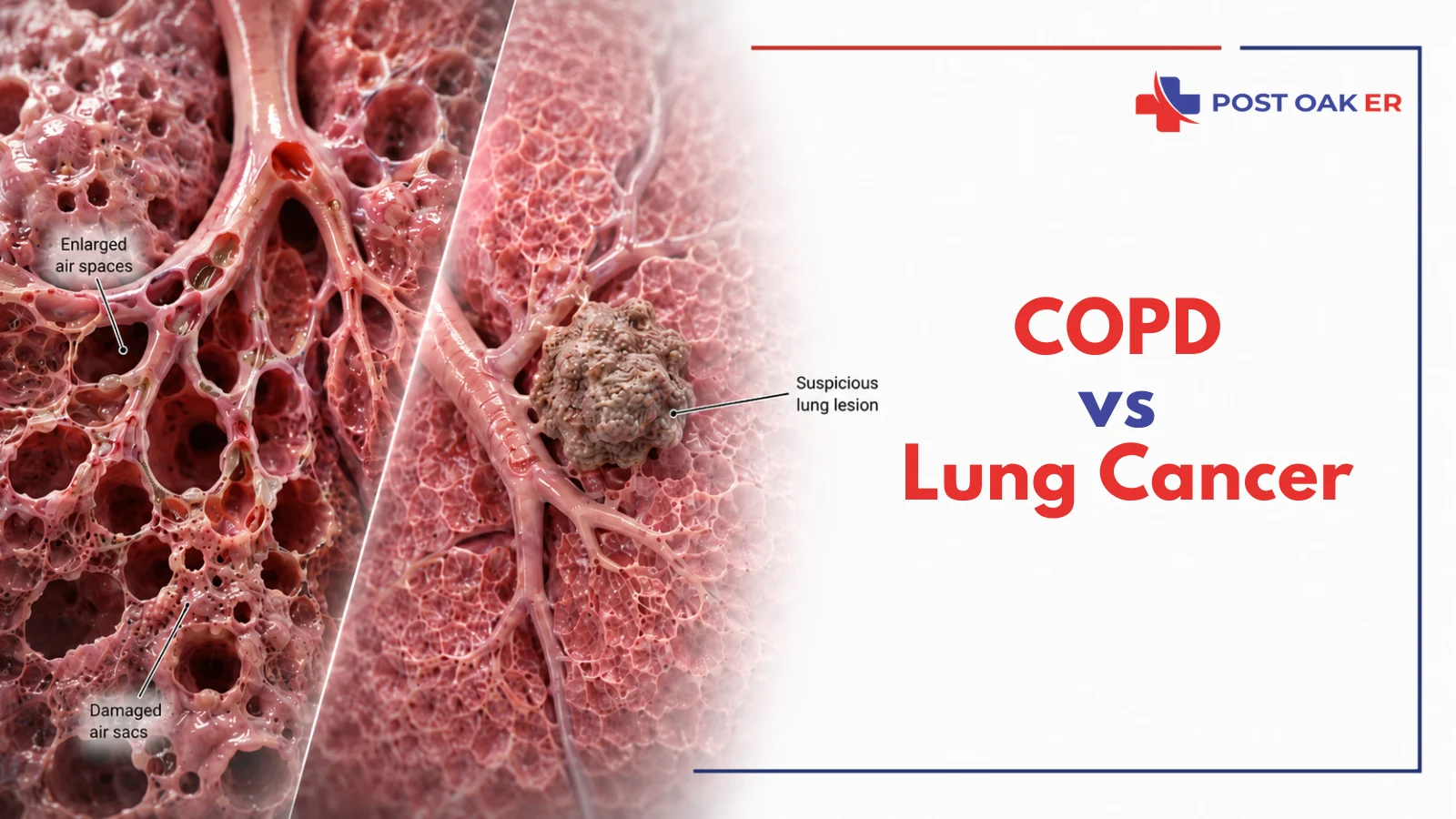
When you live with COPD, coughing and breathlessness may already be part of daily life. The concern often begins when a familiar symptom changes: the cough lasts longer, breathing keeps getting harder, or an episode no longer follows the usual pattern.
COPD and lung cancer are different diseases, but they can share symptoms and risk factors, and they may occur in the same person. A change does not automatically mean cancer. It also should not be dismissed simply because COPD is already on the medical record.
COPD and Lung Cancer Are Different Conditions
COPD is a chronic lung disease in which damage to the airways and air sacs limits how freely air moves in and out of the lungs. The National Heart, Lung, and Blood Institute explains how COPD affects airflow through loss of elasticity, airway inflammation, mucus, and damage to air-sac walls.
Lung cancer, by contrast, begins when cells in the lungs grow out of control, as described in the CDC overview of lung cancer. COPD does not simply turn into lung cancer, and lung cancer does not ordinarily become COPD. They remain separate diagnoses even when both are present.
Does COPD Cause Lung Cancer?
COPD is associated with a higher observed risk of lung cancer, including in a recent systematic review and meta-analysis of U.S. adults with COPD. An association is not the same as a direct cause-and-effect rule, and COPD does not make cancer inevitable.
Part of the relationship reflects shared exposures. Smoking is a major risk factor for both diseases, while radon, air pollution, and some workplace substances also contribute to lung-cancer risk. The CDC summary of lung cancer risk factors explains these exposures without implying that everyone exposed will develop cancer.
Can Someone With COPD Also Develop Lung Cancer?
Yes. Having COPD does not prevent a separate lung cancer from developing. This is why a new or sustained departure from a person’s established COPD pattern deserves evaluation rather than repeated assumptions that every change is another routine flare.
Can Lung Cancer Cause COPD?
No. Lung cancer does not transform into COPD. It can, however, cause coughing, wheezing, shortness of breath, recurrent infections, or chest discomfort that resemble COPD symptoms or make existing breathing problems feel worse. Symptom overlap describes how the conditions may appear; it does not establish which condition is responsible.
Symptoms COPD and Lung Cancer Can Share
The NHLBI list of common COPD symptoms includes cough, shortness of breath, wheezing, chest tightness, and fatigue. The American Cancer Society’s lung cancer symptom guidance includes several of the same complaints, along with appetite or weight changes and respiratory infections that persist or return.
Because these patterns overlap, symptoms alone cannot reliably separate COPD from lung cancer. The shared symptoms may include:
- A persistent or changing cough
- Shortness of breath
- Wheezing or noisy breathing
- Chest discomfort
- Reduced stamina, weakness, or fatigue
- Respiratory complaints or infections that keep returning
The useful question is not whether one symptom appears on a cancer checklist. It is whether the symptom is new, progressive, unexplained, or meaningfully different from the person’s usual COPD baseline.
Changes That Should Not Automatically Be Attributed to COPD
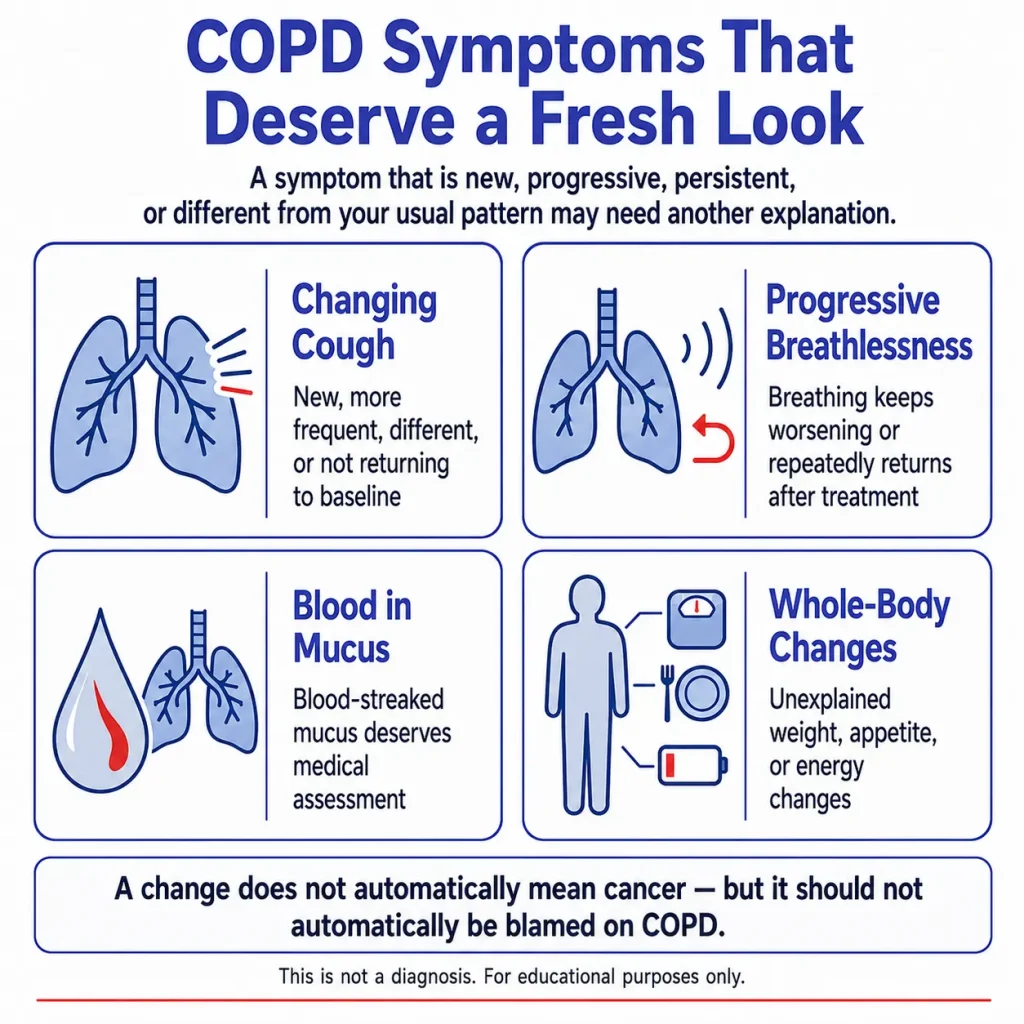
A New or Persistently Changing Cough
A cough deserves a fresh assessment when it begins without a familiar trigger, changes in sound or mucus pattern, becomes more frequent, or fails to return to baseline. A clinician may need to consider infection, medication effects, airway irritation, heart problems, cancer, or another cause rather than treating the symptom as COPD by default.
Breathlessness That Continues to Progress
A COPD flare can cause sudden worsening, but breathlessness that keeps advancing over weeks or repeatedly returns after treatment calls for follow-up beyond another presumed exacerbation. The cause may still be COPD, yet persistent progression changes the clinical question and may justify additional testing.
Blood in Coughed-Up Mucus
Blood-streaked mucus does not confirm cancer. Infection, forceful coughing, a blood clot in the lung, bronchiectasis, and other conditions can also cause it. Still, the MedlinePlus guidance on coughing up blood advises contacting a healthcare professional whenever it occurs and obtaining immediate help when the amount is more than a few teaspoons or it accompanies chest pain, dizziness, or severe shortness of breath.
Unexplained or Persistent Systemic Changes
Unplanned weight loss, a sustained appetite change, or unusual fatigue is not specific to cancer. When one of these develops alongside a changing cough, worsening breathing, or recurrent respiratory complaints, it adds a reason for timely assessment rather than watchful waiting without a plan.
Can Lung Cancer Look Like COPD on a Chest X-Ray?
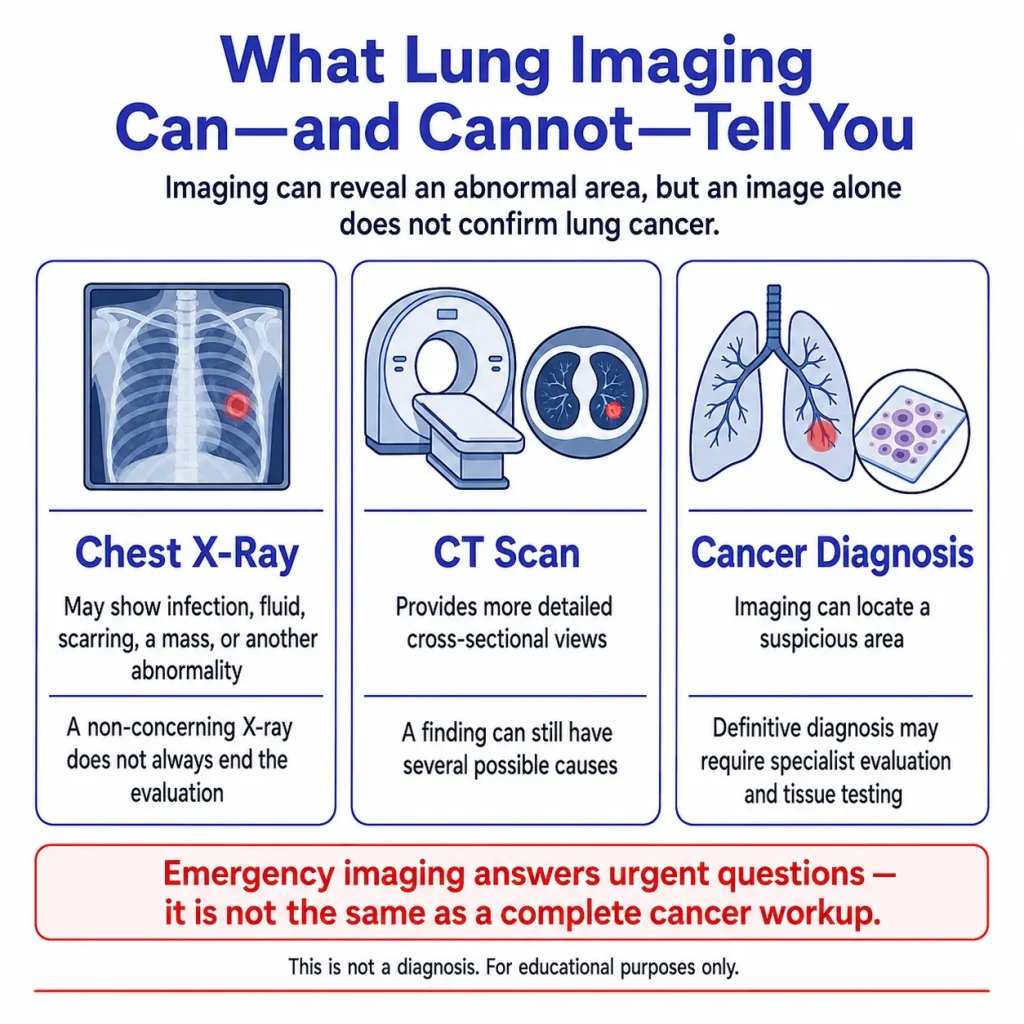
A chest X-ray may show changes associated with COPD, an infection, fluid, scarring, a mass, or another abnormality, but the image does not always reveal what caused the finding. COPD itself is primarily diagnosed through history, examination, and lung-function testing; imaging helps clinicians look for other explanations and complications.
A chest X-ray is often an early imaging test when a lung problem is suspected. However, CT is more likely than a routine chest X-ray to find lung tumors. That means a non-concerning X-ray does not necessarily end the evaluation when symptoms continue, while an abnormal X-ray does not prove cancer.
Why Emergency Imaging Has Limits
Imaging in an emergency visit is selected to answer the most urgent questions raised by the patient’s symptoms and examination. Clinicians may be looking for pneumonia, a collapsed lung, fluid, a blood clot, heart-related changes, or another immediate cause of deterioration. The study may also reveal a finding that needs follow-up, but an emergency evaluation is not the same as a complete cancer workup.
When a CT Scan May Be Considered
CT provides more detailed cross-sectional views than a standard chest X-ray and may be appropriate when the clinical picture requires a closer look. Post Oak ER’s emergency imaging services include X-ray and CT when ordered as part of physician-guided emergency care. Even then, a CT finding may represent infection, inflammation, scarring, a benign nodule, cancer, or another process that needs comparison or follow-up.
Imaging Is Not the Same as a Cancer Diagnosis
Imaging can locate and characterize a suspicious area, but the American Cancer Society’s overview of lung cancer testing explains that the actual diagnosis is made by examining lung cells in a laboratory. Depending on the situation, the next steps may include comparison with older images, repeat or specialized imaging, specialist review, and sometimes a biopsy.
Screening and Diagnostic Evaluation Are Not the Same
Screening looks for possible lung cancer in selected people who do not have a known suspicious symptom or finding. Diagnostic evaluation starts because a symptom, examination, or image already needs explanation.
The U.S. Preventive Services Task Force recommendation supports annual low-dose CT screening for a defined high-risk group and emphasizes shared decision-making. Those screening rules should not be used to dismiss a symptomatic person who falls outside screening criteria. Anyone wondering about routine screening should discuss individual eligibility with a regular clinician; a new symptom follows a diagnostic pathway instead.
When Sudden Symptoms Need Emergency Care
Emergency evaluation is about immediate safety, regardless of whether cancer is suspected. Call 911 or go to the nearest emergency room for:
- Severe or rapidly worsening difficulty breathing
- New or significant chest pain
- Coughing up a concerning amount of blood
- Confusion, unusual drowsiness, fainting, or another change in alertness
- Bluish or grayish lips, face, skin, or fingernails
- A sudden oxygen decline accompanied by serious symptoms or visible distress
These may signal an acute breathing or cardiovascular emergency. NHLBI’s COPD emergency guidance specifically identifies inability to catch the breath or talk, blue or gray discoloration, reduced alertness, and failure of the prescribed rescue plan as reasons to call 911.
When Persistent Changes Need Outpatient Follow-Up
Symptoms can require timely medical attention even when the person is stable enough not to need emergency care. Arrange follow-up for:
- A cough that remains different from the usual COPD cough
- Breathlessness that gradually worsens
- Respiratory symptoms that return repeatedly after treatment
- Persistent blood-streaked mucus
- Unexplained changes in weight, appetite, or energy
- An imaging abnormality for which follow-up was recommended
Bring the imaging report, discharge instructions, medication list, and any earlier chest studies to the follow-up visit if available. Comparing the new pattern with prior symptoms and images can help the regular clinician decide whether pulmonary or other specialist assessment is needed.
What the ER Can and Cannot Determine
Emergency clinicians can assess a sudden breathing change, low oxygen, chest symptoms, bleeding, infection, or another immediate concern. Depending on the presentation, evaluation may include:
- Vital signs and oxygen assessment
- Heart and lung examination
- Chest imaging when clinically appropriate
- Laboratory tests or other emergency studies
- Treatment and stabilization of acute symptoms
- Identification of findings that need hospital care or outpatient follow-up
The ER may identify a suspicious abnormality or rule out certain immediate threats. It generally cannot complete the longitudinal imaging comparisons, specialist workup, or tissue testing required for a definitive lung cancer diagnosis during one emergency visit.
Emergency Evaluation at Post Oak ER
Post Oak ER provides 24/7 emergency care in Houston for people with COPD who develop severe breathing difficulty, concerning chest symptoms, coughing up blood, or another sudden change. Our emergency team can assess breathing and oxygen status and order on-site X-ray, CT, ultrasound, or laboratory testing when clinically appropriate. Emergency care can address acute danger and identify findings that need additional investigation, while ongoing cancer diagnosis and follow-up may require coordination with the patient’s regular physician or a specialist.
Frequently Asked Questions
Does COPD cause lung cancer?
COPD is associated with a higher risk of lung cancer, but it does not directly make cancer inevitable. Shared exposures, especially smoking, contribute to the relationship, and other biological factors may also be involved.
Can lung cancer cause COPD?
No. They are separate diseases. Lung cancer can cause respiratory symptoms that resemble or worsen COPD symptoms, but it does not transform into COPD.
Can COPD and lung cancer occur at the same time?
Yes. A person may have both conditions. A new or sustained change from the usual COPD baseline therefore deserves evaluation even when the symptom seems familiar.
Can lung cancer look like COPD on a chest X-ray?
A chest X-ray may show changes without revealing their exact cause. Some lung cancers are not apparent on a routine X-ray, and an abnormal finding still needs further assessment before it can be called cancer.
Can an ER diagnose lung cancer?
An ER may find a suspicious abnormality while evaluating urgent symptoms, but imaging alone does not confirm lung cancer. Definitive diagnosis usually continues through an outpatient or hospital-based pathway that may include specialist review and tissue testing.
Which symptom changes in someone with COPD need emergency care?
Severe or rapidly worsening breathing difficulty, significant chest pain, a concerning amount of coughed-up blood, confusion or unusual drowsiness, blue or gray discoloration, or sudden symptomatic oxygen decline require emergency evaluation. Call 911 when symptoms are life-threatening or the person cannot travel safely.
When should persistent COPD symptoms be evaluated for another possible cause?
Arrange timely follow-up when a cough remains different, breathlessness keeps progressing, symptoms repeatedly return after treatment, blood-streaked mucus persists, or weight, appetite, or energy changes without a clear explanation. Follow-up is also necessary after any imaging finding for which additional evaluation was recommended.