
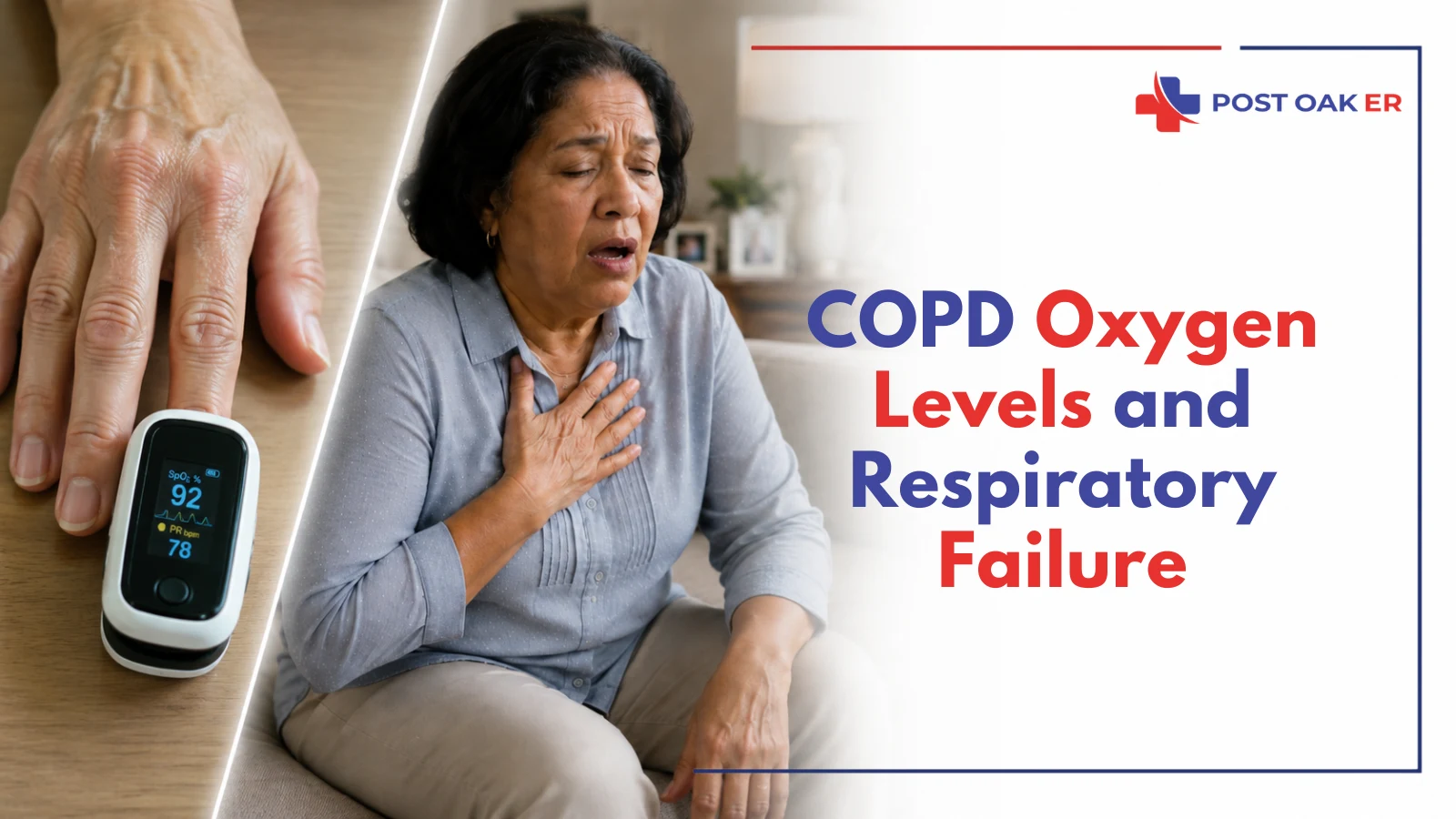
A pulse oximeter can be helpful when someone has chronic obstructive pulmonary disease (COPD), but it cannot independently show whether that person is safe. The device estimates blood oxygen saturation; it does not measure carbon dioxide, explain why a reading changed, or replace an assessment of breathing effort and alertness. The FDA advises interpreting home pulse-oximeter readings alongside symptoms and how the person feels.
Call 911 when a person with COPD is struggling to breathe, cannot speak normally because of breathlessness, becomes confused or markedly drowsy, develops bluish or grayish coloring around the lips or face, or appears to be declining rapidly. Do not wait for the monitor to display a particular number, and do not let repeated checks delay emergency help.
Why There Is No Single “Normal” Oxygen Level for Everyone With COPD
An oxygen reading has meaning only in context. Clinicians consider the patient’s usual baseline, current symptoms, medical history, whether supplemental oxygen is prescribed, and the individualized target in the care plan. A reading that is acceptable for one person may represent a meaningful drop for another, while a familiar number does not cancel out severe symptoms.
What a Pulse Oximeter Measures
A fingertip pulse oximeter uses light to estimate SpO2, the percentage of hemoglobin carrying oxygen. It also displays a pulse rate. As the MedlinePlus overview of pulse oximetry explains, this is a quick, noninvasive estimate rather than a direct measurement of every part of respiratory function.
Why Prescribed Oxygen Targets Can Vary
Some people with COPD have a clinician-defined oxygen target or different prescribed settings for rest, activity, or sleep. The American Thoracic Society’s oxygen-therapy guidance emphasizes that oxygen is a prescribed medication. Patients and caregivers should know the written plan and use that plan—not a general internet cutoff—to interpret readings.
Low Oxygen, Carbon Dioxide Retention, and Respiratory Failure
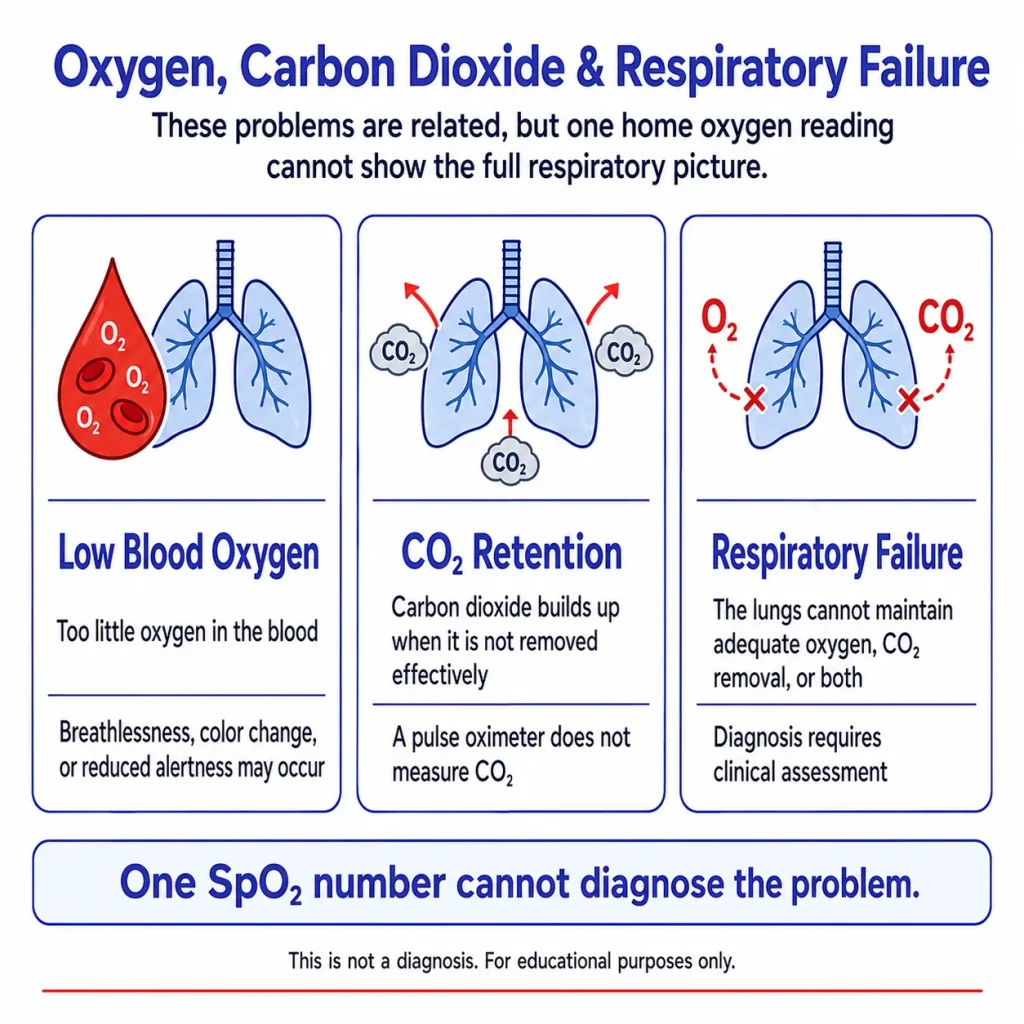
These terms are related, but they are not interchangeable. COPD can interfere with getting oxygen into the blood, removing carbon dioxide from the blood, or both. That is why one home oxygen number cannot describe the full respiratory picture.
Low Blood Oxygen
Hypoxemia means there is too little oxygen in the blood. Worsening breathlessness, bluish coloring, unusual drowsiness, or impaired alertness can accompany low oxygen, but symptoms and readings do not always line up perfectly. The National Heart, Lung, and Blood Institute (NHLBI) notes that low oxygen and high carbon dioxide can also occur together.
Carbon Dioxide Retention
COPD may make it harder to breathe out effectively, allowing carbon dioxide to accumulate. Headache, confusion, rapid breathing, profound sleepiness, or loss of consciousness can occur when carbon dioxide becomes very high, although these changes are not specific enough to diagnose the problem at home. A standard pulse oximeter does not measure carbon dioxide, so an apparently acceptable SpO2 reading cannot rule out carbon dioxide retention.
Respiratory Failure
Respiratory failure develops when the lungs cannot provide adequate oxygen, remove carbon dioxide, or maintain both functions well enough for the body. It may happen suddenly or develop on top of chronic respiratory disease. The NHLBI definition of respiratory failure makes clear that diagnosis depends on clinical assessment and blood oxygen and carbon dioxide levels—not home interpretation alone.
Emergency Warning Signs That Matter More Than One Oxygen Reading
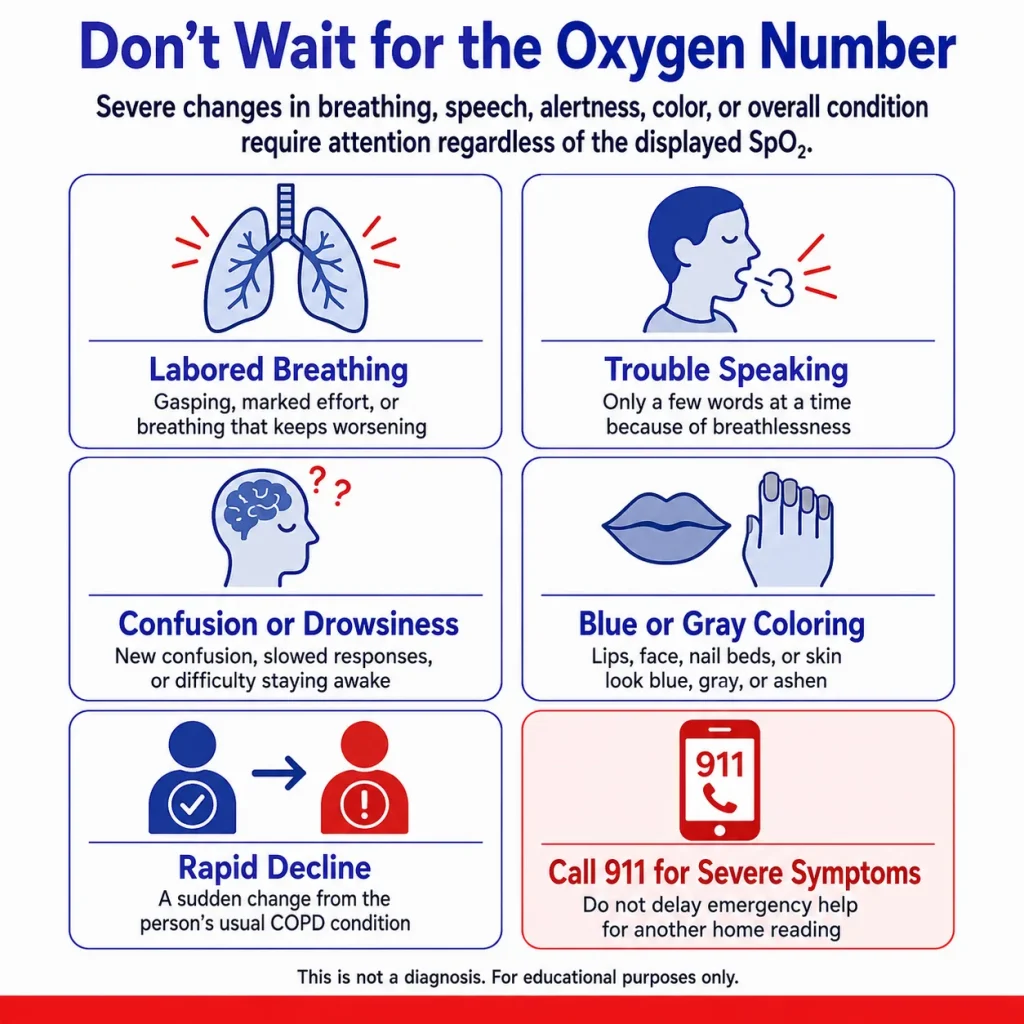
The safest question is not simply “What number is on the screen?” It is “How is this person breathing, speaking, and responding right now?” The following changes deserve immediate attention.
Visibly Labored Breathing
Markedly increased effort, gasping, pronounced chest or neck muscle use, or breathing that keeps worsening suggests serious respiratory distress. The patient may look frightened, restless, exhausted, or unable to find a comfortable position. A familiar oxygen value does not make that appearance reassuring.
Difficulty Speaking Normally
Someone who must stop repeatedly for breath, can say only a few words at a time, or cannot answer normally because of breathlessness may not be moving enough air. The NHLBI’s COPD emergency guidance includes difficulty catching one’s breath or talking among the reasons to call 911.
Confusion, Dizziness, or Marked Drowsiness
Sudden confusion, unusual dizziness, difficulty staying awake, slowed responses, or behavior that is clearly different from baseline can signal inadequate oxygen, rising carbon dioxide, or another urgent problem. These changes are especially concerning when they occur with shortness of breath or a rapid decline.
Bluish or Grayish Discoloration
Bluish or grayish color around the lips, face, nail beds, or skin requires immediate emergency attention. Color changes may appear differently across skin tones, so caregivers should also watch for an ashen appearance and compare with the person’s usual coloring.
A Rapid Change From the Patient’s Usual Condition
A sudden fall from the usual oxygen range, sharply increased breathing effort, new trouble speaking, or a change in alertness may be more meaningful than whether a single measurement crosses a general threshold. Trend, speed of change, and symptoms belong together.
How to Interpret an Abnormal Home Oxygen Reading
Use the reading as one part of a short safety check, not as a stand-alone self-triage system. Consider:
- Whether it differs from the patient’s usual baseline or clinician-prescribed range.
- Whether it represents a sudden downward trend rather than an isolated value.
- Whether breathing effort, speech, alertness, or skin color has changed.
- Whether severe symptoms are present regardless of the displayed number.
If the patient appears severely unwell, call 911. Repositioning the device and taking repeated readings should not postpone emergency care.
Basic Limitations of Home Pulse Oximeters
Movement, cold hands, poor circulation, nail polish, tobacco use, skin characteristics, device quality, and placement can affect accuracy. The reading is an estimate and may differ from the actual blood oxygen level. If the number seems inconsistent with the patient’s condition, symptoms still deserve attention.
Do Not Adjust Oxygen Independently
Follow the existing clinician-directed oxygen plan. Do not raise, lower, stop, or restart oxygen based only on a home reading unless the written plan specifically instructs that action. If the plan is unclear and the patient is stable, contact the prescribing clinician; if severe warning signs are present, call 911.
When to Call 911 for COPD Breathing Problems
Call 911 for severe respiratory distress, inability to speak normally, new confusion, unusual or marked drowsiness, bluish or grayish discoloration, loss of consciousness, or rapid deterioration. Emergency medical services can begin assessment and support during transport. Do not ask the patient to drive, and do not wait for a particular pulse-oximeter number when these signs are present.
How the ER Evaluates Possible Respiratory Failure
Emergency clinicians evaluate the whole respiratory picture. The NHLBI description of respiratory-failure diagnosis includes symptoms, physical examination, pulse oximetry, and testing selected for the suspected cause and severity.
The evaluation may include:
- Oxygen saturation, breathing rate, heart rate, blood pressure, and other vital signs.
- Work of breathing, ability to speak, mental status, and skin color.
- Lung and heart examination and comparison with the patient’s usual COPD baseline.
- Arterial blood-gas testing when direct information about oxygen, carbon dioxide, and acid-base balance is needed.
- Imaging, laboratory testing, heart testing, or other evaluation when clinically appropriate.
Not every patient needs every test. The purpose is to identify whether respiratory failure or another emergency is present, assess severity, and determine the level of treatment and monitoring required.
24/7 Emergency COPD Evaluation in Houston
Post Oak ER provides 24/7 emergency care in Houston for severe COPD-related breathing changes, concerning oxygen readings, and possible respiratory failure. The emergency team can assess breathing, oxygen status, and changes in alertness and can use on-site laboratory testing and emergency imaging services when clinically appropriate. If someone is struggling to breathe, cannot speak normally, becomes confused or markedly drowsy, or develops bluish or grayish discoloration, call 911 rather than waiting for another home reading.
Frequently Asked Questions
What is considered a normal oxygen level for someone with COPD?
There is no single number that is normal or safe for every person with COPD. Use the patient’s usual baseline and the target set by their clinician, and consider symptoms and any sudden change at the same time.
Can someone have carbon dioxide retention even if the pulse-oximeter reading looks acceptable?
Yes. A pulse oximeter estimates oxygen saturation but does not measure carbon dioxide. Blood-gas testing may be needed when clinicians are concerned about carbon dioxide retention.
What are the warning signs of carbon dioxide retention in COPD?
Possible warning signs include headache, confusion, rapid breathing, marked sleepiness, slowed responses, or loss of consciousness. These symptoms can have other causes, so they require clinical evaluation rather than home diagnosis.
When should a person with COPD go to the ER for a low oxygen reading?
An unexpected reading outside the patient’s prescribed range or a clear drop from baseline should be assessed in the context of symptoms and the care plan. Call 911 for severe breathing difficulty, inability to speak normally, confusion, marked drowsiness, bluish or grayish color, or rapid deterioration, regardless of the reading.
Should home oxygen be increased when the oxygen reading drops?
Not unless the patient’s clinician-directed plan specifically says to do so. Oxygen is a prescribed treatment, and changing the flow independently can be unsafe; severe symptoms require emergency action rather than experimentation with settings.
How does the ER evaluate someone for respiratory failure?
The ER evaluates breathing effort, alertness, vital signs, oxygen saturation, and the patient’s baseline. Blood-gas testing, imaging, laboratory studies, or heart testing may be added when needed to clarify oxygen, carbon dioxide, severity, or the cause of the breathing problem.