
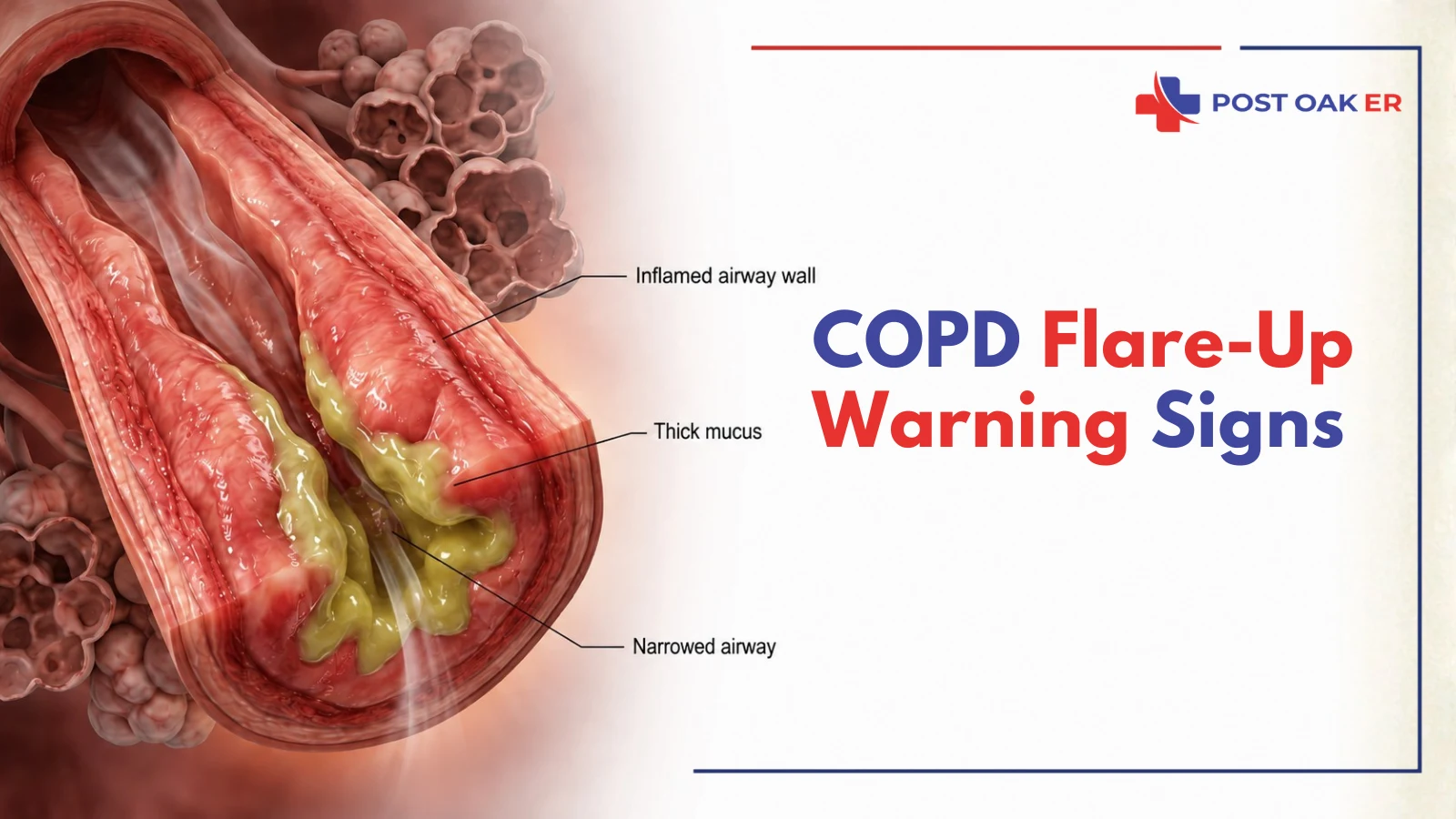
Most people living with chronic obstructive pulmonary disease (COPD) know their usual breathing pattern: what activities they can manage, how much they cough, and how quickly they recover. Concern begins when that baseline changes—breathing becomes harder, cough or mucus changes, chest symptoms appear, or the usual rescue plan provides less relief.
A severe or rapidly worsening change is not simply a “bad COPD day.” You do not need to identify the exact cause—or assign the flare a severity grade—before getting emergency help.
What Is a COPD Flare-Up?
A COPD exacerbation, commonly called a flare-up, is a noticeable worsening of respiratory symptoms beyond the person’s usual day-to-day variation. The 2026 GOLD Report describes an exacerbation as an acute event involving increased breathlessness and/or changes in cough and sputum over a short period.
Flare-ups vary in severity. A mild change may be handled through a clinician-directed COPD action plan; a more serious change may need urgent assessment. An action plan guides early steps—it should not keep someone at home while severe warning signs are developing.
What Can Trigger a Flare-Up?
Respiratory infections are common triggers. Smoke, air pollution, dust, fumes, air-quality or weather changes, and other health problems may also worsen COPD. The American Lung Association’s COPD guidance emphasizes that triggers differ among patients. Sometimes no trigger is clear, and flare-like symptoms may instead reflect pneumonia, a heart problem, a blood clot, or another urgent condition.
How to Tell When COPD Symptoms Are Getting Worse
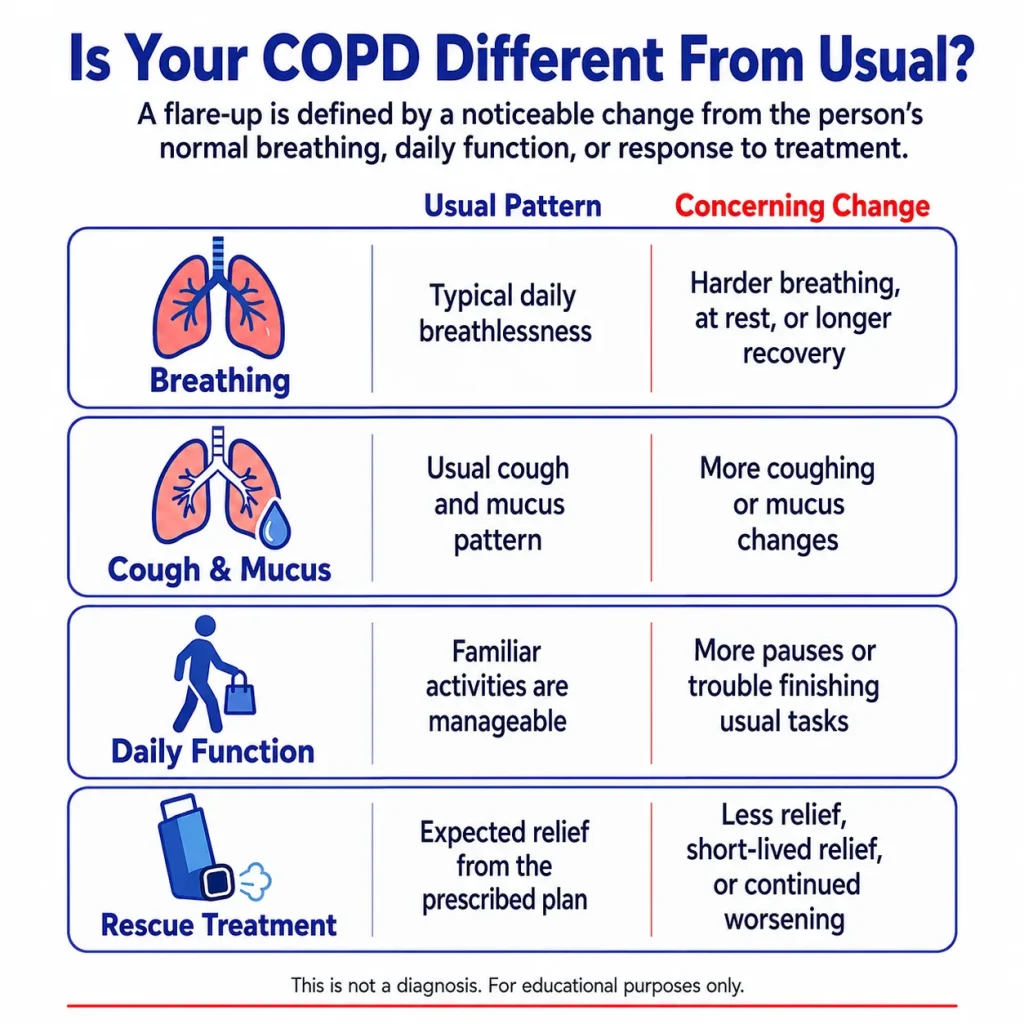
Compare current symptoms with the patient’s baseline. Daily breathlessness does not by itself establish an emergency; a meaningful change in breathing, function, alertness, chest symptoms, or treatment response does. Caregivers may notice first that the person pauses more often, cannot finish familiar tasks, or seems less alert.
Breathing Feels Harder Than Usual
Worsening breathlessness may appear during normally manageable activities, at rest, or as a longer recovery after walking, dressing, or bathing. Faster or shallow breathing, leaning forward, or visible use of the neck and rib muscles suggests increased breathing effort. The American Thoracic Society’s patient guide notes that exacerbations may develop over hours to days and make routine activities more difficult.
Cough, Mucus, or Chest Symptoms Have Changed
Cough may become more frequent or forceful. Mucus may increase or change in thickness or color, while wheezing or chest tightness becomes more noticeable. Mucus color alone cannot establish the cause. New chest pain, pressure, or unusual tightness needs separate attention rather than being assumed to be COPD.
The Prescribed Rescue Plan Is Providing Less Relief
Follow the COPD action plan exactly as prescribed. If symptoms do not improve, return quickly, or continue to worsen, contact the clinician promptly or seek urgent evaluation. MedlinePlus guidance on COPD flare-ups similarly advises reassessment when breathing keeps getting harder despite the action plan. Do not change doses, repeat treatment beyond the plan, or delay emergency help for severe symptoms.
COPD Warning Signs That Require Emergency Evaluation
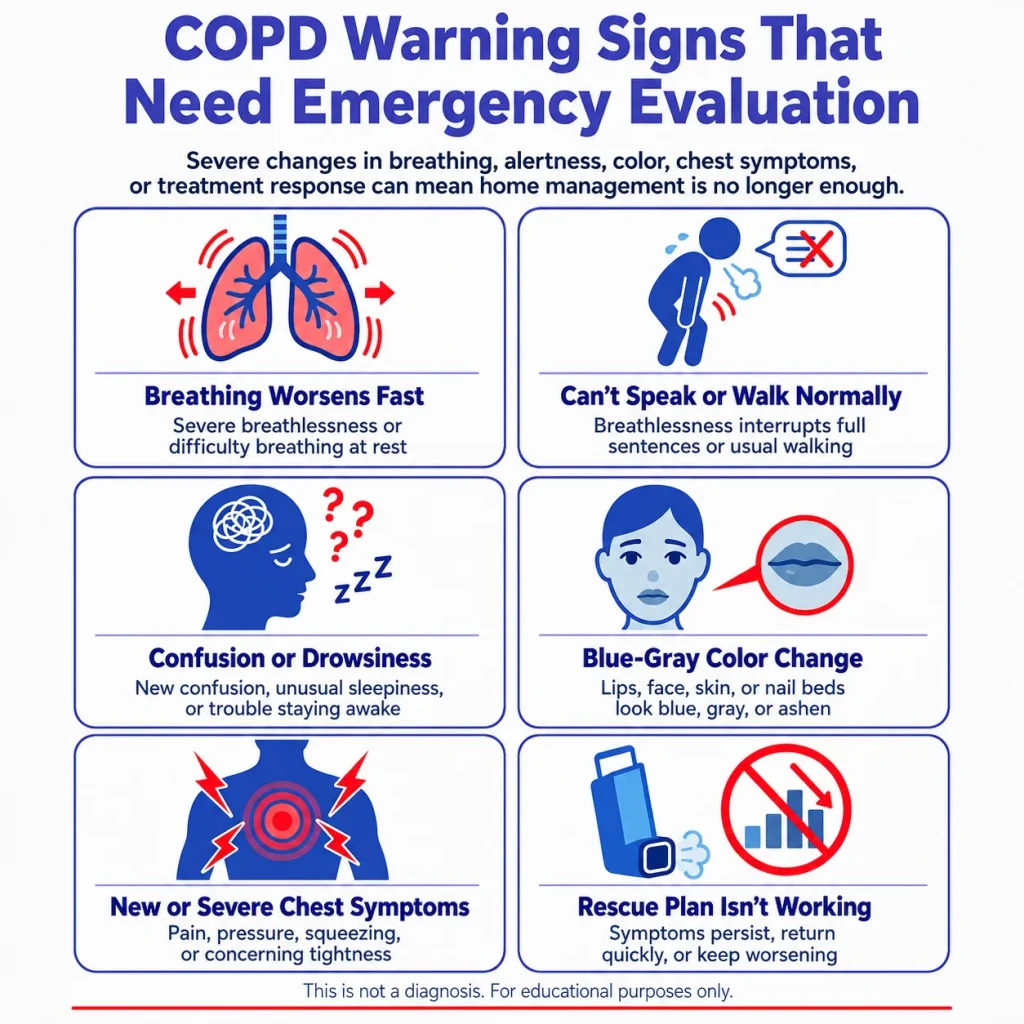
These patterns may signal that home management is no longer enough. Patients and caregivers do not need to determine whether COPD, infection, a heart problem, or another condition is responsible before acting.
Severe or Rapidly Worsening Breathlessness
Get emergency help when breathing becomes significantly harder, worsens quickly, or is difficult even at rest. Warning signs include struggling to complete a sentence, being unable to walk as usual because of breathlessness, appearing panicked or exhausted, or visibly working hard for each breath.
Confusion or Unusual Drowsiness
New confusion, unusual sleepiness, difficulty staying awake, or trouble waking the person is serious. During a breathing crisis, this may occur when oxygen is too low, carbon dioxide is too high, or another acute problem is present. The cause cannot be determined safely at home.
Bluish or Grayish Discoloration
Blue or gray color around the lips, face, skin, or nail beds can indicate inadequate oxygenation or circulation. On darker skin, an ashen change may be easier to see on the lips, gums, inside the eyelids, palms, or soles. A sudden color change with breathing difficulty or reduced alertness is an emergency.
New or Concerning Chest Symptoms
New, severe, or worsening chest pain, pressure, squeezing, or tightness should not automatically be attributed to COPD. Shortness of breath can occur with a heart attack, with or without chest discomfort. The American Heart Association’s heart-attack warning signs advise calling 911 for possible heart-attack symptoms. Post Oak ER provides specific guidance on when chest pain needs emergency care.
The Prescribed Rescue Plan Is Not Working
Persistent or worsening symptoms despite the established rescue plan may mean home treatment is no longer sufficient. The NHLBI COPD Caregiver’s Toolkit identifies fast, hard breathing despite COPD medication as a reason to call 911, especially when the person cannot talk or walk normally or develops blue-gray discoloration.
When to Call 911 Instead of Driving to the ER
Call 911 when the person is in severe distress, may deteriorate during transport, or cannot travel safely. Do not have someone with severe symptoms drive themselves. Call 911 for:
- Severe breathing difficulty, gasping, or inability to speak in full sentences
- New confusion, unusual drowsiness, fainting, or reduced responsiveness
- Blue or gray lips, face, or skin
- New or severe chest pain, pressure, or squeezing
- Rapid worsening or failure of the prescribed rescue plan with significant distress
Emergency medical services can begin assessment and supportive care during transport. Do not postpone the call while waiting for a home reading, trying to name the cause, or deciding whether the flare is “severe enough.”
Why Home Readings or Flare Duration Should Not Delay Care
A pulse oximeter estimates oxygen saturation; it does not evaluate the whole patient. The FDA’s pulse-oximeter guidance explains that symptoms matter alongside the reading and that poor circulation, skin pigmentation, skin temperature, tobacco use, movement, and nail polish can affect accuracy. Follow any clinician-directed oxygen target, but do not wait for a particular number when breathing is visibly difficult, alertness changes, the skin turns blue or gray, or serious chest symptoms appear.
Time alone is not a safe triage rule. A flare may build over hours or days, while recovery may take weeks. Symptoms that are escalating, failing to improve as expected, or crossing an emergency threshold require reassessment regardless of duration.
What to Expect During an Emergency Evaluation
The evaluation is tailored to the person’s symptoms, history, examination, and severity. It may include:
- Assessment of breathing, oxygen status, vital signs, and alertness
- A physical examination and review of how the current symptoms differ from the patient’s baseline
- Imaging or laboratory testing when clinically appropriate
- Evaluation for a COPD exacerbation and other possible causes of worsening breathing or chest symptoms
- Supervised treatment based on the suspected cause and the patient’s condition
Not every patient needs every test. Clinicians may consider infection, pneumonia, heart problems, a blood clot, collapsed lung, respiratory failure, or other causes according to the findings. The goal is to identify urgent complications, support breathing, and determine the appropriate level of care.
24/7 COPD Flare Evaluation in Houston
If you or someone you care for has COPD and develops severe or rapidly worsening breathing difficulty, confusion, unusual drowsiness, blue-gray discoloration, concerning chest symptoms, or poor response to the prescribed rescue plan, Post Oak ER provides 24/7 emergency care in Houston. Our team can assess breathing and oxygen status and use on-site imaging or laboratory testing when clinically appropriate. If the person is in severe distress, call 911.
Frequently Asked Questions
What is considered a COPD exacerbation or flare-up?
A COPD flare-up is a noticeable worsening of breathlessness, cough, mucus, wheezing, chest tightness, or related respiratory symptoms beyond the person’s usual daily pattern. The change may be mild, moderate, or severe, so the response should follow the patient’s clinician-directed plan and the warning signs present.
When should someone with COPD go to the ER?
Go to the ER when breathing becomes substantially harder or rapidly worsens, the person is confused or unusually drowsy, the lips or skin turn blue-gray, serious chest symptoms appear, or the prescribed rescue plan is not providing expected relief. Call 911 instead of driving if distress is severe or transport may be unsafe.
Can a COPD exacerbation become life-threatening?
Yes. A severe exacerbation can interfere with oxygen delivery, carbon-dioxide removal, and the person’s ability to keep breathing effectively. Prompt emergency assessment is warranted when severe breathing difficulty, altered alertness, color change, or other danger signs develop.
Should I wait for a low oxygen reading before seeking emergency care?
No. A pulse oximeter is one data point and may be inaccurate in some circumstances. Severe symptoms, visible breathing effort, blue-gray discoloration, chest symptoms, or a change in mental status should prompt emergency action even if the displayed number does not look unusually low.
How long can a COPD flare-up last?
The duration varies. Symptoms may worsen over hours or days, while recovery can continue for weeks. Do not use elapsed time as the main safety test; worsening symptoms or failure to improve as expected should guide reassessment.
What should I do if my prescribed rescue inhaler or nebulizer is not relieving my symptoms?
Follow your personal COPD action plan and contact your clinician promptly if relief is inadequate or short-lived. If breathing is severe or worsening, alertness changes, blue-gray discoloration appears, or serious chest symptoms occur, call 911; do not keep repeating treatment beyond the prescribed plan while delaying emergency care.