
End-stage heart failure usually means symptoms have become more severe, more frequent, and harder to control. At this stage, some people feel short of breath with very little activity or even while resting, and everyday tasks can become much harder than they used to be.
For patients and families in Houston, this stage can feel overwhelming because the changes are not only physical. Energy drops, breathing can become more difficult, swelling may worsen, and normal routines may start to revolve around symptoms, medications, and doctor visits. Knowing what to expect can make this stage a little less confusing and help families recognize when urgent medical care is needed.
Key Takeaways
- End-stage heart failure usually means symptoms are severe and may happen even at rest.
- Common symptoms can include shortness of breath, swelling, fatigue, weakness, coughing, and trouble lying flat.
- Poor appetite, nausea, belly swelling, and confusion can also happen in more advanced disease.
- Symptoms may worsen slowly over time or flare suddenly.
- Families may notice big changes in breathing, walking, sleeping, eating, and day-to-day function.
- Palliative care can be part of advanced heart failure care and does not mean someone has “given up.”
- Chest pain, severe breathing trouble, fainting, blue lips, or sudden worsening still need emergency care.
What Does End-Stage Heart Failure Mean?
In plain English, end-stage heart failure usually means the heart is struggling enough that symptoms continue despite ongoing treatment. The American Heart Association describes advanced heart failure as stage D, where regular treatments may no longer control symptoms well and daily life may become much more limited.
That term sounds frightening, but it does not mean there are no options left. It usually means the focus becomes more serious and more tailored: managing symptoms, adjusting treatment, protecting quality of life, and making clear decisions about what kind of care makes the most sense.
Common End-Stage Heart Failure Symptoms
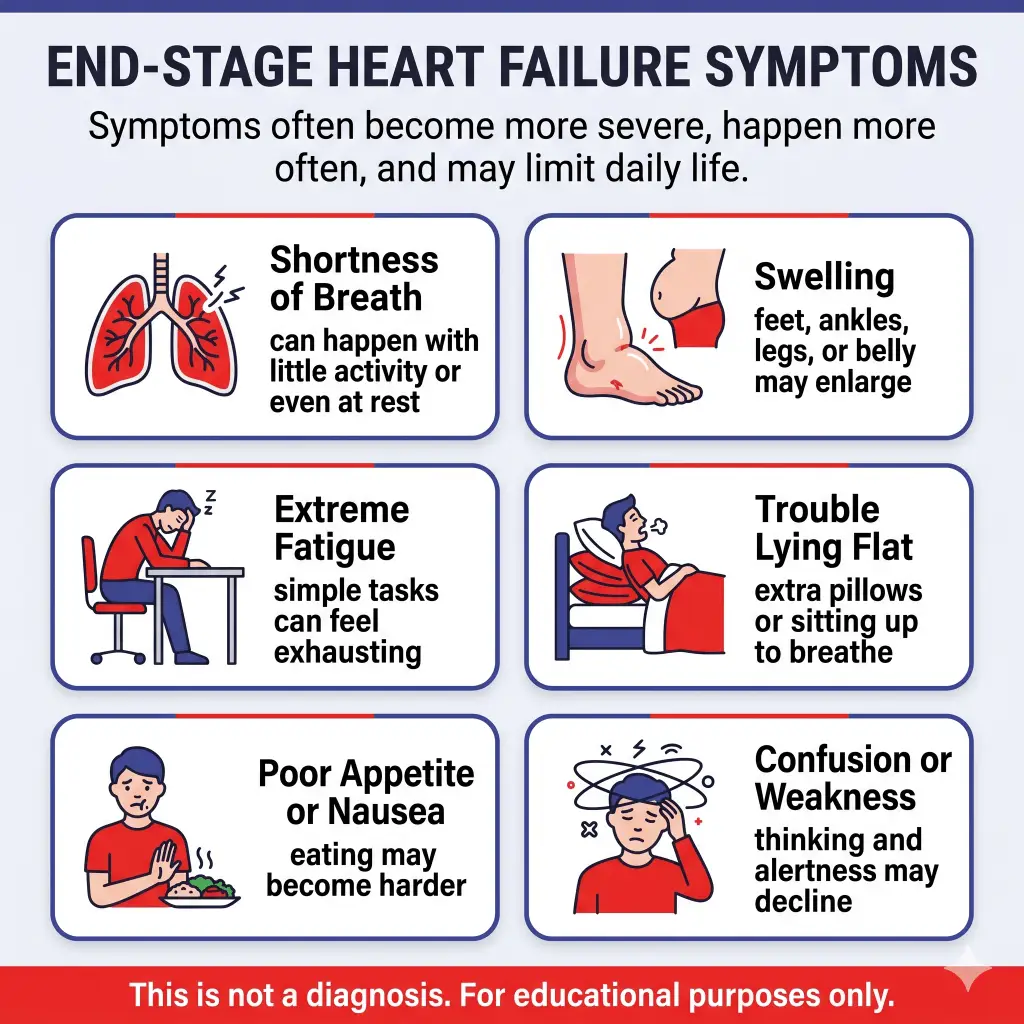
The most common symptoms are often shortness of breath, swelling, and extreme fatigue. Many people notice that walking across a room, getting dressed, or doing simple tasks leaves them tired or winded. Some also develop a cough, chest congestion, or the feeling that they cannot get a full breath.
Another common sign is trouble lying flat. Some patients need extra pillows to sleep, while others wake up at night feeling short of breath and need to sit up to breathe more comfortably. Swelling in the feet, ankles, legs, or belly can also become more noticeable as fluid builds up.
Other Symptoms Families May Notice
Families often notice changes before the patient fully describes them. A person with advanced heart failure may eat less, lose interest in food, complain of nausea, sleep more, or seem much weaker than before. They may also move more slowly, need more help with everyday tasks, or stop doing things they used to manage on their own.
In some cases, families may notice confusion, poor concentration, or a general decline in alertness, especially when breathing problems, low blood flow, or fluid-related complications are getting worse. Sudden changes in thinking or awareness should never be brushed off.
Why Breathing Problems Often Get Worse
Breathing trouble gets worse in advanced heart failure because fluid can build up in or around the lungs. When that happens, the lungs cannot work as efficiently, and breathing may feel harder during activity, when lying flat, or even while resting.
This is also why some people describe a drowning feeling, nighttime attacks of shortness of breath, or the need to sit upright to breathe. When those symptoms become severe, it can signal a true emergency rather than a routine “bad day.”
What Daily Life May Start to Look Like
As heart failure becomes more advanced, daily life often becomes smaller and more exhausting. A person may need help with bathing, dressing, walking, getting to the bathroom, or preparing meals. It may also become harder to keep up with appointments, weigh-ins, medication schedules, and symptom tracking without family support.
That does not mean every day will look the same. Some days may feel manageable, while others may feel much harder. But when symptoms keep limiting normal activities, that is often a sign the care plan needs to be re-evaluated rather than simply pushed through.
When It May Be Time to Talk About Palliative Care or Goals of Care
This is also the stage when palliative care discussions can become very helpful. Palliative care is not the same thing as “doing nothing.” It is about improving comfort, reducing distressing symptoms, supporting the patient and family, and making care decisions that match the person’s goals and priorities.
For some families, that means asking better questions about shortness of breath, fatigue, appetite, sleep, and what to do during a sudden decline. For others, it means talking openly about future emergencies, treatment preferences, and what quality of life means to that person. Those are difficult conversations, but they are often important ones.
When to Go to the ER or Call 911
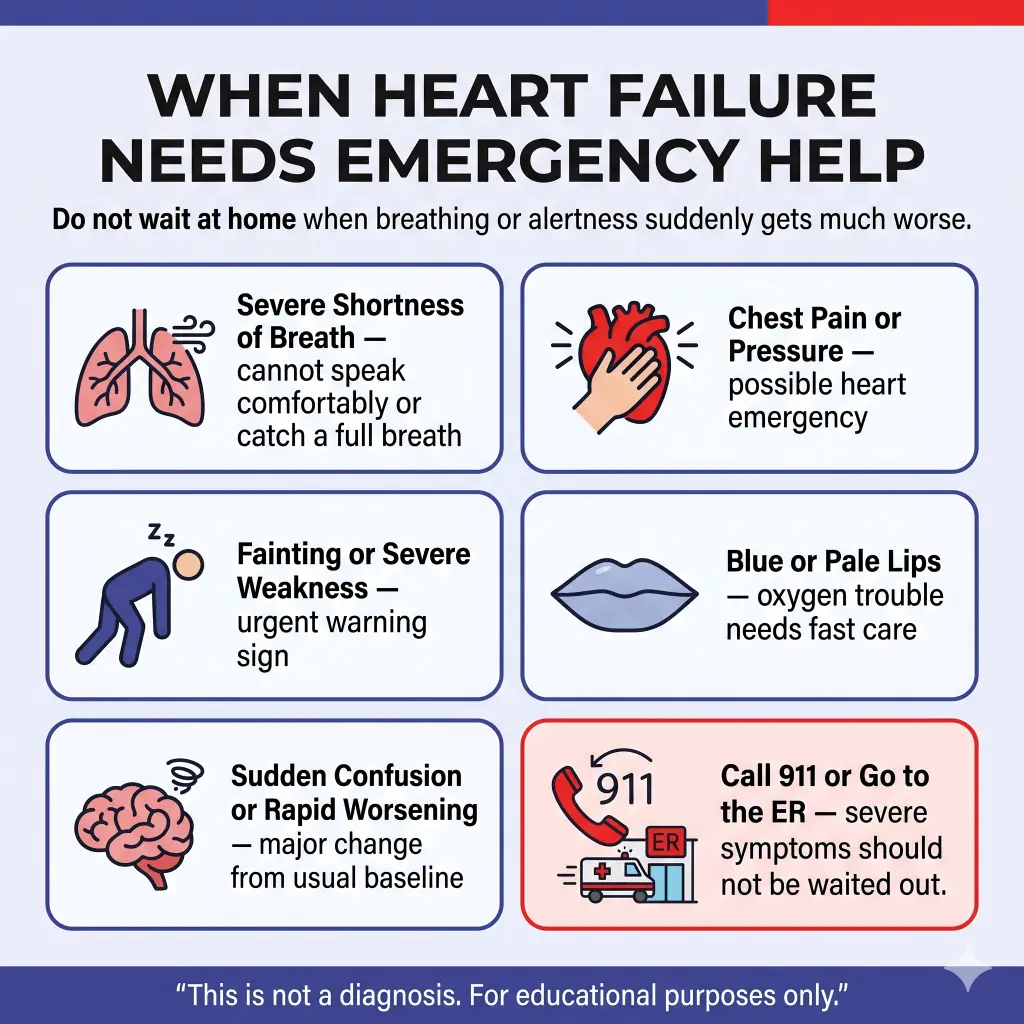
Go to the ER or call 911 right away if there is severe shortness of breath, chest pain or pressure, fainting, blue or pale lips, sudden confusion, severe weakness, or a rapid worsening of swelling or breathing. Even in someone with chronic heart failure, those changes can signal an acute emergency that needs immediate evaluation.
If you are in Houston and severe heart failure symptoms suddenly worsen, Post Oak ER is open 24/7 for prompt emergency evaluation. This is especially important when the person cannot speak in full sentences, cannot lie flat without gasping, seems much less responsive, or looks like they are in obvious distress.
What Doctors May Focus On at This Stage
When someone with advanced heart failure is evaluated, doctors often focus first on breathing status, fluid overload, oxygen levels, kidney function, and whether other organs are being affected. Heart failure can reduce blood flow and also lead to fluid buildup in organs such as the lungs, kidneys, and liver, so the evaluation often goes beyond the heart alone.
Treatment at this stage may include medication adjustments, oxygen support, fluid management, and a broader review of the overall care plan. In some cases, the medical team may also discuss advanced therapies, symptom-focused care, or whether the patient’s goals have changed.
Even in end-stage heart failure, families do not have to manage everything alone. Symptoms can still be treated, comfort can still be improved, and urgent worsening should still be taken seriously. The most helpful next step is often getting the right level of care at the right time, instead of trying to wait out severe symptoms at home.
Frequently Asked Questions
What does end-stage heart failure mean?
It usually means heart failure has become advanced enough that symptoms are severe, daily life is more limited, and regular treatment may not control symptoms well anymore.
What are the most common end-stage heart failure symptoms?
The most common symptoms include shortness of breath, swelling, fatigue, weakness, coughing, and trouble lying flat.
Does end-stage heart failure mean symptoms can happen even at rest?
Yes. In advanced heart failure, symptoms may happen with very little activity or even while resting.
Why does heart failure cause so much shortness of breath?
Heart failure can allow fluid to build up in or around the lungs, which makes breathing more difficult.
Can end-stage heart failure cause confusion or appetite loss?
Yes. Poor appetite, nausea, weakness, and confusion can happen in more advanced disease, especially as the body becomes more affected.
When should someone with advanced heart failure go to the ER?
They should get emergency help for severe shortness of breath, chest pain, fainting, sudden confusion, blue lips, or any major sudden worsening.
Does palliative care mean there is no more treatment?
No. Palliative care focuses on comfort, symptom relief, support, and care planning. It does not automatically mean treatment has stopped.
What should families watch for at home?
Families should watch for worsening breathing, more swelling, poor appetite, sudden confusion, less ability to move around, and any rapid change that looks severe or unusual.