
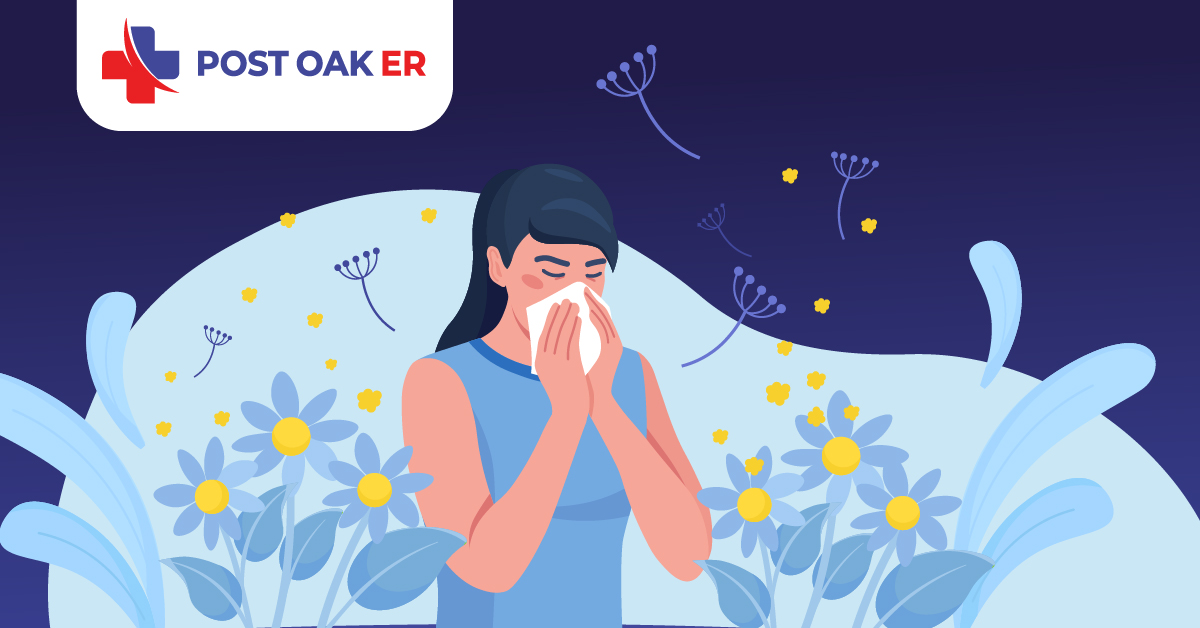
Quick Summary
- Spring allergies are a form of seasonal allergic rhinitis, also called hay fever.
- They are triggered by airborne allergens such as tree pollen, grass pollen, and mold spores.
- Common symptoms include sneezing, runny or stuffy nose, itchy or watery eyes, cough, fatigue, and sinus pressure.
- Symptoms often persist as long as allergen exposure continues.
- Medical evaluation may help when symptoms persist, interfere with daily life, or overlap with asthma.
What Are Spring Allergies?
Spring allergies—often referred to as seasonal allergies, hay fever, or allergic rhinitis—are a common condition triggered by the immune system reacting to airborne allergens that appear during certain times of the year.
Some people experience allergy symptoms only during spring, while others may have symptoms in multiple seasons depending on which allergens are present and when they circulate.
What Causes Spring Allergies?
Spring allergy symptoms are caused by exposure to airborne allergens. Verified triggers include:
- Tree pollen, which commonly appears in early spring
- Grass pollen, which tends to rise in late spring and summer
- Weed pollen, which is more common later in the year
- Mold spores, which can be present both seasonally and year-round, especially in damp environments
Pollen grains are lightweight and can travel long distances in the air, meaning exposure is not limited to nearby plants.
How the Immune System Causes Symptoms
In people with allergies, the immune system mistakenly identifies harmless substances—such as pollen—as threats. The body releases antibodies and chemicals (including histamine), which lead to inflammation and irritation affecting the nose, eyes, and airways.
Common Spring Allergy Symptoms
Symptoms can vary in type and severity and may persist as long as exposure continues.
Nose and Sinuses
- Sneezing
- Runny nose
- Nasal congestion (stuffy nose)
- Postnasal drip
Eyes
- Itchy eyes
- Watery eyes
- Red or irritated eyes
Throat and Chest
- Itchy throat
- Cough
General Symptoms
- Fatigue, often related to poor sleep caused by congestion
- Headaches or sinus pressure
Allergy vs. Cold: How to Tell the Difference
Spring allergies and the common cold can appear similar, but key differences exist.
More Consistent With Allergies
- Itchy eyes or nose
- Sneezing
- Runny nose with thin, watery discharge
- Symptoms that persist as long as allergen exposure continues
More Consistent With a Cold
- Fever
- Body aches
- Symptoms that usually resolve within several days
Unlike colds, allergies are not caused by viruses.
When Are Spring Allergies Usually Worse?
Symptom severity often depends on pollen levels and weather conditions:
- Tree pollen is most common in early spring
- Grass pollen increases later in spring and summer
- Windy days can increase airborne pollen
- Rainy days may temporarily reduce pollen in the air, though mold growth can increase in damp conditions
Monitoring local pollen counts can help with planning daily activities.
Complications and Related Conditions
Asthma
Pollen and other allergens can trigger asthma symptoms in people who have asthma. These may include coughing, wheezing, and shortness of breath.
Sinus Pressure
Allergy-related congestion is associated with sinus pressure and headaches.
There is no high-quality evidence confirming that allergies directly cause sinus infections.
Anaphylaxis
Anaphylaxis is a severe allergic reaction that can be life-threatening. It is more commonly associated with foods, medications, or insect stings than with seasonal pollen, but any suspected anaphylactic reaction requires immediate emergency care.
Managing Spring Allergies
Management focuses on reducing exposure and relieving symptoms.
Reducing Allergen Exposure
- Staying indoors when pollen counts are high
- Keeping windows closed during peak pollen periods
- Showering and changing clothes after outdoor exposure
- Using saline nasal rinses to clear allergens from nasal passages
- Using air filtration systems, such as HEPA filters
Medications
Evidence-based options include:
- Antihistamines, which reduce sneezing, itching, and runny nose
- Nasal steroid sprays, which reduce inflammation and congestion
- Saline nasal sprays or rinses
- Antihistamine eye drops
Decongestants may help some people but are not appropriate for everyone and should be used with medical guidance.
When to See a Doctor
Consider seeing a healthcare professional if:
- Symptoms persist despite over-the-counter treatment
- You are unsure whether symptoms are due to allergies or another condition
- Allergy symptoms interfere with daily activities
- You have asthma and notice worsening respiratory symptoms during allergy season
A clinician may recommend allergy testing, prescription treatment, or immunotherapy when appropriate.
Frequently Asked Questions
What causes spring allergies?
Spring allergies are triggered by airborne allergens such as tree pollen, grass pollen, and mold spores.
What are the symptoms of spring allergies?
Symptoms include sneezing, runny or stuffy nose, itchy or watery eyes, postnasal drip, cough, fatigue, and sinus pressure.
What do spring allergies feel like?
They often involve persistent nasal congestion, sneezing, and eye irritation that continue while exposure to allergens persists.
When are spring allergies the worst?
They are often worse when pollen levels are high, particularly during tree pollen season in early spring.
Can spring allergies cause fever?
There is no high-quality evidence showing that seasonal allergies cause fever.
Can seasonal allergies make you vomit?
There is no high-quality evidence supporting vomiting as a typical symptom of seasonal allergies.
Can spring allergies trigger asthma symptoms?
Yes. In people with asthma, pollen exposure can trigger coughing, wheezing, and shortness of breath.
Are spring allergies the same as hay fever?
Yes. Hay fever is another name for allergic rhinitis, which includes seasonal allergies.
Do spring allergies go away on their own?
Symptoms typically improve when exposure to allergens decreases.
Can allergy symptoms last for weeks?
Yes. Seasonal allergies can last for weeks or longer while allergens remain present.
APA Reference List
American Academy of Allergy, Asthma & Immunology. (2024, July 8). Pollen counts defined. https://www.aaaai.org/tools-for-the-public/allergy%2C-asthma-immunology-glossary/pollen-counts-defined
American College of Allergy, Asthma & Immunology. (n.d.). Seasonal allergies: Causes, symptoms & treatment. https://acaai.org/allergies/allergic-conditions/seasonal-allergies/
Centers for Disease Control and Prevention. (2024, March 2). Allergens and pollen. https://www.cdc.gov/climate-health/php/effects/allergens-and-pollen.html
Mayo Clinic Staff. (2024, August 13). Hay fever: Symptoms and causes. https://www.mayoclinic.org/diseases-conditions/hay-fever/symptoms-causes/syc-20373039
Mayo Clinic Staff. (n.d.). High blood pressure and cold remedies: Which are safe? https://www.mayoclinic.org/diseases-conditions/high-blood-pressure/expert-answers/high-blood-pressure/faq-20058281
Mayo Clinic Staff. (2025, April 15). Asthma attack: Symptoms and causes. https://www.mayoclinic.org/diseases-conditions/asthma-attack/symptoms-causes/syc-20354268
National Health Service. (2023, June 21). Anaphylaxis. https://www.nhs.uk/conditions/anaphylaxis/
National Health Service. (2025, April 7). Asthma. https://www.nhs.uk/conditions/asthma/
National Institute of Environmental Health Sciences. (2025, December 22). Pollen. https://www.niehs.nih.gov/health/topics/agents/allergens/pollen
National Library of Medicine. (2024, March 31). Allergic reactions. MedlinePlus Medical Encyclopedia. https://medlineplus.gov/ency/article/000005.htm
National Library of Medicine. (2024, March 31). Anaphylaxis. MedlinePlus Medical Encyclopedia. https://medlineplus.gov/ency/article/000844.htm
National Library of Medicine. (2024, June 26). Allergy skin test. MedlinePlus Medical Test. https://medlineplus.gov/lab-tests/allergy-skin-test/
National Library of Medicine. (2024, November 19). Allergy blood test. MedlinePlus Medical Test. https://medlineplus.gov/lab-tests/allergy-blood-test/
National Library of Medicine. (2025, June 15). Pseudoephedrine. MedlinePlus Drug Information. https://medlineplus.gov/druginfo/meds/a682619.html
National Library of Medicine. (2025, August 13). Pseudoephedrine hydrochloride tablet [Drug label]. DailyMed. https://dailymed.nlm.nih.gov/dailymed/lookup.cfm?setid=78faa497-6743-b85b-e053-2a91aa0ae822
NIH MedlinePlus Magazine. (2024, May 21). What triggers seasonal allergies? https://magazine.medlineplus.gov/article/what-triggers-seasonal-allergies