

Key Takeaways
- Slurred speech in older adults is a red flag for stroke or TIA, especially if it comes on suddenly.
- Slurred speech can be caused by other conditions like infections, low blood sugar, or medications—but stroke should be ruled out first.
- If you notice sudden speech changes along with face droop, weakness, or difficulty speaking/understanding, call 911 immediately—it could be a stroke or TIA.
- Even if symptoms resolve, it could still be a TIA (mini-stroke), which still requires urgent medical attention.
what causes slurred speech in the elderly?
Slurred speech (also known as dysarthria) in older adults can occur suddenly and might signal a stroke or TIA—especially if it’s the first time it’s happened. Slurred speech occurs when the muscles used for speaking are weakened or don’t work properly, leading to unclear speech.
While it can be caused by other factors like medication side effects, dehydration, or even infections, stroke is the most critical concern in older adults, and it should always be treated as an emergency until proven otherwise.
The big safety rule: new slurred speech = emergency until proven otherwise
When slurred speech happens suddenly in an older adult, the first thing to think about is stroke. Sudden weakness or changes in speech are common warning signs of stroke. The American Stroke Association emphasizes: if you suspect stroke, call 911 immediately—even if the symptoms improve quickly.
Why families get tricked into waiting
It’s tempting to think, “Well, they seem fine now, and it passed.” But even if symptoms go away, TIA (mini-stroke) is still a concern. A TIA can cause sudden symptoms like slurred speech that go away on their own within minutes to hours. But TIAs are still serious—they indicate that a stroke could happen.
Don’t wait to seek help—call 911 immediately.
First, define what you’re actually seeing (slurred speech vs “word trouble”)
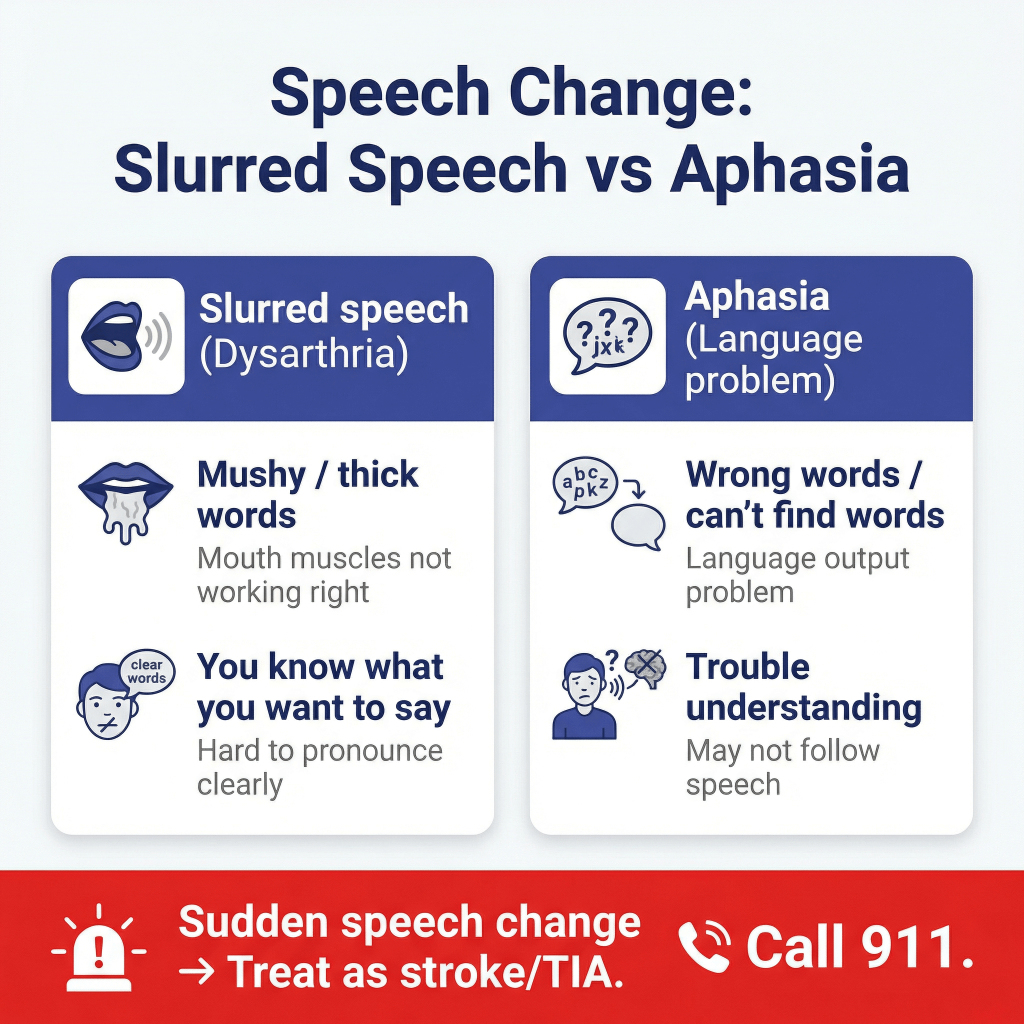
It’s important to distinguish between slurred speech and language issues when evaluating symptoms.
Slurred speech (dysarthria)
When someone has slurred speech, they may sound like their words are mushy or thick—like their mouth isn’t working right. The muscles needed to form words can become weak or uncoordinated due to neurologic damage from a stroke.
Trouble finding words or making sense (aphasia)
Aphasia is a language disorder where a person may have difficulty speaking, understanding speech, reading, or writing. Unlike slurred speech, aphasia typically involves the incorrect use of words or inability to form coherent sentences—it doesn’t always affect the clarity of individual words.
Why this matters for stroke recognition
Both slurred speech (dysarthria) and aphasia can be caused by stroke and are medical emergencies. A stroke can affect the brain areas that control both speech and language, so it’s critical to get help fast if speech suddenly changes.
When slurred speech could be a stroke (warning signs that matter most)
Slurred speech in isolation doesn’t always mean stroke, but it’s a major warning sign when it’s accompanied by other stroke-related symptoms.
Is slurred speech a sign of stroke?
Yes. Slurred speech (dysarthria) is one of the classic stroke symptoms. The CDC includes sudden difficulty speaking as one of the main signs of stroke.
Stroke symptoms that often show up with slurred speech
Slurred speech usually happens with other signs of stroke, including:
- Face droop or numbness on one side of the face
- Arm weakness or inability to move one side of the body
- Speech difficulty—not just slurred, but often confused or unable to understand or form words
- Vision changes (sudden loss of vision or double vision)
- Balance problems or sudden trouble walking
- Severe headache with no known cause
When to call 911
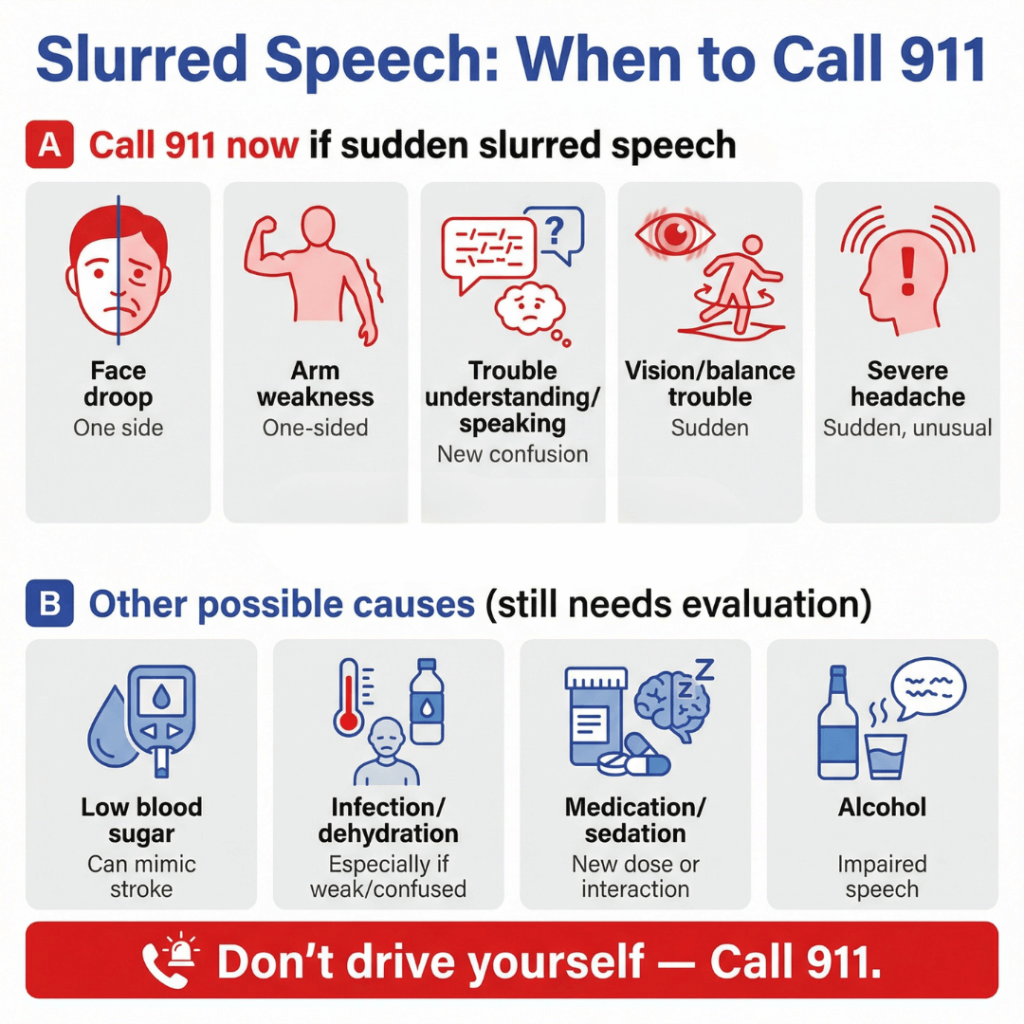
If slurred speech happens suddenly and is accompanied by any of the above symptoms, you should call 911 immediately. Delays in stroke treatment can result in permanent brain damage or death.
If it got better: could it be a TIA (mini-stroke)?
A TIA (transient ischemic attack), also called a “mini-stroke,” occurs when blood flow to part of the brain is briefly interrupted. Symptoms usually come on suddenly, and may include slurred speech, weakness, or confusion—just like a stroke. The key difference is that TIA symptoms usually resolve on their own within 24 hours.
What is a TIA?
A TIA is not a small stroke, but a warning of a potential future stroke. It can be hard to tell the difference between a TIA and a full stroke, which is why any episode of sudden weakness or slurred speech in the elderly should be treated as a medical emergency.
Symptoms that resolve still matter
Even if the symptoms disappear, you still need to call 911. A TIA is a warning that a full-blown stroke could occur later. And if you wait, you risk serious permanent damage.
Other common causes of slurred speech in older adults
While stroke and TIA are the primary concerns for sudden slurred speech, there are other possible causes. However, these causes do not rule out the need for urgent evaluation.
Low blood sugar, medication effects, alcohol/sedation
Low blood sugar (hypoglycemia) can cause confusion and slurred speech in older adults, particularly those with diabetes. Medications (like sedatives or muscle relaxants) and alcohol use can also impair speech clarity temporarily.
However, if slurred speech happens suddenly and without obvious triggers, it should always be evaluated as a possible stroke or TIA.
Infections/illness, dehydration, severe fatigue
Infections, dehydration, or extreme fatigue can sometimes lead to confusion and slurred speech in elderly individuals, particularly if they already have cognitive impairment.
Again, if symptoms come on suddenly, or if slurred speech is accompanied by weakness or dizziness, call 911 immediately.
Neurologic conditions
Conditions such as Parkinson’s disease or a previous stroke may also contribute to slurred speech over time. However, a new onset of slurred speech is still concerning and should not be dismissed.
What to do right now
If it’s happening now
- Call 911 immediately if you notice any of the following:
- Sudden slurred speech with face/arm weakness or vision problems
- Severe headache, confusion, dizziness, or balance loss
- Sudden loss of speech or understanding
- Do not drive yourself—emergency services can begin treatment immediately on the way to the hospital.
- Note the time symptoms started (called “last known well”), as this is critical information for stroke care.
- Do not give food or drink if they are having difficulty swallowing.
If it happened earlier today and improved
Even if symptoms resolved on their own, it’s still an emergency. Call 911 right away so healthcare professionals can evaluate the situation before a major stroke happens.
What to expect in the ER for sudden speech changes
What clinicians focus on first
When you arrive at the ER with suspected stroke or TIA:
- They will assess timing (when symptoms started / last known well).
- They will perform a neurological exam to check for weakness or vision issues.
- Blood sugar levels will be checked (since low blood sugar can mimic stroke symptoms).
- Vitals and history will be assessed.
Common test categories
Depending on the symptoms, doctors may perform:
- CT or MRI brain scans to look for bleeding or blocked arteries.
- Blood tests to check for underlying conditions (like blood sugar or clotting).
- ECG to rule out any heart issues (like arrhythmias).
These are general steps, and your treatment will depend on your individual case.
Prevention basics
Preventing stroke and TIA revolves around managing known risk factors:
- Control high blood pressure (hypertension is a major risk factor).
- Manage diabetes and cholesterol.
- Quit smoking.
- Regular exercise and dietary changes to lower stroke risk.
- Regular medical check-ups to ensure proper management of chronic conditions.
Don’t Wait on Sudden Speech Changes
If an older adult suddenly develops slurred speech, face drooping, arm weakness, confusion, or trouble understanding words, call 911 immediately. Stroke and TIA are time-sensitive emergencies, and fast treatment can help protect the brain and save a life.
If the symptoms are mild, unclear, or already improving, they still need urgent medical evaluation. Post Oak ER is open 24/7 to evaluate sudden speech changes and other stroke-like symptoms.
Call 911 for any sudden stroke warning signs.
Need urgent evaluation? Visit Post Oak ER—open 24/7.
Frequently Asked Questions
What are common causes of slurred speech in the elderly?
It can be caused by stroke, TIA, low blood sugar, infections, medications, dehydration, or other conditions. However, stroke should always be ruled out first.
Is slurred speech a sign of stroke?
Yes. Sudden slurred speech, especially if it’s accompanied by face/arm weakness, confusion, or vision problems, can be a sign of stroke.
What’s the difference between slurred speech and aphasia?
Slurred speech is a motor issue—you can’t form words properly. Aphasia is a language issue, where you may be unable to speak the right words or understand what’s being said.
If slurred speech goes away, could it still be a TIA (mini-stroke)?
Yes. Even if symptoms resolve, you should call 911 immediately—TIA symptoms are a warning that a full stroke could happen later.
What other stroke symptoms often occur with slurred speech?
Face droop, arm weakness, sudden confusion, vision changes, severe headache.
When should you call 911 for slurred speech?
Always call 911 immediately if slurred speech is sudden, comes with weakness, or occurs with any stroke-like symptoms.