
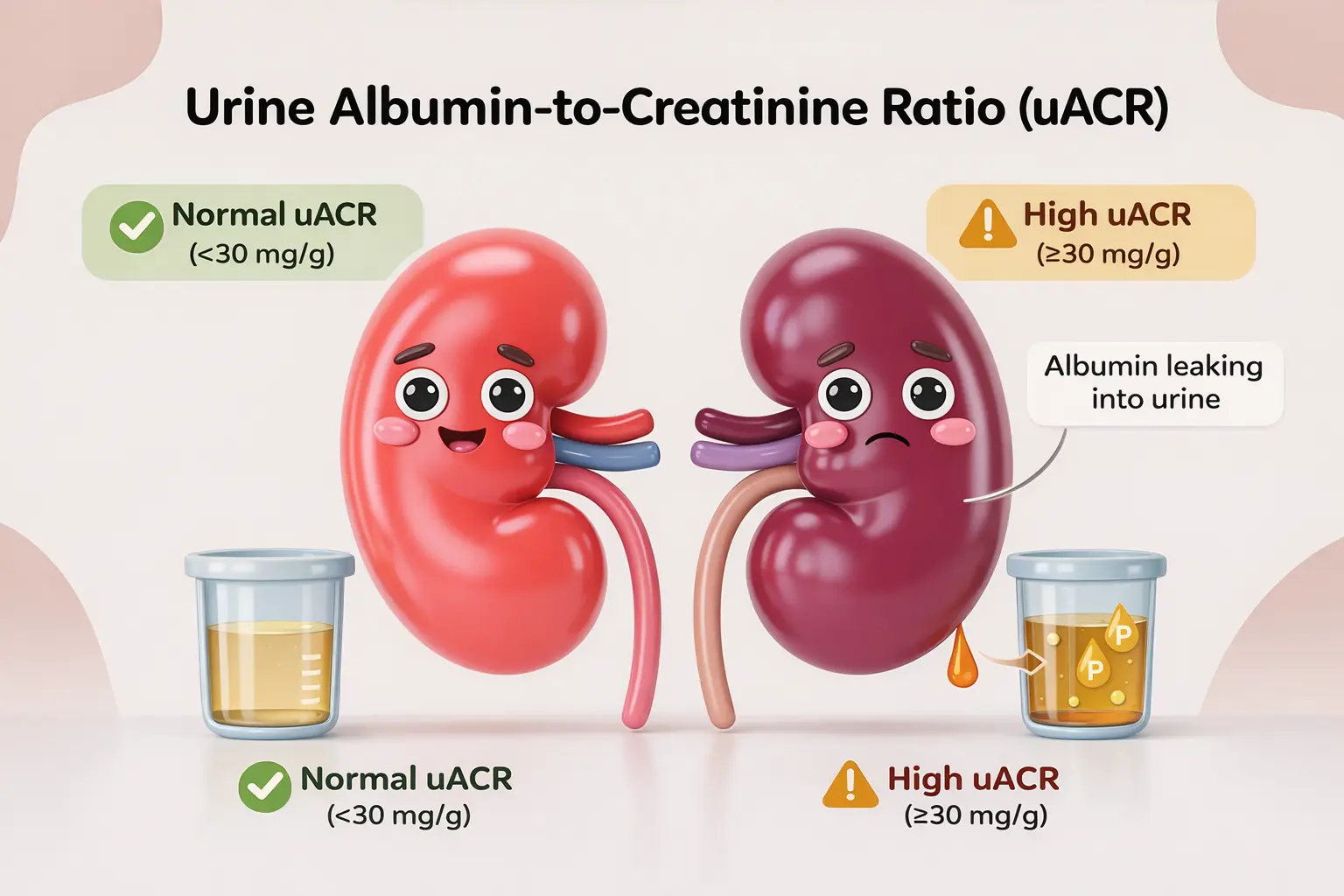
If you’re looking up microalbumin creatinine ratio, you’re usually holding a lab result that says something like “uACR”, “albumin/creatinine ratio”, or “microalbuminuria.” And you’re asking the right question: Is this a kidney problem—or something temporary?
Here’s the key point: uACR is one of the best early signals of kidney damage, often showing changes before people feel symptoms. The CDC notes CKD is common—more than 1 in 7 American adults have CKD, and many don’t know it—so urine and blood tests like uACR and eGFR matter.
Educational only. Not medical advice or a diagnosis.
What is the microalbumin/creatinine ratio (uACR)?
The urine albumin-to-creatinine ratio (uACR) is a urine test that measures how much albumin (a protein) is leaking into your urine, adjusted for creatinine (a normal waste product). The CDC explains the uACR compares albumin to creatinine in your urine and helps estimate albumin passing into the urine over a 24-hour period.
This test is typically done with a small urine sample—usually about two tablespoons collected at a clinic or lab. Your urine is then analyzed to check for the presence of albumin and creatinine. The uACR is a routine part of kidney health exams because it can pick up even small increases in protein (albumin) that might not be visible otherwise. If blood or protein is detected in your urine, it may be an early sign of kidney disease, even if you feel perfectly fine.
NIDDK (NIH) describes albuminuria as a potential sign of CKD and states that uACR on a spot urine specimen is the recommended test to assess and monitor urine albumin.
Why the “ratio” matters
A urine dipstick can be affected by how concentrated your urine is. NIDDK’s uACR quick reference explains that uACR is a ratio between two measured substances and is unaffected by variation in urine concentration, unlike a dipstick.
Normal microalbumin creatinine ratio (uACR): what range is considered normal?
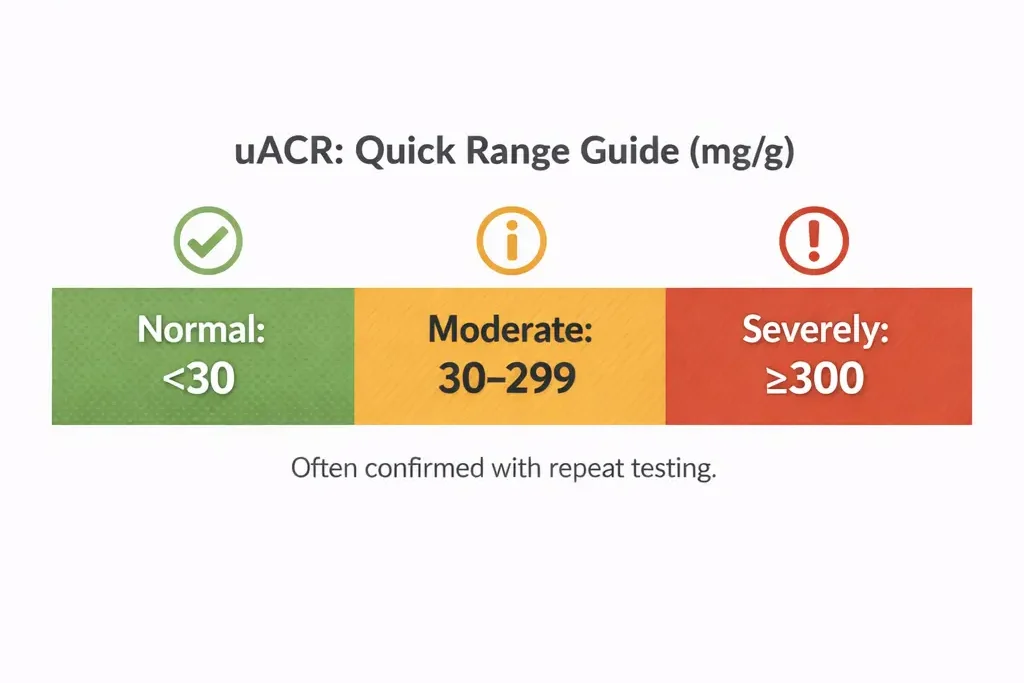
Most U.S. references use mg/g.
- Normal uACR: < 30 mg/g
- Above normal: ≥ 30 mg/g may indicate kidney disease (depending on context and repeat testing)
The National Kidney Foundation (NKF) states a normal amount of albumin in urine is less than 30 mg/g, and anything above 30 mg/g may mean kidney disease—even if your eGFR is above 60.
The CDC also notes that a urine albumin result of 30 or above may mean kidney disease, and that testing may be repeated to confirm.
Microalbuminuria vs. albuminuria (why terms vary)
You may see “microalbumin” on older labs. NKF explains that moderately increased albuminuria was historically called microalbuminuria and corresponds to ACR 30–300 mg/g.
Higher levels (often called “macroalbuminuria” historically) are generally ACR >300 mg/g.
In most modern kidney guidance, clinicians use:
- normal to mildly increased
- moderately increased
- severely increased
What does a high microalbumin creatinine ratio mean?
A high uACR means albumin is leaking into the urine, which can be an early sign of kidney damage. NKF notes albumin in urine can be a sign of kidney disease even when eGFR is “normal,” and that many people don’t feel symptoms.
Key interpretation (simple and clinically aligned)
- uACR < 30 mg/g: usually normal
- uACR 30–300 mg/g: moderately increased albuminuria (historically “microalbuminuria”)
- uACR > 300 mg/g: severely increased albuminuria (higher risk category)
One important nuance
A high uACR does not automatically mean permanent CKD. That’s why clinicians confirm it and look for temporary causes.
Can uACR be falsely high? Yes—this is why repeat testing matters
The CDC specifically notes the urine albumin test may be repeated once or twice to confirm results.
NKF also notes your healthcare team may re-check to ensure albuminuria isn’t caused by something else.
Common reasons uACR can be temporarily elevated include acute illness or factors around collection. (Your clinician will interpret your result in context and may request repeat testing.)
What additional tests might be done if kidney disease is suspected?
If your uACR or eGFR suggests possible kidney problems, your healthcare team may recommend further testing to better understand what’s going on with your kidneys. These might include:
- Imaging tests: An ultrasound or CT scan may be ordered to get a closer look at your kidneys and urinary tract. These images help check for issues such as kidney stones, tumors, or structural changes (like unusually large or small kidneys).
- Kidney biopsy: In some cases, a small tissue sample from your kidney may need to be taken and examined under a microscope. This helps pinpoint the specific type of kidney disease, and shows how much, if any, damage is present. The information from a biopsy can guide next steps for treatment.
- Referral to a nephrologist: Your primary care provider may recommend you see a kidney specialist—a nephrologist—for expert input on diagnosis and management, especially if your case is more complex.
Your clinician will decide which, if any, of these tests are appropriate based on your individual results and risk factors.
Who should get a uACR test?
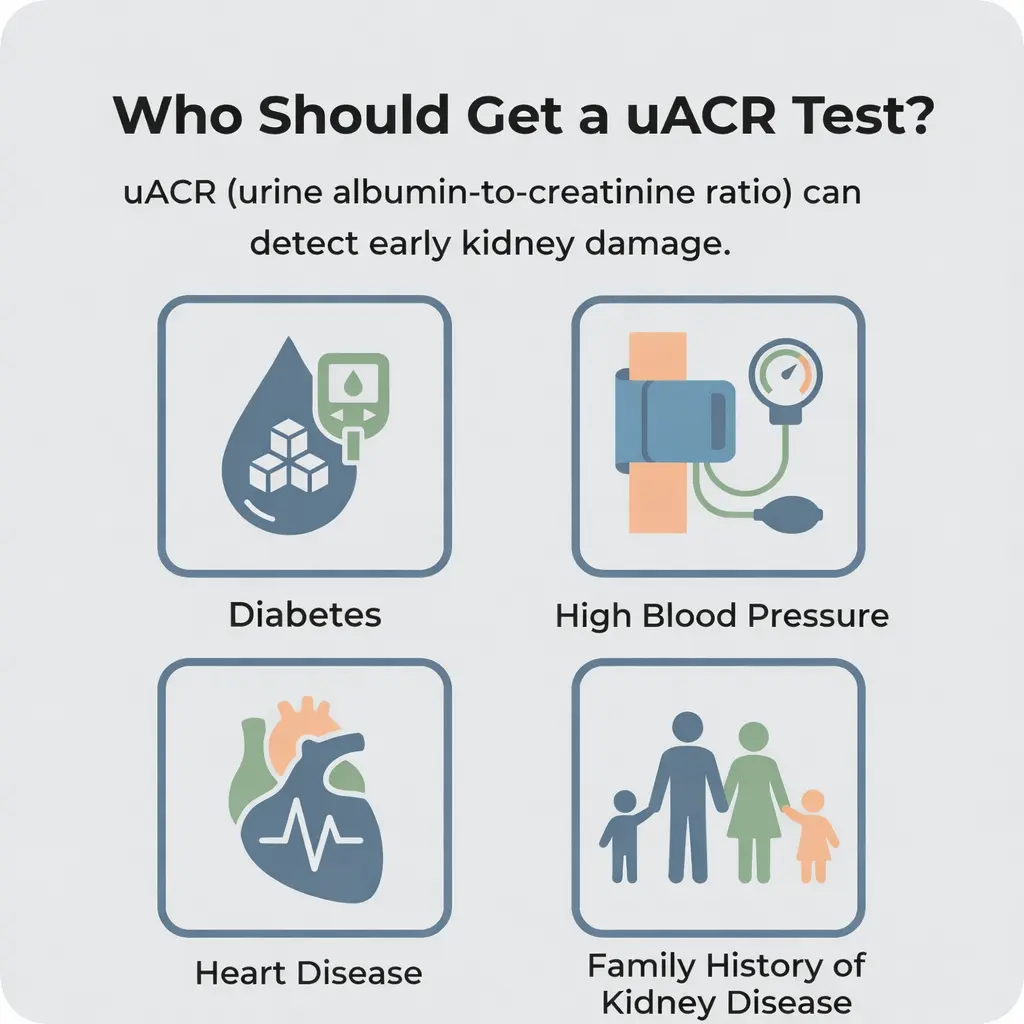
uACR is especially valuable for people at higher risk for CKD.
NIDDK’s kidney disease statistics note that CKD affects more than 1 in 7 U.S. adults (estimated 35.5 million Americans) and that risk is higher in people with diabetes or high blood pressure.
If you have:
- diabetes
- hypertension
- heart disease
- a family history of kidney disease
- or you’ve been told your eGFR is declining
…uACR is one of the most useful tests to clarify risk and guide care.
How often should kidney function be checked if you are at risk?
If you’re in a higher-risk group—such as having diabetes, hypertension, or a family history of kidney disease—most guidelines recommend checking kidney function at least once a year. That usually means both a blood test to determine your eGFR and a urine test for uACR (albumin/creatinine ratio). These two tests together give a clear picture of how well your kidneys are working and whether there’s early evidence of kidney damage—even before you feel any symptoms.
Regular, yearly monitoring helps your care team catch changes early and tailor treatment or prevention plans to protect your kidney health. If you’re experiencing changes in health or your provider sees concerning results, testing may be repeated more often to track trends.
What should you do if your microalbumin creatinine ratio is high?
This depends on the number and your overall health, but here is the clinically practical pathway:
Confirm it (don’t panic on a single test)
Because uACR can fluctuate, clinicians often repeat it. CDC highlights that repeat testing may be done to confirm.
Pair it with eGFR (the two numbers belong together)
NKF’s CKD classification approach uses both GFR category (eGFR) and albuminuria category (uACR)—often referred to as CGA staging (Cause, GFR, Albuminuria).
When your healthcare provider orders a uACR test, they’ll almost always check your estimated glomerular filtration rate (eGFR) at the same time. eGFR is a calculated value from a blood test that shows how well your kidneys are filtering waste. These two numbers—uACR and eGFR—paint the clearest picture of your kidney health, even if your eGFR seems “normal” (above 60).
Depending on your results, your clinical team may run additional tests to better understand what’s happening in your kidneys and urinary tract:
- Imaging studies (like ultrasound or CT scan): These can spot issues such as kidney stones, cysts, tumors, or changes in kidney size and structure.
- Kidney biopsy: In specific cases, a doctor may recommend taking a tiny sample of kidney tissue with a needle. This helps determine the exact type and extent of kidney damage, which guides further treatment.
Bringing uACR and eGFR together helps your provider decide if more testing or consultation with a specialist is needed, and guides how to best protect your kidneys for the long run.
Treat the drivers (this is how you protect kidneys long-term)
If albuminuria is persistent, clinicians focus on:
- blood pressure control
- diabetes control
- kidney-protective medications when appropriate
- lifestyle/nutrition changes tailored to labs
This often means working closely with your healthcare team to address the underlying causes—controlling blood pressure if it’s high, and keeping blood sugar in check if you have diabetes. These steps directly help lower kidney stress and reduce future risk.
(Your primary care doctor or nephrologist guides this; the goal is lowering kidney stress and reducing future risk.)
NKF’s management guidance also uses uACR thresholds in referral decision-making (e.g., very high uACR can warrant nephrology involvement).
Your healthcare team may also recommend that you see a kidney specialist (nephrologist) if your uACR remains high or if there are other concerning findings. A nephrologist can review your case in more detail, help clarify the cause, and guide next steps for protecting your kidney function.
Why discussing supplements and medication dosages matters
Kidneys play a central role in clearing many vitamins, minerals, herbs, and over-the-counter supplements from your body. If your kidney function is reduced, these substances may build up to unsafe levels or even cause further kidney damage.
That’s why it’s essential to talk with your healthcare team before starting anything new—whether it’s a popular collagen powder, herbal tea, weight loss supplement, or muscle-building formula from your local store. Some ingredients can interact with existing medications, or may be especially harmful when your kidneys are under stress.
Likewise, medication doses often need to be adjusted based on how well your kidneys are working and your overall health. Certain drugs that are safe at standard doses could build up in your system and cause side effects if your kidneys aren’t filtering as efficiently.
Bottom line: always loop in your doctor or pharmacist before changing supplements or medications. They can guide you toward safer choices and help avoid kidney-related complications.
What types of blood pressure medicines are used to treat albuminuria?
Two main classes of blood pressure medications are commonly used to help reduce albumin in the urine and protect kidney function:
- ACE inhibitors (ACEi)
- Angiotensin receptor blockers (ARB)
Both types target the renin-angiotensin system, which plays a key role in blood pressure and kidney health. These medications can be recommended even if your blood pressure is in the normal range, as they offer kidney-protective benefits by reducing albumin leakage. Your healthcare provider will decide which is best for you based on your overall health, lab results, and any other conditions you may have.
What medications or substances should people with chronic kidney disease (CKD) avoid?
Certain medications and supplements can be tough on your kidneys—so it’s important to be mindful if you have CKD.
Key points to remember:
- Steer clear of NSAIDs: Over-the-counter pain relievers like ibuprofen (Advil, Motrin), naproxen (Aleve), and similar non-steroidal anti-inflammatory drugs can further damage kidney function, especially with regular or high use.
- Contrast dyes: Always inform your healthcare team if you’re scheduled for imaging tests that involve contrast dye, as these can be risky for those with impaired kidney function.
- Supplements and herbal remedies: Many vitamins, minerals, bodybuilding, or weight loss supplements (including seemingly “natural” herbs and blends) can contain ingredients that may strain or harm your kidneys. Always check with your healthcare provider before starting any new supplement.
- Smoking: Avoid tobacco use since smoking can worsen kidney problems and impacts overall vascular health.
In short, before starting any new medicine—including over-the-counter drugs—or supplement, talk with your clinician. Your care team can help you weigh risks and benefits, and keep your kidneys as healthy as possible.
How do imaging tests and kidney biopsies fit into diagnosis?
If lab tests like uACR and eGFR suggest something may be going on, your clinician might recommend additional tests to get a clearer picture—literally and figuratively.
Imaging tests: Seeing the kidneys from the outside
Imaging methods such as ultrasound or CT scans help your care team evaluate the size, shape, and structure of your kidneys and urinary tract. These tests can highlight issues like:
- Abnormal kidney size (too large or too small)
- Structural changes or blockages (such as kidney stones)
- Suspicious growths or tumors
Think of imaging as a way to check for any visible “plumbing” problems that could affect kidney function.
Kidney biopsy: Looking inside the kidney tissue
In some cases, your doctor may suggest a biopsy. This isn’t routine for everyone, but it can be essential to clarify the exact type of kidney disease, gauge the amount of damage, or guide treatment when things aren’t clear from lab or imaging alone.
A kidney biopsy involves removing a tiny sample of tissue with a needle, then examining it under a microscope. While it sounds intimidating, it’s usually quick, and the detailed information it provides can be critical for making the right treatment decisions.
Frequently Asked Questions
What is a normal microalbumin creatinine ratio?
Generally < 30 mg/g is considered normal.
What does uACR 30 mg/g mean?
A value 30 mg/g or higher may indicate kidney disease and is often rechecked to confirm.
Can uACR be high even if eGFR is normal?
Yes. NKF notes that anything above 30 mg/g may mean kidney disease even if eGFR is above 60.
Is uACR better than a urine dipstick?
For albumin assessment, yes in many cases. NIDDK notes uACR is unaffected by urine concentration variability, unlike a dipstick test.
Does a high uACR mean I will need dialysis?
Not automatically. uACR is a risk marker and helps guide monitoring and treatment. Many people stabilize when underlying drivers are controlled and results are followed over time.
Most uACR concerns are handled with outpatient follow-up, repeat testing, and prevention-focused care. But if you’re in Houston and you feel significantly unwell—especially with symptoms that suggest dehydration, severe infection, or rapidly worsening swelling/breathing issues—getting evaluated sooner is reasonable.
Post Oak ER states it is open 24/7 and provides on-site laboratory services and advanced on-site diagnostics, including imaging such as CT, X-ray, and ultrasound.
They also note they are open 24/7 near The Galleria.