
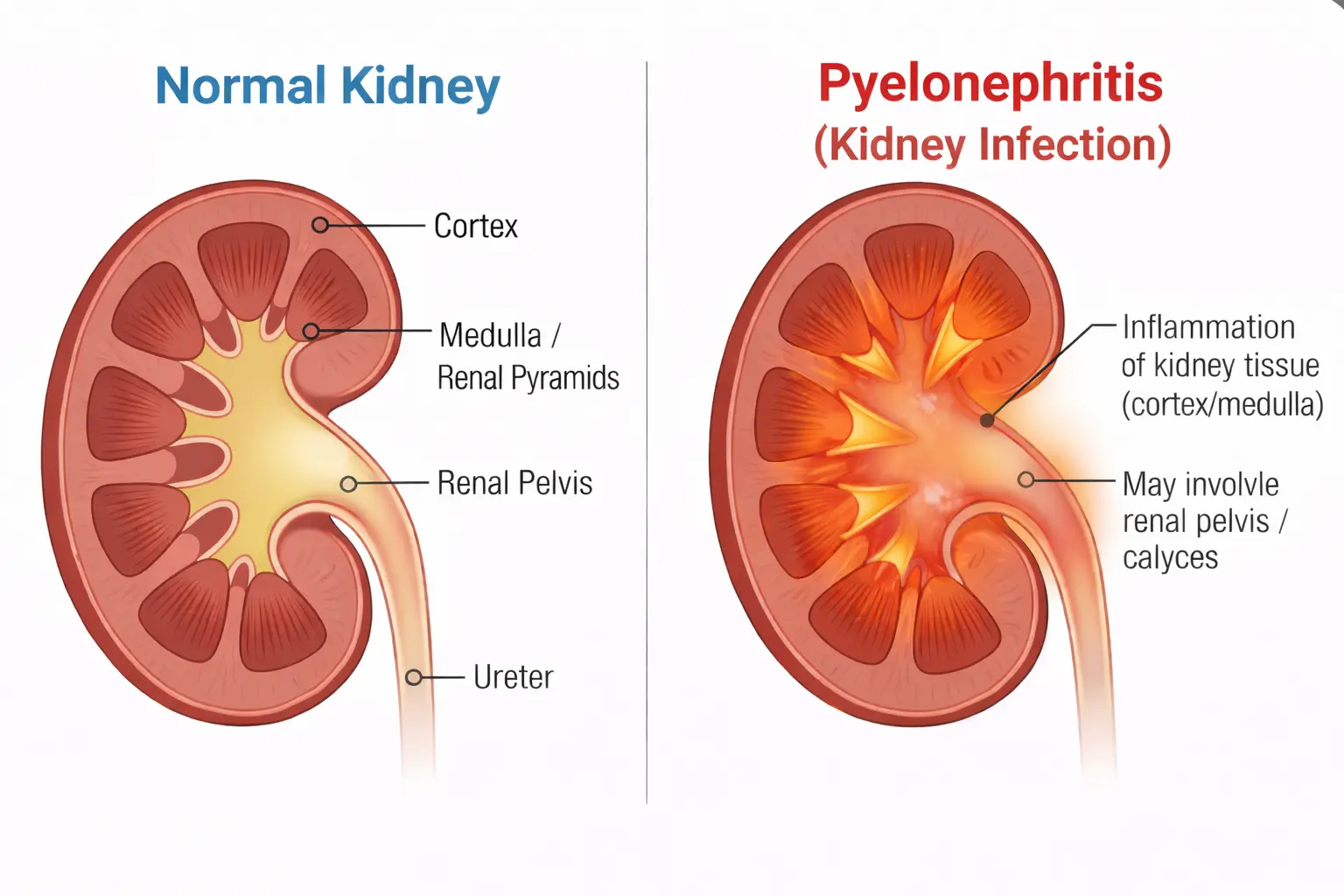
A kidney infection (also called pyelonephritis) is not the same thing as a simple bladder UTI. It’s a type of urinary tract infection (UTI) that often starts in the bladder and travels upward to one or both kidneys.
While the urinary system is designed to keep bacteria out, sometimes bacteria—often those found in the intestines—can sneak in through the urethra, move up into the bladder, and, if not stopped there, continue their journey to the kidneys. This is when trouble begins. About 1 in every 30 cases of bladder infection (cystitis) will progress to a kidney infection, which is considerably more serious.
What raises the risk?
You’re more likely to get a kidney infection if you:
- Have frequent bladder infections
- Have a structural problem in your urinary tract
- Experience urine flow blockage (from kidney stones, tumors, or congenital issues)
- Have urine flowing in the wrong direction (reflux)
- Live with diabetes or a weakened immune system
Pregnant women are also at higher risk, and any UTI during pregnancy should be taken seriously and treated promptly.
Kidney infections are much less common than bladder infections, but they can become severe quickly. That’s why it’s important to recognize the difference and seek medical attention if you have warning symptoms.
This matters because kidney infections need prompt medical treatment. If not treated properly, the infection can cause lasting kidney damage or bacteria can spread into the bloodstream and cause a dangerous infection.
Educational only. Not medical advice or a diagnosis.
How the Urinary Tract Works Normally
Before diving into what goes wrong during a kidney infection, it helps to know how things are supposed to work when everything is running smoothly.
The urinary tract is essentially your body’s plumbing system, made up of two kidneys, two ureters, a bladder, and a urethra. Here’s how it works:
- The kidneys act like diligent workers, filtering your blood non-stop to remove waste, extra water, and certain minerals.
- Each day, these busy organs sift through about 150 quarts of blood—pretty impressive for something the size of your computer mouse.
- As they filter, the kidneys create urine (usually 1–2 quarts per day), which then travels south through thin tubes called ureters toward your bladder.
- The bladder stores the urine until it’s convenient for you to let it out via the urethra.
But the kidneys don’t just sit quietly filtering. They also help:
- Keep your body’s fluids in balance
- Tweak levels of key electrolytes (like sodium, potassium, and calcium)
- Filter out acids and other wastes
- Regulate blood pressure
- Make hormones that control the production of red blood cells
Altogether, this network works behind the scenes to keep you healthy—and when it’s all going as planned, you probably don’t notice any of it.
This matters because kidney infections need prompt medical treatment. If not treated properly, the infection can cause lasting kidney damage or bacteria can spread into the bloodstream and cause a dangerous infection.
Educational only. Not medical advice or a diagnosis.
Kidney infection vs. UTI
When people say “UTI,” they often mean a lower UTI (bladder infection). A kidney infection is still a UTI—but it’s more likely to make you feel suddenly sick, cause fever, or cause lower back/side pain.
More consistent with a bladder infection
CDC lists bladder infection symptoms such as:
- pain or burning while urinating
- frequent urination
- feeling like you need to urinate even when the bladder is empty
- pressure/cramping low in the abdomen or groin
- bloody urine
More consistent with a kidney infection
CDC lists kidney infection symptoms such as:
- fever
- chills
- lower back pain or pain in the side of your back
- nausea or vomiting
Kidney infection symptoms
NIDDK notes kidney infection symptoms may include fever, pain in your back/side/groin, and painful urination.
Cleveland Clinic lists common symptoms including:
- fever and chills
- pain in your lower back or side
- pain when you pee
- bloody or cloudy urine (that may smell bad)
- urgent or frequent need to pee
How do kidney infection symptoms differ in young children and older adults?
Kidney infections can look different depending on age. Young children—especially those under two—might not have the usual symptoms like back pain or issues with urination. Instead, their main sign could simply be a high fever, without clear pain or discomfort when peeing.
Older adults can also show less typical signs. Rather than the classic symptoms, they might become confused, have trouble speaking clearly, or even experience hallucinations. These changes can be the first clue that something serious, like a kidney infection, is going on—especially if they don’t have a fever or urinary symptoms. If you notice these signs in a child or an older adult, it’s important to get medical advice quickly.
How serious is a kidney infection?
A kidney infection is treatable—but it’s not something to “wait out.” Mayo Clinic states kidney infections need prompt treatment; if not treated properly, they can cause kidney damage or spread to the bloodstream and cause a dangerous infection.
Cleveland Clinic notes kidney infections can lead to life-threatening complications, especially in people with weaker immune systems or other underlying issues. People with diabetes or a weak immune system are at high risk for infections, so it’s especially important for these groups to seek prompt treatment if they develop symptoms. Even a minor infection can become serious quickly if your body can’t fight it off effectively.
Can it turn into sepsis?
It can. CDC explains that infections leading to sepsis often start in the urinary tract, and without fast treatment, sepsis can quickly lead to tissue damage, organ failure, and death.
This is why fever + back pain + vomiting is treated differently than “just urinary burning.”
Who is more at risk for a kidney infection?
Females and pregnancy
Mayo Clinic lists being female as a risk factor (shorter urethra makes it easier for bacteria to reach the bladder), and notes pregnant women are at even higher risk.
Why kidney infections are especially serious during pregnancy
Pregnancy brings unique risks when it comes to kidney infections. Because hormonal and physical changes make it easier for bacteria to reach the kidneys, infections during pregnancy can progress more quickly—and the stakes are higher. Untreated kidney infections in pregnancy can cause complications not just for the mother (such as early labor or high blood pressure), but also for the baby’s health.
Doctors recommend pregnant women get prompt treatment for any UTI symptoms, even if they seem mild. Common antibiotics are considered safe to use in pregnancy, and early treatment helps protect both mom and baby from serious problems down the road.
Treatment for kidney infections during pregnancy
Kidney infections during pregnancy are always taken seriously—and yes, there are safe treatment options. Mayo Clinic and Cleveland Clinic both note that certain antibiotics can be used during pregnancy to clear the infection without harming the developing baby.
Your doctor will select antibiotics known to be effective and considered safe for pregnancy, such as amoxicillin or cephalosporins. Some antibiotics (like ciprofloxacin or tetracyclines) are avoided during pregnancy due to potential risks. The key is to start treatment promptly—delaying can increase risks for both mom and baby.
Always let your healthcare provider know if you’re pregnant or might be; they’ll make sure you get the right antibiotics and monitoring. If you have symptoms of a kidney infection during pregnancy (fever, back pain, vomiting, or burning with urination), don’t wait—call your provider right away.
UTI precautions in pregnancy
If you’re pregnant and develop a UTI—even if it seems minor—it’s important to see your healthcare provider promptly. Mayo Clinic and CDC both stress that UTIs during pregnancy carry added risks for both you and your baby and need to be addressed right away.
A few steps to keep in mind:
- Don’t wait to get care: Even mild urinary symptoms should be checked out. Pregnant women are more prone to kidney infections, which can quickly become more serious.
- Follow your provider’s treatment plan: There are safe antibiotics your doctor can prescribe during pregnancy—don’t self-treat or stop your medication early unless instructed.
- Watch for warning signs: If you have fever, back pain, or vomiting, seek immediate care; these can signal a kidney infection, which needs urgent attention.
Prompt treatment helps protect both your health and your baby’s, and prevents complications like preterm labor or severe infections.
Hygiene habits that may help lower risk
Certain habits can help lower the odds of bacteria making their way up to the kidneys—especially for women. Here are a few tips:
- Wiping front to back after using the toilet helps steer bacteria away from the urethra.
- Urinating soon after sex may help flush out any bacteria that made their way toward the urinary tract.
- Some forms of birth control, like diaphragms or spermicidal products, can raise the risk—so talk with your clinician about what’s safest if you’ve had UTIs before.
While none of these steps are perfect shields, thoughtful hygiene can make a real difference.
Anything that blocks urine flow
Cleveland Clinic notes risk increases when something prevents you from emptying urine normally—examples include kidney stones, enlarged prostate, and other causes of blockage.
How common are kidney infections in the U.S.?
Cleveland Clinic estimates about 1 in 2,000 people get a kidney infection each year in the U.S.
(That number is not meant to alarm you—just to show this is a real, frequent condition clinicians treat.)
What steps can individuals take to avoid kidney infections?
Practicing good personal hygiene is a key way to reduce your risk. For example, wiping from front to back after using the bathroom helps keep bacteria away from the urethra, lowering the chance of infection.
In addition:
- Urinating after sex can help clear bacteria from the urinary tract before it has a chance to cause problems.
- Some contraceptive methods—specifically those that do not include diaphragms or spermicidal products—may be less likely to increase infection risk.
While no single action can guarantee prevention, these simple habits can make a difference in lowering your chances of developing a kidney infection.
How doctors diagnose a kidney infection
NIDDK notes clinicians diagnose kidney infection using medical history, physical exam, and lab tests, and may also use imaging tests to help diagnose.
Typical evaluation often includes:
- urine testing (to look for infection signs and guide antibiotics)
- imaging when symptoms are severe, complicated, or a blockage/stone is suspected
Before starting treatment, both urine and blood cultures are often taken. These tests help the healthcare team identify the specific bacteria causing the infection and determine which antibiotic will work best for your case. Taking these cultures before antibiotics are started ensures the most accurate results and helps tailor therapy to your needs.
Imaging techniques for kidney infections
If your provider suspects a kidney infection—especially if your symptoms are severe, unclear, or not improving—imaging can help spot complications or underlying causes.
Two main imaging tests often used are:
- Kidney ultrasound: This test uses sound waves to create images of your kidneys and urinary tract. It’s useful for checking for kidney stones, blockages, abscesses, or structural problems. Ultrasound is safe, doesn’t involve radiation, and is commonly used in both children and adults.
- CT scan (computed tomography): A CT scan provides detailed 3D pictures of your urinary tract and kidneys, making it especially useful for finding stones, abscesses, or areas of infection that might need different treatment. CT may be preferred if there’s concern about lots of pain, a blockage, or complications.
Imaging is not always necessary for every kidney infection—but it’s important if something more serious or complicated is suspected. These tests can help guide treatment, especially in patients with recurring infections, severe symptoms, or risk factors like kidney stones or anatomical differences.
Kidney infection treatment
NIDDK states kidney infections are treated with antibiotics, and you should finish your medicine even if you start to feel better.
Mayo Clinic also notes treatment often includes antibiotics, sometimes given in the hospital. In most cases, antibiotics are prescribed to clear the infection. However, if the infection is severe or you’re unable to keep down oral medication due to nausea or vomiting, you may need to receive antibiotics through an IV in the hospital to ensure the infection is treated effectively. This is especially important if you’re feeling very unwell or at higher risk for complications.
Can kidney infection bacteria be resistant to antibiotics?
Yes—sometimes the bacteria responsible for kidney infections don’t respond to certain antibiotics. That’s why doctors usually collect a urine sample (and sometimes a blood sample) before starting treatment. These tests—called cultures—help identify which bacteria are causing the infection and which antibiotics will actually work against them. This way, your healthcare team can choose the most effective medication for your specific infection, rather than guessing.
It’s another reason not to self-treat or stop antibiotics early; completing the full course helps ensure the infection is fully cleared and reduces the risk of resistance.
When might surgery be required?
In some cases, antibiotics alone aren’t enough. Surgery may be necessary if a kidney infection is caused by something that physically blocks urine flow—like kidney stones, an enlarged prostate, or a structural abnormality you’re born with. Procedures might be needed to remove the blockage, drain an abscess, or correct a defect that puts you at risk for repeated infections.
Most people won’t need surgery, but if your doctor suspects there’s an underlying anatomical issue behind your infection—or if you aren’t getting better with standard treatment—they may recommend additional tests or procedures to address the root cause.
If symptoms aren’t improving
Mayo Clinic advises seeing your provider if you have kidney infection symptoms, and also if you’re being treated for a UTI but symptoms aren’t getting better.
How long does it take to feel better after starting treatment?
Most people start to feel noticeably better within a few days of beginning antibiotics for a kidney infection. It’s common for symptoms—like fever and back pain—to improve first. Sometimes, fatigue or mild discomfort may linger a bit longer as your body recovers.
However, even if you’re feeling much improved, Cleveland Clinic and Mayo Clinic strongly recommend finishing the full course of prescribed antibiotics. Stopping early (even if all your symptoms disappear) increases the risk of the infection coming back—and can make it tougher to treat next time.
If you’re not seeing significant improvement after a couple of days on antibiotics, or if your symptoms are worsening, don’t wait—check in with your healthcare provider right away.
Warning symptoms that shouldn’t wait
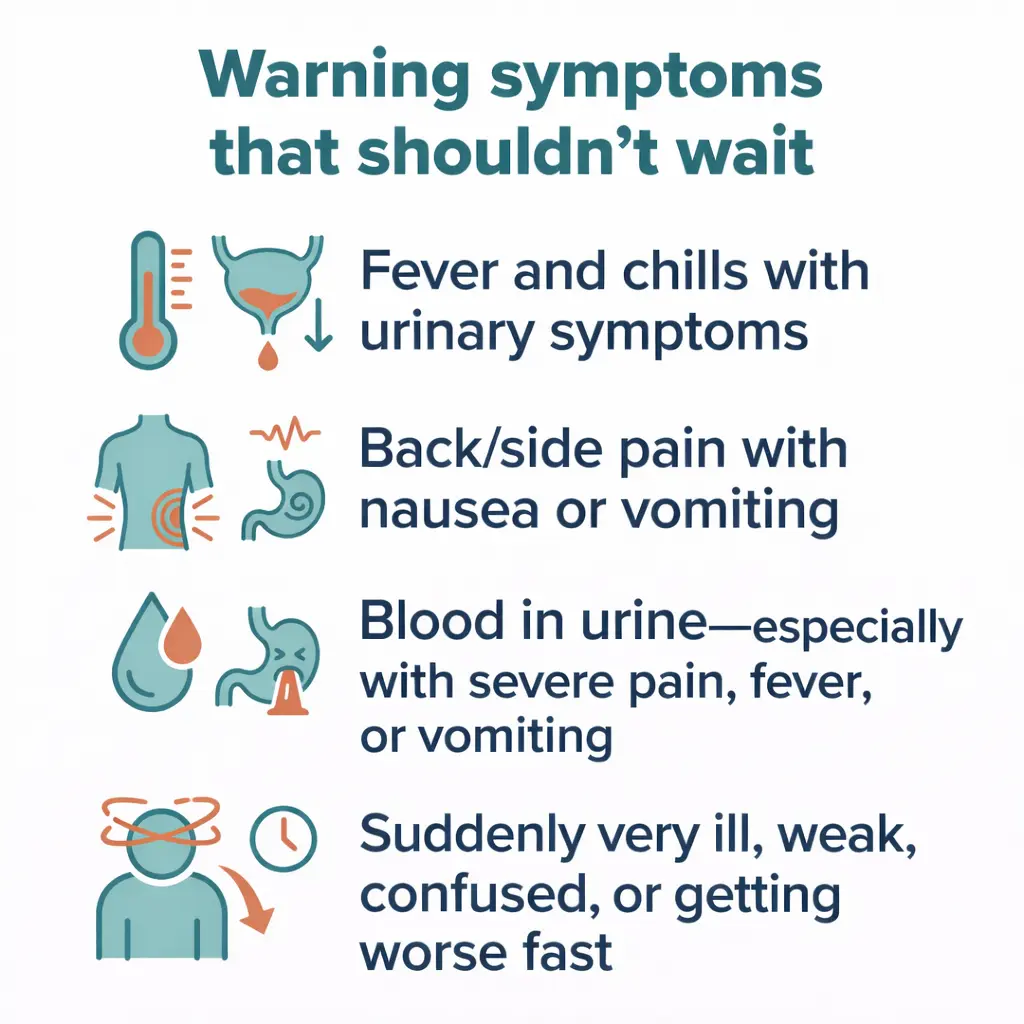
Seek urgent evaluation if you have kidney infection symptoms plus any of the following:
- Fever and chills with urinary symptoms
- Back/side pain with nausea or vomiting
- Bloody urine plus nausea/vomiting (Mayo specifically flags this as a reason to seek care right away)
- Feeling suddenly very ill, weak, confused, or “getting worse fast” (especially with fever)
If you’re in Houston and your symptoms fit the “warning symptoms that shouldn’t wait,” it’s reasonable to get evaluated—particularly if fever/chills, flank pain, or vomiting are involved.
Post Oak ER states it is open 24/7 with board-certified physicians available 24/7.
They also state they’re located off San Felipe St. near The Galleria and Uptown Park, and are easy to reach from areas like Uptown, the Energy Corridor, Westchase, Midtown, and the Heights.