
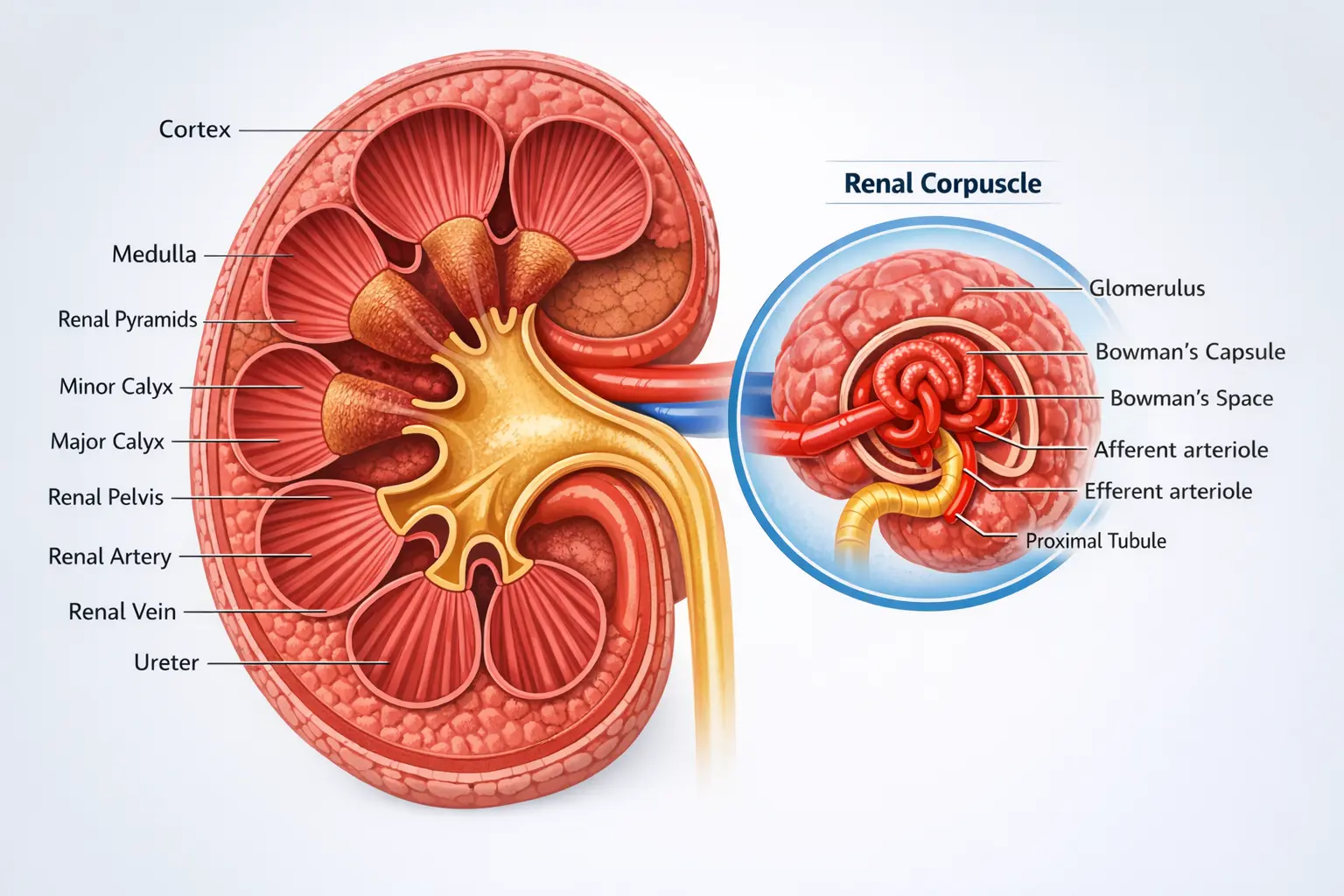
If you’re searching “how to lower creatinine levels”, you’re usually dealing with one of two situations:
- Your lab report showed high creatinine, and you want to know what to do next.
- Someone told you your kidneys may be under strain, and you want to protect them.
Here’s the most important clinical truth: creatinine is not a “detox number.” It’s a signal. Sometimes it rises from something temporary (like dehydration or intense exercise), and sometimes it rises because the kidneys aren’t filtering well. MedlinePlus explicitly notes that high creatinine doesn’t always mean a kidney problem and can be caused by dehydration, intense exercise, muscle injury/disorders, or even a diet high in meat.
This guide focuses on what’s medically sound—what can help, what’s hype, and when you should get evaluated urgently.
Educational only. Not medical advice or a diagnosis.
What is creatinine, and why does it go up?
Creatinine is a waste product from muscles that your kidneys normally remove. When kidney function slows down, creatinine can rise, and clinicians often use creatinine to estimate eGFR (kidney filtering function). The National Kidney Foundation explains that serum creatinine is part of how clinicians assess kidney health numbers such as creatinine and eGFR.
But again: a higher creatinine can also be temporary. MedlinePlus lists non-kidney causes like dehydration, intense exercise, muscle injury/disorders, and a meat-heavy diet.
First: don’t chase creatinine—confirm what it means
Before you try to “lower creatinine,” make sure you know what problem you’re solving.
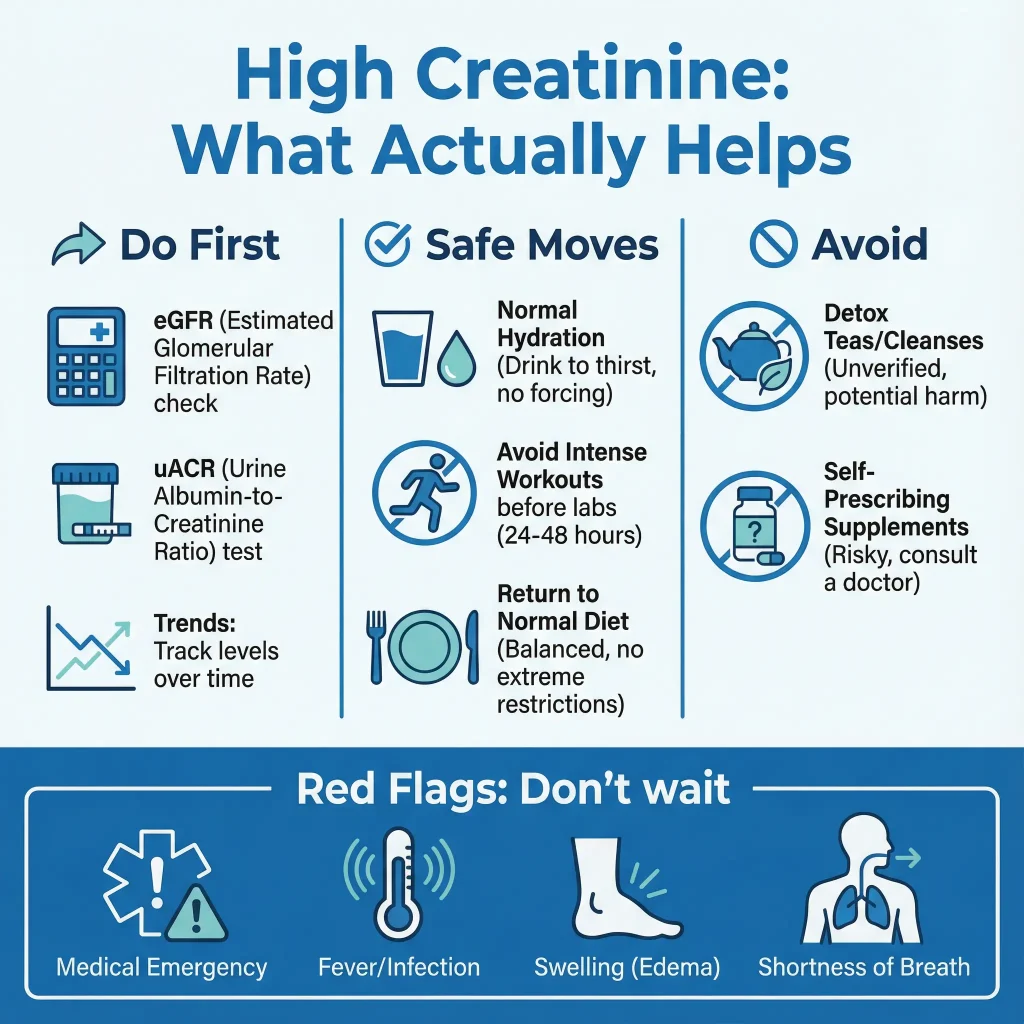
Ask for these two numbers
- eGFR (estimated filtering function)
- uACR (urine albumin-to-creatinine ratio, a protein-leak test)
Focus on trends
A single creatinine value can be misleading. What matters clinically is:
- Is it rising over time?
- Is eGFR falling over time?
- Is urine albumin increasing or improving?
How to lower creatinine safely
Fix reversible causes
If creatinine is elevated from something temporary, correcting the cause can normalize it.
MedlinePlus lists common reversible contributors such as:
- Dehydration
- Intense exercise
- Diet high in meat
Practical, safe moves:
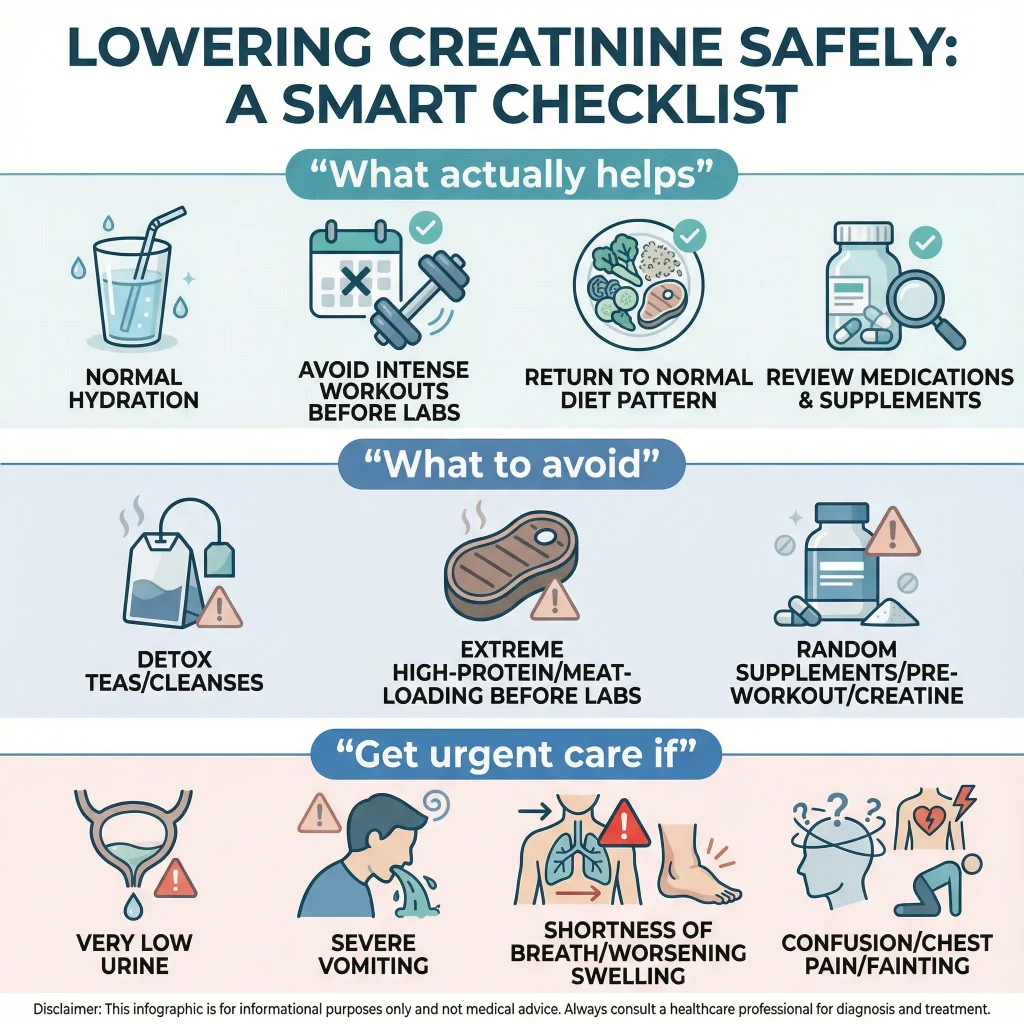
- Avoid unusually intense workouts right before repeat testing
- Return to your normal eating pattern (don’t “protein-load” before labs)
- Hydrate normally (unless your clinician has you on fluid restriction)
Lifestyle habits that can help (or hurt) your kidneys
Beyond what you eat and drink, your daily choices can have a big impact on kidney function and creatinine levels.
Exercise: Find a balanced approach
Regular physical activity supports heart and kidney health, but there’s a catch—very intense workouts (think marathon training or heavy weightlifting) can temporarily spike creatinine levels because of muscle breakdown. This doesn’t necessarily mean your kidneys are in trouble, but it can muddy the waters if you’re tracking your lab numbers.
What works best:
Aim for moderate activity—walking, light jogging, swimming, cycling, or yoga. These keep your heart and muscles healthy without overtaxing your system. If you’re due for lab tests, avoid unusually strenuous workouts for a couple of days beforehand.
Substances to avoid or limit
Certain habits can quietly put extra pressure on your kidneys:
- Smoking reduces blood flow to your kidneys, raises blood pressure, and can worsen diabetes or heart disease—conditions that all strain kidney function.
- Alcohol in moderation is generally okay (up to one drink per day for women, two for men), but excess drinking can impair your kidneys’ ability to filter waste, increase blood pressure, and cause dehydration. If you already have kidney concerns, consider limiting alcohol even further—or skipping it entirely.
- If you’re struggling to quit smoking or cut back on alcohol, talk to your healthcare provider for support. Addressing these habits, along with a balanced diet and staying well-hydrated, can go a long way in protecting your kidneys.
Aim for gentle, consistent movement
How you move matters. Strenuous exercise—think marathon training, powerlifting, or high-intensity interval bursts—can cause a temporary bump in creatinine, simply because heavy muscle use releases more of it into your bloodstream. That’s not dangerous in itself, but it may muddy the diagnostic waters if you’re retesting labs.
Instead, stick to moderate activity most days. Good options:
- Brisk walking around your neighborhood or in a park
- Gentle cycling (indoor or outside)
- Swimming or water aerobics
- Light jogging if you’re already active
- Yoga or stretching routines
These kinds of movement are kind to your kidneys, support heart health, and don’t overload your muscles. The American Heart Association recommends at least 150 minutes per week of moderate aerobic exercise for overall well-being—and that’s usually a safe target unless your provider suggests otherwise.
If you’re new to exercise or have other health conditions, check in with your clinician for personalized guidance.
Hydrate appropriately
If dehydration is part of the picture, normal hydration can help because dehydration can elevate creatinine.
If you have heart failure, advanced CKD, or fluid restrictions, hydration advice must be individualized.
For most adults, aiming for about six to eight glasses of water daily is a reasonable goal to help your kidneys flush out waste effectively and maintain healthy creatinine levels. Your individual needs, however, may vary depending on factors such as activity level, climate, and overall health.
To make staying hydrated easier, carry a water bottle with you and consider adding lemon or cucumber slices for variety. If plain water isn’t appealing, herbal teas or seltzer water are also good options. Don’t forget that foods like leafy greens, strawberries, and tomatoes contribute to your fluid intake as well. On the other hand, try to limit alcohol and sugary drinks, since they can promote dehydration. If you’re more active or the weather is hot, it’s wise to drink extra water to make up for what you lose.
While hydration is important, overdoing it can be counterproductive—especially if you have kidney or heart issues. Too much fluid can put unnecessary strain on the kidneys, particularly for those with chronic kidney conditions or fluid restrictions. In these cases, always consult your healthcare provider to determine the right amount of fluid for you, factoring in your kidney function, medications, and any other health concerns. Everyone’s needs are unique, so working with your care team is key to finding a safe, healthy balance.
Simple ways to keep hydration easy and appealing
You don’t have to chug plain water all day to stay well-hydrated (unless you’re into that sort of thing). For most people, small tweaks can help water go down easier and keep hydration on track:
- Carry a reusable water bottle for easy access—having it within arm’s reach is half the battle.
- Infuse your water with a squeeze of lemon, lime, or a few cucumber slices for flavor without the sugar rush. Herbal teas (hot or iced, unsweetened) can also mix things up.
- Munch on water-rich foods like cucumber, watermelon, tomatoes, berries, or oranges. These naturally boost fluid intake, especially if you’re not a big drinker (of water, that is).
- On hot days or after a workout, aim to drink a little extra to make up for what you sweat out.
- Skip or limit beverages that work against you—sugary sodas, energy drinks, and excess alcohol can all dehydrate.
Remember, the best “hydration hack” is whatever you’ll actually stick with.
Review medications and supplements
This matters more than most people realize. NIDDK notes that as kidney disease worsens, your kidneys may not filter medications as well, and some medicines can also harm your kidneys—so medication plans may need adjustment over time.
Bring a list of:
- prescriptions
- over-the-counter meds
- supplements (including “pre-workout,” creatine products, and herbal blends)
Special note on creatine supplements:
Creatine supplements can directly elevate creatinine levels, which may cause confusion when assessing your kidney health. If you’re tracking your kidney function or have concerns about your creatinine, it’s best to avoid creatine products and be up front with your healthcare provider about any use.
Having a complete list helps your clinician spot hidden contributors to high creatinine and tailor recommendations more precisely.
Avoid “detox” products and internet kidney cleanses
This is not a scare tactic—this is risk management.
The FDA has issued multiple public notifications warning consumers about products marketed for cleansing/detox/weight loss that contain hidden drug ingredients. For example, the FDA warned consumers not to use Toxin Discharged Tea due to a hidden drug ingredient.
If your goal is kidney health, “detox teas” are not a reliable or safe pathway.
Control blood pressure and diabetes
If kidney strain is chronic, the most meaningful “creatinine-lowering” strategy is preventing further decline.
NIDDK’s CKD management guidance emphasizes:
- Control blood pressure (described as the most important step for many people)
- Meet blood glucose goals if you have diabetes
- Monitor kidney tests over time
- Take medicines as prescribed
Use kidney-protective medications when appropriate
NIDDK notes that two classes of blood pressure medicines—ACE inhibitors and ARBs—may slow kidney disease and delay kidney failure, even in people without high blood pressure.
These must be clinician-managed because they can affect kidney labs and potassium.
Eat in a kidney-supportive way
NIDDK explains that for people with CKD, choosing healthy foods and beverages—and avoiding foods high in sodium, potassium, and phosphorus when appropriate—may prevent or delay CKD-related problems.
For creatinine specifically, remember: MedlinePlus notes that a diet high in meat can raise creatinine.
That doesn’t mean “never eat meat,” but it does mean diet can influence the number.
Plant-Based Protein: Smart Picks for Kidney Health
If you’re aiming to support your kidneys, shifting toward plant-based proteins can be a strategic move—particularly if you’re trying to manage creatinine levels with your clinician’s input.
Gentler alternatives to animal protein include:
- Lentils
- Chickpeas
- Black beans
- Edamame
- Tofu
These sources provide high-quality protein without the same kidney stress that comes from heavier meat-centric patterns. They also bring along fiber, which nourishes gut health—another plus for people keeping a close eye on kidney labs.
A few practical tips:
- Prioritize variety: Rotating among beans, lentils, and soy products (like tofu and tempeh) can help keep meals balanced and nutrient-rich.
- Mind your portions: Even plant protein counts toward your total, so stick with the serving sizes your clinician or dietitian recommends.
- Pair with produce and whole grains: Combining these proteins with vegetables and grains (think: a lentil salad with quinoa and spinach) can help optimize nutrition without overdoing it on protein.
Remember, you don’t need to go “zero meat” unless specifically advised. The key is moderation, balance, and making choices that reduce kidney strain—while still keeping meals enjoyable and satisfying.
Foods to lower creatinine
When people search “foods to lower creatinine”, what they usually need is:
- less kidney strain
- better blood pressure and blood sugar control
- less sodium (fluid retention and BP load)
- a plan aligned with their labs
A practical, evidence-aligned approach is:
- limit excess sodium (supporting BP goals)
- avoid extreme high-protein/meat-heavy patterns before labs
- work with a clinician/dietitian if potassium/phosphorus restrictions apply
Beyond these basics, some food groups tend to support kidney health and may help keep creatinine in check:
Focus on Fiber and Plant-Based Foods
- Fiber-rich vegetables: Non-starchy options like cauliflower, broccoli, bell peppers, and leafy greens add fiber, which supports digestion and helps your body eliminate waste more efficiently—without taxing your kidneys.
- Whole grains: Quinoa, brown rice, and oats deliver energy and fiber while typically being lower in phosphorus than highly refined grains.
- Berries and antioxidant-rich fruits: Blueberries, strawberries, and cranberries offer antioxidants that may help reduce inflammation and protect kidney cells from damage.
- Plant-based proteins: Legumes, lentils, and tofu provide protein with less waste production compared to animal proteins, making them a kidney-friendly choice—especially if you’re aiming to avoid high-protein intake before labs.
- Healthy fats: Foods like olive oil, avocado, and a handful of nuts (if your labs allow) can supply essential fats for heart health, without adding to your kidneys’ workload.
Pairing these food choices with your personalized lab results—and guidance from your care team—forms the foundation for a kidney-friendly eating plan that actually works for you.
What about the BUN/creatinine ratio?
Many people also search “how to lower BUN creatinine ratio.” The safe way to think about it is:
- BUN and creatinine are both influenced by hydration, diet, and kidney function
- chasing a ratio without understanding the cause often leads people into unsafe “detox” strategies
The better plan is to ask:
- Am I dehydrated?
- Are my kidney tests trending worse over time?
- Do I need a kidney-focused workup (eGFR + uACR + repeat labs)?
Warning symptoms that shouldn’t wait
If creatinine is elevated and you also have concerning symptoms, don’t self-manage at home.
Consider urgent evaluation if you have:
- little to no urination compared to your baseline
- severe vomiting or inability to keep fluids down
- shortness of breath or rapidly worsening swelling
- confusion, chest pain, fainting, or severe weakness
If you’re in Houston and you’re worried about high creatinine plus worsening symptoms, it’s reasonable to be evaluated sooner rather than later.
Post Oak ER states it is open 24/7, with board-certified emergency physicians and advanced on-site diagnostics including CT, X-ray, and laboratory services.