

Overview
Choosing where to seek medical care can affect how quickly you are seen and what services are available. The differences between an emergency room (ER), urgent care, and a hospital are based on the severity of medical conditions, the resources available, and how care is delivered.
All information below reflects only high-quality, verified medical evidence.
Emergency Room
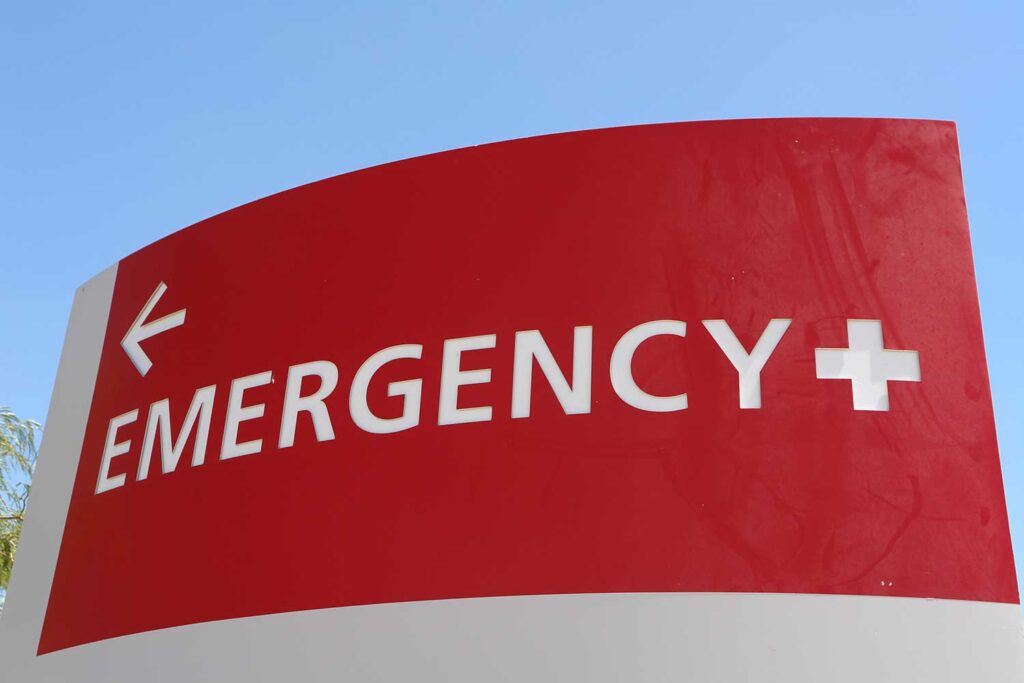
An emergency room—also called an emergency department—is designed to evaluate and treat serious or potentially life-threatening conditions.
characteristics:
- Open 24 hours a day, 7 days a week
- Provides rapid evaluation, stabilization, and advanced diagnostic testing
- Staffed by clinicians trained in emergency medicine
- Uses triage, meaning patients with the most severe conditions are treated first, regardless of arrival time
Urgent Care
Urgent care centers treat non-life-threatening illnesses and injuries that still require prompt medical attention.
Verified characteristics:
- Extended hours, often including evenings and weekends
- Treats common acute illnesses and minor injuries
- Offers basic diagnostic services, which may vary by location
- Not intended for severe symptoms or medical emergencies
- May refer patients to an ER if a condition is more serious than expected

What a Hospital Is (and How the ER Fits In)
A hospital is a healthcare facility that may provide a broad range of services.
High-quality evidence consistently supports the following:
- Many hospitals include an emergency room
- The ER functions as a department within the hospital system focused on emergency care
Other commonly stated descriptions of hospital services vary by facility and are not uniformly supported by high-quality evidence.
Key Differences
|
Care Setting |
Primary Purpose |
Availability |
Level of Care |
|
Emergency Room (ER) |
Life-threatening or severe conditions |
24/7 |
Immediate, advanced medical care |
|
Urgent Care |
Non-life-threatening but time-sensitive issues |
Extended hours |
Basic diagnostics and treatment |
|
Hospital |
Broad healthcare system |
Varies by service |
Includes ER and other departments |
Why Choosing the Right Setting Matters
Verified evidence shows that:
- ERs prioritize patients by severity, so non-emergency conditions may involve longer wait times
- Using urgent care for appropriate conditions allows ERs to focus on true emergencies
- Patients with less severe conditions may receive faster care outside the ER
When to Seek Medical Care
Go to the ER immediately for:
- Severe or sudden symptoms
- Difficulty breathing
- Loss of consciousness
- Serious injury or trauma
- Symptoms that are rapidly worsening
If you are unsure whether symptoms are severe, seeking emergency care is considered the safer option.
Consider urgent care when:
- The condition is not life-threatening
- Medical evaluation is needed promptly
- The issue cannot wait for a routine primary care appointment
Urgent care centers may redirect patients to an ER if a condition is more serious than expected.
Primary Care vs Urgent Care vs ER
Verified evidence indicates:
- Primary care focuses on routine health concerns, preventive care, and long-term management
- Urgent care addresses immediate, short-term medical needs
- ERs handle emergencies and critical conditions
Primary care offers continuity of care that urgent care centers and ERs do not typically provide.
Freestanding ER vs Hospital-Based ER
Evidence supports the following distinctions:
- Freestanding ERs operate separately from a hospital campus but provide emergency care
- Hospital-based ERs are connected to inpatient hospital services
- Freestanding ERs may transfer patients if hospital admission is required
- Capabilities and processes vary by location
Frequently Asked Questions
What is an ER?
An ER is a medical facility that treats serious or life-threatening conditions and is open 24/7.
What is the ER in a hospital?
The ER is a department within a hospital dedicated to emergency evaluation and treatment.
Is urgent care and the emergency room the same?
No. Urgent care treats non-life-threatening conditions, while ERs treat medical emergencies.
What is the difference between urgent care and the ER?
The difference is primarily the severity of conditions treated and the level of medical resources available.
Are hospitals open 24/7?
There is no high-quality evidence supporting this as a universal rule. While ERs operate 24/7, other hospital services may have limited hours.
Should I go to urgent care or the ER?
If symptoms are severe or potentially life-threatening, go to the ER. For less serious but time-sensitive issues, urgent care may be appropriate.
APA References List
Agency for Healthcare Research and Quality. (n.d.). Prevention and chronic care. https://www.ahrq.gov/prevention/chronic-care/index.html
American College of Emergency Physicians. (2015, November 2). Freestanding emergency departments and urgent care centers (Information paper) [PDF]. https://www.acep.org/siteassets/uploads/uploaded-files/acep/clinical-and-practice-management/resources/administration/fsed-and-ucs_info-paper_final_110215.pdf
Centers for Disease Control and Prevention. (n.d.). FastStats: Emergency department visits. https://www.cdc.gov/nchs/fastats/emergency-department.htm
Centers for Medicare & Medicaid Services. (2017, September 6). SC17-44: “Primarily engaged” guidance [PDF]. https://www.cms.gov/Medicare/Provider-Enrollment-and-Certification/SurveyCertificationGenInfo/Downloads/Survey-and-Cert-Letter-17-44.pdf
Children’s Hospital Colorado. (n.d.). Urgent care vs. emergency room: How to choose. https://www.childrenscolorado.org/urgent-care-emergency/urgent-vs-emergency-care/
Cigna Healthcare. (n.d.). Urgent care vs. the emergency room. https://www.cigna.com/knowledge-center/urgent-care-vs-emergency-room
Colleton Medical Center (HCA Healthcare). (2025, March 6). Deciding between the emergency room (ER) and urgent care. https://www.hcahealthcarecolleton.com/healthy-living/blog/deciding-between-the-emergency-room-er-and-urgent-care-colleton-medical
HCA Florida Healthcare. (2025, June 5). What you should know about freestanding emergency rooms. https://www.hcafloridahealthcare.com/healthy-living/blog/what-you-should-know-about-freestanding-emergency-rooms-2023
MedlinePlus. (2023, July 8). Choosing a primary care provider. National Library of Medicine. https://medlineplus.gov/ency/article/001939.htm
MedlinePlus. (2024, September 4). When to use the emergency room – adult. National Library of Medicine. https://medlineplus.gov/ency/patientinstructions/000593.htm
MedlinePlus. (2025, January 8). Recognizing medical emergencies. National Library of Medicine. https://medlineplus.gov/ency/article/001927.htm
MedlinePlus. (n.d.). Types of health care providers. National Library of Medicine. https://medlineplus.gov/ency/article/001933.htm
MedPAC. (2017, June). Stand-alone emergency departments (Chapter 8) [PDF]. https://www.medpac.gov/wp-content/uploads/import_data/scrape_files/docs/default-source/reports/jun17_ch8.pdf
North Carolina Medical Board. (n.d.). Urgent care vs. ERs (Smart Patient Toolkit). https://www.ncmedboard.org/resources-information/consumer-resources/smart-patient-toolkit/urgent-care-vs-ers
UChicago Medicine. (2023, December 1). Urgent care vs emergency room: What’s the difference? https://www.uchicagomedicine.org/forefront/health-and-wellness-articles/2023/december/when-to-go-to-the-emergency-room-vs-an-urgent-care-clinic
Yancey, C. C., & Thornton, L. (2023). Emergency department triage. In StatPearls [NCBI Bookshelf]. National Center for Biotechnology Information. https://www.ncbi.nlm.nih.gov/books/NBK557583/