
Stress and anxiety can affect the heart, but that does not mean every stressful day causes heart disease. Short-term stress can make your heart beat faster, raise your blood pressure for a while, and cause symptoms like chest tightness, palpitations, sweating, nausea, or shortness of breath. Chronic stress may also add to heart risk over time, especially when it affects sleep, blood pressure, eating habits, smoking, alcohol use, or activity level.
For patients in Houston, the key is balance: anxiety symptoms are real, but chest pain or breathing trouble should not automatically be dismissed as “just stress.” If symptoms feel severe, new, sudden, or different from your usual anxiety pattern, it is safer to get checked.
Key Takeaways
- Stress and anxiety can cause real physical symptoms, including racing heartbeat, chest tightness, sweating, nausea, dizziness, and shortness of breath.
- Short-term stress can temporarily raise heart rate and blood pressure.
- Chronic stress may lead to high blood pressure, which can increase the risk for heart attack and stroke.
- Anxiety and panic symptoms can overlap with heart symptoms, so they are not always easy to separate at home.
- Chest pain, fainting, severe shortness of breath, sudden weakness, or stroke-like symptoms should not be blamed on anxiety without evaluation.
- People with high blood pressure, diabetes, high cholesterol, smoking history, or known heart disease should be more careful with new chest or breathing symptoms.
Can Stress and Anxiety Affect the Heart?
Yes. Stress and anxiety can affect the heart because the body reacts to stress with a “fight or flight” response. During that response, your body may release stress hormones that make your heart beat faster, speed up your breathing, and raise your blood pressure for a short time.
That response can be normal in short bursts. The problem is when stress stays high for long periods, happens often, or leads to unhealthy coping habits. Over time, that pattern may affect blood pressure, sleep, food choices, exercise, smoking, alcohol use, and medication routines. Those changes can all influence heart health.
What Stress Can Feel Like in the Body
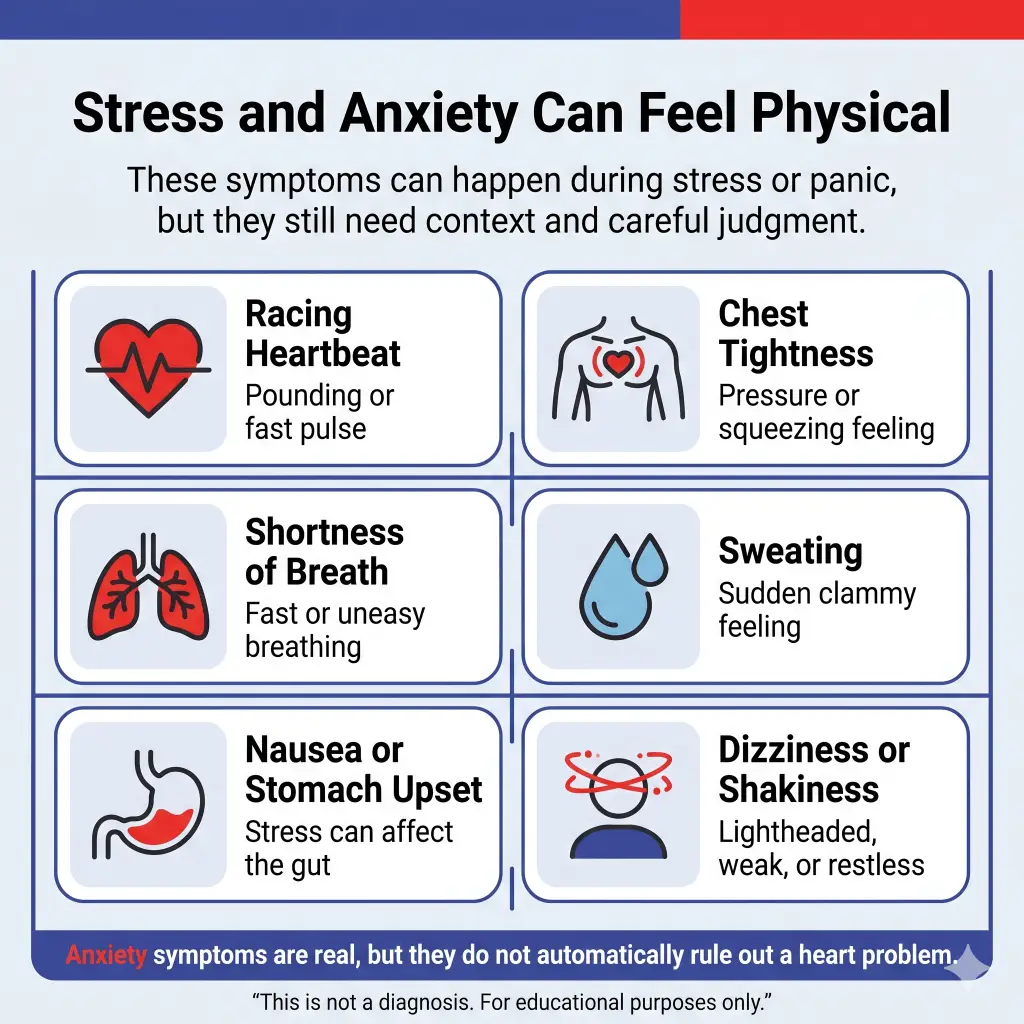
Stress does not only affect your thoughts. It can show up physically. Some people notice a racing heartbeat, chest tightness, faster breathing, sweating, stomach upset, headaches, muscle tension, poor sleep, fatigue, or feeling shaky and restless. Mayo Clinic notes that stress symptoms can affect the body, mood, and behavior, including chest pain, fatigue, sleep problems, upset stomach, and muscle tension.
These symptoms can feel frightening, especially when they involve the chest or breathing. Still, stress symptoms alone do not prove something dangerous is happening. The bigger question is whether the symptoms are new, severe, persistent, or paired with heart warning signs.
Can Anxiety Feel Like a Heart Problem?
Yes. Anxiety and panic can feel very similar to heart symptoms. The National Institute of Mental Health lists panic attack symptoms such as pounding or racing heart, sweating, trembling, difficulty breathing, weakness or dizziness, tingling or numb hands, chest pain, stomach pain, and nausea.
This is why people often ask whether chest pain is anxiety or the heart. The honest answer is that it can be hard to tell at home. Panic symptoms are real physical symptoms, not imaginary ones. But heart symptoms can overlap with them, so it is not always safe to assume anxiety is the cause, especially if the symptoms feel different from your usual pattern.
How Chronic Stress May Raise Heart Risk
Chronic stress is different from a short stressful moment. It means the body stays under pressure for days, weeks, or longer. The American Heart Association says chronic stress may lead to high blood pressure, which can increase the risk for heart attack and stroke.
Stress can also affect the heart indirectly. People under long-term stress may sleep poorly, move less, smoke more, drink more alcohol, overeat, skip medications, or delay medical care. The CDC notes that people experiencing depression, anxiety, stress, and PTSD over a long period may have increased heart rate and blood pressure, reduced blood flow to the heart, and higher cortisol levels.
Stress, Anxiety, and Blood Pressure
Stress can raise blood pressure temporarily. Mayo Clinic explains that stress hormones can make the heart beat faster and narrow blood vessels, which increases blood pressure for a time.
This does not mean every stressful event causes long-term high blood pressure. But if stress leads to poor sleep, smoking, alcohol use, overeating, inactivity, or missed medications, it can make blood pressure harder to control. For people who already have hypertension, stress management is not a replacement for medical care, but it can be part of a safer overall plan.
When Symptoms Should Not Be Blamed on Anxiety
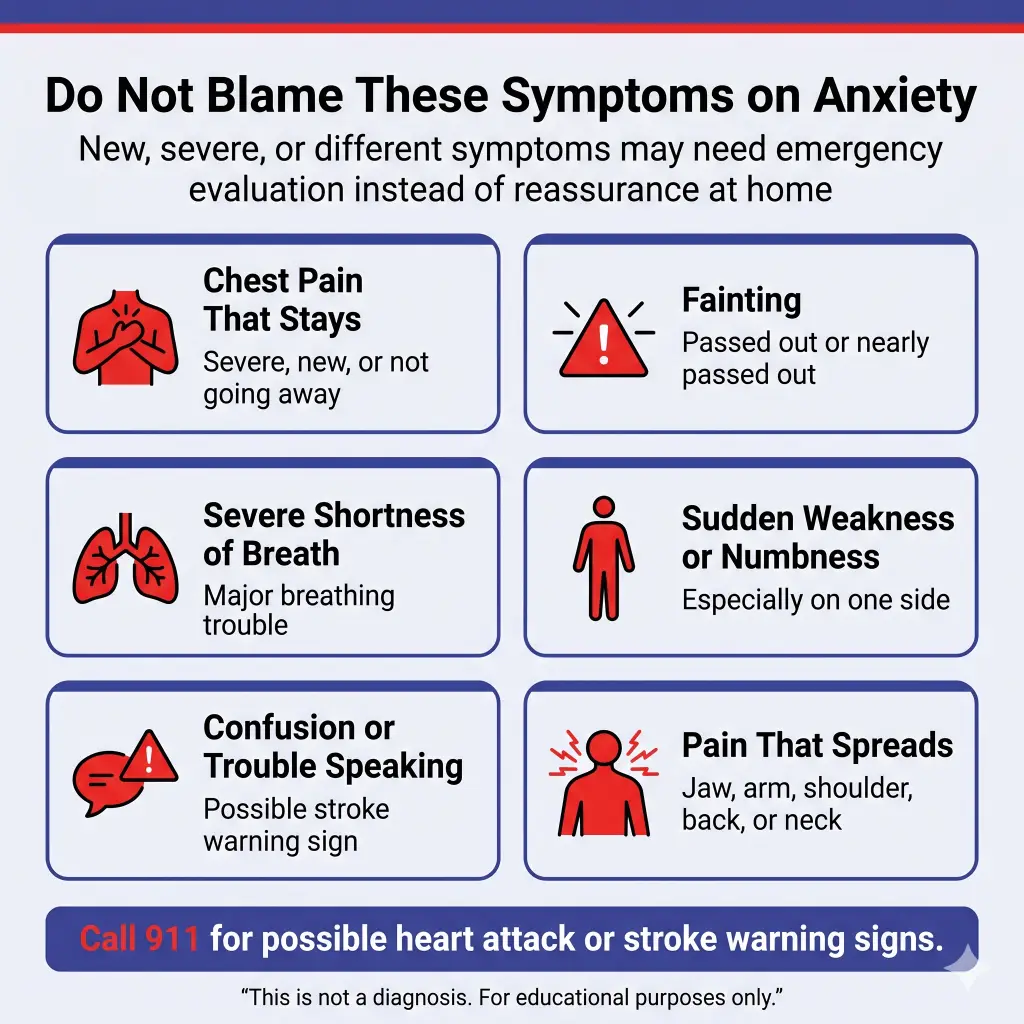
Do not assume symptoms are “just anxiety” if they are new, severe, or clearly different from what you have felt before. Chest pressure that does not go away, pain spreading to the arm, jaw, shoulder, back, or neck, fainting, severe shortness of breath, sudden weakness, confusion, trouble speaking, or one-sided numbness should be treated seriously.
This is especially true if symptoms happen during activity, wake you from sleep, or come with sweating, nausea, pale skin, or a feeling that something is very wrong. Anxiety can cause intense symptoms, but it should not become a reason to ignore possible heart or stroke warning signs.
Who Should Be More Careful With Stress-Related Heart Symptoms?
Some people should have a lower threshold for getting checked. That includes people with known heart disease, a prior heart attack or stent, high blood pressure, diabetes, high cholesterol, smoking history, older age, or a strong family history of early heart disease.
Risk factors matter because the same symptom can mean different things in different people. A brief stress-related palpitation in a young healthy person is not the same situation as new chest pressure in someone with diabetes, high blood pressure, and prior heart disease.
Can Stress Trigger a Serious Heart Event?
For most people, everyday stress symptoms are not the same thing as a heart attack. But severe emotional or physical stress can sometimes be connected with serious heart symptoms. One example is broken heart syndrome, also called stress cardiomyopathy. Mayo Clinic says symptoms of broken heart syndrome can mimic those of a heart attack and may include chest pain and shortness of breath.
This is why chest pain after a stressful event should still be taken seriously. You do not need to know whether it is anxiety, broken heart syndrome, or a heart attack before getting urgent care. If symptoms are persistent or severe, the safest step is evaluation.
What Doctors May Check
When symptoms could be anxiety or a heart problem, doctors usually look at the full picture. They may ask when symptoms started, what triggered them, whether they happened at rest or during activity, how long they lasted, and whether they came with chest pressure, fainting, sweating, nausea, or shortness of breath.
Depending on the situation, evaluation may include blood pressure, pulse, oxygen level, an ECG or EKG, heart monitoring, and blood tests if heart injury is a concern. Anxiety or panic history may also matter, but urgent physical causes should be considered when symptoms are serious.
When to Go to the ER or Call 911
Go to the ER or call 911 right away for chest pain or pressure that is severe, new, or not going away; trouble breathing; fainting; sudden weakness or numbness; confusion; trouble speaking; pain spreading to the jaw, arm, shoulder, back, or neck; symptoms that feel like a heart attack or stroke; or symptoms that feel different from past anxiety or panic episodes. The American Heart Association says, If these warning signs are present, call 911.
If you are in Houston and stress or anxiety symptoms come with chest pain, breathing trouble, fainting, sudden weakness, or other possible heart warning signs, Post Oak ER is open 24/7 for prompt emergency evaluation. Post Oak ER should not be viewed as anxiety treatment, but emergency evaluation matters when symptoms could be heart-related or medically urgent.
How to Support Your Heart While Managing Stress
Stress management can support heart health, especially when it helps you sleep better, move more, avoid smoking, reduce alcohol misuse, and stay consistent with medications. Helpful options may include walking, breathing exercises, counseling, prayer, meditation, better sleep routines, social support, and limiting stimulants like energy drinks if they worsen palpitations.
The American Heart Association notes that slow, deep breathing can help create a sense of calm and may help lower blood pressure. It also points to stress-management strategies such as physical activity, meditation, deep breathing, and yoga.
Stress and Heart Symptoms at a Glance
- Stress can: raise heart rate, increase blood pressure temporarily, and cause chest tightness or palpitations.
- Anxiety can: cause symptoms that feel like heart problems.
- Chronic stress can: add to heart risk through blood pressure, sleep, habits, and coping patterns.
- Do not wait: if symptoms are severe, new, sudden, or different from your usual pattern.
- Get help fast: for chest pain, fainting, severe shortness of breath, or stroke-like symptoms.
Stress and anxiety can affect the heart, but they should not become a catch-all explanation for every chest symptom. The safest approach is to manage stress seriously, know your heart risk factors, and get emergency care when symptoms look unusual or severe.
Frequently Asked Questions
Can stress cause heart problems?
Stress can affect the heart by raising heart rate and blood pressure temporarily. Chronic stress may also contribute to heart risk over time, especially when it affects blood pressure, sleep, habits, and coping patterns.
Can anxiety cause chest pain?
Yes. Anxiety and panic attacks can cause chest pain or tightness. But chest pain can also come from heart or lung problems, so new, severe, or persistent chest pain should not be dismissed as anxiety.
Can anxiety cause heart palpitations?
Yes. Anxiety can cause a pounding, racing, or fluttering heartbeat. If palpitations come with chest pain, fainting, severe shortness of breath, or severe dizziness, they need urgent evaluation.
How do I know if it is anxiety or a heart problem?
You may not be able to tell for sure at home. Symptoms are more concerning when they are new, severe, happen with activity, do not go away, or come with chest pressure, fainting, shortness of breath, sweating, nausea, or pain spreading to the jaw, arm, back, or neck.
Can chronic stress raise blood pressure?
Stress can raise blood pressure for a time, and chronic stress may make blood pressure harder to control through sleep disruption, unhealthy coping habits, and ongoing strain.
Can stress cause a heart attack?
Stress alone is not the only cause of heart attacks, but chronic stress may contribute to risk, and severe stress can sometimes be linked with serious heart symptoms. Chest pain after stress should still be taken seriously.
When should I go to the ER for anxiety-like chest symptoms?
Go to the ER or call 911 if chest symptoms are severe, new, not going away, or come with trouble breathing, fainting, sudden weakness, confusion, sweating, nausea, or pain spreading to the jaw, arm, shoulder, back, or neck.
What can I do to protect my heart if I am often stressed?
Focus on sleep, regular movement, not smoking, limiting alcohol, managing blood pressure and cholesterol, taking prescribed medicines, and getting support for anxiety or chronic stress. Breathing exercises, counseling, prayer, meditation, and social support may also help.