
You can get a good idea of your heart health by looking at how you feel, how well you handle daily activity, your family history, and key numbers like blood pressure, cholesterol, and blood sugar. But you cannot know everything about your heart just by how you feel. Some heart risks stay quiet for years before symptoms show up.
For patients in Houston, this matters because many people feel fine even when their blood pressure, cholesterol, or blood sugar is moving in the wrong direction. A healthy heart is not judged by one symptom, one online checklist, or one test. It is the full picture: symptoms, risk factors, lifestyle, screening, and medical evaluation when something feels wrong.
Key Takeaways
- Feeling normal does not always mean your heart risk is low.
- Important heart-health numbers include blood pressure, cholesterol, blood sugar, and weight.
- Good exercise tolerance can be reassuring, but it is not a perfect heart-health test.
- High blood pressure, high cholesterol, smoking, diabetes, obesity, physical inactivity, and family history can raise heart risk.
- Some heart risks are silent, so routine screening matters.
- Chest pain, severe shortness of breath, fainting, sudden weakness, or stroke-like symptoms should not wait.
- A healthy heart is best judged by the full picture, not by one number or one symptom.
What Does a Healthy Heart Usually Look Like?
A healthy heart usually supports your normal daily life without chest pressure, major breathlessness, fainting, or sudden drops in stamina. You should be able to walk, climb stairs, do usual chores, and recover from normal activity without symptoms that feel alarming or out of proportion.
That said, this is not a perfect self-test. Some people with heart risk factors still feel completely normal. Others may have vague symptoms that are easy to blame on age, stress, poor sleep, or being out of shape. That is why symptoms matter, but they are only one part of the picture.
Why Symptoms Alone Do Not Prove Your Heart Is Healthy
Symptoms are useful, but they do not tell the whole story. High blood pressure and high cholesterol can be present without causing obvious symptoms. Blood sugar problems can also develop gradually and quietly. A person may feel fine while still carrying risks that increase the chance of heart disease later.
This is why regular checkups and basic testing matter. CDC prevention guidance says healthy habits can help keep blood pressure, cholesterol, and blood sugar levels in a healthier range and lower the risk of heart disease and heart attack.
Key Numbers That Help Show Heart Health
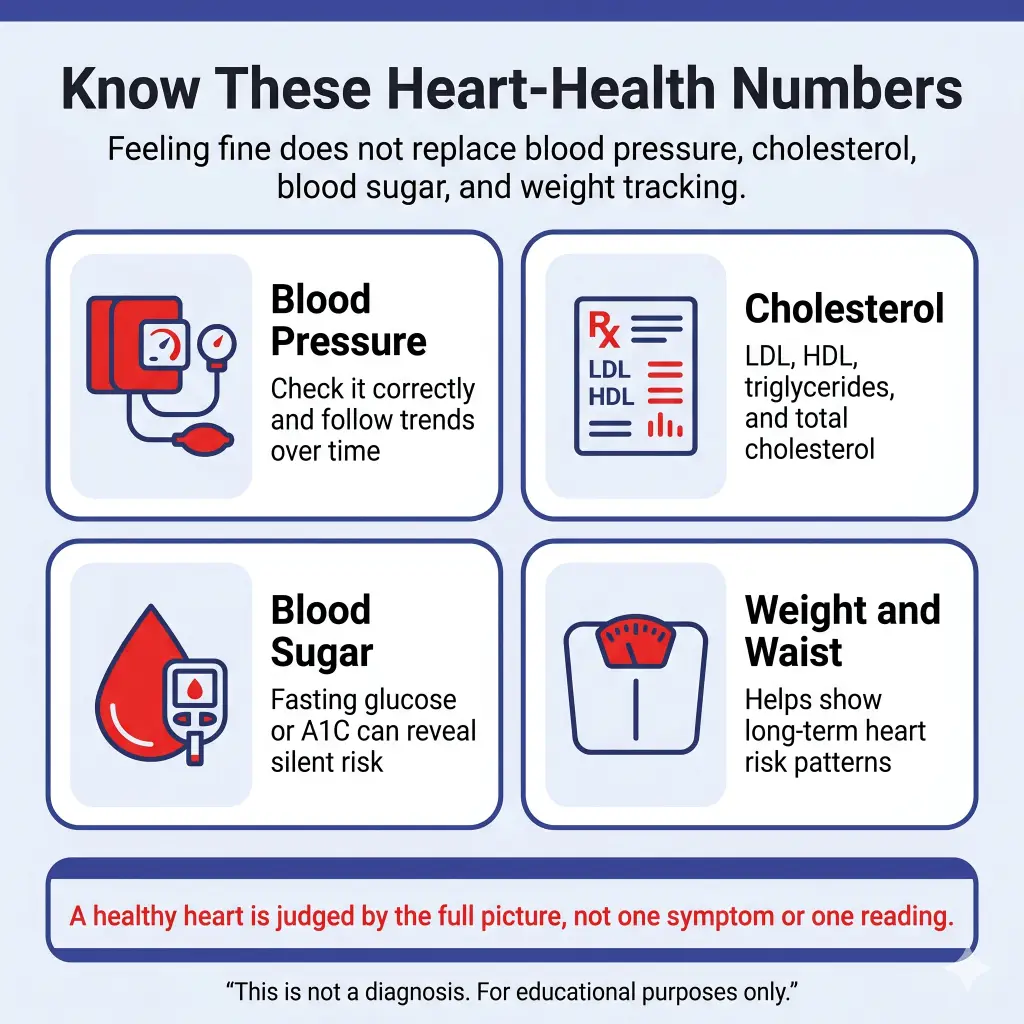
If you want to understand your heart health, start by knowing your numbers. The most important ones usually include blood pressure, cholesterol, blood sugar, weight, and sometimes waist measurement. These numbers help show risk that may not be obvious from symptoms alone.
Cholesterol testing usually looks at LDL, HDL, triglycerides, and total cholesterol. Blood sugar may be checked with fasting glucose or A1C. Blood pressure should be measured correctly and followed over time, not judged from one rushed reading. Together, these numbers give a clearer view of heart and blood vessel risk.
The American Heart Association’s Life’s Essential 8 also focuses on diet, physical activity, nicotine exposure, sleep, weight, cholesterol, blood sugar, and blood pressure as key parts of cardiovascular health.
Daily Signs That May Be Reassuring
Some everyday signs can be reassuring. For example, it is a good sign if you can handle normal activity without chest pressure, unusual shortness of breath, fainting, or a sudden decline in stamina. It is also reassuring if your breathing feels appropriate for the activity and you recover normally after movement.
Other helpful signs include no new leg swelling, no unexplained racing heartbeat, no sudden dizziness, and no chest discomfort during walking or climbing stairs. These signs do not guarantee perfect heart health, but they can suggest that your heart is handling daily demands reasonably well.
Warning Signs That Should Not Be Ignored
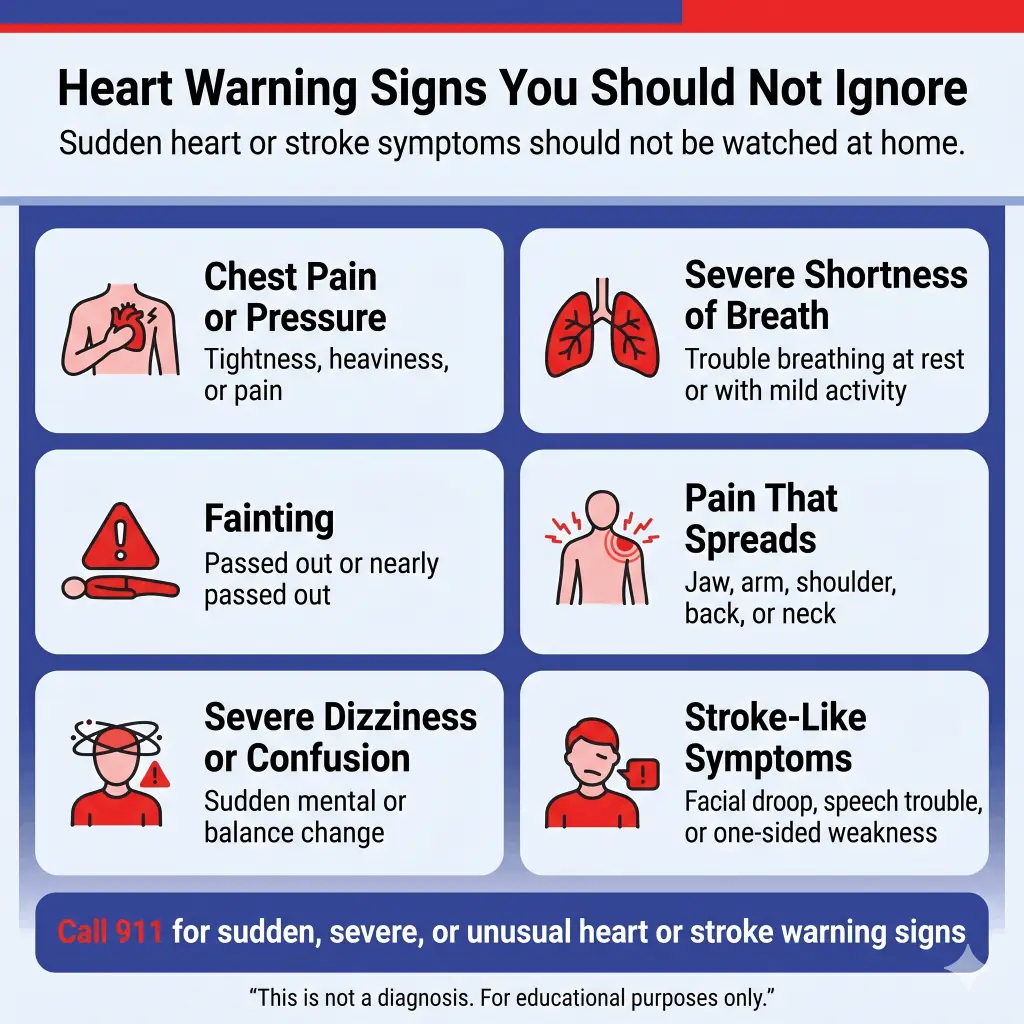
Certain symptoms deserve quick attention. These include chest pain or pressure, shortness of breath at rest or with mild activity, fainting, severe dizziness, pain spreading to the jaw, arm, shoulder, back, or neck, and sudden weakness or confusion.
Stroke-like symptoms are also urgent. Sudden facial drooping, trouble speaking, one-sided weakness or numbness, sudden vision problems, or sudden confusion should never be watched at home. The American Heart Association says heart attack and stroke warning signs should prompt calling 911.
Risk Factors That Can Affect Heart Health
Heart health is shaped by more than symptoms. Some major risk factors include high blood pressure, high cholesterol, diabetes, smoking, obesity, physical inactivity, unhealthy diet, and family history. CDC identifies high blood pressure, high cholesterol, and smoking as key risk factors for heart disease.
Age and family history matter too. You cannot change those, but you can still take action on the risks you can control. That includes not smoking, staying active, improving food choices, managing blood pressure, treating cholesterol when needed, controlling diabetes, and keeping regular medical follow-up.
Tests Doctors May Use to Check Heart Health
Doctors choose heart tests based on your symptoms, age, risk factors, and medical history. Basic checks may include blood pressure, cholesterol testing, blood sugar testing, and a physical exam. If symptoms or risk factors suggest a closer look, additional testing may be recommended.
Doctors may use an ECG, stress test, echocardiogram, or cardiac CT when symptoms or risk factors suggest a closer look. NHLBI lists common heart tests such as ECG, stress tests, cardiac CT, cardiac MRI, and coronary calcium scans, depending on the situation.
A coronary calcium scan is one example of a test used in selected patients to look for calcium buildup in the coronary arteries. It is not needed for everyone, but it may help with risk assessment when a clinician believes it fits the patient’s situation.
When to Get Screened Even If You Feel Fine
You may need screening even if you do not have symptoms, especially if you have high blood pressure, high cholesterol, diabetes, smoking history, excess weight, or a strong family history of early heart disease. Screening is also important if your exercise tolerance is changing or if you have not checked your blood pressure, cholesterol, or blood sugar recently.
Feeling fine is helpful, but it is not enough by itself. The safest approach is to combine how you feel with objective numbers and your personal risk profile. If your doctor recommends screening based on your age, family history, or medical history, it is worth taking seriously.
When to Go to the ER or Call 911
Go to the ER or call 911 right away for chest pain or pressure, severe shortness of breath, fainting, sudden weakness or numbness, confusion, trouble speaking, facial drooping, sudden vision changes, or pain spreading to the jaw, arm, shoulder, back, or neck. These symptoms should not be treated like routine heart-health questions.
If you are in Houston and you develop chest pain, breathing trouble, fainting, sudden weakness, or other possible heart or stroke warning signs, Post Oak ER is open 24/7 for prompt emergency evaluation. The American Heart Association’s emergency guidance is direct: If these warning signs are present, call 911.
How to Support a Healthier Heart Over Time
A healthier heart usually comes from steady habits, not one dramatic change. Regular physical activity, not smoking, and controlling blood pressure, cholesterol, and blood sugar can lower heart disease risk. CDC says physical activity can help maintain a healthy weight and lower blood pressure, blood cholesterol, and blood sugar levels.
Food choices matter too. A heart-supportive pattern usually means more vegetables, fruits, whole grains, lean proteins, and healthy fats, with less frequent fried food, processed food, excess salt, and sugary drinks. Sleep, stress management, medication adherence, and follow-up appointments also play a role.
Heart health is not judged by one feeling, one number, or one online checklist. The better approach is to know your numbers, understand your risk factors, watch for warning symptoms, and get medical help quickly when something feels serious or unusual.
Frequently Asked Questions
How can I tell if my heart is healthy?
You can look at symptoms, exercise tolerance, blood pressure, cholesterol, blood sugar, weight, family history, and lifestyle habits. But the best answer usually comes from combining how you feel with routine screening and medical guidance.
Can your heart be unhealthy even if you feel fine?
Yes. Some risks, including high blood pressure and high cholesterol, may not cause obvious symptoms. That is why screening and knowing your numbers matter.
What numbers should I know for heart health?
Important numbers include blood pressure, LDL cholesterol, HDL cholesterol, triglycerides, total cholesterol, blood sugar or A1C, and weight. Your doctor may also discuss waist measurement or other risk markers depending on your situation.
What symptoms may mean my heart is not healthy?
Concerning symptoms include chest pain or pressure, shortness of breath, fainting, severe dizziness, sudden weakness, unexplained swelling, or pain spreading to the jaw, arm, shoulder, back, or neck.
What tests check if your heart is healthy?
Common checks may include blood pressure measurement, cholesterol testing, blood sugar testing, ECG, stress testing, echocardiogram, or selected imaging tests. The right test depends on symptoms, risk factors, and medical history.
How often should I check my blood pressure and cholesterol?
The right schedule depends on your age, risk factors, and past results. People with high blood pressure, high cholesterol, diabetes, smoking history, or strong family history may need more regular checks than someone at lower risk.
Does good exercise tolerance mean my heart is healthy?
Good exercise tolerance can be reassuring, but it does not prove that every heart risk is low. Some risk factors are silent, so routine screening still matters.
When should I go to the ER for heart symptoms?
Go to the ER or call 911 for chest pain, severe shortness of breath, fainting, sudden weakness or numbness, confusion, trouble speaking, facial drooping, or other symptoms that feel sudden, severe, or unusual.