
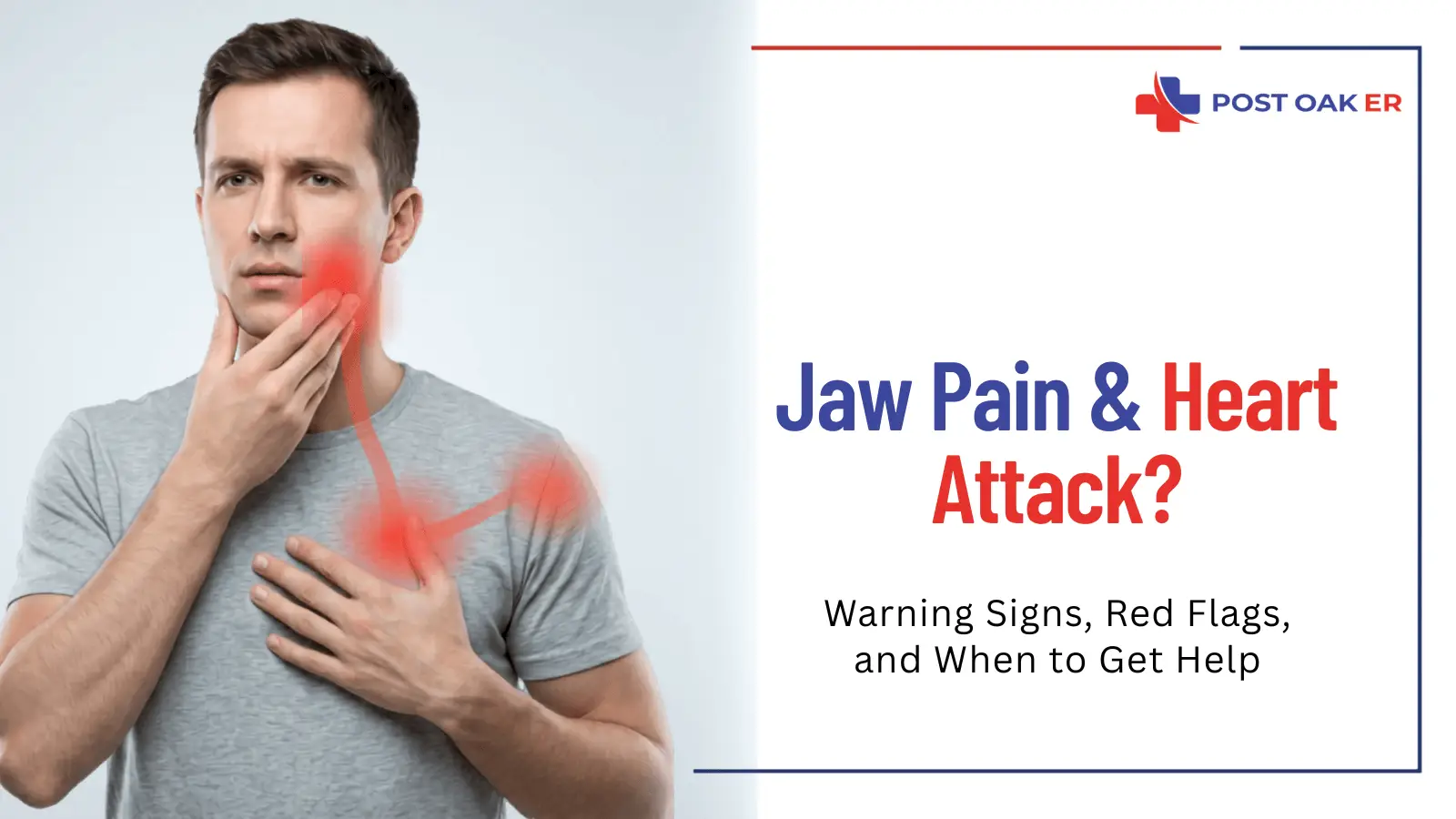
Yes, jaw pain can sometimes be a sign of a heart attack. But most jaw pain is not heart-related. The difference usually comes down to the pattern: whether the pain is isolated to the jaw or whether it comes with symptoms like chest pressure, shortness of breath, sweating, nausea, dizziness, arm pain, back pain, or unusual weakness.
For patients in Houston, the safest approach is simple: do not panic over every jaw ache, but do not ignore jaw pain that feels unusual, sudden, or connected to other possible heart warning signs. Heart-related discomfort can show up outside the chest, and in some cases, pain from a heart attack may sometimes radiate to the jaw and teeth.
Key Takeaways
- Jaw pain can sometimes happen during a heart attack.
- Heart-related jaw pain is usually more concerning when it appears with chest pressure, shortness of breath, sweating, nausea, dizziness, arm pain, back pain, or unusual weakness.
- Heart attack discomfort can spread to the jaw, neck, shoulder, arm, back, or upper stomach.
- Women may have chest discomfort, but they can also have symptoms such as shortness of breath, nausea, back pain, or jaw pain.
- Dental problems, TMJ disorders, sinus pressure, muscle strain, and teeth grinding can also cause jaw pain.
- Call 911 if jaw pain comes with symptoms that feel like a possible heart attack.
- You do not need to diagnose the cause perfectly at home before getting help.
Can Jaw Pain Really Be a Heart Attack Symptom?
Yes. Jaw pain can be one of the warning signs of a heart attack, especially when it happens along with chest discomfort or other upper-body symptoms. The American Heart Association lists discomfort in the jaw, neck, back, arm, or shoulder among possible heart attack symptoms.
That does not mean every jaw pain is an emergency. A sore jaw after chewing, dental work, grinding your teeth, or moving the jaw may have a more local cause. But jaw pain becomes more concerning when it feels unexplained, comes on suddenly, or appears with other symptoms that point toward the heart.
Why a Heart Attack Can Cause Jaw Pain
Heart-related pain does not always stay in the chest. Sometimes the brain receives pain signals from the heart and nearby nerves in a way that makes the discomfort feel like it is coming from another area. This is called referred pain.
The jaw may hurt even though the jaw itself is not the source of the problem. That is why a heart attack can sometimes be felt in the jaw, teeth, neck, shoulder, arm, back, or upper stomach.
What Heart-Related Jaw Pain May Feel Like
Heart-related jaw discomfort may feel like pressure, aching, heaviness, tightness, burning, or a deep uncomfortable sensation. It may affect one side or both sides. Some people notice it with chest pressure, while others mainly feel discomfort in the jaw, neck, shoulder, arm, or back.
The exact feeling can vary, so it is not safe to judge by pain type alone. A heart attack does not always feel like crushing chest pain. Some symptoms are milder, vague, or easy to mistake for something less serious.
Symptoms That Make Jaw Pain More Concerning
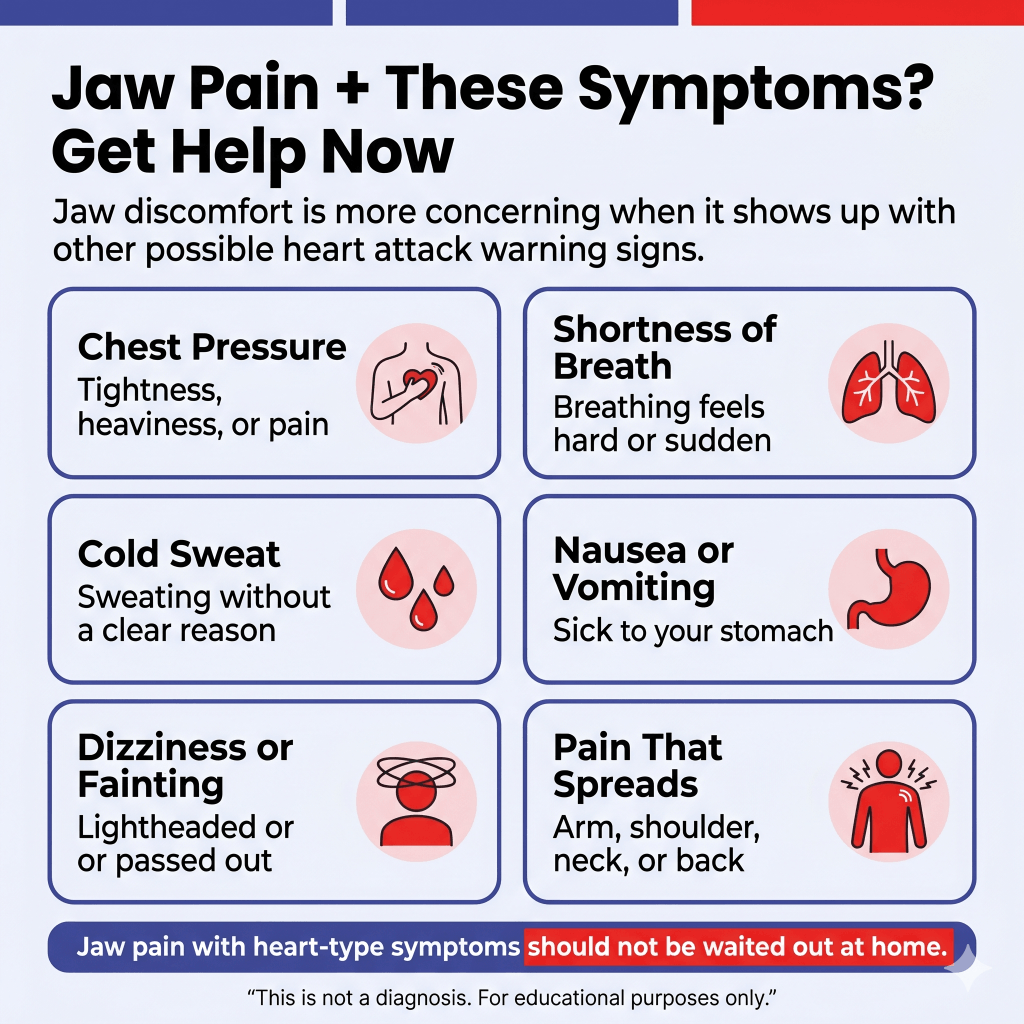
Jaw pain is more concerning when it comes with other possible heart attack warning signs. These include chest pain or pressure, shortness of breath, cold sweat, nausea, vomiting, lightheadedness, fainting, or pain spreading to the arm, shoulder, neck, back, or upper stomach.
Pay special attention if the symptoms last more than a few minutes, go away and come back, or feel clearly different from anything you have had before. A short episode can still matter if it feels intense, unusual, or comes with other red flags.
When Jaw Pain Is More Likely Not From the Heart
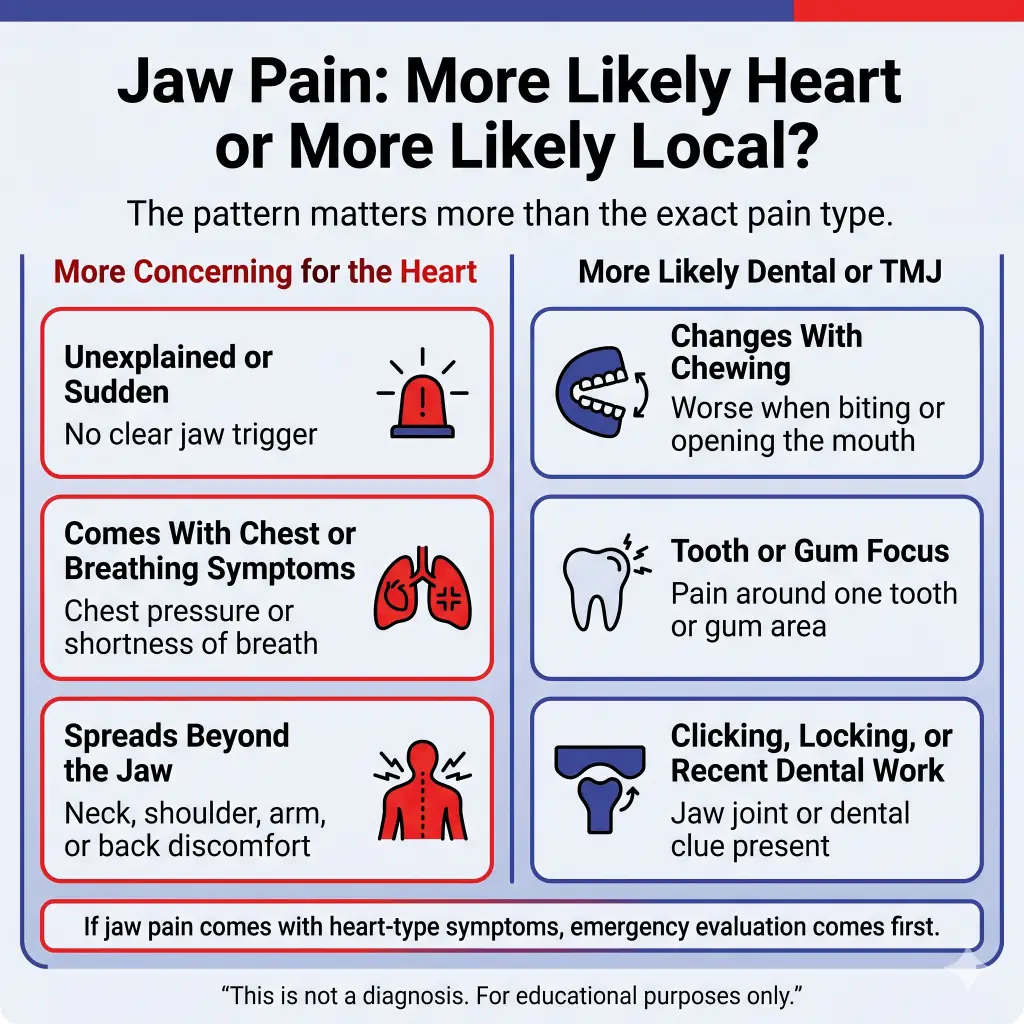
Jaw pain is often caused by something other than the heart. Common causes include dental infection, tooth problems, TMJ disorders, teeth grinding, sinus pressure, ear-related pain, muscle strain, arthritis, or recent dental work. TMJ disorders can cause pain in the jaw joint and in the muscles that control jaw movement.
A non-heart cause is more likely when the pain clearly changes with chewing, opening the mouth, pressing on the jaw, or moving the neck. Pain around a specific tooth, swelling in the gum, fever with dental pain, or clicking and locking of the jaw may also point away from the heart. Still, if chest symptoms, breathing trouble, sweating, fainting, or sudden weakness are present, emergency evaluation comes first.
Who Should Be More Careful With Jaw Pain?
Some people should take unexplained jaw pain more seriously. That includes people with known heart disease, a prior heart attack, a stent, high blood pressure, diabetes, high cholesterol, smoking history, or a strong family history of early heart disease.
Older adults and women should also be careful when symptoms are not classic. Women can still have chest pressure, but they may also notice symptoms such as shortness of breath, nausea, back pain, jaw pain, or unusual fatigue.
When to Go to the ER or Call 911
Go to the ER or call 911 right away if jaw pain comes with chest pain or pressure, shortness of breath, cold sweat, nausea, vomiting, fainting, severe dizziness, sudden weakness, or pain spreading into the arm, shoulder, back, or neck. These combinations should not be waited out at home.
If you are in Houston and jaw pain comes with chest pressure, trouble breathing, sweating, nausea, fainting, or other possible heart warning signs, Post Oak ER is open 24/7 for prompt emergency evaluation. If symptoms feel severe, sudden, or similar to a possible heart attack, the safest move is to call 911 rather than drive yourself. MedlinePlus advises calling 911 if heart attack symptoms are happening, even if you are not sure.
What Doctors May Check
If jaw pain may be heart-related, doctors usually start with the full symptom story. They may ask when it started, what it feels like, whether it spreads, whether chest discomfort is present, and whether symptoms began with activity, stress, or rest.
Common emergency checks may include vital signs, heart monitoring, an ECG or EKG, and blood tests such as troponin to look for signs of heart muscle injury. The goal is to quickly separate a possible heart emergency from other causes of jaw or chest discomfort.
What to Do if the Jaw Pain Seems Dental but You Are Not Sure
If the pain is clearly tied to a tooth, chewing, jaw movement, or a recent dental issue, a dental or primary-care evaluation may be appropriate. But if the pain is new, unexplained, or appears with chest pressure, shortness of breath, sweating, nausea, dizziness, or weakness, do not treat it like a routine dental problem.
A simple rule can help: jaw pain by itself may have many causes, but jaw pain with heart-type symptoms should be checked urgently. You do not have to be certain it is a heart attack before getting emergency care.
Most jaw pain is not a heart attack. But jaw pain can be a warning sign when it appears as part of a bigger symptom pattern. When the symptoms feel unusual, severe, or connected to chest or breathing trouble, quick evaluation is safer than guessing at home.
Frequently Asked Questions
Can jaw pain be the only sign of a heart attack?
It is possible for heart attack symptoms to be less typical, but jaw pain alone is not the most common pattern. Jaw pain is more concerning when it comes with chest discomfort, shortness of breath, sweating, nausea, dizziness, or pain in the arm, back, neck, or shoulder.
What does heart-related jaw pain feel like?
It may feel like pressure, aching, tightness, heaviness, burning, or deep discomfort. The feeling can vary, so the safer question is whether it comes with other heart warning signs.
Is jaw pain more common in women during a heart attack?
Women can have chest discomfort during a heart attack, but they may also have symptoms such as nausea, shortness of breath, back pain, jaw pain, or unusual fatigue.
How can I tell if jaw pain is dental or heart-related?
Dental or TMJ-related pain often changes with chewing, jaw movement, tooth pressure, or touching the area. Heart-related jaw pain is more concerning when it is unexplained or comes with chest pressure, shortness of breath, sweating, nausea, dizziness, or weakness.
Can jaw pain happen without chest pain during a heart attack?
Yes, some people have less typical symptoms. However, it is not safe to diagnose a heart attack or rule one out based only on whether chest pain is present.
Which side of the jaw hurts during a heart attack?
There is no reliable side rule. Heart-related discomfort may be felt on one side, both sides, or along with pain in the neck, shoulder, arm, back, or upper stomach. Do not use the side of the pain alone to decide whether it is serious.
When should I call 911 for jaw pain?
Call 911 if jaw pain comes with chest pain or pressure, shortness of breath, cold sweat, nausea, fainting, severe dizziness, sudden weakness, or pain spreading to the arm, shoulder, back, or neck.
What tests do doctors do if jaw pain may be heart-related?
Doctors may check vital signs, perform an ECG or EKG, monitor the heart rhythm, and order blood tests such as troponin to look for heart muscle injury.