
High cholesterol itself usually does not make people feel tired. In most cases, it does not cause any obvious day-to-day symptoms at all. That is why it is often described as a silent problem and why many people do not know their numbers are high until they have a blood test.
For patients in Houston, this is an important distinction. If you feel worn out, weak, or low on energy, cholesterol is usually not the direct explanation. But that does not mean cholesterol does not matter. It matters because over time it can raise the risk of heart and blood vessel disease, which can lead to much more serious problems.
Key Takeaways
- High cholesterol usually does not directly cause fatigue.
- Most people with high cholesterol feel completely normal.
- Tiredness has many other possible causes, including lack of sleep, stress, illness, thyroid problems, anemia, depression, and other medical conditions.
- What makes cholesterol important is its link to plaque buildup, heart disease, heart attack, and stroke.
- The right way to check cholesterol is with a lipid panel, not by guessing from symptoms.
- If tiredness comes with chest pain, shortness of breath, fainting, sudden weakness, or confusion, that is much more concerning than fatigue alone.
Does High Cholesterol Actually Make You Tired?
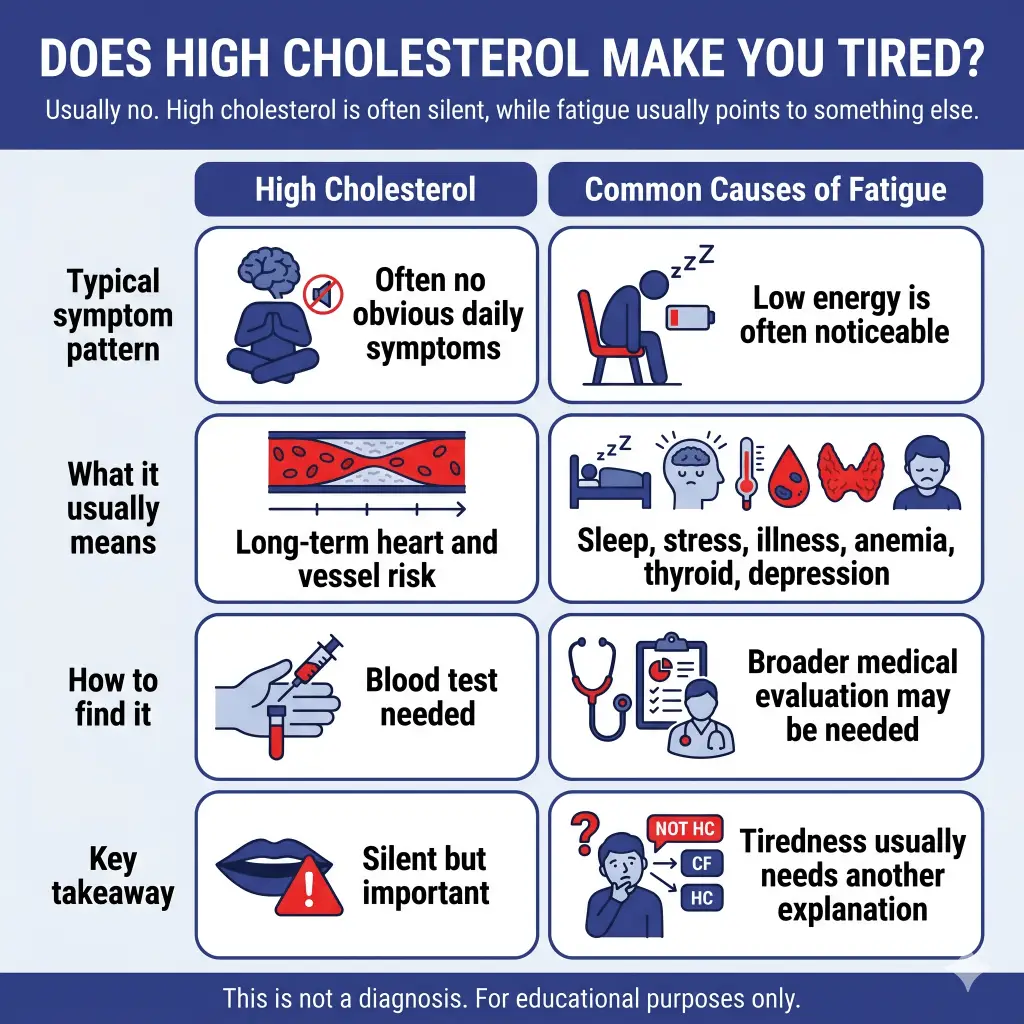
Usually, no. High cholesterol is not known for causing fatigue by itself. Official guidance from NHLBI and CDC is straightforward: people with high cholesterol often have no symptoms, which is why testing matters so much.
That means if someone feels tired, the better question is often not “Is this my cholesterol?” but “What else could be going on?” Fatigue is a common symptom with many different causes, and cholesterol is usually not the one people feel directly.
Why High Cholesterol Is Often Called a Silent Problem
High cholesterol is called silent because it often raises risk quietly over time instead of causing an obvious warning feeling in the moment. A person can have abnormal numbers for years and still feel fine.
That is also why relying on symptoms can be misleading. You can feel normal and still have LDL levels high enough to increase your long-term risk of heart disease or stroke.
Why Someone With High Cholesterol May Still Feel Tired
A person with high cholesterol can absolutely feel tired, but the fatigue is often coming from something else. Common causes of low energy include poor sleep, emotional stress, depression, thyroid problems, anemia, infections, medication effects, and other physical or mental health conditions.
Sometimes the bigger issue is not cholesterol itself but whether cholesterol has already contributed to heart or circulation problems. If blocked arteries have reduced blood flow or led to heart disease, a person may start noticing symptoms like shortness of breath, weakness, or reduced stamina. At that point, the concern is not “cholesterol is making me tired.” The concern is that cholesterol may have helped create a more serious heart problem.
When High Cholesterol Can Become More Serious
What makes high cholesterol dangerous is the long game. High LDL can contribute to plaque buildup in arteries, a process called atherosclerosis. Over time, that buildup can narrow or block blood flow to the heart, brain, or other parts of the body.
That is why cholesterol is connected to conditions like coronary artery disease, heart attack, stroke, and peripheral artery disease. The real risk is not usually tiredness alone. The real risk is what can happen when high cholesterol goes untreated for too long.
Symptoms That Matter More Than Tiredness
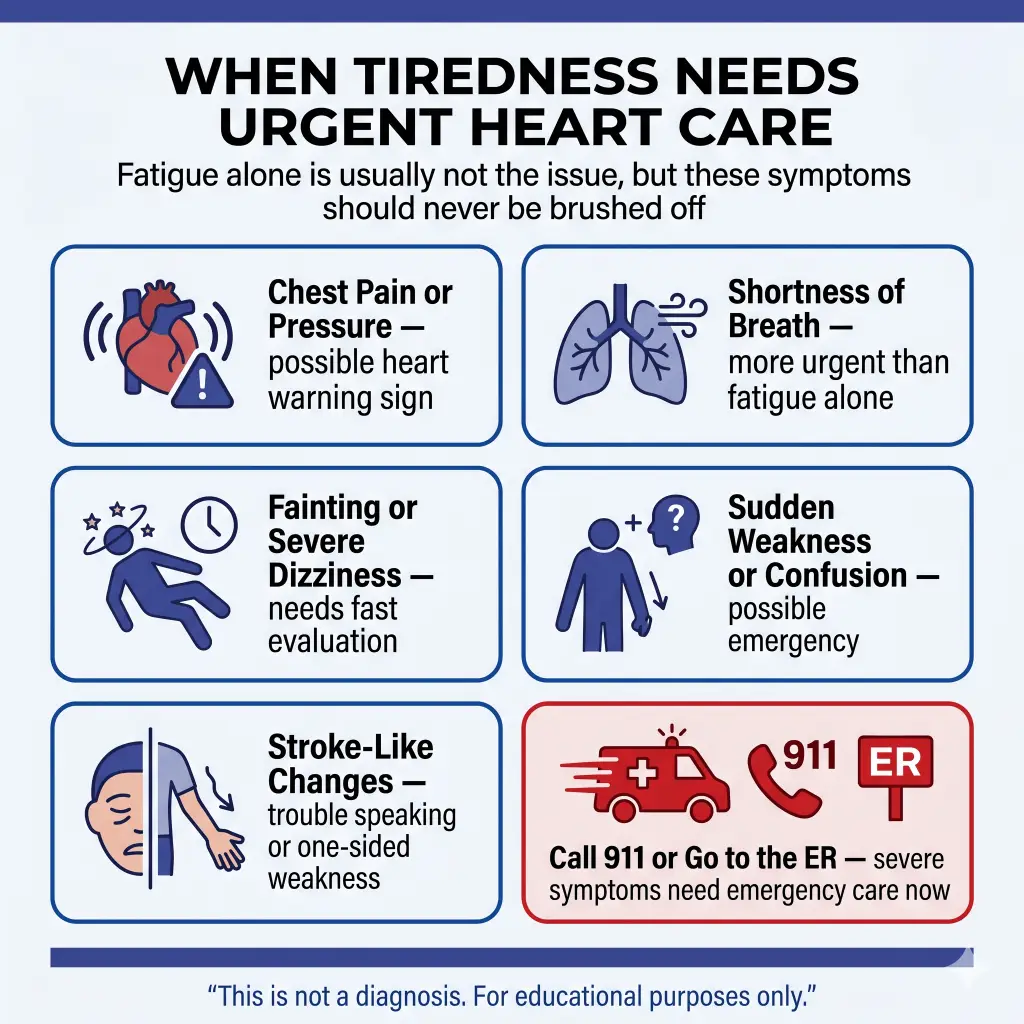
If someone is worried about cholesterol, the more important symptoms are usually not fatigue by itself. More concerning signs include chest pain or pressure, shortness of breath, unusual weakness, dizziness, fainting, or sudden neurologic changes such as confusion, trouble speaking, or one-sided weakness.
Those symptoms do not automatically mean cholesterol is the direct cause, but they may point to a heart or circulation problem that needs medical attention. In other words, tiredness may be a vague symptom, but chest pain, breathing trouble, or sudden weakness are much more urgent signals.
What Testing Actually Matters
The only reliable way to know whether your cholesterol is high is to check it with a blood test. CDC says this is usually a lipid profile or lipid panel. MedlinePlus explains that this test checks LDL, HDL, triglycerides, and total cholesterol.
This matters because people can have abnormal cholesterol numbers even when they feel completely well. Testing gives you real information about risk instead of guesswork based on symptoms.
When to Go to the ER or Call 911
Fatigue by itself is usually not what sends someone to the ER. But fatigue with chest pain, trouble breathing, fainting, sudden confusion, or sudden weakness is a different situation and should be taken seriously. MedlinePlus lists chest pain, shortness of breath, and general weakness among important heart warning signs, and general emergency guidance also includes fainting, breathing problems, chest discomfort lasting more than a couple of minutes, and sudden weakness or mental-status changes.
If you are in Houston and tiredness comes with chest pain, breathing trouble, fainting, or other possible heart warning signs, Post Oak ER is open 24/7 for prompt emergency evaluation. When symptoms look like a possible heart emergency, it is safer to get checked quickly than to assume it is “just fatigue.”
What to Do If You Are Tired and Worried About Cholesterol
Do not try to diagnose high cholesterol from tiredness alone. A better next step is to get your cholesterol checked if you have not had a recent lipid panel, especially if you also have a family history of heart disease, diabetes, high blood pressure, smoking history, excess weight, or other heart risk factors.
It also helps to look at the bigger picture. If you are tired, your provider may need to think about sleep, stress, thyroid function, blood sugar, anemia, medications, heart health, and other possible causes. That approach is far more useful than assuming cholesterol is the only explanation.
Can Very High Cholesterol Ever Cause Visible Signs?
Sometimes, yes, but this is not the usual situation. NHLBI notes that people with very high inherited cholesterol may develop visible signs such as fatty bumps called xanthomas or grayish-white rings called corneal arcus around the eye.
These signs are not the same thing as everyday fatigue. They are more often linked to inherited conditions such as familial hypercholesterolemia, where cholesterol levels can be extremely high.
High cholesterol usually does not make you feel tired, but it still matters because it can quietly raise your risk over time. The best way to handle that risk is to check your numbers, understand the full picture of your health, and not ignore serious symptoms if they appear.
Frequently Asked Questions
Can high cholesterol cause fatigue?
Usually not directly. High cholesterol is usually symptom-free, so fatigue often points to something else or to a related health issue rather than cholesterol itself.
Why do I feel tired if my cholesterol is high?
You may have high cholesterol and fatigue at the same time, but that does not mean one is causing the other. Fatigue has many possible causes, including sleep problems, stress, thyroid disease, anemia, depression, infection, and heart disease.
Does high LDL cholesterol have symptoms?
Most of the time, no. LDL can be high without causing noticeable symptoms, which is why blood testing is so important.
Can high cholesterol make you short of breath?
Not directly in the way people often think. But if cholesterol has already contributed to heart disease or blocked arteries, a person may develop shortness of breath or reduced exercise tolerance.
What are the warning signs that cholesterol has become dangerous?
The bigger concern is whether it has contributed to heart or blood vessel disease. Chest pain, shortness of breath, sudden weakness, fainting, or stroke-like symptoms are much more urgent than fatigue alone.
How do doctors test for high cholesterol?
Doctors usually order a blood test called a lipid panel or lipid profile. It measures LDL, HDL, triglycerides, and total cholesterol.
Can very high cholesterol cause visible signs?
Yes, sometimes. Very high inherited cholesterol can cause xanthomas or corneal arcus, but these signs are not common in routine high cholesterol cases.
Should I go to the ER if I feel tired and have chest pain?
Yes. Chest pain with fatigue is very different from tiredness alone and should be treated as a possible emergency, especially if it comes with shortness of breath, fainting, or sudden weakness.