
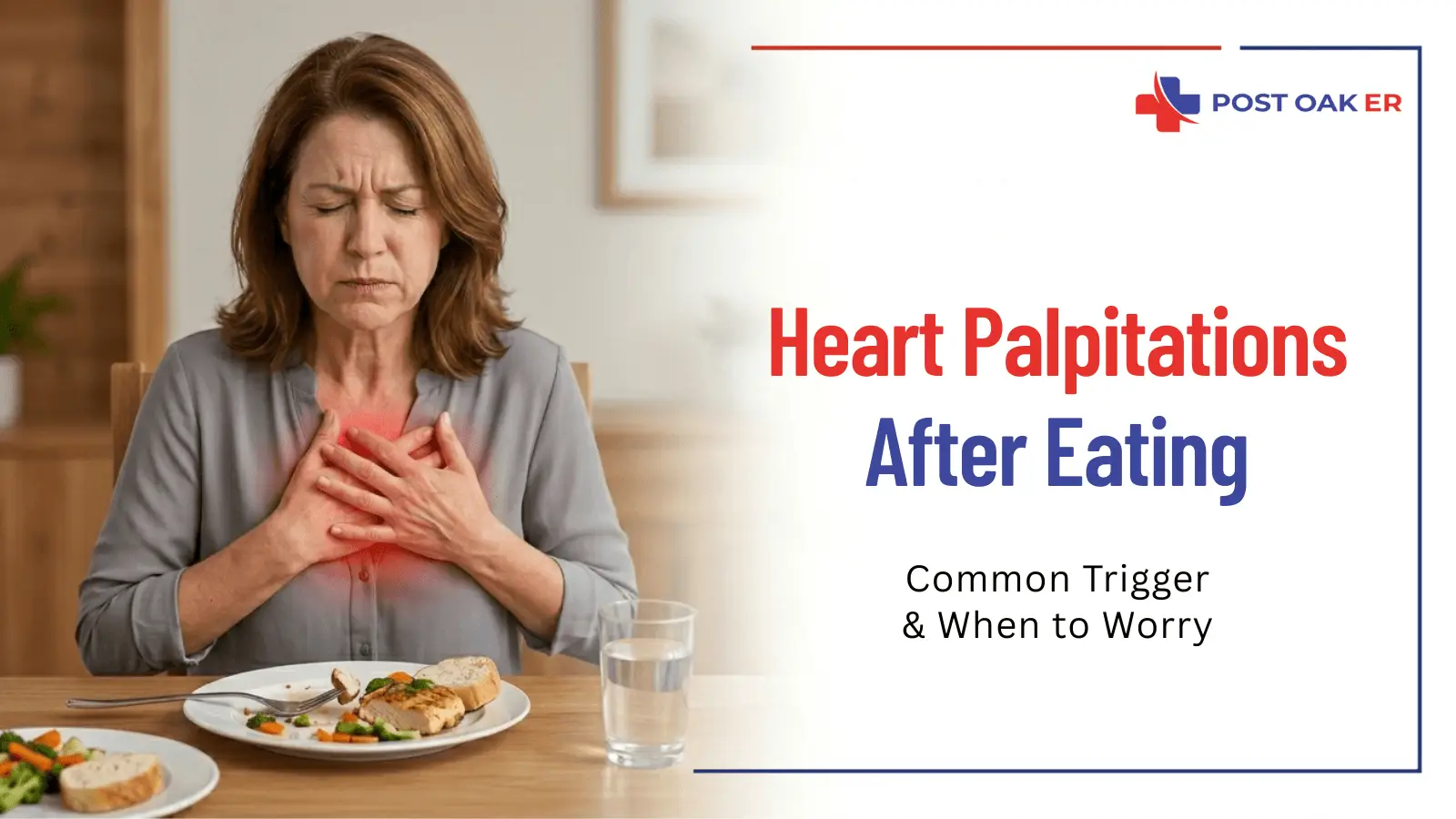
Heart palpitations after eating are often not dangerous, but they should not be ignored when they keep happening, feel intense, or come with other warning signs. Palpitations are usually described as a fluttering, pounding, racing, or skipped-beat feeling, and people may notice them in the chest, throat, or neck.
For patients in Houston, this can be confusing because the sensation may start right after a large meal, coffee, dessert, alcohol, or even anxiety around the symptoms themselves. In many cases, the episode is tied to a trigger rather than a dangerous heart problem, but repeated or worsening symptoms deserve a closer look.
Key Takeaways
- Heart palpitations after eating are usually not serious, but they should not be brushed off if they keep returning.
- Common triggers include large meals, caffeine, alcohol, nicotine, some medicines, and certain foods high in sugar, carbs, or salt.
- Some people feel palpitations after eating because of post-meal blood sugar swings, including reactive hypoglycemia.
- Chest pain, fainting, trouble breathing, or severe dizziness are red flags.
- People with known arrhythmia, heart disease, thyroid problems, anemia, or electrolyte issues should be more careful.
- Keeping track of meal size, food triggers, and symptom timing can help doctors evaluate what is going on.
What Do Heart Palpitations After Eating Feel Like?
Most people describe these episodes as a flutter, pound, skipped beat, or racing feeling. Some notice the sensation mainly in the chest. Others say they feel it in the throat or neck, especially when they are sitting quietly after a meal and paying close attention to it.
That feeling can be unsettling, but the sensation alone does not tell you whether it is harmless or serious. Some people feel strong palpitations even when the heart rhythm turns out to be normal, while others may have a true rhythm problem that needs evaluation.
Are Heart Palpitations After Eating Always Serious?
No. Many episodes after eating are linked to triggers and are not signs of a dangerous heart condition. Cleveland Clinic notes that heart palpitations after eating are usually harmless, and Mayo Clinic says palpitations are often caused by stress, exercise, stimulants, or medicines rather than a serious disease.
Still, “common” does not mean “ignore it.” If the episodes are becoming more frequent, lasting longer, or starting to come with other symptoms, that moves the situation out of the simple reassurance category.
Common Triggers After Eating
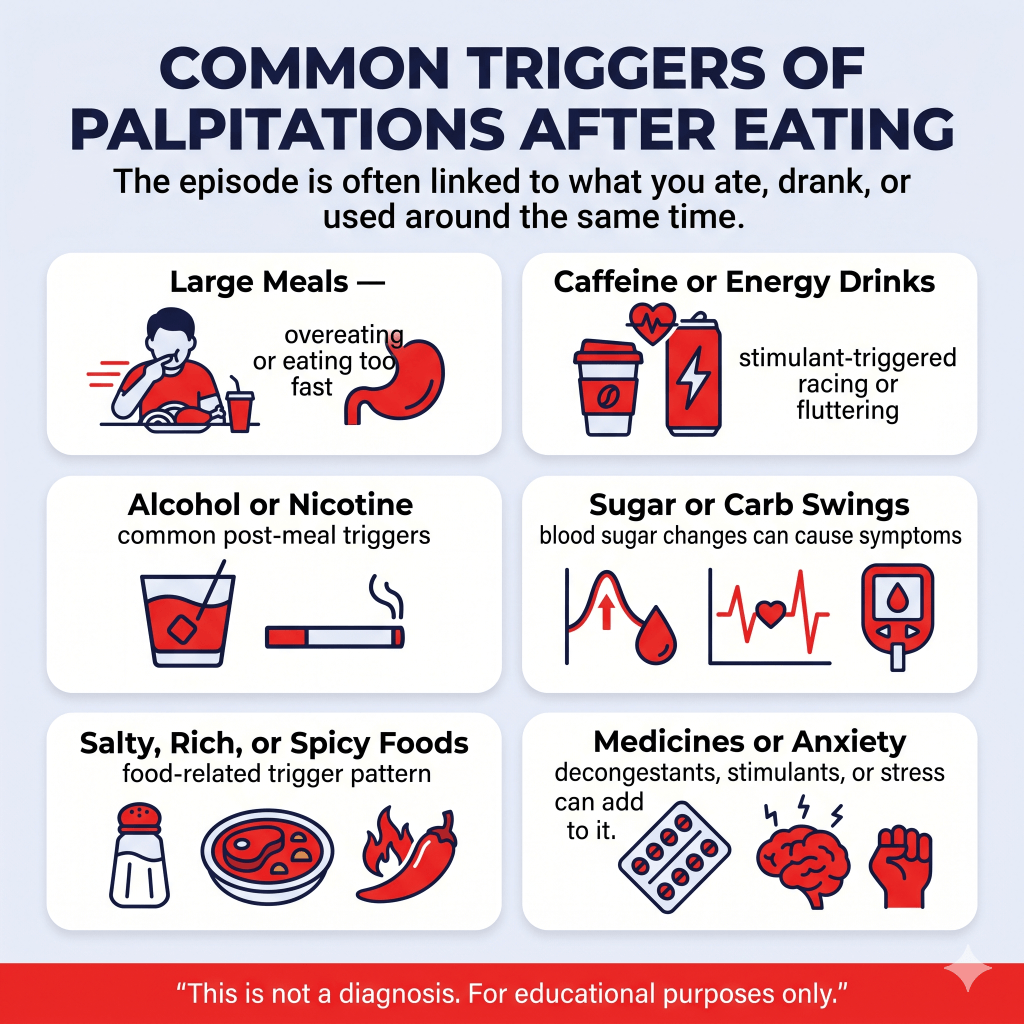
A large meal is one of the most common triggers. Some people notice palpitations more after eating quickly, overeating, or having foods that are high in sugar, carbohydrates, or sodium. Certain ingredients can also play a role, including chocolate, spicy or rich foods, alcohol, and flavoring additives like MSG in sensitive people.
Caffeine, nicotine, cold medicines, energy drinks, and other stimulants can also make the heart beat faster or feel irregular. That is why post-meal palpitations are sometimes not about the meal alone, but about what was in the meal or what was used around the same time.
Stress and anxiety can add to the picture as well. If someone is already worried, uncomfortable, or highly focused on body sensations after eating, the palpitations may feel even stronger.
How Sugar and Post-Meal Blood Sugar Swings Can Play a Role
Some people get palpitations after eating because their blood sugar changes sharply after a meal. Mayo Clinic notes that reactive hypoglycemia, also called postprandial hypoglycemia, can happen within a few hours after eating and may cause shakiness, sweating, weakness, dizziness, anxiety, and a fast or uneven heartbeat.
This does not mean every sugary meal causes a dangerous drop in blood sugar. It means that in the right person, especially someone who is sensitive to these shifts, a meal can trigger symptoms that feel very physical and very real.
When It May Be Something Other Than “Just the Meal”
Sometimes the meal is only part of the story. Palpitations can also be linked to abnormal heart rhythms, thyroid problems, anemia, low potassium, or other electrolyte issues. If symptoms happen outside meals too, or if they are getting more frequent overall, the cause may not be meal-related alone.
This matters even more for people who already have heart disease, a known arrhythmia, diabetes, thyroid disease, or a family history of rhythm problems. In those situations, a repeated “my heart races after I eat” pattern deserves more attention.
When Symptoms Become More Concerning
The pattern matters. You should worry more when the episode lasts longer than expected, feels very fast or forceful, keeps returning, or starts happening without clear triggers. A noticeable change from your normal baseline is also important.
You should also take it more seriously if the palpitations come with sweating, weakness, near-fainting, dizziness, chest discomfort, or shortness of breath. Those symptoms suggest it may be more than a simple food-related flutter.
When to Go to the ER or Call 911
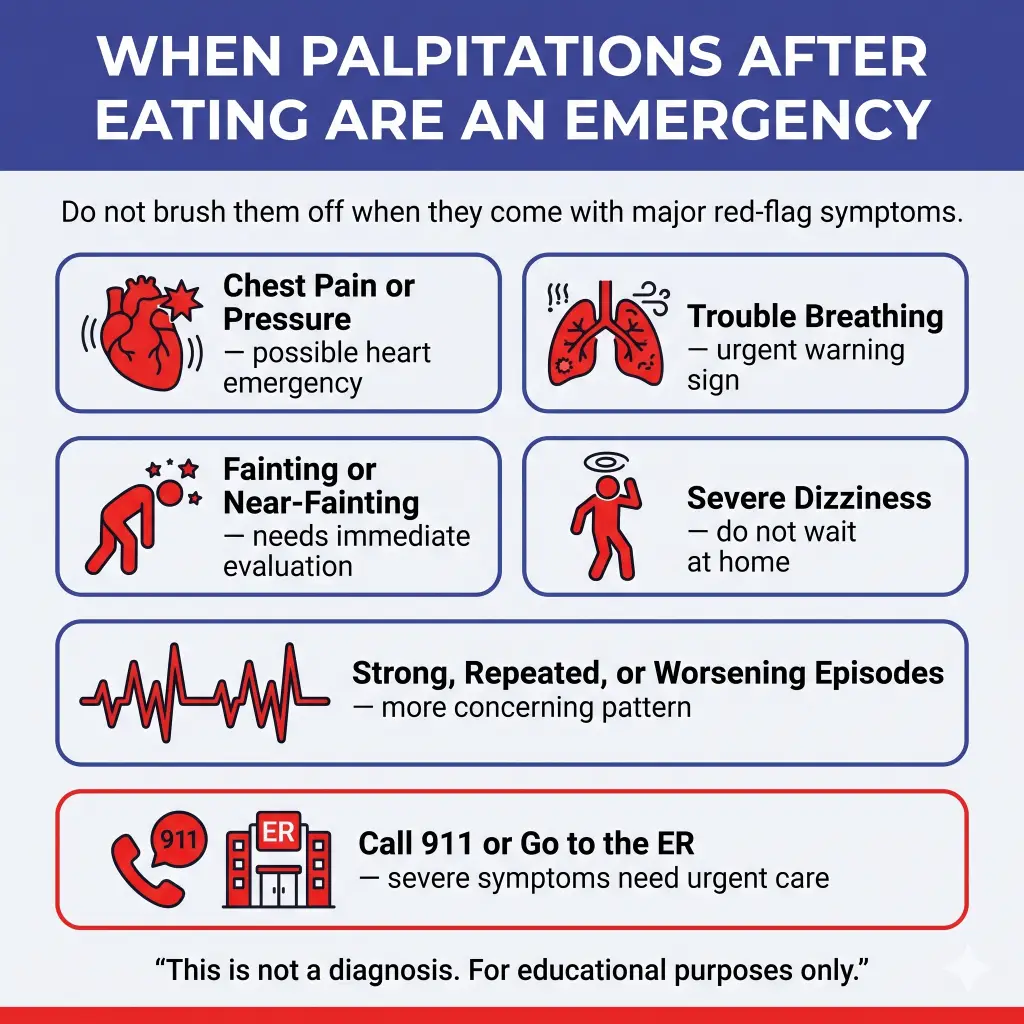
Go to the ER or call 911 right away if palpitations after eating come with chest pain, pressure, trouble breathing, fainting, severe dizziness, or a strong feeling that something is very wrong. NHLBI advises seeking emergency care when symptoms are very serious, such as chest pain or difficulty breathing, and Mayo Clinic gives the same warning for palpitations with fainting or severe shortness of breath.
If you are in Houston and palpitations after eating come with chest pain, fainting, breathing trouble, or severe dizziness, Post Oak ER is open 24/7 for prompt emergency evaluation. It is safer to get checked quickly than to assume the episode is only related to food.
What Doctors May Check
Doctors usually start with your symptom story: what you ate, when it started, how long it lasted, whether it happens only after meals, and whether you had dizziness, chest discomfort, or shortness of breath at the same time.
A common first test is an EKG or ECG, which records the heart’s electrical activity. Depending on the situation, doctors may also order blood tests to look at electrolytes or thyroid hormone levels, and they may use a Holter monitor or other portable monitor if the symptoms come and go outside the clinic.
What You Can Watch for Before a Routine Follow-Up
If the symptoms are brief and you do not have red-flag warning signs, it helps to track the pattern. Notice whether the episode happens after a large meal, sweets, salty foods, alcohol, chocolate, energy drinks, coffee, or eating too fast. Also note how long the palpitations last and whether they happen only after meals or at other times too.
That kind of tracking can be useful because doctors often want to know timing, frequency, triggers, and associated symptoms before deciding what testing makes sense.
Not every post-meal palpitation means danger. But if the episodes are repeated, worsening, or tied to chest pain, fainting, breathing trouble, or severe dizziness, they should not be brushed off.
Frequently Asked Questions
Why do I get heart palpitations after eating?
Common reasons include large meals, caffeine, alcohol, sugar, salty foods, stimulants, anxiety, and sometimes post-meal blood sugar shifts. In some people, the cause may also be an underlying rhythm issue or another health condition.
Can sugar cause heart palpitations after a meal?
Yes, in some people. High-sugar meals can be linked to blood sugar swings, and reactive hypoglycemia can cause a fast or uneven heartbeat after eating.
Can caffeine or chocolate trigger palpitations after eating?
Yes. Caffeine is a stimulant, and chocolate contains theobromine, which can increase heart rate in some people.
Are heart palpitations after eating always serious?
No. Many episodes are not dangerous and improve by avoiding triggers. But frequent, stronger, or changing symptoms should be evaluated.
Can acid reflux feel like heart palpitations?
Sometimes people confuse post-meal chest sensations because reflux, heartburn, and palpitations can all be felt in the chest after eating. But chest symptoms that are new, strong, or worrying should not be self-diagnosed at home.
When should I worry about palpitations after eating?
You should worry more when they last longer than expected, keep happening, feel very strong, or come with chest pain, shortness of breath, dizziness, or fainting.
Should I go to the ER for heart palpitations after eating?
Yes, if the palpitations come with chest pain, trouble breathing, fainting, or severe dizziness. Those symptoms need urgent medical attention.
What tests do doctors do for recurring palpitations?
Doctors commonly use an EKG, blood tests, and sometimes portable rhythm monitors such as a Holter monitor when symptoms are intermittent.