
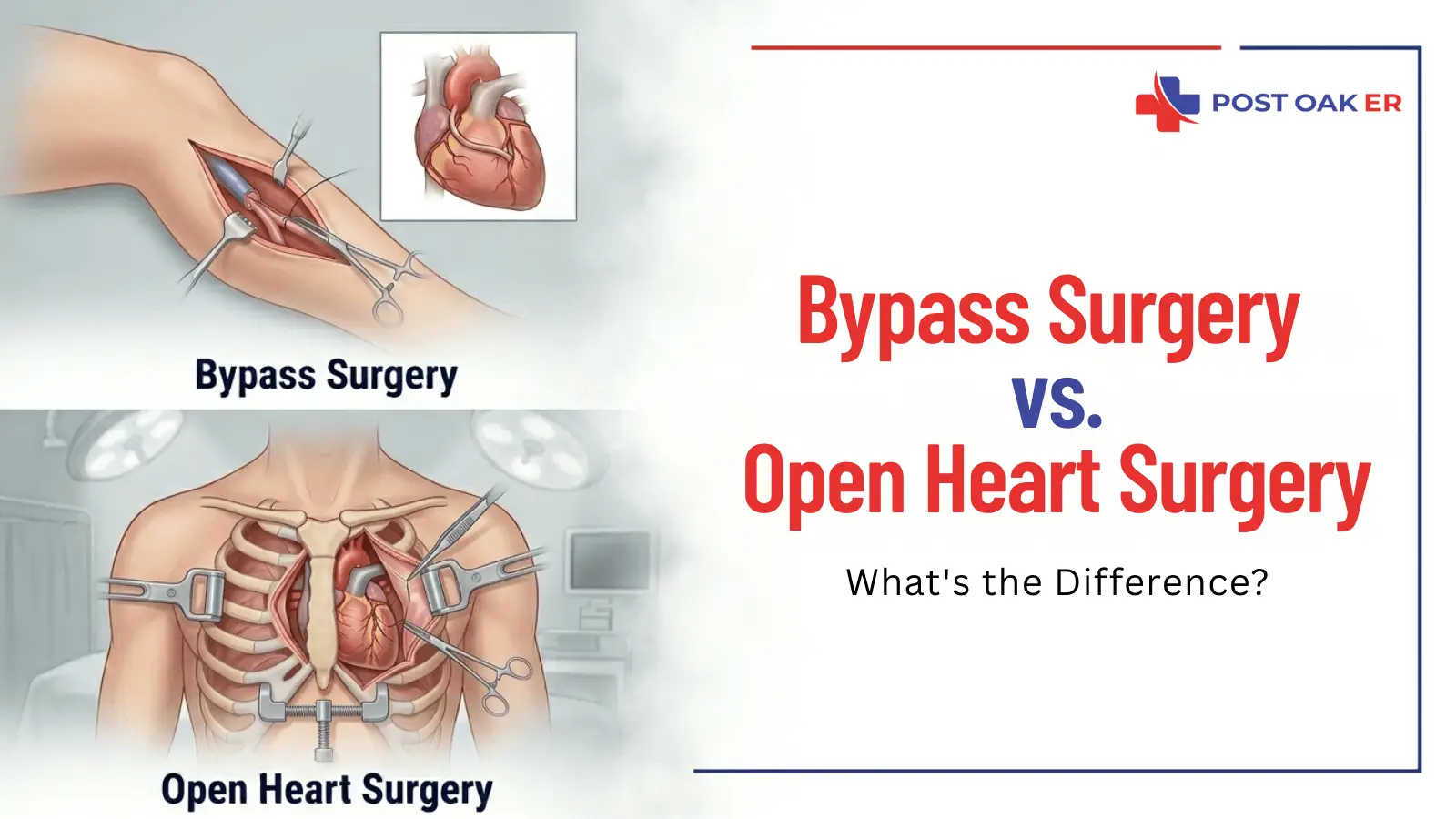
These two terms are related, but they do not mean exactly the same thing. In simple terms, bypass surgery usually means coronary artery bypass grafting (CABG), which is a specific operation used to improve blood flow around blocked heart arteries. Open-heart surgery is a broader term people often use for major heart operations done through the chest, and MedlinePlus notes that, more technically, the term refers to surgery done while a heart-lung bypass machine is used and the heart is stopped.
That is why people get confused. In everyday conversation, many families say “open-heart surgery” when they mean bypass surgery. But bypass surgery is only one type of major heart surgery. Other procedures, such as some valve surgeries or repairs for structural heart problems, may also be open-heart operations.
Key Takeaways
- Bypass surgery usually refers to CABG, a procedure that creates a new route for blood to flow around blocked coronary arteries.
- Open-heart surgery is a broader term and, technically, often refers to surgery done with a heart-lung machine while the heart is stopped.
- Bypass surgery is one common type of open-heart surgery, but not every open-heart surgery is bypass surgery.
- Some bypass operations can be done on a beating heart, so not every bypass surgery follows the exact same approach.
- Doctors may recommend bypass surgery when blocked coronary arteries are reducing blood flow to the heart.
- Chest pain, shortness of breath, fainting, or sudden worsening symptoms still need urgent evaluation.
What Is Open-Heart Surgery?
Open-heart surgery is usually understood as a major heart operation done through the chest to reach the heart. MedlinePlus explains that the term “open-heart surgery” specifically means a person is connected to a heart-lung bypass machine and the heart is stopped during the operation.
This category can include more than one type of surgery. For example, open-heart surgery may be used for bypass surgery, valve surgery, or repair of certain heart defects. That is why “open-heart surgery” is better understood as a broader category than as the name of one single procedure.
What Is Bypass Surgery?
Bypass surgery is a specific heart operation used to improve blood flow when coronary arteries are narrowed or blocked. The formal name is coronary artery bypass grafting, or CABG. During the procedure, surgeons use a healthy blood vessel from another part of the body to create a new path for blood to move around the blockage.
In plain English, the goal is simple: help blood reach the heart muscle more effectively. That can reduce symptoms such as chest pain and may also lower the risk of serious heart problems in the right patient.
Bypass Surgery vs. Open-Heart Surgery: The Main Difference
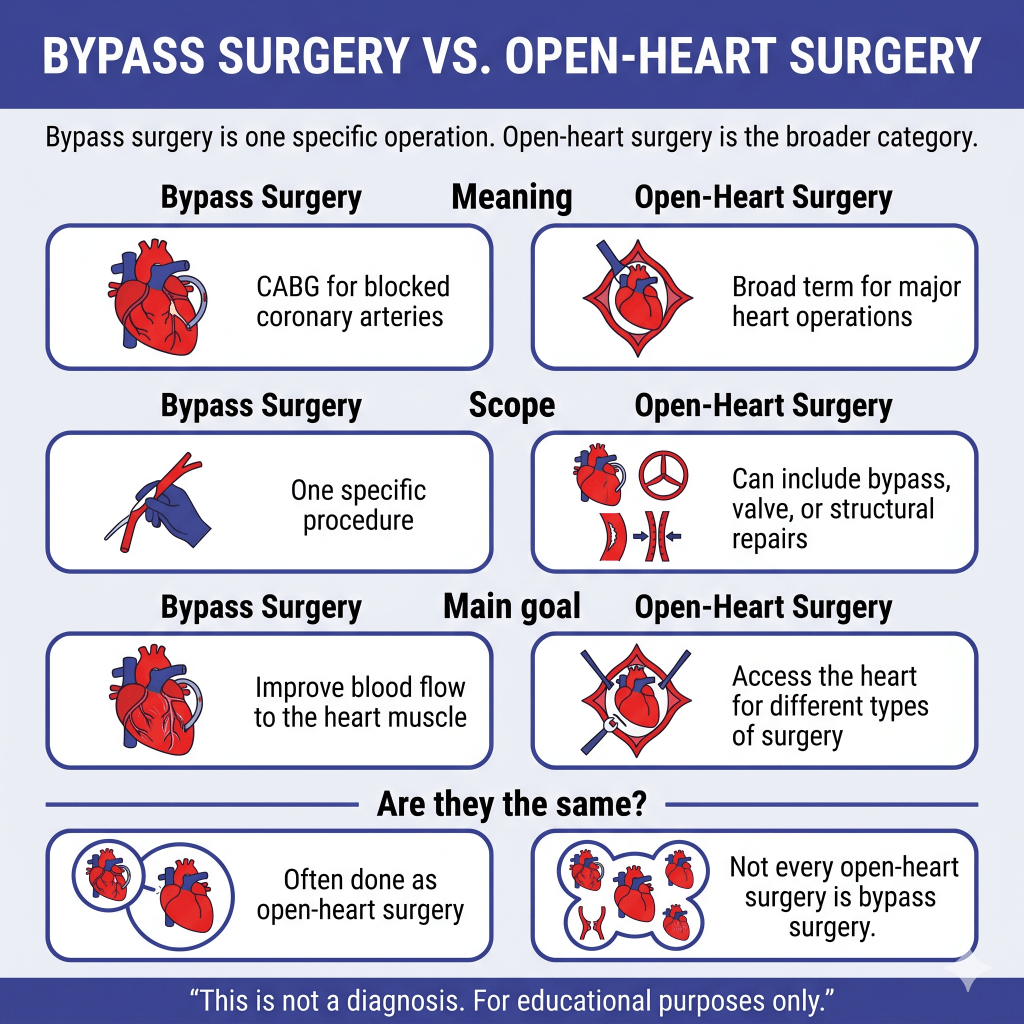
The clearest way to understand the difference is this: bypass surgery is a specific procedure, while open-heart surgery is a broader term. If someone says they are having bypass surgery, they usually mean CABG. If someone says they are having open-heart surgery, that could mean bypass surgery, but it could also mean another heart operation such as valve repair or replacement.
There is also an important technical detail. Some bypass surgeries are done using the traditional open-heart approach with a heart-lung machine, but NHLBI notes that some CABG procedures may be done off-pump, meaning the heart is not stopped. That is another reason the terms should not be treated as perfect synonyms.
Why People Get These Terms Confused
A lot of patients and families use these phrases loosely, and that is understandable. “Bypass surgery” is one of the most well-known heart operations, so people often assume it means the same thing as every major heart surgery. On the other hand, “open-heart surgery” sounds like a general label, so some people use it for bypass surgery even when they are trying to name a specific procedure.
The confusion also comes from the fact that both terms are often used during the same hospital journey. A patient may first hear they need major heart surgery, then later learn the exact operation is bypass surgery. So the terms get blended together, even though they are not exactly identical. This is an inference based on how the procedures are defined and discussed in patient-facing medical sources.
Why Someone Might Need Bypass Surgery
Doctors may recommend bypass surgery when one or more coronary arteries are seriously narrowed or blocked and blood flow to the heart muscle is not good enough. Mayo Clinic notes that CABG may be used for severe chest pain, severe narrowing of major heart arteries, multiple diseased arteries, or as emergency treatment for a heart attack when other immediate treatments are not enough.
That does not mean every blocked artery leads to bypass surgery. Some people are treated with medicines, lifestyle changes, angioplasty, or stents instead. The decision depends on the pattern of blockage, symptoms, heart function, and the patient’s overall condition.
What Bypass Surgery Is Trying to Do
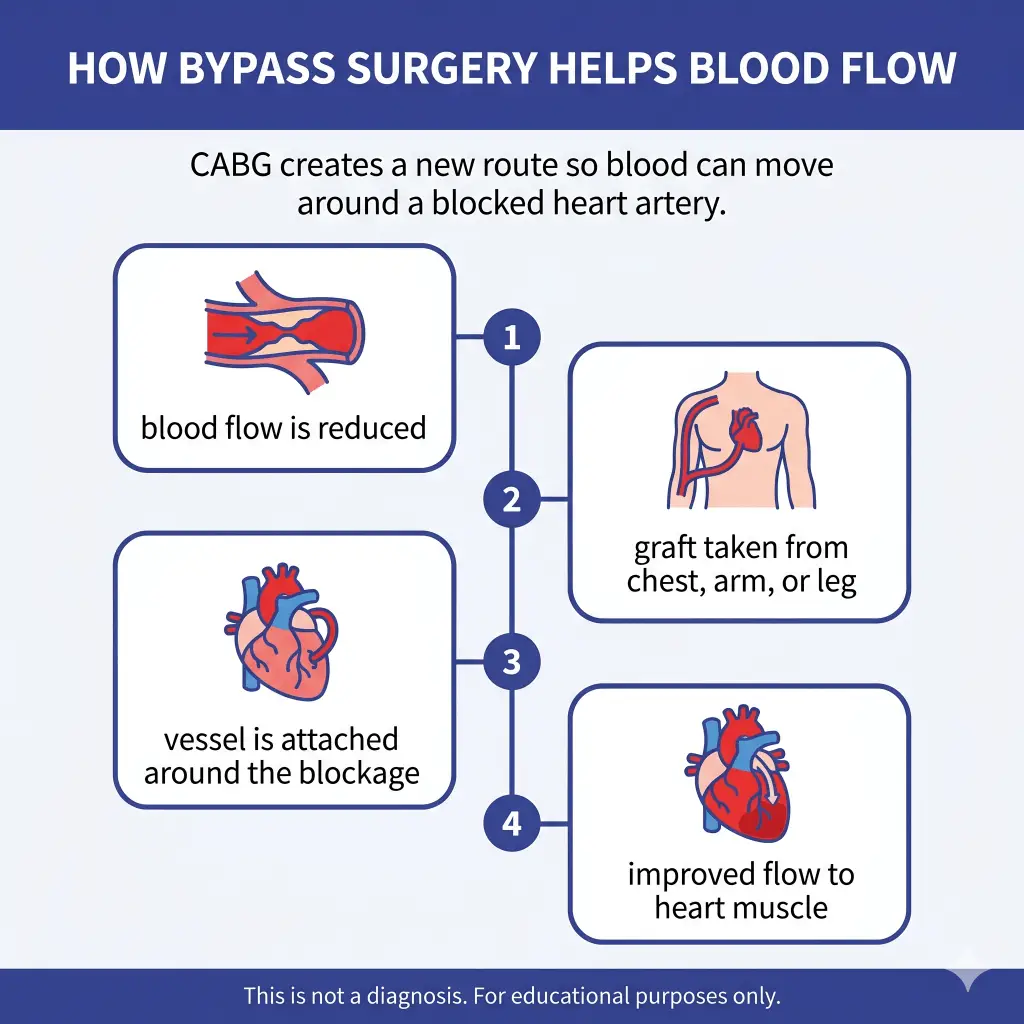
The purpose of bypass surgery is to create a new path for blood to flow around a blocked or partially blocked artery in the heart. Surgeons do that by taking a healthy vessel, often from the chest, arm, or leg, and attaching it above and below the blockage so blood can reach the heart muscle more effectively.
It is important to understand that bypass surgery does not “cure” the artery disease that caused the blockage in the first place. Mayo Clinic explains that the surgery can improve blood flow and reduce symptoms, but long-term heart care still matters after the operation.
What Recovery Can Look Like
Recovery varies, but it is usually not a quick overnight process. NHLBI says people often stay in the hospital for about 1 week after CABG, and full recovery commonly takes about 6 to 12 weeks, though less time may be needed after some minimally invasive approaches.
In the early recovery period, people may deal with soreness, fatigue, sleep issues, swelling where a graft was taken, and activity restrictions while the body heals. This is one reason it helps to think of bypass surgery as major heart surgery, not a small procedure.
When to Go to the ER or Call 911
Go to the ER or call 911 right away if you have chest pain or pressure, shortness of breath, fainting, severe weakness, or other symptoms that feel like a heart emergency. These symptoms matter more than trying to sort out whether someone might eventually need bypass surgery, a stent, or another treatment.
If you are in Houston and you have chest pain, trouble breathing, or other warning signs of a possible heart emergency, Post Oak ER is open 24/7 for prompt emergency evaluation. It is safer to get checked quickly than to wait at home and try to guess which heart problem may be happening.
What Doctors May Check Before Recommending Surgery
Doctors usually do not recommend bypass surgery based on symptoms alone. Before surgery is considered, the team may use heart tests, imaging, blood work, and studies that show where the blockages are and how severe they are. Mayo Clinic notes that patients often have many heart tests and blood tests before scheduled bypass surgery.
This evaluation helps the care team decide whether bypass surgery is the best option, whether another treatment is more appropriate, and how urgent the situation is. That is why two people with chest pain may end up with very different treatment plans. This is an inference from how CABG indications and pre-surgical workups are described in the cited sources.
It is normal to mix these terms up. The simplest way to remember it is this: bypass surgery is one specific type of heart surgery, while open-heart surgery is the broader label people often use for major operations on the heart. Understanding that difference can make these conversations much less confusing.
Frequently Asked Questions
Is bypass surgery the same as open-heart surgery?
Not exactly. Bypass surgery usually means CABG, which is one specific operation. Open-heart surgery is a broader term, and technically often refers to surgery done with a heart-lung machine while the heart is stopped.
Is every open-heart surgery a bypass?
No. Open-heart surgery can also include operations such as heart valve surgery or repair of certain structural heart problems.
Why is it called bypass surgery?
It is called bypass surgery because the operation creates a new route for blood to flow around a blocked coronary artery.
What does CABG mean?
CABG stands for u003cstrongu003ecoronary artery bypass graftingu003c/strongu003e. It is the medical name for heart bypass surgery.
Can you have open-heart surgery without a bypass?
Yes. Some valve surgeries and other heart operations may be done as open-heart surgery without being bypass surgery.
How serious is bypass surgery?
It is major heart surgery. It can be lifesaving or symptom-relieving, but it also comes with real risks, a hospital stay, and a recovery period that often lasts several weeks.
How long is recovery after bypass surgery?
NHLBI says people often stay in the hospital about a week and may need about 6 to 12 weeks for full recovery after traditional CABG.
Should I go to the ER if I have chest pain while waiting on heart testing?
Yes. New, severe, or persistent chest pain should be treated as an emergency, not something to watch at home while waiting for routine testing.