
An irregular heartbeat is not always a sign of something dangerous. Sometimes it is a brief flutter, skipped beat, or racing feeling triggered by stress, caffeine, poor sleep, or dehydration. But in other cases, it can point to a heart rhythm problem that needs medical attention.
For people in Houston, the most important thing is not to panic, but also not to ignore symptoms that feel severe, new, or clearly different from your usual baseline. If an irregular heartbeat comes with chest pain, fainting, shortness of breath, or severe dizziness, it should be treated as urgent.
Key Takeaways
- Not every irregular heartbeat is dangerous.
- Stress, caffeine, nicotine, alcohol, illness, and dehydration can all trigger palpitations.
- You should worry more if the heartbeat feels very fast, keeps happening, or is getting worse.
- Chest pain, shortness of breath, fainting, and severe dizziness are major red flags.
- People with known heart disease or other heart risk factors should be more cautious.
- Doctors often use an EKG, blood tests, and sometimes longer heart monitoring to check the cause.
- If symptoms feel severe, unusual, or do not settle, emergency evaluation matters.
What Does an Irregular Heartbeat Feel Like?
People describe an irregular heartbeat in different ways. Some say it feels like fluttering, pounding, racing, thumping, or a skipped beat. Others feel it in the chest, throat, or neck and say their heart suddenly feels “off.” In plain English, many people use “irregular heartbeat” to describe palpitations, even though the rhythm may or may not actually be abnormal.
That is why the feeling alone does not always tell you how serious it is. A brief skipped beat can be harmless, but a rhythm that is fast, repeated, or paired with other symptoms deserves more attention.
When an Irregular Heartbeat May Not Be Serious
In many cases, palpitations are not serious. A short episode that lasts only a few seconds and goes away on its own may not need urgent evaluation, especially if it happens rarely and there are no other warning signs.
It is also normal for the heart rate to change with physical activity, stress, rest, and sleep. Some people notice a skipped beat once in a while without having a dangerous rhythm problem. That said, “not always serious” does not mean every episode should be ignored. If it becomes frequent, stronger, or more disruptive, it deserves a closer look.
Common Causes of an Irregular Heartbeat
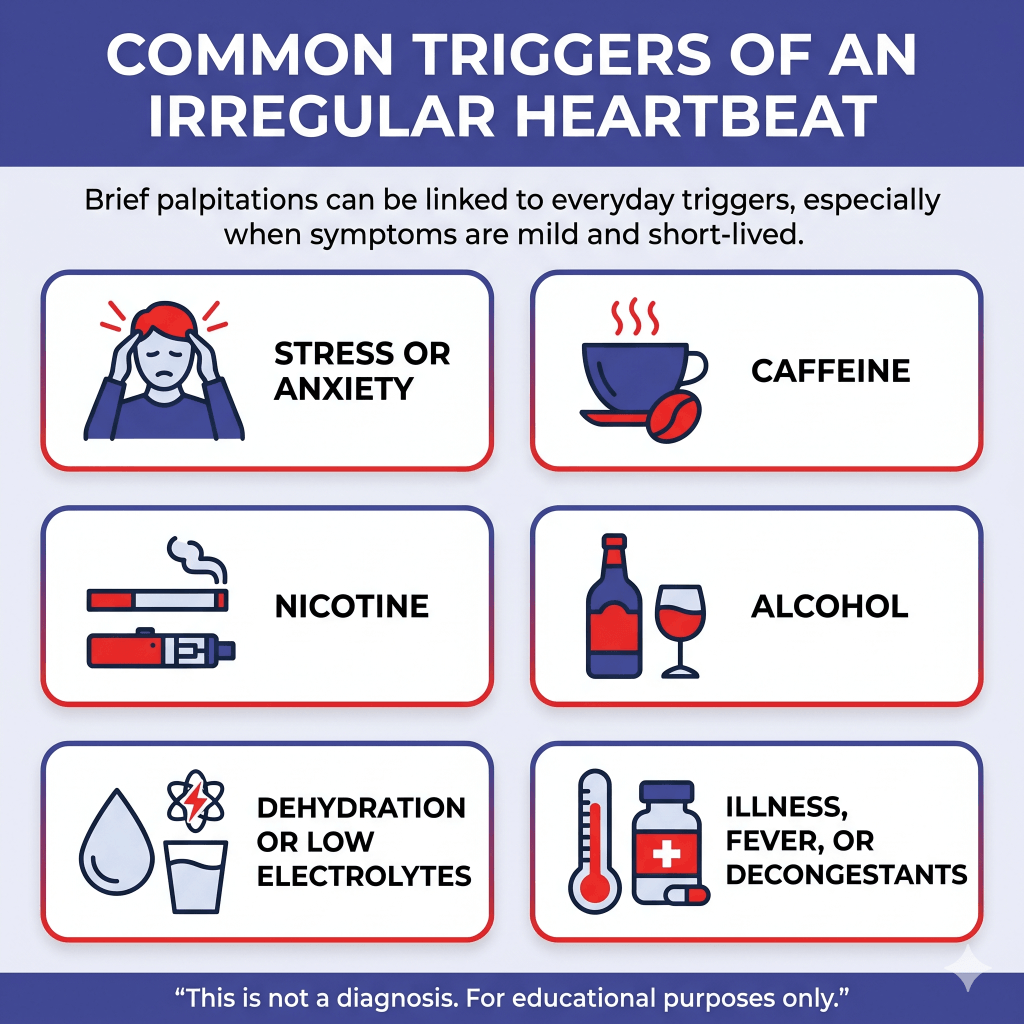
A lot of everyday triggers can cause palpitations or make your heartbeat feel irregular. Common examples include anxiety, stress, caffeine, nicotine, alcohol, fever, exercise, decongestants, stimulant drugs, and some other medicines. Dehydration and low electrolytes can also make abnormal rhythms more likely in some people.
Sometimes the cause is not just a trigger but an underlying health issue. Heart disease, an abnormal heart valve, thyroid problems, lung disease, kidney disease, obesity, sleep apnea, and family history can all matter depending on the situation.
Warning Signs That Make an Irregular Heartbeat More Concerning
You should be more concerned when the symptom is new, frequent, worsening, or clearly more intense than before. A heartbeat that starts suddenly and does not settle, keeps returning without an obvious trigger, or feels very fast or forceful is more concerning than a one-time flutter that disappears in seconds.
Context matters too. If you already have heart disease, a history of heart attack, a known valve problem, or major heart risk factors, an irregular heartbeat deserves more caution. The same is true if the episode starts during rest without a clear reason or if it leaves you feeling weak, shaky, or unwell afterward.
Symptoms That Mean You Should Not Wait
Some symptoms move this out of the “watch and see” category. Chest discomfort or pain, fainting, severe shortness of breath, and severe dizziness are major red flags. These symptoms raise concern that the rhythm problem may be affecting blood flow or may be connected to another urgent heart problem.
You should also take it seriously if the irregular heartbeat comes with near-fainting, confusion, heavy sweating, unusual weakness, or the feeling that you may pass out. Even if the episode later improves, that does not automatically make it safe to ignore.
Who May Need to Be More Careful
Some people should be more cautious from the start. That includes older adults, people with known heart disease, people with an abnormal heart valve, and people with strong heart risk factors. It can also include those with thyroid disease, sleep apnea, kidney disease, lung disease, or a family history of rhythm disorders.
If you fall into one of those groups, an irregular heartbeat should not automatically be assumed harmless. It does not always mean there is a dangerous problem, but it does mean the threshold for getting checked should be lower.
When to Go to the ER or Call 911
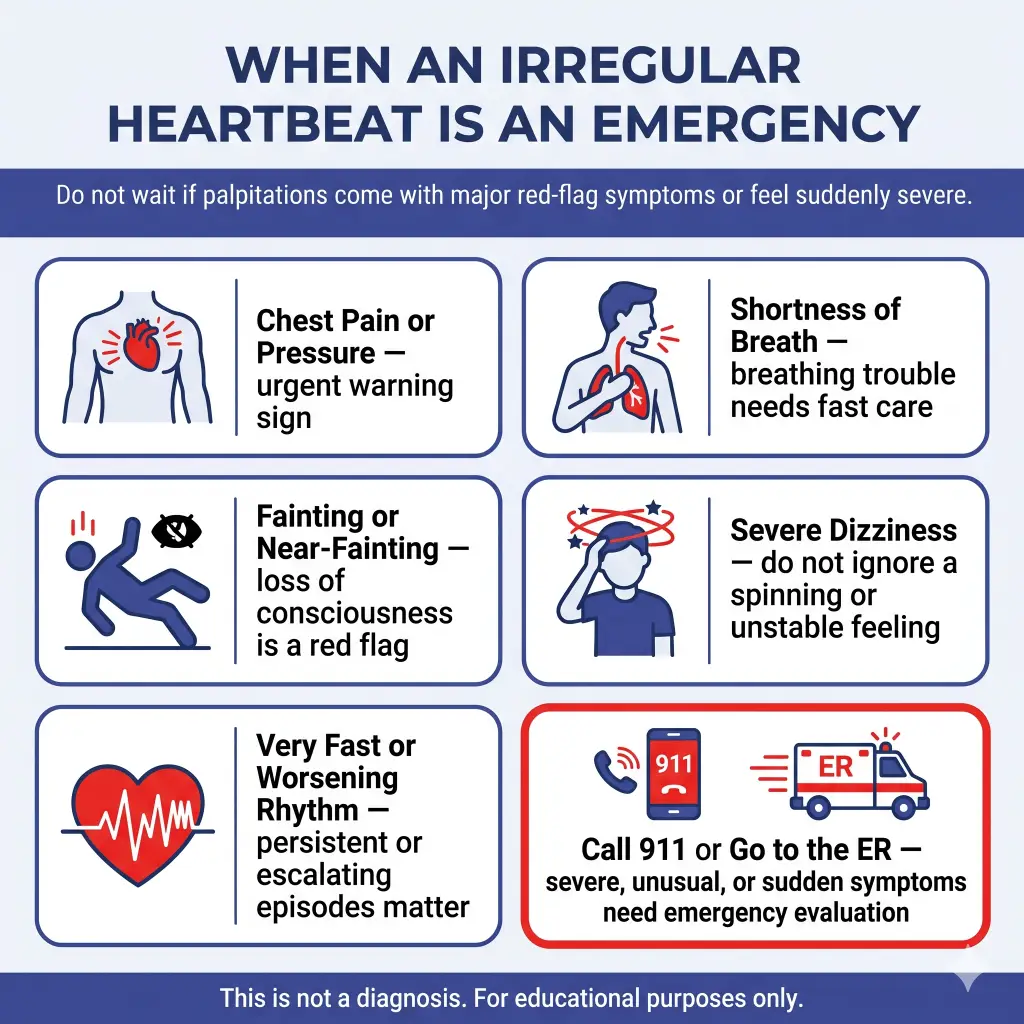
Go to the ER or call 911 right away if an irregular heartbeat comes with chest pain, trouble breathing, fainting, severe dizziness, or a sudden feeling that something is seriously wrong. Those are the situations where waiting at home can be risky.
If you are in Houston and an irregular heartbeat comes with chest discomfort, breathing trouble, fainting, or severe dizziness, Post Oak ER is open 24/7 for prompt emergency evaluation. Even if the feeling turns out not to be dangerous, it is safer to get checked than to miss a more serious heart problem.
What Doctors May Check
When someone comes in for an irregular heartbeat or palpitations, doctors usually start with the basics: symptoms, timing, triggers, pulse, blood pressure, and a physical exam. One of the most common tests is an electrocardiogram, also called an EKG or ECG, which records the heart’s electrical activity.
Depending on the situation, doctors may also order blood tests, check electrolytes, or look for other health problems that can affect the heart rhythm, including thyroid disease. If the rhythm does not happen during a regular EKG, longer monitoring such as a Holter monitor or event recorder may be needed.
What to Do if It Keeps Happening
If the symptom keeps coming back, do not try to self-diagnose from internet searches alone. Pay attention to patterns instead. Notice whether it happens after caffeine, alcohol, stress, poor sleep, intense exercise, illness, or decongestant use. That kind of pattern can help a doctor figure out whether the trigger is more likely harmless or whether more testing is needed.
It is also reasonable to cut back on obvious triggers while you are waiting to be evaluated. Reducing caffeine, avoiding nicotine, staying hydrated, and being cautious with stimulant-type medicines may help some people. But if the symptom becomes more frequent, more intense, or starts coming with red-flag symptoms, do not wait for a routine appointment.
Not every irregular heartbeat means danger. But if it is persistent, worsening, or comes with chest pain, shortness of breath, fainting, or severe dizziness, it deserves prompt medical attention. That is the safest way to separate a harmless flutter from a rhythm problem that should not be ignored.
Frequently Asked Questions
Is an irregular heartbeat always dangerous?
No. Some skipped beats or brief palpitations are not dangerous, especially if they are rare and go away quickly. But frequent, worsening, or symptom-heavy episodes deserve medical attention.
When should I worry about heart palpitations?
You should worry more when palpitations are new, frequent, worsening, or come with chest pain, fainting, severe shortness of breath, or severe dizziness.
Can anxiety cause an irregular heartbeat?
Yes. Anxiety, stress, panic, and fear are common triggers for palpitations.
Can dehydration cause an irregular heartbeat?
It can. Dehydration and electrolyte abnormalities can make rhythm problems or palpitations more likely in some people.
Should I go to the ER for a racing heart?
Go to the ER if a racing or irregular heartbeat comes with chest pain, fainting, severe shortness of breath, severe dizziness, or a feeling that you may pass out.
What does a dangerous irregular heartbeat feel like?
It may feel very fast, sustained, forceful, or out of control, especially if it comes with weakness, chest discomfort, shortness of breath, or fainting.
Can caffeine make your heartbeat feel irregular?
Yes. Caffeine is one of the common triggers that can make some people feel palpitations or an irregular heartbeat.
What tests do doctors do for an irregular heartbeat?
Common tests include an EKG, blood tests, and sometimes longer heart monitoring such as a Holter monitor or event recorder.