
A heart attack can last minutes to hours, and the symptoms do not always look sudden or dramatic. In many cases, the discomfort starts gradually, feels mild at first, or seems to come and go before it becomes clearly serious.
For people in Houston, that is an important thing to understand. A lot of patients expect a heart attack to feel obvious right away, but that is not always how it happens. If chest pressure, shortness of breath, sweating, nausea, jaw pain, or arm discomfort keeps happening or lasts more than a few minutes, it should be taken seriously.
Key Takeaways
- A heart attack may last longer than a few minutes.
- Symptoms can come and go instead of staying constant.
- Some heart attacks start slowly, not all at once.
- Mild symptoms can still be dangerous.
- Waiting too long can increase heart damage.
- Chest pain is common, but it is not the only warning sign.
- If symptoms feel severe, unusual, or do not go away, call 911 and get emergency care right away.
What Is the Short Answer?
A heart attack can last more than a few minutes, and in some people the symptoms may return on and off over several hours. There is no reliable “safe” amount of time to wait at home and see what happens.
That matters because people often delay care when symptoms seem mild, fade briefly, or do not match the dramatic picture they had in mind. But a heart attack is a medical emergency because blocked blood flow can start damaging the heart muscle quickly.
What a Heart Attack Can Feel Like
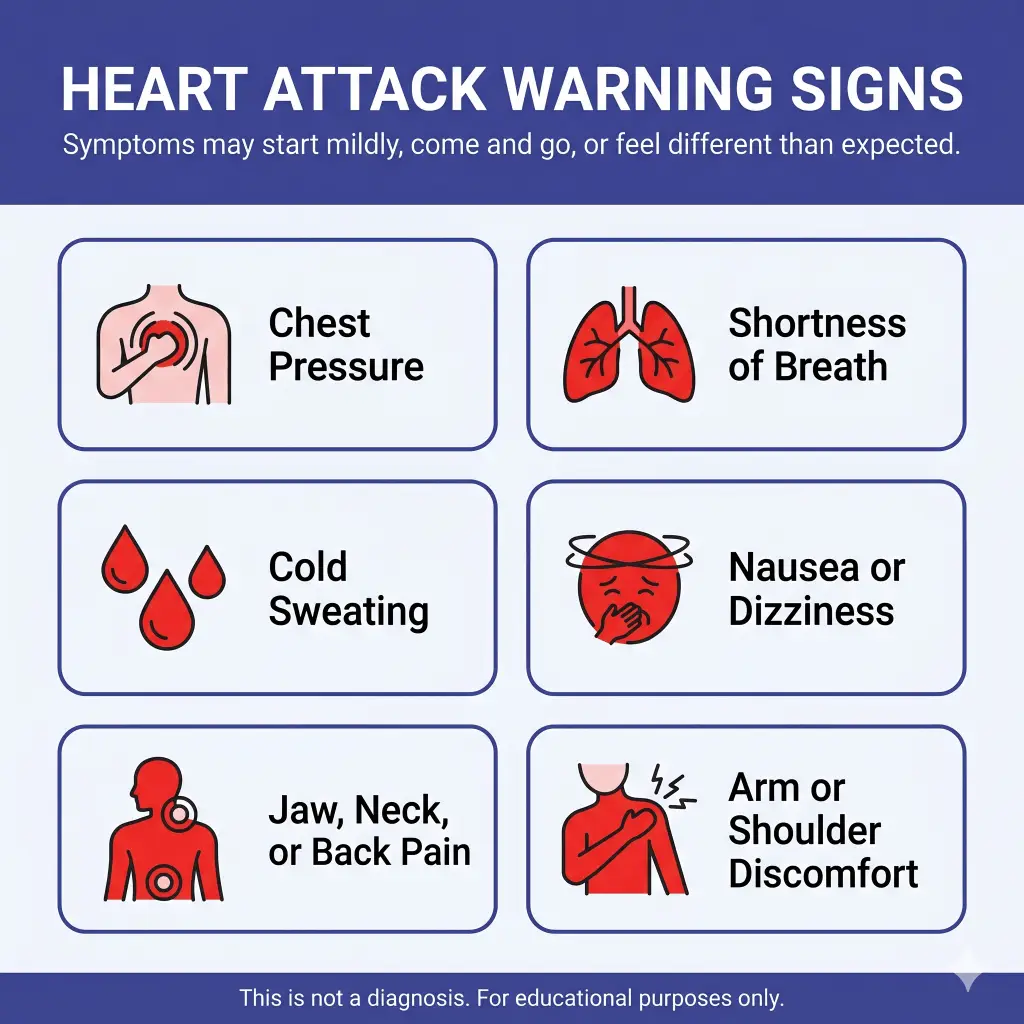
A heart attack often causes pressure, squeezing, fullness, or pain in the chest, usually in the center or left side. Some people also feel pain or discomfort in the arm, shoulder, back, neck, or jaw. Others mainly notice shortness of breath, sweating, nausea, dizziness, or unusual weakness.
Not every person feels the same thing. Some people describe it as a heavy weight on the chest. Others say it feels more like bad indigestion, tightness, or a strange pressure that will not settle down. That is one reason heart attack symptoms are sometimes missed at first.
How Long Heart Attack Symptoms Can Last
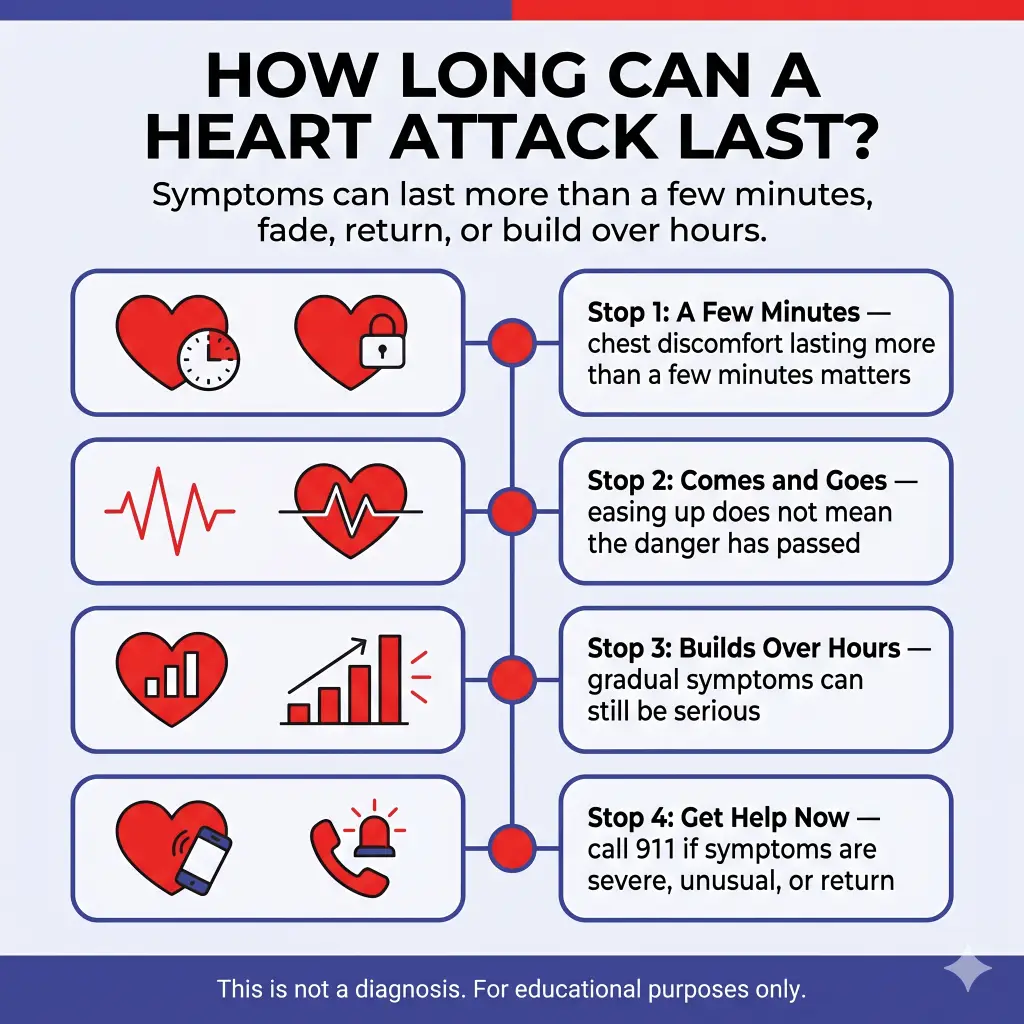
In many cases, chest discomfort often lasts more than a few minutes. It may stay steady, or it may ease up and then come back. A person may think the worst has passed, but returning symptoms can still signal a serious problem.
Some people feel symptoms for a shorter period, while others notice warning signs building over hours. That does not mean a longer episode is the only dangerous kind. Even a shorter episode of chest pressure or related symptoms can still be a reason for emergency evaluation, especially if it is new, intense, or different from your usual baseline.
Why the Timing Can Be Different From One Person to Another
Heart attack timing can vary because the blockage is not always the same, and the body does not always respond the same way. One person may have strong, sudden chest pain. Another may have milder symptoms that begin slowly and become harder to ignore over time.
Age, diabetes, prior heart disease, and sex can also affect how symptoms show up. For example, some women are more likely to report shortness of breath, nausea, jaw discomfort, or back pain instead of classic crushing chest pain.
When Symptoms May Seem Mild but Still Be Dangerous
One of the biggest mistakes people make is assuming that a heart attack has to feel extreme from the start. In reality, some heart attacks start slowly, and the pain or pressure may not seem unbearable at first.
That is why symptoms that come and go can be especially misleading. A person may rest, feel a little better, and decide to wait. But if the heart is still not getting enough blood flow, the danger has not necessarily passed.
When to Go to the ER or Call 911
Go to the ER or call 911 right away if you have chest pressure, chest pain, trouble breathing, fainting, severe weakness, cold sweating, or pain spreading into the arm, shoulder, jaw, neck, or back. You should also act quickly if symptoms last more than a few minutes, improve and then return, or simply feel alarming and out of the ordinary for you.
The safest move is to call 911 right away rather than try to drive yourself if you think you may be having a heart attack. If you are in Houston and these symptoms feel severe, unusual, or are not going away, Post Oak ER is open 24/7 for prompt emergency evaluation.
What Happens at the ER
At the ER, the team will focus on checking whether your symptoms are coming from a heart attack or another urgent problem. One common test is an ECG checks the heart’s electrical activity, which can help show signs of a heart attack or other heart rhythm problems.
You may also have blood work because blood tests can look for heart muscle damage. A troponin test measures proteins that may rise when the heart muscle has been injured. Depending on what doctors find, you may also need monitoring, imaging, repeat testing, or treatment to restore blood flow.
Why Fast Treatment Matters
The biggest reason timing matters is simple: fast treatment can limit heart damage. When blood flow stays blocked, the heart muscle is deprived of oxygen, and that can lead to more permanent injury.
That is why waiting it out is risky. Not every episode of chest pain turns out to be a heart attack, but symptoms that are new, severe, or persistent deserve urgent attention. Getting checked sooner is safer than hoping the problem will disappear on its own.
Frequently Asked Questions
Can a heart attack last just a few minutes?
It can feel brief at first, but heart attack symptoms often last more than a few minutes or come back after easing up. Even a short episode should not be ignored if the symptoms are concerning.
Can heart attack symptoms come and go?
Yes. Some people have symptoms that improve and then return over several hours. That pattern can still be dangerous.
Can a heart attack last for hours?
Yes, symptoms can build, fade, and return over hours in some cases. A gradual timeline does not make it safe.
How long should chest pain last before I worry?
You should not wait for a long timeline if the pain feels intense, unusual, or comes with shortness of breath, sweating, nausea, or pain spreading to the jaw, back, or arm. Chest discomfort that lasts more than a few minutes or comes back needs urgent attention.
Can heartburn feel like a heart attack?
Yes, some heart attack symptoms can feel like indigestion or heartburn. That is one reason chest discomfort should be taken seriously, especially when it is new or paired with other warning signs.
Do all heart attacks cause severe chest pain?
No. Some heart attacks begin with milder symptoms or less typical symptoms such as shortness of breath, nausea, back pain, or jaw pain.
Should I drive myself to the ER if I think I’m having a heart attack?
It is safer to call 911. Emergency medical responders can start care sooner, and driving yourself can be dangerous if symptoms suddenly worsen.
Can women have different heart attack symptoms than men?
Yes. Women may still have chest discomfort, but they can also be more likely to report symptoms like nausea, shortness of breath, jaw pain, or back pain.